“Light a Candle” Countless candles burn in the pre-dawn darkness around Boudhanath Stupa in Kathmandu, Nepal.
“Thousands of candles can be lit from a single candle, and the life of the candle will not be shortened. Happiness never decreases by being shared.”
– The Buddha
The end of the year – according to the Gregorian calendar is drawing near…
Of course, the more you travel, the more you realise that many people in the world march to different calendars, marked with different celebrations and holidays!
I was used to the idea of Orthodox Christmas and Easter falling on dates different from the conventional Western Christian days because many Orthodox Christians continue to use the Revised Julian calendar. In Thailand, where I lived for many years, the year is currently 2561 BE (Buddhist Era). Theravāda Buddhist holidays are more important than Christian ones, and because they line up with moon cycles, the actual dates change yearly.
The official calendar in Nepal is based on ancient Hindu traditions; at the moment, the year is 2075 BS (Bikram Samvat). Last year, I was lucky enough to be in-and-around Kathmandu for several Buddhist and Hindu religious and cultural holidays that corresponded with various full moons (more on those one day, when I get back to the photos).
I was also lucky enough to be staying within a short walk of Boudha (or Boudhanath) Stupa, one of the largest Buddhist stupas in the world. This huge, iconic, structure with its all-seeing eyes facing in four directions, stands tall over the surrounding skyline. It is considered the holiest Tibetan Buddhist temple outside China’s Tibetan Autonomous Region, and is visited by thousands of domestic and international tourists and pilgrims every year. Badly damaged by the horrific April 2015 Nepal Earthquake, this UNESCO World Heritage-listed site is of such local importance that repairs costing 230 million Nepalese Rupees (about $USD2,000,000) were begun almost immediately, and it was reopened just 19 months later.
One of the things that impressed me most – beyond the structure itself – was the devotion of the pilgrims who visited. Holy days, of course, were packed! But even on “ordinary” days, devotees and pilgrims took time out to come and light candles, spin prayer wheels, say prayers, and circumambulate the base of the stupa – some performing prostrations along the way.
In Nepal, giving thanks, and saying prayers asking for protection, inspiration, wishes, and even miracles, are an integral part part of everyday life.
A Commanding Presence From the roof of my hotel, I have a wonderful (if typically hazy) view over the Kathmandu suburb of Boudha, and the 36 metre- (118 ft) tall Boudhanath Stupa.
Morning Movement It is not yet 6am when I enter the temple grounds: the faithful get up early to circumnavigate Boudhanath Stupa.
Spinning the Prayer Wheel Three-times clockwise, the faithful walk around the giant prayer wheels, chanting Oṃ maṇi padme hūṃ softly.
Prayer Wheel, Candles and Prayer Flags
Prayer Candles There are prayer candles burning in every niche and corner.
Candles Trestle tables are covered in prayer lamps …
Lighting Candles … waiting to be lit with long tapers
Lighting Candles
Lighting Candles Although the temple is noisy with chanting, gongs and chatter, the mood is quiet and contemplative as people light their flames.
Around the Candle Tables
Candles for Loved Ones
Monks in the Morning Tibetan Buddhist monks see Boudhanath Stupa as an important place of pilgrimage and worship. They sit for hours chanting prayers; …
Monk Music … this one, accompanying the long chants with intermittent drumming on a small two-headed drum and blasts on a strange horn.
Hindu Pilgrims Beggars, invalids, cripples and Hindu sadus are part of the throng that surround the temple.
As the light came up over the stupa, my mornings at the temple – and my stay in Kathmandu – drew to an end. But, I left feeling quietly restored, having lit a few candles myself.
As this year draws towards a close – whatever calendar you are using, and whatever you celebrate this season – I hope you enjoy some time for candles and quiet reflection.
“Look at how a single candle can both defy and define the darkness.”
[…] Jack Kurtz. When we weren’t exploring various outdoor locations (e.g: A Thousand Steps, Boudhanath Stupa, Bhaktapur Ruins, and Swayambhunath, etc.), we were grouped in an airy Airbnb home in Thamel and […]ReplyCancel
[…] visit this magnificent place many times during my stay (e.g.: Prayers in the Eyes of the Buddha and Light a Candle) and never ceased to marvel at it – or at the devotion of the many pilgrims who visited at […]ReplyCancel
Silver Snow Daisies – Celmisia Longifolia High on the Ramshead Range in Australia’s Snowy Mountains, the flowers put on a unique summer spectacle from late-December through January.
Summer Snowmen
Janet andAllan Ahlberg
In the good old days, When snow was snow, Snowmen lated years, You know.
They kept cool heads When the sun came out. They didn’t melt, They ran about!
They took their holidays By the sea, And paddled Just like you and me.
When winter time Came round again, They piled more snow And made more men!
Still, that of course Was years ago; In the good old days, When snow was snow.
Summer starts on December 1st in the Southern Hemisphere, and the heat usually follows soon after. That’s my cue to escape into the high country. For, even though it is not necessarily any cooler in the Snowy Mountains of Kosciuszko National Park, it is usually less humid and muggy than on the coast. And, the summer heat brings out the beautiful alpine flowers endemic to Australian alpine regions.
This time last year, as the Australian summer hotted-up and Christmas rolled into New Year’s, we had a house full of people. It was a perfect excuse to take the chairlift up the Ramshead Range from Thredbo Village, and walk along the family-friendly pathway towards Mount Kosciuszko in search of flowers (for me) and snow (for the children).
We were lucky enough to find both!
Join us in the fresh air and sunshine for a summer walk.
Chairlift on the Ramshead The Kosciuszko Express Chairlift is a ski lift in winter; in summer it is kitted out to take mountain bikes as well as pedestrians. It takes us from Thredbo Village (1365 metres) to Eagle’s Nest Restaurant (1937 metres) and the start of our walk.
Family on the Hill I always feel like I’m on the roof of the world when I’m up here!
Walkway to Mt Kosciuszko The walking track is an elevated metal grid, which allows snow-melt through, and protects the delicate plants against trampling.
Flowers on the Ramshead Range From about mid-December to mid-January, the alpine flowers bloom – with at least 21 species found nowhere else in the world. Here, the silver snow daisies and mountain celery stretch up to the granite boulders on the ridge.
Candle Heath (Richea Continentis) Candle Heath is endemic to Australia, and loves the watercourses and bogs in the alpine and sub-alpine wet heathland of Australia’s Great Dividing Range. It is punishingly sharp – another reason to stick to the walkway!
Mountain Celery (Aciphylla Glacialis) and Sheep Sorrel (Acetosella Vulgaris) Indigenous plants like mountain celery and silver snow daisies fight for space with non-native species like the widespread sheep sorrel.
Silver Snow Daisies (Celmisia Longifolia) My favourites are the silver snow daisies, which are just starting to bloom . (iPhone6)
Don’t Panic! We can’t actually see Mt Kosciuszko from here – it is hidden behind the range we are on, but don’t panic: …
Mt Kosciuszko 4.5 … that marker says “4.5”, not “45” as it first appears! The mountain was named by explorer Paweł Edmund Strzelecki in 1840 for the Polish freedom fighter, General Tadeusz Kościuszko.
Rock with a View At the Mt Kosciuszko Lookout, you can see Australia’s highest point (unimpressive against the other ridges!) and the source of the Snowy River. Pockets of snow still tuck into the hollows.
Girl Conquers Rocks! While some people use the granite boulders as a vantage point, others treat them as an adventure playground.
Purple Eye-Bright (Euphrasia Collina) Early Snowy Mountain stockmen recognised eyebright’s eye-soothing properties. Today, many of the species are extinct or endangered.
Rocks on the Hillside We are well above the tree line, but the uplifting, faulting, folding, and erosion of the granite boulders that make up these mountains provide plenty of visual features.
Path through the Saddle Off the main track, an informal path …
Summer Snow … leads us to a patch of summer snow.
“Do you want to build a Snowman?”
Candleheath on the Hill These alpine plants lie in wait under the snow all winter – bursting forth with colour as soon as the snow melts.
Summer Ski Slope Not only are they covered in snow throughout winter, they are squashed under Thredbo’s popular ski runs.
The Chair Down All too soon, it is time to take the chairlift back down through the snow gums and into the little village of Thredbo.
What ever it is that you and your family celebrate this time of year, I wish you a wonderful holiday season, filled with love and laughter, and the magic of summer snowmen.
[…] have my favourite walking tracks that I return to regularly (eg: Rennix Walk; Kosciuszko Lookout; Porcupine Rocks; Mount Kosciuszko Summit; Mount Stillwell; Seaman’s Hut; Waterfall […]ReplyCancel
Terraces The ridges that skirt the Kathmandu Valley between Nagarkot and Sankhu provide panoramic views over lushly planted terraces, ancient Newari villages, and the foothills of the Himalayas.
I always feel like I’m finally getting into the rhythm of a walk when it is about to finish!
I suspect that this is an illusion, as it doesn’t matter if the walk takes four hours or four days.
It was the final leg of an “easy” four-day trek around the Eastern Rim of the Kathmandu Valley. I had organised the walk with local guide Angfula Sherpa, and although he had made allowances for the fact that neither I nor my walking-companion were particularly young, fit, or spry, it didn’t feel very easy!
Still, on day four, I was sad that it was coming to an end.
In beautiful spring weather, we had walked a good 16km (10 miles) from Dhulikhel (1550 m – 5085 ft) to Nagarkot (2175 m – 7136 ft) the day before (see: Kathmandu Valley Part 4). The altitude gain of over 600 meters (much more if you count the ups-and-downs) had exhausted me, and after a great meal I was looking forward to bed. Accommodation has improved markedly since had I first trekked in Nepal many years ago, but even so, most places have no central heating, and our rooms at the Stupa View Resort were frigid! It was only thanks to the hot-water bottles that the staff managed to find that I was able to relax my aching muscles and collapse into sleep.
We started our next day in Nagarkot without the views of the Himalayas that the village is known for; the weather conspired against us, and we spent part of our morning getting in and out of rain gear as we walked through a pine forest shrouded in mist, drizzle, and outright rain.
But, it was downhill, and mostly soft underfoot.
Before long, we made our way out of the forest and into better weather, and into terraces planted with grain, potatoes, and mustard. With our arms swinging and our feet finding their pace, we walked down towards the Newari town of Sankhu (1382 m – 4534 ft), stopping en route for lunch at a restaurant that wasn’t officially open and that only an experienced guide would ever have found.
A vehicle met us in Sankhu, and drove us the hour back to Kathmandu – a world away ….
Angfula on the Track We walked down from Nagarkot, out of the trees and rain, and onto a track over the terraced hills.
Earthquake Damage In the villages, the buildings we pass still show extensive damage …
Brick Ruins … from the April 2015 Gorkha earthquake which killed about 9,000 people.
Sun on the Terraces The amount of work that goes into tending the narrow terraces is mind-boggling.
Gathering the Grain Using head straps, women carry large loads through the fields.
Child Playing at a Hindu Shrine Hindu and Buddhist shrines are dotted all around the Kathmandu Valley. A boy playing – with what appears to be a pretend gun – seems in odd juxtaposition with this linga, an abstract representation of the Hindu deity Shiva.
Farmhouses and Terraces As we drop down in altitude, grains give way to potato and mustard. Crops are planted in rotation to make the best of the short growing season.
Mustard Flowers The mustard is in bloom, …
Potato Flowers … as are the potatoes.
Working the Fields
The Women of the House In spite of earthquake-damage to their buildings, this delightful Nepali family were able to produce a wonderful lunch for us.
Young Woman I had a long chat with the daughter of the house, who – two weeks after our visit – was heading to Australia to study at university. Most Nepali I spoke to have relatives working or studying overseas: about 8.5% of the the country’s population lives outside its borders.
Potato Furrows Food stretches out all around us: Nepal is still an agricultural country, with over two-thirds of the population directly engaged in farming.
On the Road Nepal is also among the least developed countries in the world, with a severe lack of skilled labor. We could see evidence of this in the roads we travelled and the buildings we passed.
Woman in Green About one-quarter of Nepalese live below the poverty line and, no matter their age – like this old woman carrying her greens – most are engaged in manual labour.
Sorting Potatoes So much of the labour seems rather informal: at the side of the road, these people were sorting potatoes for bagging and sale.
Sankhu It is a bittersweet moment when we can finally see the end of our walk: the ancient Newari town of Sankhu, where we will meet our car back to Kathmandu.
Swasthani Mata Temple On the way into Sankhu, we cross the waters of the Sali Nadi, and pass through a temple dedicated to the HinduGoddess Swasthani.
The Sali Nadi These littered, polluted waters are sacred: during the month-long Shree Swasthani Brata Katha festival, Hindu devotees to Goddess Swasthani bathe here.
Swasthani Mata Temple The temple itself has a unique octagonal roof.
Icon in a Niche Everywhere you look, there are icons: coloured with candle wax and chalk, …
Icon in a Niche … and draped in cloths and garlands.
Swasthani Mata Temple The wonderful gold-plated octagonal roof of the temple is supported by struts carved with depictions of the Goddess Swasthani.
Hindu Priest You will always find a priest tending a Hindu temple.
Blessings I made sure to receive my blessing before leaving.
Hotel Room Back in Kathmandu, my room was positively palatial – especially after the modest accommodation on our trek.
Palatial room or not, I’d rather be walking!
Like the rest of Nepal, the Kathmandu Valley is a joy to trek around.
Wasn’t that grand? I agree, we aren’t particularly young, fit, nor spry but that which we lack is made up with our determination. Arthritic hips be damned! They can always be replaced later. Thanks for this trip down Memory Lane.ReplyCancel
Getting Ready for the Dance Face-painting is an integral part of the costuming for the traditional cultural dances that are performed at a Papuansing-sing.
It takes a lot of time to prepare for a Papua New Guineansing-sing.
Ancient masks and costumes – some pieces carved from wood and others woven from leaves and grasses: all decorated with paint, shells or feathers – have to be checked and repaired. New costume details need to be fashioned from leaves and grasses. And – most importantly – faces have to be painted in patterns that are specific to the village and its totems.
The dances and songs that are performed have been passed down through the years to each successive generation. At a sing-sing – a friendly gathering of tribes or villages – each local or visiting group can demonstrate and share their culture, with its distinctive dance and music.
These days, of course, sing-sings are organised not only to re-enforce local culture, but also to attract tourist dollars. In the relatively “temperate” month of August, the people of Kanganaman Village, in the Middle Sepik region of Papua New Guinea, host the annual (since 2014) Sepik River Festival. This fledgling event draws performers from surrounding villages and a small audience of intrepid international travellers. I was there last year with photographer Karl Karl Grobl from Jim Cline Photo Tours, and a small group of photo enthusiasts.
I had spent much of my morning in the village’s main haus tambaran, or spirit house, watching the men of Kanganaman getting their face-paint ready for their dance performance (see: A Black and White View and Crocodile Men). But, Kanganaman has not one, but two spirit houses (see: Welcome to the Spirit House). The smaller one is open to everyone in the village, and it was there that the women were gathered – out of the sun, but still blanketed in oppressive heat – getting their costuming and face-painting ready for their contribution to the festival.
Come and meet the women (and their children), and watch them get ready.
Grooming and Selling The Sepik River region has long been known to collectors of tribal art: before the dancing starts, the local women have laid out woven- and carved-goods at the edges of the open green in the hope of attracting the eyes of the international tourists.
A Boy and his Snack Papua New Guinea is a young country (almost thirty-three percent of the population is under 15) and there are children everywhere.
Papuan Boy They are a delight to photograph –
Papuan Child – even when they are not quite sure what to make of me!
In the Little Spirit House It is hot and dark and crowded inside the Little Spirit House where the village women are helping each other get ready.
Woman with a Cigarette The same material and method that goes into making traditional bilum string carry-bags is used to make the women’s halter-bras and their shell headdresses. Long-leaf tobacco is rolled in cut newspaper rectangles to make long, slim cigarettes.
Papuan Woman Many of the women are decorated with irregular facial tattooing that shows faintly against their dark skin.
Young Papuan Woman Preparations for a sing-sing are a good opportunity to get together for a chat and a laugh. The smiles show off the betel-nut staining common across all of Papua New Guinea.
Woman Getting Ready Some of the women favour cornrows – and scarification is also common.
Cornrows and Laughter Outside the spirit house, the mid-day sun is as bright as the smiles.
Woman Getting Ready
Young Woman in the Spirit House
Young Boy
Face Painting for the Dance
Young Woman in a Shell Headdress Seashells are so important in Papua New Guinea that they were the national currency until 1933.
Tending each Other
Face Painting I can’t help but admire the wonderful bone-structure under the faces being painted!
Stilted Village House What amazes me, given all the activity in the sing-sing preparation areas, ….
People in the Village House … is how many people are outside those preparations!
Papuan Child
Papuan Child with Food
Papuan Mask Inside the Spirit House, precious artefacts are on display, …
Mother and Child …while outside, life goes on.
Young Papuan Woman Even though August is usually the coolest month of the year, Papua New Guinea is in the tropics, and it is bright and even hot outside, …
Old Woman with her Eyes Painted … and nearly as hot inside the Little Spirit House.
Waiting for the Dance
When I left the little spirit house, it was early afternoon, and the women were still busy.
I guess in some ways the preparation is as important as the actually dance.
The Boys and the Yellow Princess Parrot Bird-spotting is easy and accessible when the birds come to you!
I was out walking on local wetlands not long ago, and as we were listening to the chirping in the trees, one of my companions asked if I was a “bird watcher”.
I had to confess that while I enjoy watching birds, as a photographer I’m usually too slow to get decent pictures of them!
This was much less of a problem on a couple of recent visits to “On the Perch”, a bird park not far from my home. My young grandchildren (and their parents) were visiting from the UK, and it was nice to be able to show them some accessible Australian wildlife in a child-friendly setting.
The bird park is relatively small, but once we were armed with inexpensive containers of wiggly grubs with which to feed the birds inside the four walk-in aviaries set up as regional habitats, we were able to amuse the children and have a relaxing and enjoyable time. Mind you, the three-year-old was almost as taken with the playground equipment and the coffee-shop (“Hot chocolate!” she squealed.) as she was with the birds.
I enjoyed getting closer to our feathered friends and I hope you like the results.
Rainbow Lorikeets at Our House We don’t have to go to the bird park for colourful birds: when you leave crumbs on the table, the rainbow lorikeets (Trichoglossus moluccanus) comes to us! (19July2018 – iPhone6)
Lorikeets on the Balcony They love fruit and nuts …
Lorikeet in the Umbrella Tree … and will chitter at me noisily if I’m too slow with their treats. (03September2018 – iPhone6)
Gouldian Finches – Erythrura Gouldiae Inside the front entrance to the bird park, the Cape York exhibit includes the colourful (and endangered) Gouldian finches, native to Northern Australia.
Rainbow Bee-Eaters – Merops Ornatus Spectacular rainbow bee-eaters share the display. Apparently, these birds are common across Australia –
Rainbow Bee-Eaters – Merops Ornatus – but I can’t say I’ve ever spotted one in the wild!
Namaqua Dove – Oena Capensis The African Savannah walk-in aviary contains a number of birds foreign to us.
Cordon Bleu Finch or Crimson-eared Waxbill – Uraeginthus Bengalus The exotic little creatures in this aviary were wary, …
Cordon Bleu Finch – Uraeginthus Bengalus … but I was satisfied with watching them at reasonably close range.
Yellow Canary – Crithagra Flaviventris I spent a lot of time just sitting in there quietly, watching, …
Cut-Throat Finch – Amadina Fasciata … and feeding the pretty little things from my supply of mealworms.
Cut-Throat and Cordon Bleu Finches
Red-Billed Firefinch or Senegal Firefinch – Lagonosticta Senegala
Red-Winged Parrot – Aprosmictus Erythropterus The birds in the Inland Australia walk-in aviary were much less shy.
Long Legs and the Black-Winged Stilt The black-winged stilt (himantopus himantopus) was so keen for the the mealworms we had that it was willing to play dodge ’em with a three-year-old!
White-Browed Woodswallows – Artamus Superciliosus
Purple-Crowned Lorikeet – Glossopsitta Porphyrocephala The birds have plenty of places to hide if they want to, but they know when food is on offer.
The Boy and the Purple-Crowned Lorikeets … completely ignored a curious toddler.
Yellow Princess Parrot – Polytelis Alexandrae
Regent Parrot – Polytelis Anthopeplus The parrots are happy to be fed by hand.
Regent Parrots – Polytelis Anthopeplus
Forest Kingfisher – Todiramphus Macleayii I do occasionally spot these beautiful little birds in the tea-trees around our estuary on my morning walks, but they are much too fast-moving for me and my iPhone!
Waiting Child In the Asia-Pacific walk-in aviary, you can hand-feed them – if you can stand ground …
Feeding the Kingfishers … in the face of their speed …
Forest Kingfisher – Todiramphus Macleayii … and sharp beaks.
Feeding the Kingfishers A quick pinch on the palm as they snatch mealworms, …
Forest Kingfishers and a Finch … and they are back on their perch before you know it!
White-Winged Choughs – Corcorax Melanorhamphos The Aussie Icons aviary contains a number of white-winged choughs. Often mistaken for crows, Australia’s choughs were named after the European birds that they resemble (see: The Stationary Ark) but are only distantly related to.
Laughing Kookaburras – Dacelo Novaeguineae The Aussie Icons aviary also contains the more emblematic kookaburras – which we do see at home, but usually high in the gum trees over our heads.
I look forward to my next visit to the park.
I think I might have to borrow some small children – for while I could go back on my own, it’s much more fun watching youngsters getting close to nature.
**Addendum: After the stress of a disastrous bush-fire season, the park closed to the public in February 2020.**
- Performing the Ganga Aarti from Dasaswamedh Ghat, Varanasi
- Buddha Head from Shwedagon Pagoda, Myanmar
- Harry Clarke Window from Dingle, Ireland
- Novice Monk Shwe Yan Pyay Monastery, Myanmar
Packets of 10 for $AU50.
Or - pick any photo from my Flickr or Wanders blog photos.

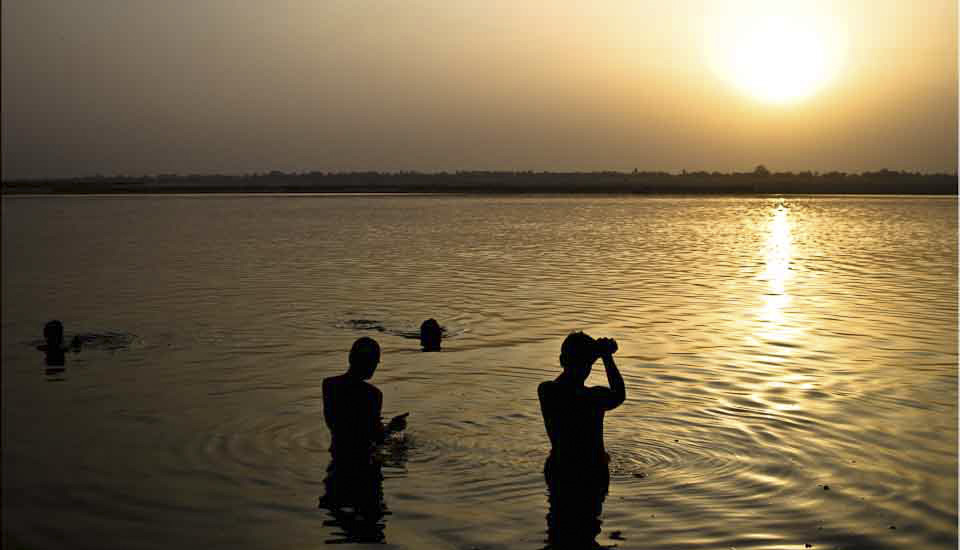
.jpg)
.jpg)
.jpg)











 Until next time,



[…] Jack Kurtz. When we weren’t exploring various outdoor locations (e.g: A Thousand Steps, Boudhanath Stupa, Bhaktapur Ruins, and Swayambhunath, etc.), we were grouped in an airy Airbnb home in Thamel and […]
[…] visit this magnificent place many times during my stay (e.g.: Prayers in the Eyes of the Buddha and Light a Candle) and never ceased to marvel at it – or at the devotion of the many pilgrims who visited at […]
Buddhism is the Light of the world
Thanks for stopping by Chukwugozie!