Morning among the Camels Early morning sun warms the November air as people bring their camels to the water trough at the Pushkar Camel Fair.
Once again, pictures of camels and colour are flooding my news feed: the Pushkar Camel Fair in Rajasthan is currently in full swing, and photographers from around the world are there, posting pictures that make me nostalgic for India.
The Pushkar Fair, orKartik Mela, is a multi-day livestock fair and cultural fête. Animal breeders and buyers descend on the small Northern Indian town of Pushkar, and for five days they display and trade their camels, horses, cows, goats, and sheep. As the name implies, the camels take centre stage: they are everywhere, in all their decorated, bad-tempered glory.
The dates of the annual fair are determined by the Hindu calendar and the phases of the moon: usually occurring between late October and early November on the Gregorian calendar. The official 2018 dates are November 15-23, finishing on the Kartik Purnima, the full-moon of the month Kartik, and the day of the Hindu, Sikh and Jain festival of Tripuri Purnima or Tripurari Purnima. So, not only does the town attract livestock traders, hawkers, and entertainers, it also draws thousands of Hindus who come to bathe in the holy Pushkar Lake.
I so love travelling and making pictures in India! I love the food and the masala chai and the colour. I love that people of all walks of life are generally friendly and welcoming, and open to being photographed.
Join me for a day among the horses and camels, and the colourful characters who keep them.
Morning Fires It was our third day in Pushkar; we drove to the fairgrounds before sunrise to watch the site slowly come to life. It might be pre-dawn, but there is plenty of activity: the animals and the fires need tending.
Sharing Drinks The climate here is extreme: highs of 40-45°C are common in summer, and winter night temperatures can drop below 10°C. Wrapped in blankets against the chill of a pre-dawn November day, men share drinks and warm their hands over the fire.
Camels on the Hill All over the extensive grounds, camels are tethered near their owners’ tents or carts.
Curious Camels Some of the animals are curious at my presence; …
Ornery Camels … most, however, are too busy arguing with each other.
Man and his Camels
Morning among the Camels Before the sun comes up and the camel-trading starts in earnest, there is a wonderful quiet and sense of community in the Pushkar Camel Fair grounds.
The Morning Smoke Many of the men around the morning fires enjoy smoking their clay or metal pipes.
Pushkar Scene As the light rises over the surrounding mountains, …
Three Men … there is more activity around the fair grounds.
Pack Camels Camels are working animals: carrying loads or pulling small trailers.
Dressed Camel Decorated with bells, beads and pompoms, the camels are the stars of the show. They even have a beauty contest!
Decorated Camel Some have elaborate patterns shaved and died into their coats.
At the Water Tank One of my favourite places to sit and people- and camel-watch, was the large square water trough, which naturally attracts a stream of visitors all day.
Women at a Fire
Marwari Horses – Equus Ferus Caballus The other stars of the fair are the rare Marwari horses. With their distinctive, inward curving ears, these beautiful animals were originally bred by the Rathores, the rulers of Marwar (Jodhpur) up to the 12th century.
Marwari Mare and Foal The Marwari (or Malani) descendants – which can come in all equine colours – are among the livestock for sale at the Pushkar Fair.
Man on a Marwari Horse Prospective purchasers test them out before buying.
Tug of War The trick, if you buy one or two of these spirited animals, is to get them into your transport!
“People Truck” In over-loaded open trucks, …
Men in the Fairground … on foot, …
Young Woman on the Bus … or on busses: people come and go all day long.
Man in the Sugar Cane
Girl in the Sugar Cane Sugar cane is a special treat; …
Sugar Cane Press … it is pressed into juice for the fair goers.
The Ferris Wheel Like any fair, Pushkar features sideshows and rides.
Mother and Child at Camp
Camel Rides Finally, after five in the evening, the temperature starts to drop as the sun lowers in the sky. Soon it will be too dark for the camel rides that the tourists – even the domestic Indian ones – so enjoy.
From pre-dawn until after-dark: Pushkar Fair is a wonderful experience.
Bathing-Pool Access Even though it is mid-spring, the beaches at the popular North Sea resort town of Knokke in West Flanders are still bleak, windswept, and almost deserted.
Last Sunday marked 100 years since the signing of the Armistice with Germany, after World War I – “the war to end all wars.”
My understanding of history has always been a bit fuzzy, but I had direct ancestors on both sides of that horrific conflict and the one that followed. Growing up in a Commonwealth country, the November 11th Remembrance Day (aka: Poppy Day, Memorial Day, or Armistice Day) was a big deal, and we all learned and recited the poem “In Flanders Fields”, written about that war by Captain John D. McCrae.
So, Flanders – and red poppies – have always been part of my consciousness, even if I had never been to the sites in question.
I had been to Belgium. I may have been there as an infant, but the first time I remember touching base there was also a long time ago. On a rail trip from Paris to Germany, the train cut through a corner of Belgium – forcing Border Control personnel (in those pre-European Union days) to check my ticket and passport twice in the space of about fifteen minutes. If it hadn’t been for them, I wouldn’t have known that the green fields rolling past my window represented three different countries!
I had always wanted to visited Bruges – especially after the 2008 movie In Bruges was released. I hadn’t yet seen the film, but the trailers had put that medieval Flemish city back on my mental map. I was in Paris with a day to spare, and a brochure in the hotel where I was staying advertised a day trip to Bruges. I booked the trip for myself and my husband, and at the appointed pre-dawn hour, we stood out on a cold road in the Septième Arrondissement (Seventh District), watching our frozen breath under a street lamp near our hotel, and waiting for a bus which never came… We re-explored Paris instead.
I had hoped to visit Bruges this year, when we were to be docked in nearby Zeebrugge. Unfortunately, the fates conspired against us again. The direction of our ocean trip through the English Channel and around the outside of the west coast of Europe was reversed, resulting in less port-time everywhere, as we motored against the prevailing currents. I wasn’t going to forgo our included shore excursion: Scenic Flanders & Coastal Village of Knokke, leaving us no time to get into the old city.
We were very excited ahead of our cruise: we had done a European river cruise and had been thrilled with the included shore excursions and with time we spent exploring cities on our own (eg: Passau; Regensburg; Melk; Kelheim to Weltenburg; Vienna; Budapest Market; and Buda Castle Hill). Of course, ocean cruising – even in a relatively small boat – is different, and we found ourselves a long way from city-centres. Instead of the inner-city walks we had experienced before, our shore excursions typically involved a lot of bus time. To frustrate me (and my cameras) further, the buses didn’t necessarily stop at the places with the best light (see: An (Other) English Spring).
So it was that we got onto a big tour bus at the dockside in Zeebrugge, and drove past the outside of Bruges and into the Flemish countryside, not stopping until we got to Knokke, where the beach was pretty much deserted in the cold North Sea wind.
Photographically, this made for real challenges! Many of these pictures were taken from the bus, where curved windows cause odd reflections, tinted glass makes for strange colour effects, and unpredictable movements result in blur that may-or-may-not be artistic.
But, I did find red tulips (no poppies), and I payed mental respects to the region’s bloody, muddy history.
Boat Deck Unlike river cruising where the shores are always in sight, sometimes we were a long way from anywhere. As we did laps of the deck, our boat motored through the English Channel and into the North Sea. (iPhone6)
Gentpoort – Gate of Ghent Six-kilometers of Bruges’ city ramparts – parts of which date back to the end of the 13th century – are currently incorporated into a green-belt of parks that was constructed during the second half of the 19th century. Gentpoort – built in the beginning of the 15th century – is one of the four remaining medieval town gates.
Windmill in Bruges Four ancient windmills stand on the remains of the city’s inner fortification line. Originally, about 30 windmills lined the banks here, grinding flour. In the 19th century, steam power rendered these windmills obsolete. As our bus followed the city ramparts, we had tantalising glimpses into the medieval way of life.
Across the Moat We also got a taste of modern life – where the miles of parkland reputedly make the city a pleasant place to live and work.
Flanders Fields The fields that were once part of the muddy trenches on the front lines of a catastrophic war are today impossibly green with fresh crops.
Fallow Fields The tilled land rolls past the bus window, as flat as I had expected.
Cyclists As if to live up to my expected stereotypes, we can spot groups on bicycles riding through the countryside.
Tidy Houses Our bus takes us through small villages with tidy homes …
Parish Church and Graveyard … and small churches at their centre.
Tidy Towns Clearly, the locals take responsibility for keeping their own little corner clean.
Flemish Woods Tall trees stand as windbreaks along the canals as we continue through the countryside.
Knokke We passed a mix of traditional housing and modern high-density accommodation as we drove into the sea-side resort town of Knokke. (iPhone6)
Petanque Club – Knokke Our bus tipped us out into the summer sea-side resort town of Knokke: most of the waterfront cafes were closed and the beach was deserted.
Looking back to Zeedijk-Knokke Rows of tidy beach huts stand ready for warmer weather; …
“Nasimi Beach” … many of them are named for famous beaches around the world.
Knokkestrand Few things are as desolate as a beach in bad weather!
Lone Red Tulip We gave up on trying to find an open coffee-shop …
Belgian Bicycle … and made our way past displays of spring flowers …
Flanders’ Tulips … in search of that famous Belgian chocolate.
As we got back on our bus, cold and tired, but with a bag of chocolate truffles in our possession, we could reflect on how truly lucky we are!
Once again I missed out on Bruges, but the tulips of Knokke served as a reminder of sacrifices made in the past so that we can have the life we do today.
[…] though it was spring and we had seen plenty of tulips and windmills in Belgium the day before (see: Flanders Fields and Beaches), we saw none on our day’s stop in […]ReplyCancel
Monkey Guardian Everywhere you go in Bali, spiritually-infused art is a part of the natural landscape, and nature in turn takes over the art.
It is so easy to fall in love with Bali.
Last year, my husband and I visited for a second time: we were only in the country for just over 2 weeks – based in four separate locations – but even allowing for plenty of down-time, we felt like we did and saw so much!
The Ubud area, in the “uplands” of Bali, is the cultural heartland – and it is also where we had most of our “animal” experiences: elephants, monkeys, civets, and of course, the mythical, demonic creatures that live in the very stones …
Hanging Crab-Claw Flower – Heliconia Rostrata There is something about the tropics: the hot, moist climate makes for sumptuous displays of colour wherever you look.
Ganesh Images of the Lord Ganesha, the remover of obstacles, the patron of arts and sciences and the deity of intellect and wisdom, are ubiquitous. This one takes centre stage at the Jalan Elephant Safari Park gift shop, Tegallalang Ubud.
Elephant Riders in the Sanctuary With the ongoing controversy surrounding captive elephants, we hadn’t elected to go to the park; …
Elephant Riders in the Sanctuary … it was an included part (lunch stop) of a cycling tour we had taken through the rice terraces (see: A Ride through the Rice Fields).
Mahout and his Elephant The elephants in the eco-resort/sanctuary were reputedly rescued from the Sumatran logging trade and seem well looked after.
Elephant Food
Hungry Elephant They are certainly keen for the food visitors buy to give them.
Ganesh and Flowers Another Ganesha – this time in the gardens of our accommodation on the outskirts of Ubud. (iPhone6)
Keeper Checking a Macaque The Sacred Monkey Forest Sanctuaryis a must-visit in Ubud. We arrived late in the afternoon, and it was already growing dark under the canopy of trees.
Park Attendant We paid the small fee, took our booklets, smiled at the ticket collector and made our way in.
Monkey Guardian Two Bedogol or Dvarapala – gate guardians – are present at the entrance to all temples and most homes or villages in Bali; this monkey-statue reminded me of those guardians, but there was only one as we walked into the sacred forest.
Balinese Long-Tailed Macaque – Macaca Fascicularis I’m a lot more wary around monkeys since being bitten by a macaque in Thailand (long story!), so I kept a reasonable distance and avoided eye contact.
Macaques and Sweet Potatoes Most of the animals were more interested in the food they were surrounded by than they were in us, but there are all kinds of warning instructions for visitors.
Macaque on the Pavers
Macaque on the Pathway The little ones seem so sweet, …
Toothy Macaque … but when they squabble with each other, those mighty canines look quite fearsome.
Mother and Son
Roasting Coffee As a brief sojourn on another day trip, we stopped in at one of the many eco-coffee “plantations”, where visitors get to see labelled coffee-, tea-, cocoa-, and spice-plants; to watch coffee beans be hand-roasted; and (best of all!) to taste-test all the products.
Asian Palm Civet – Paradoxurus Hermaphroditus Bali prides itself on “Luwak (civet) Coffee” – what the Vietnamese call “Weasel Coffee”. The coffee is made only from beans the civet has eaten and passed through it’s digestive tract, producing a less-acidic brew. Luwak coffee is much more expensive than the regular blends; I went home with a beautifully spiced hot-chocolate mixture instead.
Fountain Figures : Goa Gajah Balinese water temples are decorated with beautiful sculptures, and the figures in the bathing fountains at Goa Gajah, or Elephant Cave, are a fine example. Thought to have been built in the 9th century, the fountains were only rediscovered in the 1950s.
Inside the Temple Complex Behind the bathing ponds are the usual pavilions and shrines …
The Mouth of the Demon … and a very unusual cave complex. Although it is called Elephant Cave, there were never elephants here; it may be named for the nearby river, or for the Ganesha in one of the caverns.
The Elephant-Headed God Ganesha One of the caverns houses the remains of lingam, phallic symbols of the god Shiva, and yoni, the female compliments. Another houses a statue of Ganesha, Shiva’s son. Offerings of flowers and incense are everywhere.
I do love Bali.
There is always something new to discover, or something familiar to re-explore. I hope to get back there one day. In the mean time, I still have more pictures and memories from the last trip.
According to the guide books, the Mursi people have “an aggressive reputation”.
This fierce reputation is probably what helps them maintain their cultural traditions and their animist practices in the face of the “artificial” geographic boundaries enforced by the Ethiopian state, the tensions between themselves and other tribes, and the onslaught of modern tourism.
That reputation, and their inaccessibility.
Tucked into about 1900 square kilometres of land between the Mago and Omo Rivers, the roughly 7,500 Nilo-Saharan Mursi arrived in their remote corner of southwestern Ethiopia after a series of migrations in search of a “cool place” (bha lalini) for their families and their cattle. To visit their village, I had climbed into a Toyota Land Cruiser at 4.30am to undertake the bumpy drive from Jinka, across Mago National Park, and into Mursi territory.
Four-thirty in the morning is not my favourite hour. But, we were on a Piper Mackayphotographic tour under the direction of photographer Ben McRae, and we wanted to catch the light and beat the “tourists”. Depending on the weather, the state of the gravel, and the number of heavy sugar trucks on the road, the journey can take up to two and a half hours. As it happened, the roads had greatly improved, so our Grand Holidays Ethiopia Tours & Travelvehicles got us there in an hour and a half, and we arrived before the sun (or the Mursi tribe) was up.
According to our trip notes, the Mursi are among the most dramatic tribes to photograph, but also the most challenging. I found the whole concept of “pay-for-click” tourism confronting (I’ll come back to discuss this more some other time), but this was our last day in the tribal regions, so I had toughened up and felt ready for almost anything. This cloak of confidence made me proof against extortion: if you are not careful, the price per photograph can double in the course of an hour!
The Mursi are a tall, good-looking people, but part of their pull for tourists is the unique (shared with their cousins the Suri) habit the women have of wearing lip plugs. Back in 2004, anthropologist David Turton was already writing about the tension between outsiders’ attraction to the Mursi to “see” and photograph the the women’s lip plates, and the visitors’ simultaneous revulsion by them. Shauna LaTosky, as part of her doctoral field research into the Mursi, was going to look at the impact of tourism, but turned her study around – and instead examined the significance and meaning of the lip plates to the Mursi women themselves, and how they have taken advantage of the tourists’ fascination to generate income.
There are no easy answers to the questions raised when traditional cultures rub up against modern ways.
I tried to engage with the villagers and to “chat” with them. But, they are very used to the pay-per-shot (or per-shoot, if you are lucky) model, and just clamoured for “Photo! Photo! Photo!”
So, I payed my money and made my pictures.
Sleeping Village When we arrive at the Mursi Village, it is still quiet. Some fires are smoking, and plastic bottles from the day before litter the ground.
Woman in Warthog Tusks Both men and women can wear the heavy headdresses of braided twine, metal rings and warthog tusks. They also love chunks of heavy metal on their necklaces. Babies – and flies – are everywhere.
Face Paint and Lip Plates Traditionally, Mursi girls wear skin skirts, and women receive a second skin (of goat or lesser kudu) to go over one shoulder after they give birth to their first child. Today, most wear a cloth or blanket, with the skins saved for special ritual occasions. The women wear lots of bracelets and elaborate headdresses – this one of cloth and cow horns – but apparently the face paint is an artifice for the tourists. The women’s most distinguishing feature, of course, is the lip plate. The first incision is made in their lower lips at age 15 or 16, and the lip is stretched out over larger and larger plugs over the next several months. They are not obliged to wear lip plugs, but, as those without them are considered unlucky, ungraceful, impatient and lazy, it is hard to see how girls could resist the social pressure!
Face Paint, Beads, Horns and a Lip Plate To me, the lip plates look horrendously uncomfortable (the practice has been compared with the wearing of high heels), but the Mursi say it gives a woman a graceful, pleasing gait.
Man with a Gun The Omo Valley is ruled by cattle raiders, local rituals, and revenge killings: young men earn their scarification “stripes” by killing their enemies. Surprisingly, I was more alarmed by the cavalier handling of the automatic weapons that are everywhere in the villages than I was afraid of being an intentional target. While guns are cheap, bullets are expensive – and dispatching tourists is bad for repeat business!
Young Woman with Scarification Body art in the Mursi tribe includes extensive scarification: boys get markings on their left shoulder as they pass into manhood; young women get designs across their chests and arms, and then – as I said above – there are special markings for enemies dispatched. All these traditional markings translate into tourist dollars – as demonstrated by the Ethiopianbirr tucked into this young woman’s bracelets.
Old Woman in a Headdress This woman’s headdress of bundled grasses trimmed with metal rings and adorned with warthog tusks and animal hair fascinated me. Traditionally, widows do not put their lip plates in – although they sometimes make exceptions when it comes to making money from tourists.
I’m a bit overwhelmed by the number of photos I have come away with. Images of heat, flies, dust, and a culture very different from my own, crowd my brain.
The Mursi truly are an amazing people! I’ll return to the many photos that resulted from that day’s shooting some other time.
[…] remaining tribes to continue to wear lip plates: I’ve shared pictures of these before (see: Meet the Mursi). According to accounts, Mursi men engage in ritualised violence in the form of ceremonial stick […]ReplyCancel
[…] tourism, and have posted some of the pictures I “bought” in this Mursi village (see: The Mursi and Mursi Men). One of the biggest problems I had was the transactional nature of the exchanges, […]ReplyCancel
[…] of the deliberately underexposed pictures I made of the Mursi people in very bright light (see: Meet the Mursi); I also wanted to work with whited-out backgrounds, and get more practice with off-camera […]ReplyCancel
Robert Plant Robert Plant and the Sensational Space Shifters take to the Byron Bay Bluesfest stage and fill the tent with glorious sound – sound that transports me back to my youth and the heady days of Led Zeppelin, and then delivers me into a future of world music, country, and electronica.
If there is a single problem with the annual Easter-weekend Bluesfest music festival in Byron Bay, it is deciding what to miss out on!
It is hard not have “music envy”. Every year that I attend, there are headliners that I have to forfeit. Or there are the days or years that I don’t go at all – and then when the line-up is announced, I have to quell my envy of all those lucky listeners who are there.
The list of people I’ve missed is long, but the acts I’ve enjoyed – the big names and the lesser-known – have left me sated every year that I’ve attended (see: Ursula’s Weekly Wanders: Bluesfest Byron Bay). This year, I sacrificed seeing Lionel Richie because I was too busy enjoying a favourite of mine: Michael Franti and Spearhead.
You really have to pick and choose – but, in the end, it’s all great music!
Juanes I might not have recognised his name or music before Bluesfest this year, but Juan Estebán Aristizábal Vásquez, known as Juanes, is one of the two biggest pop stars out of Colombia – the other being Shakira.
Michael Franti Filming Juanes Clearly he has fans outside the Spanish-speaking community. Michael Franti, a performer I’ve loved since first hearing him on late-night radio in the early 90s, attended Juanes’ set and filmed one of the songs on his phone …
Michael Franti in the Audience … before turning to chat with others in the VIP area.
Robert Plant That voice! It still sends chills up and down my spine. Robert Plant is one of those performers I couldn’t bear to miss: I attended a Led Zeppelin concert in Vancouver back in the 1970’s and a Jimmy Page & Robert Plant concert in Sydney some 25 years later.
Robert Plant and the Sensational Space Shifters Although he and his Sensational Space Shifters played fewer of my Led Zeppelin favourites than they did when I last saw them at Bluesfest in 2013 (see: Singing the Blues), Plant’s presence has lost none of it’s commanding swagger. I could learn to love his new material almost as much.
Jackson Browne We last saw Jackson Browne playing his countless old hits – and his new music – at Bluesfest 2016 (see: From Buskers to Big Bands). Once again the tent was packed.
Sound Man Unable to get anywhere near the stage, I contented myself watching the sound engineers at work while listening to the familiar tunes.
Seal Bluesfest constantly stretches boundaries: the English soul and R&B singer and songwriter Seal is not someone I associate with “the Blues”.
Seal With lilting, lyrical melodies, lushly orchestrated harmonies, and a charismatic stage presence: …
“Kiss From A Rose” … Seal transported me – and the rest of the audience – away.
Melissa Etheridge Legendary rocker Melissa Etheridge exuded energy from one end of her set to the other. We enjoyed her as much as when we saw her at Bluesfest in 2016 (see: From Buskers to Big Bands).
Sheryl Crow This year, this was the performer I was waiting for! Sheryl Crow’smusic was a huge part of my middle-adulthood; …
Sheryl Crow … I can’t tell you how many hours Tuesday Night Music Club played on repeat on my bedroom CD player!
Sheryl Crow Once described by Rolling Stone as relishing the role of a “grizzled road warrior”, Crow performed her extensive repertoire with ease and a down-to-earth simplicity.
Sheryl Crow I love that she’s wearing a Debbie Harry“Blondie” shirt – a tribute to another brilliant female singer.
Chic The disco-funk ensemble Nile Rodgers & Chic was an absolute crowd pleaser: the tent was one big disco party, packed with smiling people of all ages dancing and singing along to hits from the 70s like Le Freak and Good Times.
Michael Franti It was getting late on the last festival day when Michael Franti and Spearhead took to the stage.
Michael Franti and J Bowman
Carl Young – Spearhead
Michael Franti in the Crowd It’s not long before Michael is off the stage and working his way through the packed audience.
In the Crowd It has to be a bit of a logistics nightmare! A few minders tried/ to stay close to Michael in the packed tent.
Photos of Michael Franti The audience grab their smart phones and take advantage of the photo ops – all while singing along and jumping on cue.
Michael Franti and Lukas Nelson On his last number, Franti always gets his support team, and any children in the audience, out on stage to join in the happy music. Lukas Nelson (POTR) added to the mix.
We might have missed out on Lionel Richie and a few other big names, but our ears and hearts were full of joyous music.
We left the festival grounds smiling and dancing – and with next years tickets already in hand.
[…] international visitors. Some are big names that take me back to my youth (see, for example: Bring on the Big Names; The Soundtrack of my Youth; Musical Name-Dropping; The Sound of Sunshine); others are more […]ReplyCancel
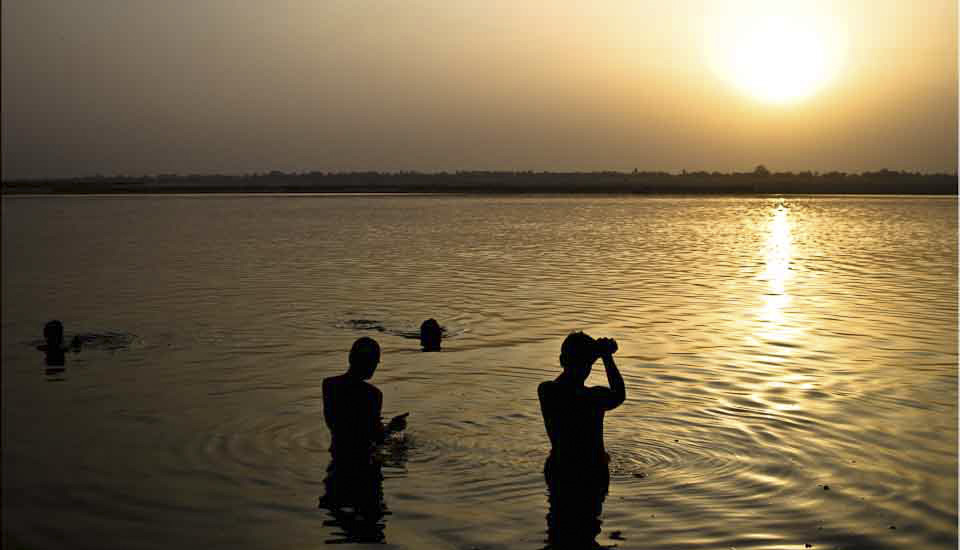
- Performing the Ganga Aarti from Dasaswamedh Ghat, Varanasi
- Buddha Head from Shwedagon Pagoda, Myanmar
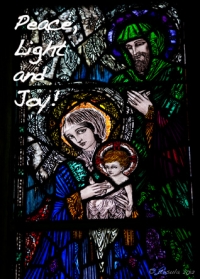
- Harry Clarke Window from Dingle, Ireland
- Novice Monk Shwe Yan Pyay Monastery, Myanmar
Packets of 10 for $AU50.
Or - pick any photo from my Flickr or Wanders blog photos.

.jpg)
.jpg)
.jpg)