Eyes and Earrings In the unforgiving light of an African morning, a young woman from the Arbore tribe in the Omo Valley allows me (for a price!) to take her picture. I think she is stunning, but neither the harsh light, nor the artificial nature of our interaction, can do justice to her commanding beauty.
Village visits in the Omo Valley in Ethiopia are like nothing I’ve experienced before!
The region is still tribal, and each ethnic group maintains its own customs. What all the tribes have in common is a “pay-per-shot” mentality, meaning that visiting tourists pay for each picture they take. While I see this as entirely fair – after all, why shouldn’t tribal groups trade on their distinctiveness – it does distort the concept of environmental portraiture.
Studio portraits are taken under controlled lighting and precisely edited to produce perfection. At the other extreme, street portraits are candid, and in many instances, taken without the knowledge of the subject. My preferred modus operandi is between these two points: informal people-shots made with permission, but without staging. In the Omo Valley, this was impossible: the pay-per-click mindset meant that photographic subjects were very much actors in their own shots.
And, that is as it should be! I couldn’t help but wonder, however, how much control or self-determination individual tribal members have over the rest of their lives.
These groups fascinate me: the Arbore number less than 7,000, divided across four villages along the Weito (Weyto or Woito) River. Their funeral and marriage ceremonies date back generations, as do their customs of dress, and practices of day-to-day living. Their traditional method of sorghum cultivation depends on seasonal rains and flooding, and they divide and allocate land collectively each season, giving priority to widows, orphans, and the poorest. Wealth is measured by the number of cattle owned by an individual, and this importance is reflected in the tribal name, “Land of the Bulls”: with Ar meaning “bull” and bore meaning “land”.
Unlike their fearsome and aggressive tribal neighbours, the Arbore engage in a wide regional network of exchange of gifts and goods, and get along with their neighbours. They are also protected by a legend that promises a curse if they are attacked!
I guess my questions about these groups are more political than cultural: outside their demand for 10 birr/photo, how much control over their lives do they really have, when ‘culture’ dictates their dress, their hairstyles, and their bodies. Until marriage, Arbore girls shave their heads as an indication of virginity and they are circumcised as a pre-requisite to marriage.
These questions were too big for my short visit! I was with photographer Ben McRae, as part of a small-group Piper Mackay Photo-Tour, and we were all doing our best to have a meaningful engagement – without the benefit of a common language – with these delightful people. I’ve shared some of the pictures I took previously (see: Portraits in an Arbore Village).
Please enjoy a few more:
Old Woman Once women are married, they keep their hair in tightly plaited corn-rows. Metal earrings are popular.
Woman with Animal Feed Everyone knows their place: daily jobs are divided according to age and gender.
Arbore Child While we are in the village, the children stick close to their elders. By the colourful beads and shaved head, I’m guessing this is a girl.
Mother and Child The children are curious about us – as long as mum is close by! The women keep a length of black cloth (bleached navy blue-looking by the sun) as a cover against the searing heat.
Three Generations Most of the men are probably out with the grazing animals.
Beads and Attitude Arbore women are known for their layers of beaded adornments.
Arresting Eyes
Man in a Head-Wrap The men commonly wrap a white cloth around their heads.
Young Man in a Choker They, too, love colourful beads and sport unique jewellery: this choker features a metal watch strap …
Young Man from the Back … and is neatly tied off at the back.
Man with his Stick The men spend a lot of time in the pastures with their animals, which is why they are usually seen with their sticks and their stools.
Milking the Goat Goats are central to the Arbore – and naturally, I had to pay extra to include this one in my photo!
Young Mother and Child
Young Woman
Old Man Livestock have a high economic and social value: with a crook and a stool, you are never too old to look after the precious cattle.
Mother and Kids All around the kraal, people are gathered in clumps hoping to get their turn in front of the camera’s lens.
Arbore Families The village, with its tall, elegant huts made from reeds and grass, is set against a beautiful backdrop of steep mountains.
Young Arbore Wife People marry young: judging by how long this young woman’s hair is, she has been married quite a while!
Arbore Elder Mother (or mother-in-law?) is on hand for advice.
Young Gniro I’ve shared pictures of eight-year old Gniro before (see: Portraits in an Arbore Village): I was fascinated by her calm self-possessed manner.
Young Man and the Goats My last image as we were leaving the village was of one of the young men with a small herd of goats.
There was a wonderful energy around this village, and the people were warm and welcoming. They consider themselves rich with all their cows and goats.
It is hard for me to imagine a way of life more ‘foreign’!
Another wonderful set of images, with equally delightful captions, and explanations. I always enjoy seeing your images and reading about your many adventures. Bravo again Ursula! I’m anxious to see what’s next.ReplyCancel
Shoppers in Main Street, Batticaloa Every November, the height of the retreating monsoon drops a rainy deluge on the East Coast of Sri Lanka – but everyday life goes on.
“There’s no such thing as bad weather, only unsuitable clothing.” ― Alfred Wainwright
After living in the tropics for many years, I should be used to rain.
But, this past week I’ve been trapped indoors as my portion of East Coast Australia has been battened down against heavy rainfall, gale-force winds, and the threat of severe thunderstorms. Some parts of the state had evacuation warnings. The good news was that the dump of water (temporarily) extinguished all the bush fires that had been burning for weeks.
I closed all my windows against driving, slanting rains, and double-checked the whereabouts of batteries and candles in case of power outages. Unable to hear the tv or radio for the noise of passing squalls, I wondered how people in the tropics cope with this sort of weather yearly – and often twice a year.
Somehow, tropical locals take it in their stride. They wear plastic flip-flops that don’t fall apart in puddles and light clothing that dries quickly once the downpours stop. Whether riding bicycles, walking, or driving motorcycles, they carry umbrellas that – magically – don’t seem to turn inside out. Even at the height of rainy season, vendors display products outdoors, dragging plastic awnings or sheeting quickly across shop fronts each time the skies open.
My last experience of monsoonal travel was on the East Coast of Sri Lanka – in a region so low that within 90 minutes of the beginning of the December 2004 tsunami, it was swamped by a wall of water up to 4.7 metres (15 ft) high. This coast has nothing between it and the north-east monsoon that occurs at the end of every year, bringing heavy rains from October through December.
Naturally, the “best time to visit” sits outside the seasonal monsoons, but my travel dates had been organised to conform with other commitments. How bad could it be?
My stay was in November, and – as you would expect from the forecast averages – it rained every day. Unfortunately, it was a particularly wet year, so it also rained most of the day the whole time I was there.
But, you can’t hide out in a room – even a comfortable room – forever.
After checking maps and the internet, I organised with a local tuk tuk driver to go to the area’s main attraction: the ‘famous’ Batticaloa Fort. “Views across the lagoon are magnificent,” enthused the Lonely Planet.
Of course, the Lonely Planet didn’t factor in the rain!
Traditional Boat on the Beach The rains are sporadic, and the weather is temperate-to-warm: … (iPhone6)
Pasikuda Beach … so there is no excuse not to walk along the empty beach in the mornings.(iPhone6)
Crows on the Beach The wild weather leaves a residue at the high tide mark, and crows explore this for treasures. (iPhone6)
Boat on the Beach (iPhone6)
Footprints on the Beach My tracks are the only ones I see. (iPhone6)
Selfie in a Tuk-Tuk The easiest way to escape a rain-locked resort is to hire a local auto rickshaw. Of course, I found it helpful to check the compendium in my room, and the internet, to explore sight-seeing options before negotiating with three-wheeler drivers – especially as their English can be patchy, and my Sinhala and Tamil are non-existent.
Temple Grounds At my tuk-tuk driver’s suggestion, we stop at one of the many Hindu temples in this predominantly Tamil region.
Hindu Temple As is the case with most Hindu architecture, the temples here have highly decorative exteriors, covered with layers of carved and painted images of deities.
Hindu Priest The temple interior is dark. A priest tends one of the shines …
Worshipper … while a worshipper make her ways around the colourful interior.
Flowers on the Step Offerings can be found everywhere.
Saris in the Rain Tucked back into my tuk tuk, at least I can stay mostly dry – ….
Schoolgirls in the Rain … unlike the poor people walking in the street.
Street Scenes The rain blurs my view as people on bicycles and motorcycles wrestle with umbrellas and raincoats in the road.
School Girls in White I can never get my whites that bright!
Hindu Temple We make a brief stop at another Tamil Hindu temple along the road. While my driver goes to make an offering, …
Beautiful Smiles … I chat with the young men outside.
Batticaloa Railway Station My driver was very keen to show me all around the railway station. It is listed as a ‘must-visit attraction’ on local websites, and while it was clean and tidy, I could find no information explaining what made it particularly noteworthy.
A Golden Book By contrast, the outline of the history of the nearby “Dutch Fort” (built by the Portuguese!) is inscribed in a golden book outside the Batticaloa Fort entrance. As a testament to the colonial history of this region, the original cannon in the background features a Dutch East India stamp.
Old Fort Wall Batticaloa Fort was built by the Portuguese in 1628 …
Fortress Corner … and the surrounding walls are impressive. The rain is still falling, and the fortress grounds are uneven and soggy with long grass.
Watch Turret Even though the fort sits on one of the many islets off Batticaloa, protected by the Batticaloa Lagoon on two sides and a canal on the other two sides, it was captured by the Dutch in 1638, only ten years after being built.
Cannon in the Rain and Mud From 1745, the fort was used by the British, and an English cannon still looks out towards the Indian Ocean. (iPhone6)
Ruined Bell Tower The remains of the original bell tower rise out of the wet and unruly grass.
Inside the Fort Parts of the fort are in reasonable condition …
Women in the Rain .. and currently house several government administrative offices.
Government Workers Employees in the administrative offices are not too busy to step outside into the rainy corridors for a chat, a smile, …
Floating Boats … and to race paper boats in the flooded gutters.
Man in Main Street The rain continues in Batticaloa …
Main Street … but the streets are busy with people going about their business.
Motorcycle in the Rain We start the journey back north. My cameras and I are getting very wet in the back seat of my tuk tuk – the roll-down plastic windows are no match for highway driving! Even so, I feel very fortunate compared with motorcycle riders trying to protect themselves with umbrellas.
Flooded Mangroves Mangroves, with their multiple aerial roots, are well adapted to regular flooding.
Riding in the Rain
The Colours of Poetry The rain and the plastic windows render the street scenes almost abstract, and a favourite line from an Al Stewart song comes to mind: “… in a silk dress running Like a watercolour in the rain …”
After being wet all day, I revelled in a nice hot shower.
And, I wondered again how the locals manage it, year after year –
[…] was also a delightful surprise. I expected (and got) colonial architecture and Hindu temples (see: Temples, Rains, and Ruins), but the number and variety of Buddhist sites in the country (eg: Dambulla Cave; Avukana Buddha; […]ReplyCancel
Jiwaka Province Tribal Dancer In the dense jungles of Papua New Guinea’s Western Highlands, tribal warriors are getting ready for a local sing sing. Tropical birds, cuscus paws, and shells feature heavily in the elaborate costumes.
There are always dilemmas around preserving age-old cultural traditions.
One of the difficulties in safeguarding the unique practices and languages of the many tribal groups in Papua News Guinea is that their ritual dress relies heavily on indigenous birds, plants, and animals.
In times past, the people living in small, relatively isolated clusters in the Papua New Guinea Highlands painted their faces in wild colours and created fantastic headdresses and outfits to intimidate their enemies during the regular deadly skirmishes with neighbouring tribes. Today, these traditional outfits are reserved for the gatherings of dancing and singing known as sing sings. Even so, looking at the wonderfully elaborate and colourful costumes, you’d be forgiven for wondering how any birds or animals on the island survive.
I was travelling with photographer Karl Grobl from Jim Cline Photo Toursand a small group of photography enthusiasts. We had arrived in Mount Hagen for the annual Cultural Show, and were attending the newer, smaller Paiya Village Mini Cultural Show as a bit of a “warm up”. Because the Paiya Village Show is small, and is only ticketed by prior arrangement, it allowed us much greater access to the tribal people who had travelled in – some of them, great distances – as they painstakingly created their extravagant costumes.
With the surfeit of colours, at first I didn’t realise that many of the complex feathered headdresses (bilas) I saw included whole birds. And, with the preponderance of shell necklaces, I didn’t even see the tiny, clawed feet of the slow-moving marsupial cuscus forming the top layer of beads! Hopefully, the rest of the animal was put to good use.
Given the threat that many species are under in Papua New Guinea – especially particular parrots and birds of paradise – it is fortunate that the feathers are so expensive. It takes feathers from multiple birds to craft just one of these headdresses, but rather than making new ones for each occasion, many people attempt to deconstruct the creations and to store the feathers until the next use. To assist in this, the Wildlife Conservation Society of Papua New Guinea has created Bilas Protection Kits which they are trying to distribute as broadly as possible. Other people are working on more sustainable ways of sourcing feathers, including the use of introduced species and dying chicken feathers.
Knowing this made me feel better about enjoying the wild and wonderful adornments sported by the people of the Western Highlands and Jiwaka Provinces as they got ready for their sing sing in Paiya Village.
Man in a Feathered Headdress We arrived in Paiya Village early: it was dark in the jungle, but already hot. The ‘ferocious’ intent of the costuming is belied by this elder’s twinkling smile and diminutive stature. Of course, because of my cultural background, I don’t feel threatened by someone whose bird wings create a profile resembling a gremlin, and whose red nose reminds me of a circus clown.
Woman in Red Feathers These people are so comfortable within themselves – and with the camera; I, on the other hand, am distressed by the betel damage to everyone’s teeth!
Long Feathers The headdresses (bilas) feature feathers that are extremelylong.
Woman in Red Feathers
Shake your Tail Feathers! Painstakingly crimped leaves make the tail-feathers of the costume.
Tribal Dancers – Jiwaka Province Wide belts of beaten bark are heavily adorned with more shells, and draped strings in front make a sort of apron.
Jiwaka Shell Necklace We are a long way from the sea, but shells are so central to Papua New Guinean culture that they were once the unit of barter. The name of the contemporary local currency, kina, is a coastal language name for the precious pearl shell that was once used for trade all across the country.
Birds of Paradise The more you look, the more birds you see! Some of the more favoured ones come only from specific regions of the country and are very expensive – which is a good incentive to care for the headdresses carefully.
A Milliner’s Dream Each confection is more wonderful than the last!
Tribal Warrior Fur, feathers, and felt: tribal costumes incorporate the lot!
Headdress (Bila) Extraordinaire! In recent years, headdresses have have been incorporated into more modern practices and meanings, and utilise some non-traditional materials.
Jiwaka Woman You have to be very careful with your posture and movements when wearing your bila.
Preparation In a another area, a different tribal group are getting ready.
Making his Costume Affixing the leaves and feathers is a painstaking process …
Man in a Mirror … and the men are very focussed on their task.
Western Highland Warrior The head coverings that form the base of these headdresses are stitched in the same way as the ubiquitous bilum bags, using something that looks like a tatting hook.
Young Woman in Beads and Shells
Heading into the Corral The dancers we have been watching are ready to head into the main fair grounds and meet up with friends from other tribes and villages.
Old Uncle One of the elders from the village we are in makes his way through the jungle …
The Garden Path … and we head off in search of more dancers.
I hope these tribal groups can preserve their culture – and safeguard their flora and fauna at the same time.
[…] performances. I have previously shared pictures of people from Jiwaka Province (see: Feathers Fur and Facepaint) and from Engan Province (see Big Hats and Small Drums) as they got ready for the […]ReplyCancel
We are a non-for-profit group based in Australia made up of Jiwaka and Hagen women.
We unknowingly used one of your photographs of the Jiwaka women for our event poster. If you require payment, please advise how we can do so and how much? You have captured beautiful pictures of our women.
Thank you Ursula for capturing very beautiful photos of our traditional culture and customs. Happy to see my papa Philip Jika Komni and Philip Gurnga in Geru Peng head dress attire. I’m saving them but if you’ve got any high resolution photos, please do send them. I want to keep them in my personal archive as memories for my kids who will remember their grandfather’s.ReplyCancel
Lake Lugano from Monte Brè Even on a rainy day, the views over Lake Lugano, in Switzerland’s Italian-speaking Ticino region, are well worth the short ride up the funicular railway to the top of Monte Brè.
“Funiculì, Funiculà!”
I find it impossible not to sing the popular Neapolitan tune – at least in my head – whenever I ride a funicular railway. The song was composed in 1880 to commemorate the then-new funicular track up Mount Vesuvius.
Cable railway systems, designed for steep slopes, have been in use since the 1820s and funicular systems – where two railway cars counterbalance each other – emerged in second half of the 19th century. The one we were riding on this particular day: in Lugano, Switzerland, to the peak of Monte Brè (933 m), had been in use since 1908.
The city of Lugano, the cultural and economic hub of Tessin, Switzerland’s Italian-speaking and southernmost canton, sits on the northern shore of glacial Lake Lugano, and at the feet of Monte San Salvatore and Monte Brè.
The city, which borders on Italy, is also the Swiss re-entry point for passengers riding the wonderful Bernina Express rail line that culminates in Tirano. My husband and I had enjoyed several days on the Bernina circuit, travelling with Swiss friends (See: Railway Dreaming; Spirals from Poschiavo; Switzerland for Lunch; and The Crossroads of the Passes). We had arrived in Lugano on the red Bernina Express Bus from Tirano the night before, giving us the day to explore .
We could have stayed longer!
Trenino Turistico Lugano’s little tourist train gave us a practical way of seeing a bit of Lugano and getting to the bottom of the Monte Brè funicular.
Houses on the Hill Ticino is the only canton in Switzerland where Italian is the sole official language.
Monte Brè Funicular The cars on the funicular up Monte Brè are modern and colourful; …
Going Up! … the system itself, however, was commissioned in 1905, and opened fully in 1912.
People in the Carriage The funicular carriages have windows on all sides, allowing passengers plenty of light and a good view out.
Two-Track Funicular System Funiculars use two counterbalanced track-guided rail cars attached to opposite ends of a cable. In this instance, the cars travel up and down a single track with a passing section …
Oncoming Carriage … that is just wide enough to let the trains pass safely.
Looking Down Passengers watch the lake below as it recedes into the distance.
Ristorante Vetta This old restaurant on Monte Brè affords views …
Overlooking Lugano … over Monte San Salvatore, the lake, and the city.
Going Down! After lunch and a walk, we get back on the funicular to ride back down, under roadways, …
Funicular Tunnel … and through tunnels.
Down, Down, Down! We watch as the lake and the city get closer …
Train in the Passing Lane … and as the oncoming carriage rises to meet us.
Almost Abstract: Faces on the Tourist Train Once back at the bottom of the mountain, we re-board the tourist train and complete the city circuit.
Lake Lugano Foreshore In the city centre, we walk along the lake …
Lake Lugano … enjoying gelato, views, …
Carlo Battaglini (1812 – 1888) Mayor of Lugano … and some of the very modern sculptures in the Parco Civico.
The Belvedere Sculpture Garden
La Catena – The Chain Swiss painter, sculptor, and graphic designer Piero Travaglini was a proponent of Swiss Pop Art.
Classic Buildings In other parts of the city, the more classic styles prevail.
Luxury Stores Not far away, on Via Nassa, international name brands …
Bucherer Swiss Luxury Watches … vie with Swiss precision, …
Bicycle outside Tabacchi Two Lions … and healthy bicycles contrast with tobacco products.
Outdoor Fruit Stand I love the prevalence of colourful, fresh fruit in Europe!
Cattedrale di San Lorenzo One of our last city sights, as we climbed the hill to the railway station, was a glimpse of Lugano’s Roman Catholic Cathedral, rebuilt in the late 15th century. (iPhone5)
All too soon, we had to retrieve our bags and make our way up to the train station, leaving the city behind. We had an afternoon train to catch, and it would take us back to our starting point of Rapperswil-Jona, on Lake Zurich on the other side of the country.
Fortunately, it is a small country, so we were not too late getting home! But it is certainly rich in varied natural, architectural, and cultural sights.
Storied Walls The Litany of Ra is among the Ancient Egyptian funerary texts of the New Kingdom written on the inside of the tomb of Rameses IV. Can you imagine what it must have been like when they discovered the Rosetta Stone in 1799 and were finally able to decipher the copious notes inscribed on the walls and ceilings of this magnificent structure?
Time lost all meaning for me in Egypt.
The 63 tombs in the Valley of the Kings might indeed be over a thousand years younger than the magnificent Pyramids of the Old Kingdoms at Giza (see: Stories in Ancient Stone), but even the graffiti defacing them is older than the buildings I grew up around!
The Theban rulers of the Eighteenth Dynasty – spanning the period from 1549/1550 to 1292 BC – mark the start of the New Kingdom of Egypt, an era in which Ancient Egypt arrived at the peak of its power.
The Valley of the Kings was used for royal and noble burials from approximately 1539 BC to 1075 BC, and contains the tombs of pharaohs, preeminent nobles, and the wives and children of both nobles and pharaohs.
Today, to help protect the tombs from the impact of hot, sweaty bodies, the more important ones are open on a rotation system.
The first tomb I visited was the tomb of Ramesses (Rameses or Ramses) IV, the third pharaoh of the Twentieth Dynasty of the New Kingdom of Ancient Egypt. This relatively simple tomb was intended to be much larger, but was cut short when he died (1145 or 1149 BC) about six and a half years into his reign.
The chamber has been open since antiquity, and is believed to have been used as a dwelling by Coptic monks. European visitors described it in the early 1700s, and many 18th- and 19th-century visitors even used it as a hotel. As a consequences, the tomb is noted for having “the second-highest number of ancient graffiti within it”: it contains markings left by Ancient Greek and Roman visitors, depictions of Coptic saints and crosses, and more modern signatures.
Of course, the tombs were (with the exception of that of Tut Ankh Amun) looted by ancient grave robbers. I am not alone, however, in thinking that thereal treasure is on the walls.
What was extraordinary to me was the vibrancy of the colours and the integrity of the bas-relief of the remaining hieroglyphics and paintings. The quality of the ancient workmanship is just stunning!
Over 3000 years ago, plasterers smoothed the quarried walls with muna, a plaster made from clay, quartz, limestone and crushed straw. This was then coated with thin layers of clay and limestone and whitened with a layer of diluted gypsum. Draftsman then sketched out the designs, as decided by the high priests and the pharaoh. Once any corrections were noted, sculptors would carve the bas-relief, which was then painted in the six basic colours (each with symbolic ritual meaning) made from mineral compounds. A layer of varnish or resin was then applied as a protective coating, and this, along with Egypt’s dry climate has helped protected the paintings.
Join me in the Tomb of Ramses IV!
Porter Half the fun of exploration is getting there. We travelled to Luxor on the ‘luxury’ overnight train from Cairo, complete with porters, microwave meals, and tiny sleeping compartments.
View from the Bus From the Luxor train station, it was about a one-hour bus trip across and along the Nile to the Valley of the Kings.
The Colossi of Memnon Our first stop was west of Luxor, where twin colossi depicting Pharaoh Amenhotep III, who ruled (1386-1353 BC) during the 18th Dynasty, flank the entrance to what was once his mortuary temple.
Colossus of Memnon Following an earthquake in 27 BC, one of the colossus started to ‘sing’ at dawn. Greco-Roman tourists renamed the statue Memnon for the eerie wail it made – which reminded them of the mortal son of Eos crying to his mother every morning.
Balloon over Luxor Meanwhile, more modern tourists have the opportunity to ride high over the valley.
Howard Carter House British archaeologist and Egyptologist Howard Carter (1874-1939) became world-famous after discovering the intact tomb of Tut Ankh Amun. He became a popular public speaker, but died without receiving any British honours for his works.
Relief Map The visitor centre to the Valley of the Kings contains an impressive large relief model of the layout of the tombs.
Shuttle into the Valley The valley is extensive, with an inhospitable climate – blistering hot days and freezing cold evenings – that made it unsuitable for people to live and thrive.
Shuttle Driver The shuttles are a welcome help to ferry tourists towards the tomb entries.
Walid and the Postcards Our guide (who can’t enter the tombs with us) uses postcards to explain the illustrations inside K2.
Hieroglyphics and Graffiti Ancient funerary texts and netherworld books: the Litany of Ra, the Book of Caverns, the Book of the Dead, the Book of Amduat, and the Book of the Heavens, line the walls of the tomb.
Painted Corners The bits of plaster that have been rubbed off over time only highlight how well most of the work has lasted.
Colours and Textures The colours – after all this time – are eye-poppingly bright.
Into the Afterlife The texts inside the tomb helped the deceased find his way.
Illustrations
More Hieroglyphics – More Graffiti
Corridor into the Tomb A rail at the end of the corridor keeps us out of the burial chamber of Ramesses IV. There are faded stars overhead.
Birds On my way out, I paused to admire more hieroglyphs – and more graffiti.
Exit – Entry Back outside, even at eight in the morning, the heat and brightness are overwhelming …
Alone with his Phone … and we are plunged back in the 21st century.
From 1149 BC to AD 2019 in the blink of an eye! As I said, Egypt renders the passage of time and the depth of history unfathomable.
I just hope Rameses got where he was meant to be going …
[…] We know all this because the texts describing the processes of mummification, the magic spells to protect the ‘deceased’ on their journey, and the rituals and protocols required of them and the living mourners, were all painstakingly rendered on the walls of the tombs of the most affluent and most revered of the Ancient Egyptians: the Pharaohs (see: The Writing on the Walls). […]ReplyCancel
[…] FactoryAfter a hot morning in the tombs of the Valley of the Kings (see: The Writing on the Walls and Take me to the Afterlife), a stop in an air-conditioned alabaster factory was a welcome […]ReplyCancel
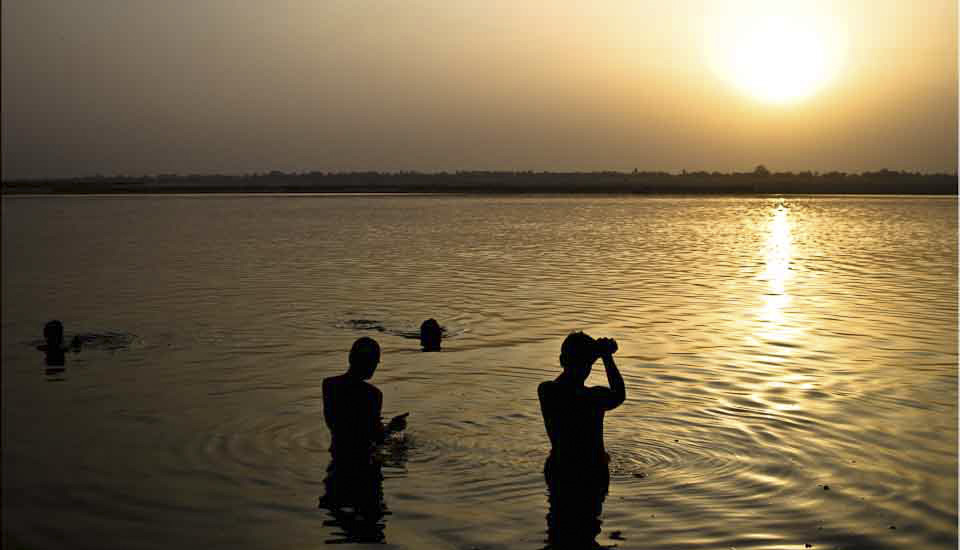
- Performing the Ganga Aarti from Dasaswamedh Ghat, Varanasi
- Buddha Head from Shwedagon Pagoda, Myanmar
- Harry Clarke Window from Dingle, Ireland
- Novice Monk Shwe Yan Pyay Monastery, Myanmar
Packets of 10 for $AU50.
Or - pick any photo from my Flickr or Wanders blog photos.

.jpg)
.jpg)
.jpg)

 It is hard for me to imagine a way of life more ‘foreign’!




 And, I wondered again how the locals manage it, year after year –


 I hope these tribal groups can preserve their culture – and safeguard their flora and fauna at the same time.


 I just hope Rameses got where he was meant to be going …



Another wonderful set of images, with equally delightful captions, and explanations. I always enjoy seeing your images and reading about your many adventures. Bravo again Ursula! I’m anxious to see what’s next.
Thank you so much, Karl!
It is always a joy to share adventures … I’m thinking we’ll cross paths one rainy season … Maybe next year. 😀