Red Rocks and Emerald Waters These are the colours of the Far South Coast of New South Wales, Australia – or at least they are when there are not fires raging across the land, filling the skies with smoke.
Once upon a time, our waters were sapphire blue, emerald green, and foaming diamond white. Once upon a time, our sands were pristine shades of white and yellow. Once upon a time, we could walk among the she-oaks, the wattle, the Banksia, and the eucalypts.
Once upon a time … before our spectacular conflagrations razed communities, turned the air brown and the sun red, and coated our beaches in ash … before we made international headlines with the apocalyptic destruction of swathes of bushland by firestorms which chewed up animal habitats and pushed species to the brink of extinction.
We will be a long time counting costs and trying to recover.
To take a break from the smoke-filled skies and to cheer myself up, I’m visiting photos I’ve taken in the past: on two walks in the Bournda National Park. This 2,655-hectare (6,560-acre) reserve boasts a magnificent coastline and three bodies of water: a fresh lake, a salt lake, and a brackish lagoon. It is just a short drive north of me, but I’ve only ever visited when my walking-group organises something along sections of the tracks (e.g.: Kangarutha Track).
So far this year, this particular park has been spared direct bush-fire damage, but like others in the region, it is currently closed to all visitors because of the risks.
But, once upon a time, we walked there, and enjoyed it immensely.
Checking the Map I love the NPA bushwalking program! It allows me to be rather lazy: someone else has done the planning and is carrying safety- and first-aide equipment. (iPhone5)
Guinea Flower – Hibbertia Obtusifolia Walking with a group can be slow, but it allows stops to appreciate small sightings along the track.
Guinea Flower – Hibbertia Obtusifolia There is a wealth of knowledge and interests within the group of walkers: sometimes people even know the names of things!
White Sands The white sands and rocks here are so beautiful that they were once quarried nearby.
White Sands – Green Trees The pale sands provide an attractive foil for the trees that cling to the windy cliff top.
Waves in the Inlet The waters here have worked their way into gaps and crevices, carving inlets into the cliffs.
Lunch on White Rock White Rock is the half-way mark if you are walking the whole Kangarutha Track – as we did on a different visit to the park (see: Kangarutha Track). On this occasion, however, we were walking out-and-back to one of the several access spots, making White Rock our end-point.
On the Rocks There are great views from White Rock: including whales off shore, raptors overhead, and roiling waters below.
Almost Abstract: Grass atop White Rock
Grass in the Crevices Colours and patterns are all around as hardy grasses cling to inhospitable grounds.
Burned Out Car This is the land that fire built: natural and man-made fire; even in a good season, there are reminders everywhere.
Trail Sign Much of the Kangarutha Track is steep, uneven, and close to cliffs – giving it a difficulty rating of 3-4. The access points, however, are graded fire trails which are a pleasure to stroll (Phone5).
Looking towards Bournda Island The Sandy Creek Loop Track further south in the park takes in a completely different environment!
Photographer Overlooking Sandy Creek Mangroves make for tidal filters between the Pacific Ocean, Bournda Lagoon, and Sandy Creek.
Walking through the Tea-Trees Apparently, Bournda means ‘place of tea tree and kangaroos’: we spent much of our walk lacing in and out of Myrtaceae – commonly known as paperbarks, honey-myrtles, or tea-trees.
Sandy Creek Following the six kilometre loop up and down over rough terrain, we are regularly rewarded with views of Sandy Creek.
Almost Abstract : Sandy Creek The crystal clear waters of the creek are like an impressionist painting.
Sandy Creek
Pacific through the Trees Looping around Bournda Lagoon, we once again get views over the Pacific, …
Sapphire Waters … and over the beautiful curve of beach stretching back to the little town of Pambula.
Surfer on the Beach
Red Rocks Iron oxide contributes to our wonderful red rocks; the brilliant blue waters give the Sapphire Coast its name.
Beach Walk The last stretch of the walk takes us across the beach, straight into the early afternoon sun, and back to our cars.
Looking at the pictures of these walks makes me realise how much cabin-fever I am feeling. I haven’t seen the sun without its red smoke-filter in weeks, and the ebb and flow of ash and smoke in the air has made exercise difficult.
I can only hope that the powers-that-be will take better care of our landscape once these fires finally loosen their grip.
I can’t wait to get our parks back!
Happy Walking.
Photos: Kangarutha Track 21September2014; Sandy Creek Loop Track 16September2018
Buddha in a Niche There is something calming about a Buddha image – even when one is surrounded by earthquake ruins and at risk of being caught in a deluge!
Swayambhunath, also known as the Monkey Temple, is one of the most sacred religious sites in Kathmandu and is one of the seven monuments that contribute cultural heritage to the UNESCO-listed Kathmandu Valley.
This stupa is among the oldest religious sites in Nepal, dating back to about the beginning of the 5th century CE. For Buddhist Newars, it is the most sacred religious site in Kathmandu, but it is revered and regarded as a pilgrimage destination by Hindus and other Buddhists alike.
Although the Swayambunath complex suffered some damage in the April 2015 Nepal Earthquake, with outlying buildings crumbling, the eyes of the Buddha painted on the gilded spire atop the giant white stupa kept its watch – without harm – over the valley.
The last time I was there – under the tutelage of travel photographer Gavin Gough and photojournalist Jack Kurtz – it rained: even the monkeys had run for cover! The ancient, rambling grounds were wet and slippery; the scenery was punctuated by colourful raincoats and umbrellas; the sky alternated dark clouds with luminous pockets of light; and the city below was wrapped in a rainbow.
Join me at one of Nepal’s most important temples.
Buddha in the Pond A bronze Bodhisattva- or Buddha-statue in the centre of the World Peace Pond welcomes us to Swayambhu Temple.
Prayer Flags and a Bell In Hinduism and Buddhism, devotees ring bells at the entries of temples to inform the deity of their arrival. The sound of the bell is also said to help focus one’s mind in readiness for prayer or reflection.
Bell and Stupa The ground is wet and the sky is full of prayer flags and rain.
Green Buddha in an Alcove Every niche contains an icon, …
Stupa and Flags … and everywhere, there are eyes watching!
Flags at the Top of the Stairs The stairs to the upper level are swathed in prayer flags.
“Work in Progress” Although Swayambhunath suffered less damage in the April 2015 earthquake than many other sites, there are still repairs to be made.
Woman Selling Candles But, devotion and work continue among the rubble.
Gold Buddha in Red
Prayer Wheels Traditionally, Buddhist prayer wheels are spun clockwise to symbolise the “turning the wheel of Dharma” and to release the mantra Om Mani Padme Hum, which is written in Newari (Nepali) script on the outside of the cylinder.
Shiny Shrines The rain washes the surfaces clean …
Central Stupa … and the spire of the stupa rises into the clouds.
Shrines A variety of shrines and temples dot the upper layer …
Bodhisattva amid the Sales … and Buddhas, Bodisattvas, and souvenir sellers are tucked into every space.
Candles in a Shrine
Ornate Surfaces Every surface is carved and decorated.
Golden Buddha behind a Screen I love the textures and patterns all around the grounds.
Rainbow over Kathmandu Swayambhunath sits atop a hill in the Kathmandu Valley, affording views back over the sprawling city.
Marigolds and Wrought Iron Buddhism is heavily influenced by Indian Hinduism and it is common to see marigolds at temples. Of course, these “Mary’s Gold” flowers also feature in early Christianity.
Dome of the Stupa The large white dome of the stupa represents the entire world, …
Prayer Wheels …and Hindu and Buddhist faithful spin the prayer wheels as they perform their clockwise circumambulations of the stupa.
Golden Top of the Stupa The eyes of Buddha, looking in all four directions, represent wisdom and compassion.
These images calm me, as I wait for a new conflagration half way across the world. If the Nepali can worship so serenely in the aftermath of deadly earthquake, surely I can hold firm in the face of Antipodean fires!
Oṃ maṇi padme hūṃ …
In Nepal, like other Tibetan Buddhist countries, this is the most ubiquitous mantra and an ever-present feature of the landscape. I found myself repeating it while I was there – and I felt better.
Arbore Woman in her Doorway With her shaved head and layers of beads, this young Arbore woman was an arresting sight as she peered out from her family hut.
Another year has rolled around…
I normally head for the fresh air of the Alpine slopes this time of year, but we spent this New Year’s Eve at home blanketed in smoke, with out-of-control fires raging on three sides. The roads to the mountains were unsafe, and there is no fresh air to be had there either as fires blaze through bushland, taking animal habitats and historic villages with them.
It has been a trying time here in Eastern Australia, with loss of life and inordinate loss of property. My country is in the midst of a firestorm and people are in shock.
But, we are still lucky.
The volunteer fire-fighters have worked around the clock – some for months now – to mitigate the damage. Communities are pulling together to shelter and comfort those who have lost everything, and local businesses are delivering hot food to evacuees camped out in safer areas. Spirits remain strong.
And, we are lucky that – whether through insurance, government support, or the generosity of neighbours and strangers alike – families and communities will rebuild.
This makes me reflect on communities I’ve visited where people have (and are mostly happy with) so much less!
A couple of years ago, I spent a morning in an Arbore village in the Omo Valley. The people there – part of the Cushitic peoples and language group – seemed happy and wise; kind and welcoming. Of course, this hard to say for certain with no common language! In direct contrast to many of the other ethnic groups in the region who have fearsome and aggressive reputations, the Arbore are considered a peaceful and cooperative people.
What I can say from observation is that outside of a few cooking pots, the odd shawl, skirt, and blanket, and copious beads and bangles, these people have almost nothing in the way of personal possessions. They value their cattle, sheep, and goats and live on these and modest agriculture.
Come explore:
Arbore Village The grass-and-stick houses and compounds might be simple, but they are brushed clean and tidy.
Animal Pen Livestock is critical to a good livelihood, and is kept protected in a thorn-bush corral.
Animal Pen It is seven in the morning, and the surrounds are soon lit in a warm glow.
Old Arbore Woman Once women are married, they stop shaving their heads: their customary hairstyle consists of tightly woven braids.
Arbore Women The temperature has not yet started to climb, and the women are wrapped against the morning chill.
Arbore Man The men sport colourful beads and closely-cropped hair.
Young Arbore Shepherd Men commonly wrap a white cloth around their heads. This young shepherd was delightfully engaging; one can only wonder what he would do with his life if his horizons were broader!
Arbore Family There is a feeling of space here, with the mountains stretching into the distance. Traditionally, Arbore have practiced slash and burn agriculture – moving to new lands as needed.
Man with his Headrest Most men carry a wooden headrest which doubles as a stool.
Man with a Stick These people have an unselfconscious grace about them; …
Arbore Man … they seem so comfortable in front of the camera!
Old Man What stories lie behind these weathered faces?
Mother and Child It’s a simple life – but not an easy one.
Arbore Woman
Wise Woman So much time and wisdom in these old faces.
“Bloom Where You are Planted” Like the rest of her village, eight year old Gniro seemed perfectly at home, living a life I can barely imagine.
Young Gniro was the perfect dilemma: a girl who has almost nothing in the way of possessions but who seems happy, and who seems bright enough to master any environment, but who was limited to the one she was raised in. Of course, if she was initiated into our world, she might no longer fit into hers, and she would learn to value ‘things’.
Looking at her face is a useful reminder to me, as I face the possible loss of my ‘things’ in the approaching firestorm.
[…] These questions were too big for my short visit! I was with photographer Ben McRae, as part of a small-group Piper Mackay Photo-Tour, and we were all doing our best to have a meaningful engagement – without the benefit of a common language – with these delightful people. I’ve shared some of the pictures I took previously (see: Portraits in an Arbore Village). […]ReplyCancel
[…] Portraits; and Morning Portraits), Daasanach (see: A Visit to the Daasanach) and Arbore (e.g.: Portraits in an Arbore Village; and Arbore Village Portraits) […]ReplyCancel
“Ferry Cross the Mersey” The buildings of Pier Head retreat into the distance as we cross the Mersey with the flag flying and Gerry & The Pacemakers ringing in our ears: this is Liverpool.
Liverpool: hometown of The Beatles and so many other popular musicians that the city boasts more No. 1 hit singles than any other in the world; home to the top-tier English football club that is so renowned that I have seen their red-and-white t-shirts in some of the most remote corners of the globe; site of the second highest number of listed buildings in the United Kingdom, including the elegant ‘Three Graces’: the Royal Liver Building, the Cunard Building and the Port of Liverpool Building on Pier Head…
… and, my birthplace.
I left when I was very young, but it is always a joy to return, and to explore a little of what this multi-layered city has to offer.
The last time I visited, I had my husband and my son with me – and it was with some pride I spent a day walking around some of the more iconic sites.
Come share them with us!
Billy Fury on Albert Dock Billy Fury, Liverpool-born singer and actor from the late 1950s to the mid 1960s, and songwriter into the 1980s, was England’s answer to Elvis. He equalled The Beatles’ record of 24 hits in the 1960s, but died young as a consequence of rheumatic fever contracted in childhood.
Edmund Gardner Pilot Ship Sitting where the River Mersey meets the Irish Sea, Liverpool has a long and proud history as a sea port. After almost 30 years service as a pilot cutter, the cheerfully painted Edmund Gardner has retired to dry dock opposite the Maritime Museum.
Waiting: The Monument to the Liverpool Working Horse This wonderful sculpture by British sculptor Judy Boyt is a fitting tribute to the 250 years that horses were used to move goods to and from Liverpool docks and businesses.
Superlambanana Liverpudlians have a quirky sense of humour! The original four-inch Superlambanana, designed by New York City-based Japanese artist Taro Chiezo, was intended to be a cross between a banana and a lamb: a warning against genetic engineering and a nod to two of the common goods that moved through the docks. Today, multiple large, colourfully painted, replicas are scattered around the city.
Pier Head It is said that the ‘Three Graces’ on the Pier Head dock survived the war because they were so identifiable and were used by German bombers as a reference point. Here, the Port of Liverpool Building is in the foreground, with the Cunard Building and the Royal Liver Building tucked behind.
Western Approaches Headquarters Liverpool played a huge part in the Second World War and was the most heavily bombed British city outside of London. We payed a visit to the secret underground WWII bunker on Rumford Street, instrumental in managing the Battle of the Atlantic.
Ceramic Fuses
The Map Room Location accuracy in reporting enemy movements to the RAF was essential. In these pre-computer days, the personal of the Women’s Royal Naval Service and Women’s Auxiliary Air Force worked on a giant map to relay German U-Boat positions.
Bunk House
Secret Hotline The red phone had its own cone of silence.
Bicycle It’s the little touches that bring museums to life.
The Human Faces No one is sure how many children were evacuated from Liverpool – public records are incomplete, and many evacuations were privately organised. My father was among them: sent to the countryside to a family he didn’t know. He hated every minute! He much preferred running through the bombed-out Liverpool streets, looking for bits of shrapnel, like the child in the 1987 film Hope and Glory.
Rooftops
Liverpool Metropolitan Cathedral Liverpool has a strongly Irish heritage, and is home to proportionally three-times as many Catholics as England overall. The Metropolitan Cathedral of Christ the King is the seat of the Archbishop of Liverpool and the mother church of the Roman Catholic Archdiocese of Liverpool.
Liverpool Metropolitan Cathedral Affectionately knows as Paddy’s Wigwam because of its circular shape, the cathedral was designed by British architect Sir Frederick Gibberd (1908–84). No photos are allowed in the contemporary interior, which features magnificent modern stained glass in yellow, blue, and red to represent the Trinity.
Church of St Luke Another casualty of WWII is the bombed-out Anglican parish Church of St Luke, originally built between 1811 and 1832.
The Blackie and Chinatown Gate The Neoclassical Great George Street Congregational Church – ‘The Blackie’ – was opened in in 1841 and now operates as a community arts centre.
The Great Escape Liverpool was a major port supporting ships suppling the American slave trade. In this sculpture by English sculptor Edward Cronshaw, the horse, which is constructed of spaghetti-like rope, is unraveling in its quest for freedom.
The Port of Liverpool King Edward VII, a sculpture by Welsh sculptor Sir William Goscombe John, (1860-1952) sits in front of the Edwardian-Baroque style Port of Liverpool Building, which opened in 1907.
Mersey Ferry As a tourist in Liverpool, you have to take a ferry across the Mersey! It was late enough in the day that many of the passengers were workers going home.
The Royal Liver Building
Passengers Many passengers on the ferry were like us: just on for the return ride.
Flag over Liverpool The 50 minute ride is a great way to appreciate the foreshore. The 1964 song ‘Ferry Cross the Mersey’ plays on endless loop inside the cabin.
Footsore and hungry, we left the river behind with the 1964 Gerry and the Pacemakers song ringing in our ears.
What a wonderful way to explore my family heritage.
[…] So, we are back in England at the moment: for the marriage of my Australian daughter to her British man. And, I couldn’t resist visiting Liverpool again: with my husband and adult son, to show them some of my roots (see: The Mersey). […]ReplyCancel
A Desert Rose The desert gives rise to people who are tough and resourceful. This beautiful Al Wahiba girl is part of a large family of semi-nomadic Bedu living in the Sharqiya Sands Desert.
The desert is a magically beautiful place.
It is also unforgiving. You have to be tough to forge a life in these hostile, barren expanses where almost no precipitation falls.
Bedouin or “desert people” – from the Arabicbadawī – have made the deserts of North Africa and the Middle East their home for thousands of years. Even today, many still follow a traditional nomadic lifestyle, roaming their tribal territories with their herds of camels and goats.
As early as 6000 B.C., agricultural and pastoral people were living along the southern edge of the arid Syrian steppes. They acquired domesticated camels around 1,100 B.C. By about 850 B.C., they had established a network of oasis settlements and pastoralist camps, and were known as the A’raab. The Bedouin are the nomadic desert descendants of these people, and are considered by many to be “ideal” Arabs – in contrast with their ḥāḍir, or sedentary, city-dwelling cousins.
There are a number of Bedouin tribes, many tracing back to a single paternal ancestor. In Oman, the numerous Al Wahiba tribe are the predominant residents, making their home across the Sharqiya Sands desert.
This desert stretches about 200 kilometres (125 miles) north to south and 80 kilometres east to west, running between Oman’sEastern Hajar Mountains and the Arabian Sea. There are no paved roads, and the only permanent camps are those resorts that have been build for tourists. The roughly 3,000 Bedouin who live here follow a traditional nomadic lifestyle, building temporary camps among the shifting dunes.
Lunch with a Bedouin family was a highlight of my Omani itinerary. The trick, of course, when setting a date with nomadic people, is finding them! It took my guide (with NTT Tours) a number of phone calls to establish when and where we would be welcome. On Fridays, these tribal families gather in larger groups to share news and deal with problems or organisational issues – so we re-arranged our schedule, allowing a camp visit on a Thursday instead.
Once there, we were warmly welcomed, and the food was wonderful! Come meet the family:
Dawn on the Sharqiya Sands The desert is a sensually seductive place, with the sands ebbing and flowing over the dunes into the distance (see: Sand Songs and Desert Dreams). But, don’t be fooled! Once that sun rises over the horizon, the temperatures will skyrocket – with no water in sight!
Bedouin Settlement Barely visible tracks criss-cross a desert punctuated with both portable and semi-fixed Bedouin settlements. We catch sight of several from the car …
Camels in the Desert … before parking next to the camels belonging to our lunch hosts.
Bedouin Siblings This family has six children. They were initially timid, hiding behind their mother’s heavy black robes. Fortunately, I had an Instax mini-camera with me.
Bedouin Boy Once I took one child’s picture, they all wanted a turn – and when I ran out of Instax film, I was able to get some individual portraits.
Bedouin Woman Even mum got in on the fun, agreeing to have her photo taken properly once she too had her instant photo in hand. Before I made any photos, she put on her traditional Omanibattoulah: a special mask which she said protected her from the sand.
Young Bedouin Child Once they got over their shyness, the children were full of life and curiosity.
Bedouin Girl These children have beauty, strength, and intelligence.
Whale Bone The desert and the ocean are linked by metaphor: “ships of the desert’ and “seas of sand”. It’s more than that, though: the dunes of the Sharqiya Sands Desert stretch to the Arabian Sea. Like abstract sculptures, giant segments of whale bone decorate this family homestead.
Child in a Net
Camel at the Camp The Bedouin call camels a “gift from God”, and they serve a number of cultural and functional uses.
Grass in the Sand The vegetation is sparse – how the animals find anything to eat amazes me.
Life in the Sands As unappetising as they look, Vachellia tortilis (Acacia tortilis) – or “Umbrella thorn” trees – are essential to Omani desert dwellers. The wood is used for furniture, cart wheels, and even charcoal. Their leaves are important fodder and their deep roots help fix the drifting sands. They are homes to all manner of animals and insects, and provide some shade from the sun and protection from the winds.
Camels at the Camp Tourist accommodation in the desert is much more substantial than the portable Bedouin camps. Here at the 1000 Nights Sharqiya Sands Camp, located in the heart of the desert, camels wait for customers.
Arabian Oryx In spite of the harshness of the desert, a number of animal species have adapted themselves to the conditions. Unfortunately, the Arabian oryx (Oryx leucoryx) couldn’t survive human predation, and the last wild one was poached in 1972. This small domestic herd was in a compound at our resort.
Arabian Oryx – (Oryx leucoryx) The national animal of Oman (and other countries on the Arabian Peninsula), this beautiful animal is gradually being reintroduced into the wild.
Arabian Gazelles Another pen houses dainty Arabian gazelles (Gazella arabica). Appreciated for their grace and associated with female beauty in Arabic literature, these animals are also rated as extinct in the wild.
Camels at the Ready The camels, on the other hand, are ubiquitous; you’d be forgiven for thinking the country has plenty. However, when people found out I was from Australia, one of the first thing they’d say was: “Send us some camels!” In Australia, the 1,000,000+ feral camels – originally introduced into the country in the 1840’s to help with inland exploration – are a pest, here in the sands of the Arabian Peninsula, you can never have too many!
And that’s how it is, isn’t it? One man’s riches is another man’s pest!
I always reflect on these differences in values more when I meet the bright and engaging children in these remote places; youngsters who are perfectly suited to their environments, but who may have limited understand of, and access to, other options.
I can’t help but wonder how they will bridge that gap between their traditional lifestyle and the changing modern world – and I hope they manage it well.
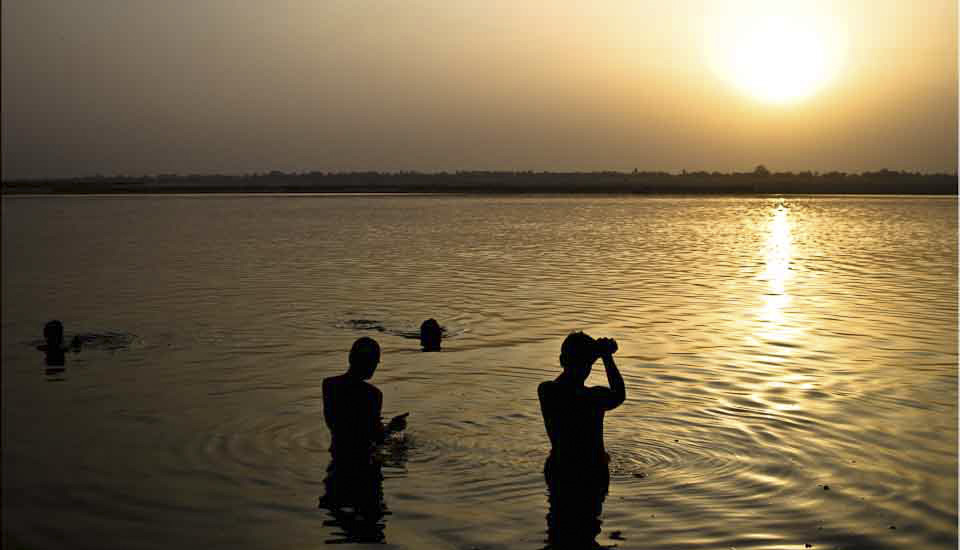
- Performing the Ganga Aarti from Dasaswamedh Ghat, Varanasi
- Buddha Head from Shwedagon Pagoda, Myanmar
- Harry Clarke Window from Dingle, Ireland
- Novice Monk Shwe Yan Pyay Monastery, Myanmar
Packets of 10 for $AU50.
Or - pick any photo from my Flickr or Wanders blog photos.

.jpg)
.jpg)
.jpg)




.jpg)


 Looking at her face is a useful reminder to me, as I face the possible loss of my ‘things’ in the approaching firestorm.





 I can’t help but wonder how they will bridge that gap between their traditional lifestyle and the changing modern world – and I hope they manage it well.