Busskirch Village This little corner of Rapperswil-Jona, with its charming Medieval Gothic church, is as picturesque as the rest of the landscape around the Obersea and Lake Zurich in Switzerland.
Quaint and historic buildings in pretty villages, set against impossibly green grass, and surrounded by snow capped mountains: Switzerland truly is a picture-perfect postcard!
It was a bit of a rushed visit: I had travelled from Paris via Geneva(watch this space!) by train, and had only a few days before I had to return to Paris for a flight. But we made the most of it: talking, eating, and just walking through the charming streets and picturesque fields and forests.
Rapperswil-Jona is a collection of villages and hamlets that merged to form a new political entity in 2007. In addition to the two communities that give it its name, it also takes in Bollingen, Busskirch, Curtiberg, Kempraten-Lenggis, and Wagen.
It sits on the south side of the Seedamm: a moraine of the Linth Glacier that lies across Lake Zurich, partially separating it from the Obersee. Evidence of lake-crossing structures date back to the Early Bronze Age. Today, the causeway at the Seedamm carries a rail line and a highway – making Rapperswil-Jona an important transport hub.
Join me for some easy, relatively flat, small-town walking:
Stately Home My friends live in Jona – an independent municipality in the canton of St. Gallen in Switzerland until it merged with Rapperswil and became Rapperswil-Jona. That is where we started our days.
Apples Can you say “Switzerland” without thinking of William Tell and apples?
The Historic Haus zum Engel – House of the Angel Houses have names here! This one sits at the eastern end of Rapperswil’s old town. First mentioned in 1530, this Medieval building with its late-Gothic facade now features a mural painted by Swiss artist Jost Blöchliger (1934–1989) following the building’s restoration in the late 1960s.
Fischmarktplatz – Fish Market Square At the south end of the old town, this large square was rebuilt in the late 1800s.
Rapperswil across the Tracks The railway line across the Seedamm is protected from errant pedestrians by fencing. Through it, we can look up over the old town to Rapperswil Castle on the hill.
Komposition in Corten by Silvio Mattioli (1929-2011) In complete contrast with the old town, the OST – Eastern Switzerland University of Applied Sciences features modern buildings and a large abstract sculpture installation of weathering steel.
Holzbrücke and the Heilig Hüsli (Holy House) Pedestrians have been crossing here since time immemorial: this historic track forms part of Jakobsweg, the Way of St. James, (Camino de Santiago). In 2001, this new 841-meter-long wooden footbridge – built in the same place as the original bridge – was opened between us here in Rapperswil-Jona and Hurden on the south side of the lake.
Heilig Hüsli – The Holy House This little chapel was originally built next to the old bridge in 1551, replacing earlier versions. The first recorded mention of a wooden prayer house or chapel greeting pilgrims on their way toward Santiago de Compostela was in 1485.
St. Martin Church Back in the 1st century CE, Busskirch was a Roman lakeside crossroads stage town. The current church was built on Roman ruins some time in the 13th century.
🎶 I’m Getting Married in the Morning 🎶 Horse and carriage is a popular form of Swiss wedding transport.
Between the Mountains and the Fields
Beautyberry – Callicarpa I can’t help but admire the range of plants in the gardens as we walked back home.
Horse Chestnuts – Aesculus Hippocastanum The glossy brown seeds of horse chestnuts – known as a conkers – are not edible. Unlike sweet or European chestnuts (Castanea), which belong to the beech/oak family (Fagaceae), horse chestnuts belong to the soapberry family (Sapindaceae).
From the Meienberg The next morning we walked up the hill behind Rapperswil-Jona. We have views over the town, the lake, and the mountains to the south.
Wayside Crucifix Walking through a hillside neighbourhood, we pause to admire one of many traditional devotional crosses that punctuate this predominantly Catholic country.
Mürtschenstock The mountains of the Glarus Alps rise up, far to the southeast.
Pfarrkirche Maria Himmelfahrt – Parish Church of Saint Mary’s Assumption As we ascend the hill, we have views over some of the town’s historic buildings.
Historic Medieval Complex of Rapperswil-Jona Schloss Rapperswil – Rapperswil Castle – stands on a smaller hill between us and the lake.
Walkers into the Jonerwald The path into the woods – once we get there – is shady and calm.
Wet and Winding A gentle rain sprinkles as we make our way along the level path. Jonervald is a bit of a patchwork of forested lands, cobbled together and linked by walks that sometimes border on private property.
A Stump This is a temperate and humid climate zone, so there is plenty of moss and greenery around our feet.
Light on the Path The autumn trees are at different stages; the yellowing one in front of us strikes me as a beacon.
Into the Woods
Bell Tower We find our way out of the forest via a different road – which leads us to a good lunch. From there, we head back home to Jona, stopping to admire the Pfarrkirche Maria Himmelfahrt (Church of the Assumption of Mary). This church sits in the place of the first Christian house of worship here, dated to 812CE. The church and bell-tower we see today were mostly built in 1852 in distinctive Neo-Gothic style.
The Crucifixion of Jesus with Mary and John It is cool and quiet inside the Maria Himmelfahrt Church – as you’d expect in a Catholic church outside of service times. I think that this gilded wooden Calvary group sculpture is modern – though it is reminiscent of 16th-century Renaissance works.
That was a fitting end to our lovely Sunday walk.
We returned to the apartment, where I packed my bags in readiness for my onward trip the next day.
Masai Giraffe – Giraffa Tippelskirchi Striding across a protected landscape of savannah bounded by wilderness and mountains, a giraffe seems to own the grasslands of southwestern Kenya.
How many distinctively different animals can you see in just one day in the Masai (Masaai) Mara?
More than will fit into one blog post, apparently!
The Mara is home to about 95 species of mammals, including the “The Big Five”: lions, leopards, African bush elephants, African buffaloes, and black rhinoceros. The bird species number over 450. My count on my first full day in the park didn’t mount quite that high, but the frequency and density of animal sightings was still breathtaking.
The total area in the Greater Maasai Mara ecosystem – or simply “the Mara” – is huge: covering almost 1,510 square kilometres (580 sq mi). It includes the Maasai Mara National Reserve (see: Masai Mara National Reserve), the Mara Triangle, several Maasai group ranches, and Maasai Mara conservancies.
Each section is managed somewhat differently, but infrastructure development is carefully managed and wild animals have right-of-way everywhere. In the conservancies, Maasai communities still continue to live in their traditional way, herding their cattle – while the Reserve and the Triangle, you will see only wild animals.
I was on a long-awaited safari: just me and a Kenyan guide-driver. After a four-hour-plus drive from Lake Nakuru National Park the day before (see: Rainy Roads and Potholes), we had arrived into the park early in the afternoon. In the early evening, we drove up an extraordinarily-bad road into the Oloolaimutia Hills to my accommodation just outside the park gates. Tourist accommodation in the conservancies – that is, outside the actual park boundaries – tends to be less expensive, and includes more infrastructure.
Entry into the park is time-limited: strictly 12 hours per entry fee and restricted to between 6am and 6pm. That said, on this particular day we entered the gates after 7am. By mid-afternoon, my camera batteries and I were exhausted.
Join me for some highlights:
A Blue Wildebeest – Connochaetes Taurinus Our first sighting in the morning was a herd of wildebeest grazing. One of the Ugly Five, wildebeest certainly are odd-looking creatures. The blue wildebeest – which isn’t actually blue, as you can see – is the most common. What really caught my eye here was the distinctive hammerhead birds running around at their feet.
Hamerkop – Scopus Umbretta Named for the shape of their heads, these medium-sized water birds are common across Africa, Madagascar, and Arabia. They are also known as hammerheads, anvil heads, or umbrette.
Helmeted Guineafowl – Numida Meleagris As we drive the rough, dirt tracks through the expansive park, native guineafowl scuttle around the road edges.
Topi – Damaliscus Lunatus An elegant topi – a large African antelope – scans the savanna for predators.
Lions on a Hill My guide was determined to return to the road tailings that we had visited the previous afternoon (see: Masai Mara National Reserve). I dutifully took many pictures – even though I don’t find lions sleeping on a pile of dirt particularly interesting or photogenic.
Lilac-Breasted Roller – Coracias Caudatus I was far more excited when I spotted Kenya’s beautiful and colourful little national bird.
African Bush Elephant – Loxodonta Africana Also known as African savanna elephants, these magnificent – but endangered – creatures are spotted regularly in the open savanna.
On the Mara River We cover a lot of ground, and the terrain is constantly changing. Later in the morning, we stop at the river …
Ranger Hillary … where I’m introduced to a young ranger. He took me for a walk along the river in search of hippopotamus.
Nile Crocodile – Crocodylus Niloticus The hippos are mostly hiding, only showing their ears, foreheads, and snout above the muddy river. On the other hand, crocodiles, which are an apex predator in the Mara, can be seen everywhere: on the rocky shore and in the water.
Lone Tree Back away from the river, the grasslands stretch out in all directions, dotted with acacia tree.
Little Bee-Eater – Merops Pusillus I don’t have the the patience – or the lenses – for bird photography, but I couldn’t resist this delightful little bee-eater.
Superb Starling – Lamprotornis Superbus Some time later, as we stop to watch more lions sleeping, a beautiful superb starling lights on a neighbouring jeep.
Impalas – Aepyceros Melampus Many antelope use hills and termite mounds to keep an eye out for predators.
Resting Lions A completely relaxed lion pair snooze after mating.
Lion in a Tree Lions will sleep anywhere!
Topi – Damaliscus Lunatus Such a long face! From another mound, a topi keeps watch.
On the River We crossed the river again. The lush grass almost hides the African buffalo (Syncerus caffer) on the opposite bank; we’d seen plenty of these, so didn’t stop.
Warthogs – Phacochoerus Africanus One of the ugly five, these fully-grown examples are not as cute as the young piglets.
Thomson’s Gazelle – Eudorcas Thomsonii It had been a particularly rainy spring and all the animals looked healthy – albeit covered in an abundance of flies.
Eland – Taurotragus I marvelled at the many different types of antelope we saw.
Banded Mongoose – Mungos Mungo These were too quick and too far away for a clear shot – but I just loved watching their antics.
Plains Zebra – Equus Quagga There are several different types of zebras, and they are all beautiful. I know this is a plains zebra, but can’t tell you if it is a Grant’s or Burchell’s.
Black-Backed Jackal – Lupulella Mesomelas
Common Ostrich – Struthio Camelusa Even though she is less flashy than her male counterpart, watching a female ostrich so close is still wonderful.
There is no way I could have lasted 12 full hours!
It was a wonderful day with so many animals, but after hours of bouncing around in the back of a Land Cruiser, I was ready for a hot shower, a tasty dinner, and a comfy bed.
And, with any luck, we’d be back in the park the next morning.
Visitor Centre A traditional cedar longhouse in the Nisga’a Memorial Lava Bed Provincial Park, Nass Valley BC Canada, serves as an information centre. The striking design on the exterior depicts Gwax Ts’agat (a local super being), as painted by Nisga’a artist Jaimie Davis. The centre displays information on the Nisga’a people and the devastating loss of life from the eruption of the Tseax Cone some time between 1675 and 1780.
The Nisg̱a’a people have lived in the Nass River Valley since before recorded time.
Today, these lands are geographically part of northwestern British Columbia (BC), Canada, roughly in line with the tip of the Alaska Panhandle and only a short distance away as the crow flies. By any other means of transport, they are a long way from anywhere.
The IndigenousNisg̱a’a share long oral and artistic traditions, and have managed to preserve much of their culture and language. They reclaimed the right to self-governance on May 11, 2000 in a landmark agreement with the BC government that includes land and water resources across roughly 1,992 square kilometers (769 square miles) of the Nass River Valley (see: Nisga’a Treaty).
I had made a short foray into the region on my previous visit to northwestern BC the year before (see: In the North Country). I decided then that I really had to return. So, after visiting a friend near Smithers (see: Stops on BC’s Yellowhead Highway #1), I pointed the car west for two and a quarter hours to to Terrace, then an hour and fifteen north on the Nisga’a Highway to Gitlax̱tʼaamiks (formerly known as New Aiyansh).
In these remote lands, that is the blink of an eye, really!
I booked two nights at a guesthouse near Gitlax̱tʼaamiks, the capital of the Nisga’a Nation. The weather was overcast and drizzly, but I managed glimpses of this unique landscapes. I was able to visit all four of the local villages – and to appreciate some of the art and history.
Come along to some unique locations:
Are you sureGoogle Maps? Shhhh! Don’t tell the car rental company. My accommodation was some way out of town, up a lengthy gravel road. Fortunately, it was well graded.
Lava Beds and Mountains Back on the main road, a short detour takes me into the rocky flats that serve as a reminder of that volcanic eruption back in the 18th century. Roughly 2000 people were killed by the fumes and gasses, two villages were buried, and the course of the Nass River was changed.
Welcome to Gitwinksihlkw or Place of the Lizards Pronouncing some of these place names can be a real challenge for English-speakers! Gitwinksihlkw was formerly known as Canyon City. “Home of Hobiyee” is a reference to the most important day on the Nisga’a calendar: the Nisgaʼa New Year. This is celebrated upon the arrival of the first waxing crescent moon in February or early March.
The Right Totem Pole Four tall totem poles mark the two ends of the bridge into Gitwinksihlkw.
The Left Totem Pole The story poles honour the eagle, wolf, raven, and the killer whale.
A Stylized Bird Head This is either the eagle or the raven; unfortunately, I can’t always tell them apart.
Gitwinksihlkw Suspension Bridge – Ukws-Ts’agat Until 1995 – when the road bridge was built – suspension pedestrian bridges were the only way of accessing this village. This bridge, built in 1968, spans about 103.3 meters (339 feet) across the Nass River.
Fisherman on the River On the riverbank, a local fisherman prepares to check his nets. Nisga’a diet is heavily dependent on coastal seafood and freshwater fish.
Totem Poles on the Other Side As I leave Gitwnksihlkw, I get a view of the other two poles.
Hli Goothl Wilp-Adokshl Nisga’a – “The Heart of Nisga’a House Crests” The Nisga’a Museum collection is housed in a beautiful building. The carved wooden crests displayed on the boxes in the foreground illustrate the local Nisga’a clans and house groups.
Inside the Museum The museum contains priceless display of artefacts: many of them reclaimed from collections previously held around the country. The Ancestors’ Collection includes ancestral masks and supernatural figures (nax̱nox).
Eagle Mask There are many similarities across the Pacific Northwest First Nations’ traditions. This 19th-century eagle transformation mask shares features with those of other groups – including the one that inspired the original logo for the Seattle Seahawks football team.
Carved Bird/Scoop Remember the ‘Hobiyee’ – the crescent moon? It gets its name from this: a hoobix – the bowl portion of a traditional wooden spoon or ladle. ‘Hobixis hee!’ literally means ‘the moon is in the shape of the hoobix’.
I continue west to the coastal town of Gingolx (historically called Kincolith), the ‘Seafood Capital of the Nass’ for lunch and some waterside walks. (More on that some other time.)
Nature’s Sculpture On my drive back east along the Nisga’a Highway, I stop to admire some moss-draped twisting trees in the old-growth temperate rainforest.
I Live in Hope! Although the roadside signposts warn of crossing wildlife, I didn’t actually see any. While bears and deer are common sightings in BC, I have never seen a moose in the wild.
Nisga’a Memorial Lava Beds I arrive back at the Provincial Park with time to walk the short Crater Creek track into a poignant terrain.
Lava Rocks The area is buried in basalt rock from the 18th century volcanic eruption of the Tseax Cone. Over time, nature has softened the landscape with a thick blanket of green and yellow mosses and lichens.
Tufted Saxifrage – Saxifraga Cespitosa Beautiful and tough plants embed themselves in nooks and crannies …
Pacific Stonecrop – Sedum Divergens … or anchor in the stony gravel.
Fern in the Lava Rock This park is a sacred site. For the sake of respect, as well as for safety over the the sharp rocks, deviation from the narrow – but relatively easy – track is not allowed.
Wild Rose on the Rocks Life is slowly returning to this sobering place, where the power of nature can still be seen.
Nisga’a Government Office Before returning to my room, I stop in the capitol village of Gitlax̱t’aamiks for supplies – and to admire the beautiful poles agains the darkening sky.
I managed to make it back to my guesthouse before the road got too slippery in the early-evening rains.
This truly is a remarkable place, and I was looking forward to exploring further.
The Chunayanmakkal Waterfalls Just 18 km (11 mi) from the hill station of Munnar in Kerala, a beautiful waterfall cascades into the Pani River near Pothupara. (Long Exposure, iPhone12Pro)
Given that India, with ~ 1.476 billion people – is the most populous country in the world, it always surprises me how much space there is in the country – and how much unspoiled beauty can be found.
I was staying in Kerala – widely known as “God’s Own Country” – near the hill station of Munnar. I had a driver and had lined up various day trips (eg: High Tea in Kerala and Tamil Nadu) to explore the nearby area.
On one particular day, part of the trip I was looking at required a local jeep, which my driver booked for us. We visited two nearby – but distinctively different – waterfalls on the Muthirapuzha (Muthirappuzhayar) River. Place-naming in these regions can be vague, and I was told the first cascade was Pothupara Falls – also known as Chunayanmakkal Waterfalls. The second – more developed and with an entry fee – is commonly known ar Ripple Waterfalls, or Sreenarayanapuram Falls.
We also visited two separate dams: the Mattupetty Dam on the Muthirapuzha River, and the Ponmudi Dam on the Panniyar River. Both are concrete gravity dams used for electricity generation, and their surrounds have been developed as recreational areas.
The hills around here are tea producers, so, in addition to the scenic stops, we made a tour of the Madupatty (Mattupetty)Tea Factory.
Come for a day out in the hills of Kerala’s Western Ghats:
In the Tea Hills Munnar Hill Station is known for its tea plantations; this was my view over breakfast every morning.
Mattupetty Reservoir It was only a half hour drive from my accommodation to the reservoir formed by Mattupetty Dam.
Rainbow in the Dam The reservoir attracts wildlife like elephants – none of which we saw. Rainbows formed in the spray of the overflow in the 70+ year-old dam.
Wild Iris in the Fencing Fencing protects the dam crossing against accidents; wild plants add a touch of whimsy.
Factory Floor The Mattupetty Tea Factory is only a few minutes away. I had booked myself into a tour.
Our Guide A personable young man lead our group and explained the cultivation and processing of tea.
The Stages of Tea Ripple Tea is a local brand: this display illustrates some of the forms tea is found in.
Mattupetty Tea Factory As we leave the area, I get a view back over the factory where it sits: perched on a hill and surrounded by tea.
Pothupara Falls Also known as Chunayanmakkal Waterfalls, these lovely falls are fed by several streams in the Mutirapuzha River Basin.
Grasses on the River The Chunayanmakkal (Pothupara) Waterfalls are promoted as being ‘natural, with minimal commercialisation.’ This translates as: No visitor infrastructure.
Meandering Waters As fresh and inviting as the water looks, swimming here is discouraged because of very slippery rocks all year and very heavy waters during the monsoon season.
Ripple Waterfalls We crossed the the Muthirapuzha River to visit the much more developed Ripple Waterfalls – known locally as Sreenarayanapuram Falls.
Lily Pond Connecting ponds have been built into the rock at the top of the falls.
Water Lily – Nymphaea
Flying Fox Apparently this is India’s longest and highest river-crossing zipline. I opted for the stairs.
Rocks at the Top It’s is a ruggedly beautiful area.
The Main Falls The exposed rock here at the falls is primarily a coarse-grained, quartz-feldspar, metamorphic-rock typical of the ancient Precambrian crust found throughout the Western Ghats.
Rocky Riverbed There are flat sections between the tiers of these falls.
View from the Jeep: Ponmudi Thookkupalam A short distance south, we dove over the historic Ponmudi Hanging Bridge, near the Ponmudi Dam.
Almost Abstract: Ravine under the Hanging Bridge
An Intimate Moment It’s a narrow bridge – single vehicles and pedestrians only.
On Ponmudi Dam Going the other direction, we drive over the dam itself.
Roadside Stop We then drive up the hillside …
Red Tropical Hibiscus – Hibiscus × Rosa-Sinensis … where beautiful vegetation …
Over the Hills … extends far into the Western Ghats.
Portrait of a Local Man I can’t remember exactly where we were – but this is one of the reasons I love India: the locals are usually ready to be photographed!
It was a full day and wonderful day – and we still made it back for dinner!
This was a lovely read about exploring the quieter side of Kerala around Munnar. I especially enjoyed the way you covered both the natural beauty of Pothupara Falls and the more developed Ripple Waterfalls, along with the dams and tea factory. The details about the slippery rocks and lack of visitor infrastructure at Pothupara are also useful for anyone planning to visit. The combination of waterfalls, tea plantations, reservoirs and Western Ghats scenery makes this sound like a wonderful full-day outing.
Really??? THAT is my Trail ?? I had clearly bitten off more than I could chew: the Göynük Canyon in the foothills of Türkiye’s Taurus Mountains is stunningly beautiful, but not exactly easy to walk through!
I knew it might be tough – just not how tough!
I had booked myself a supported walk on the eastern section of the Lycian Way on the southern coastline of Türkiye. The full walk is 540 kilometers (335 miles), typically completed in 25 to 30 walking days – well beyond my ambitions or stamina. I decided on the eastern section because I had a group tour planned around Türkiye later in my proposed stay, and some of the stops on that itinerary overlapped with the WesternLycian Way.
Then COVID-19 hit. Travel stopped. I deferred my deposit. By the time I prepared to actually undertake the walk, I was two years older.
I arrived into Antalya on the bus from Bodrum (see: Bodrum: Türkiye’s Charming Southwestern Port) the evening before my trek, and was then driven the 45 minutes to my guest house in Göynük. After too much food and too little sleep, I was transported to and deposited at the entry of Göynük Gorge the next morning.
Estimates of the difficulty of this track vary. Some say “medium to hard”; others just say “hard” – and include words like “challenging” and “rugged”. In any event, I was panicked enough by the descriptions of the first day that I opted to send my cameras with the rest of my luggage rather than carry them. It was absolutely the right decision! I would have never finished if I had been carrying the extra weight.
My trip notes said: “You walk uphill all day …” and that felt about right. They also predicted: 17km (10.6mi) / 6hrs / +1200m / -510m. By contrast, my walker tracked: 22.31 km / 8:30 hrs / +1692 m / -1014 m. I emptied two external battery packs; thank heavens I had them, as the track was not always well-marked or obvious, and without the gps on my phone, I would have never found my way. I also drank copious amounts of water, and was grateful to find a kiosk where I bought an extra bottle towards the end of the day – which I also finished.
I’ve done the hard work; you can tag along with ease:
Pomegranate – Punica Granatum Nothing says “Mediterranean” to me like a tree full of fresh pomegranates! My guesthouse was set into beautiful gardens.
Follow The Food : A Turkish Breakfast for One! Add a pot of coffee – and I’m happy.
Entry to the Göynük Canyon This is the official start of the Likya Yolu – the Lycian Way. I don’t know whether I am more excited or nervous.
A Wild Turkish Goat Although bezoar ibex (Capra aegagrus aegagrus) are well distributed in this region, the statues at the park entry are the only ones I saw. Mind you, I spent a lot of time watching my feet on the incredibly rocky ground!
Lake at the Bottom I was worried about stopping too long here, but I couldn’t help admiring the Taurus Mountains as they reflected in the still waters.
Picnic Pagoda Contained within the Beydağları Coastal National Park, the Göynük Canyon is a popular recreational area.
Reflections in the Turquoise Because the water here comes down from the high surrounding mountains, it is incredibly clear – and cold year round.
Cream Pincushions – Scabiosa Ochroleuca This pretty little member of the honeysuckle family is widely distributed in Türkiye.
Göynük Canyon Clearly I had been distracted by the views – I missed my turn-off and had to backtrack.
It’s a Rough Trail to Follow! A narrow and exceptionally rocky trail zig-zags up through the pines.
Greek Strawberry Tree – Arbutus Andrachne – Ağacı
Views of the Mountains High above Göynük Canyon, I’m surrounded by Mediterranean pine and glimpses of mountaintops.
Sing in Praise of Good Boots! I’m thankful for the ankle support in my boots: the path continues rocky and steep. A twisted ankle while walking alone would not be ideal!
In the Mountain Peaks
Trees and Rocks on the Ridge It is ruggedly beautiful. I take a lot of pictures: partially because the constant uphill climb is killing me! I’m three hours in – and well behind schedule already.
Rocky Cairns Occasionally, small cairns mark the path to follow. I actually look out for them, because other markings are few and far between.
Mediterranean Pine – Pinus Brutia Also known as, Calabrian pine or Turkish pine, these trees grow tall and straight on the ridge lines – and twisted and gnarled on the windy edges of the forest. The pine needles are deep and soft underfoot.
Colchicum Variegatum Small members of the lily family decorate the forest floor.
Wild Buckwheat? Asteraceae?
Cyclamen Maritimum around a Boulder Little flowers hide everywhere – a welcome distraction from my fatigue.
Rocky Creek Finally I reach the creek I should have found by lunch time.
You are Kidding??? This section is even more overwhelming than I had anticipated. I couldn’t quite believe that a makeshift ladder was my only egress. Believe me: I looked for alternatives!
A Taurus Mountaintop Somehow, I made it through. I don’t remember how, but some tears and a lot of swearing were involved. Eight hours into my day, I was back in the mountaintops.
More Pine and Rocks
“Panoramic WC” Eventually, my path widens out into an actual track, and there are signs of civilization – including this charming loo with a view.
I never did quite reach my end point.
After finding a dirt road – about a kilometre from where I was meant to meet my ride – an unmarked car with an undindistingued driver pulled up beside me and offered me a lift. At least I think he did: he spoke almost no English, and I speak no Turkish. I politely declined, as I had no idea who he was. He then named the hotel I was aiming for. But, I was in the middle of nowhere – where else would I be going? Again, I declined, as this wasn’t the correct meeting spot. He then mentioned “Mr Deniz”, who was my local contact, and I relented and got in.
I later learned that every second man in this region is named Deniz! Fortunately, this actually was the driver for my hotel. We finally managed to chat a little in in German – which we both spoke badly. I arrived at my hotel late, drenched in sweat, and exhausted – but alive!
Fortunately, I had organised an extra rest day for myself – so hopefully – after that and a good sleep – I’d be ready for the next leg of this adventure.
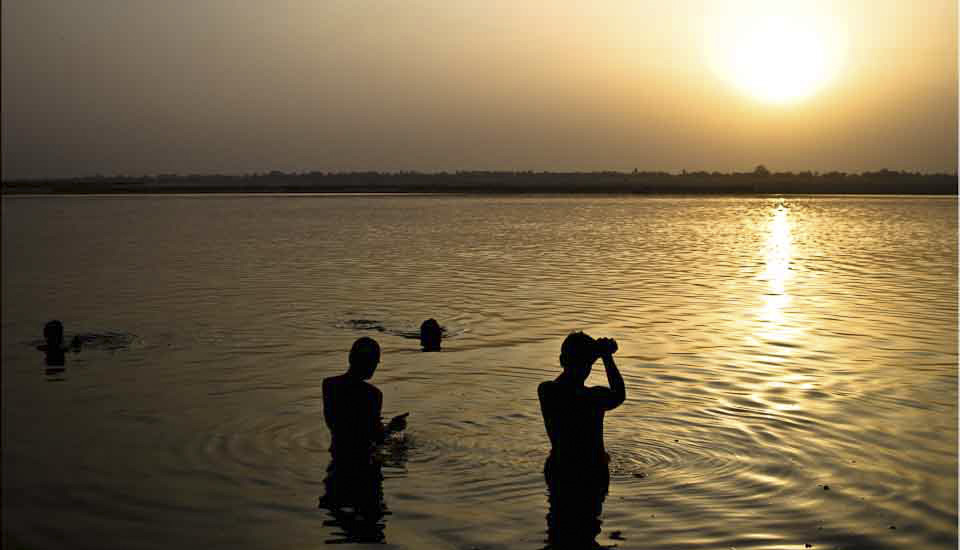
- Performing the Ganga Aarti from Dasaswamedh Ghat, Varanasi
- Buddha Head from Shwedagon Pagoda, Myanmar
- Harry Clarke Window from Dingle, Ireland
- Novice Monk Shwe Yan Pyay Monastery, Myanmar
Packets of 10 for $AU50.
Or - pick any photo from my Flickr or Wanders blog photos.

.jpg)
.jpg)
.jpg)











 Until next time,