Uureg Lake and the Altai Mountains Blue skies, bluer waters, and sparse grasses – what could be more Mongolian? Uureg Lake, on a high (2,200 m/7,500 ft) plateau in UvsProvince, Mongolia, is just stunning in the afternoon light.
After five days of bumping across the rough roads of Mongolia’s seemingly endless grassy steppes, it was with a sigh of relief that I watched our Russian UAZ (Ulyanovsky Avtomobilny Zavod) four-wheel-drive vehicle climb into the Altai Mountains that run along the north western border of the country.
Mongolian guides G and Segi of Shaman Tours were looking after myself, a small group of photographic enthusiasts, and photographers Jeffrey Chapman and Winslow Lockhart from Within the Frame. We were taking the long roads to the Golden Eagle Festival in Bayan-Ölgii, West Mongolia, but we still had a full day’s driving ahead of us before we would reach our destination.
The little cabins at Suldet Tsakhir Tourist Camp on the shores of beautiful Uureg Lake were the perfect location for our penultimate stop.
High Power We had lunch on the last stretch of flat land before we climbed into the nearby mountains.
UAZs into the Mountains Our Shaman TourUAZs lined up for the last run towards the Altai Mountains.
Up into the Mountains Once we are finally out of the steppes, the hills rise steeply on all sides. (iPhone6)
Snow Patches in the Foothills
Circuiting the Ovoo or Obo At the top of our first pass, we came to an ovoo, or “magnificent bundle”. In keeping with local custom, we circled three times, clockwise, to ensure the continued safety of our trip.
Ovoo on the Mountain Pass This sacred pile of rocks which honours the spirits of the surrounding land is intrinsic to Mongolian folk religion or shamanism (also called Tengerism).
“… In Protection of the Sacred Mountain …”
Offerings at the Ovoo Visitors discard crutches, steering wheel covers, and empty food containers – especially empty vodka bottles – to give thanks for good health, a safe journey, or any other boon.
Offerings at the Ovoo
Yellow Khadag While the ovoo itself is predominantly adorned with khadag (ceremonial scarves) in blue – a symbol of reverence for the sacred “Munkh Khukh Tengri” or “Eternal Blue Sky”, the surrounding rocks are tied in Buddhist yellow, a symbol of knowledge and religion.
Bumpy Roads into the Mountains Never ask if a Mongolian road could be any worse! It can always deteriorate. (iPhone6)
Uvs Lake and Russian Mountains Our tailbones might be bruised by the bone-shaking climb, but we are rewarded with a closer sighting of the Altai Mountains, rising between us and Russia on the other side of Uvs Lake.
Mongolian Grass and the Altai Mountains
The Long and Winding Road Uvs Lake is Mongolia’s largest, and the best known lake in the Great Lakes Depression. As part of an endorheic (closed drainage) basin, the lake is five times saltier than the ocean!
Suldet Tsakhir Tourist Camp Now here is a “resort” I’d come back to! Simple, but located in a blissful setting high on a plateau on the south shore of Uureg Lake, the cabins at Suldet Tsakhir Tourist Camp beckon in the afternoon shadows.
Uureg Lake Foreshore This beautiful saltwater-highlands lake on the Mongolian – Russian border boasts exceptionally clear water.
Skull on the Rocky Foreshore The lake is home to Turkic stone statues, burial mounds, and rock drawings that indicate the area has been inhabited by nomadic tribes for millennia. And, of course, there are the more modern animals.
Photographers on Uureg Lake Foreshore The lowering afternoon sun led to a feeling of quiet, as we all explored the foreshore.
Reflections in Uureg Lake
Afternoon Sun on Uuleg Lake
Quiet on the Foreshore The snow caps over Russia turn pink…
Sunburst on the Grasses … as the sun drops below the surrounding mountains.
Last Layers of Twilight on Uuleg Lake Foreshore
Sunset on the Altai Mountains
Sunset on Uureg Lake The sun is down – it is time for dinner. (iPhone6)
It was a beautiful spot – albeit freezing! The flooring of my cabin was not yet finished, so the wind whistled up through the floorboards all night.
Still, a worsening cold was a small price to pay to be in such a magnificent location.
Travel may not always be smooth (or warm), but it is always enlivening.
Mozart Monument and Ephesos Museum Vienna’s monument to Austrian composer Wolfgang Amadeus Mozart (1756–1791) in the Burggarten of the Hofburg Palace was shrouded in scaffolding for repairs when we visited.
Vienna.
City of Mozart. And waltzes.
And that other Strauss: Richard – known for his operas, and familiar to my generation thanks to his fanfare from Thus Spake Zarathustra that was used in Stanley Kubrick’s film 2001: A Space Odyssey. But when I think of Vienna, I always think of Billy Joel, or of Leonard Cohen’s melancholy three-quarter time dirge: Take This Waltz, based on the “Little Viennese Waltz”, written by Spanish poet Federico Garcia Lorca.
Viennese streets are full of history and tradition, and rich with the art of Baroque, Renaissance and contemporary architecture: large, gilded structures in metal, glass, stone and marble sitting majestically in public gardens and open plazas, or rising over narrow streets crowded with tourists on foot and in horse-drawn carriages. It is not all sublime, however: men in Mozart costumes spruik musical entertainments, and shops sell all manner of tacky souvenirs. Scaffolding and machinery also crowd the public spaces in an effort to prevent the ancient fountains, monuments, and facades from crumbling into the cobbled roadways.
Vienna is lines and curves and patterns and beauty – and also good coffee, fine chocolate, and rich pastry.
Vienna waits for you …
Palais Auersperg It is probably fitting that the first stop in Vienna for my husband and myself, once our Danube canal boat tied up securely, was to the baroque Palais Auersperg – built between 1706 and 1710 – for a program of classical pieces from Wolfgang Amadeus Mozart and Johann Strauss.
Leading Lines and Subway Patterns Early next morning found us in a spotless underground station, watching trains disappear into the tunnels.
“Opera WC” Coin-operated toilets are a feature of many European cities; this one in the Viennese U-Bahn was bright, clean and quirky-looking.
Fountain – Wiener Hofoper/Vienna State Opera House We emerged from the subway near the Neo-Renaissance-style Vienna State Opera House – built as the Vienna Court Opera between 1861 and 1869.
“Mozarts” on the Street Men dressed as Mozart sell tickets for performances by the Vienna State Opera.
Richard Strauss German composer Richard Georg Strauss (1864 – 1949) served as musical co-director of the Vienna State Opera (with Franz Schalk) from 1919 to 1924. His star in Vienna’s “Walk of Fame” is in the pavement outside the Opera House.
The Danubius Fountain Everywhere you look in downtown Vienna, there are works of beauty and antiquity. The Baroque Danubius Fountain (also called the Albrecht Fountain), in front of the Albertina Museum, was carved from white Carrera marble and unveiled in 1869.
Palmenhaus and Schmetterlinghaus At the edge of the Burggarten – the castle garden – delicate Art Nouveau glass and metal buildings house an upmarket restaurant and a collection of tropical plants and butterflies.
Emperor Franz Josef I (1830 – 1916) A statue of the long-ruling Emperor of the Austro-Hungarian Monarchy stands in the castle gardens.
Mozart in Scaffolding The much more popular Mozart monument in the castle gardens was almost completely obscured by scaffolding. By Austrian sculptor Viktor Oskar Tilgner (1844 – 1896), the work was finished just before his death.
Through the Fence Statues are everywhere in Vienna. Looking into the Heldenplatz(Heroes’ Place), we can see the 1865 bronze equestrian statue …
Prince Eugene of Savoy … of the landowner Eugene of Savoy – also known as Prince Eugene.
Vienna City Hall Clock Tower Delicate gothic spires rise up from the Rathaus, nestled in its gardens.
“Swiss Gate” A lovely archway leads into the Alte Burgor Old Fortress.
“Power at Sea” Fountain The Hofburg Imperial Palace is a treasure trove of sculpture.
Equestrian Statue of the Holy Roman Emperor Joseph II Holy Roman Emperor from 1765 to 1790 and ruler of the Habsburg Empire from 1780 to 1790, Joseph II, eldest son of Habsburg Empress Maria Theresa and brother of Marie Antoinette, was considered one of the “Enlightened Despots” of the 18th century.
Chariots and Horses The roof of the Imperial Palace is adorned with marble horse-drawn chariots …
Spanische Hofreitschule … while the horses of the Spanish Riding School …
Lipizzana Horses … live and train below.
St. Michael’s Wing – Hofburg Imperial Palace
St. Michael’s Wing Walking out into Michaelerplatz gives an imposing view back to the St. Michael’s Wing of the Hofburg Imperial Palace.
Vienna Streets Back in the old city streets, the horses are for tourists.
Religious Iconography Many of the marble sculptures in the city are under netting to protect them from pigeons.
Holy Trinity Column The ornate Baroque Pestsäule (Plague Column) was erected in 1693 as a memorial to the Great Plague of Vienna (1679).
St. Stephen’s Cathedral At the end of a street, the spire of the Gothic Stephansdom stands tall.
Haas Haus Reflections Not all the buildings in the city centre are ancient: finished in 1990, the Romanesque rounded glass surfaces of the contemporary Haas Haus reflect the Medieval architecture surrounding it.
Mostly Mozart Souvenirs Quality Austrian chocolates and souvenirs are readily available …
Mozart … as are all kinds of trinkets.
Plaza in the Sun After a morning of exploring the parks, architecture, statues, and cobbled streets, we find a place for coffee and cake to relax briefly …
Heiliger Franz von Assisi – Jubiläumskirche … before catching an underground train and returning to the Danube and our boat.
[…] exploring cities on our own (eg: Passau; Regensburg; Melk; Kelheim to Weltenburg; Vienna; Budapest Market; and Buda Castle Hill). Of course, ocean cruising – even in a […]ReplyCancel
Karen Girls in a Truck Bed Getting from A to B in the hills of Northern Thailand takes all kinds of transport; as I watch the girls behind me in the bed of the truck I’m in, I can’t help but think about safety laws in other countries, and worry about the probability of rain.
It was a Sunday. And the sky was full of rain.
In spite of that, hill tribe children were at school, scrubbed and dressed in their traditional clothing, ready with smiles to greet our group of visitors.
It always amazes me how cheerfully Thai students – especially those from farming hill tribe families in the remote northern regions – go the extra mile to continue their educations: they often have to live in school dormitories for much of the year because the roads to and from their homes are long, rough, and completely impassible in the rains; they fill in countless forms and spend hours waiting for or participating in interviews if they want to receive a small stipend to help cover study expenses; and they participate in these visits with project-funders and scholarship-providers with good spirits.
Earlier this year, I was lucky enough to spend four days travelling around Chiang Mai and Mae Hong Son visiting schools and students with a small group of educators who manage the Thailand Hilltribe Education Projects (THEP). THEP helps northern hill tribe children stay in school (see: Ursula’s Weekly Wanders: THEP). Local educators Apichart and Usa Intra are good at identifying project needs: a new dormitory here, new bunkbeds there, mosquito nets, garden projects, canteens – all the small and big things that make live-in schools manageable, but that the Thai Department of Education doesn’t pay for. For over 25 years, one of THEP’s originators, Susan Race, has managed to find funding – corporate, agency, or private – for these many projects, and has helped supervise their completion. THEP organisers receive no pay for their time and effort; community members don’t get money for their labour when they help construct project buildings; and teachers receive no extra pay when they stay at the schools to keep an eye on students in dormitories or travel with students to weekend interviews.
It is the enthusiasm of the students themselves that keeps teachers, principals, and village representatives putting in this extra time and effort.
We covered a lot of miles on this trip – many of them on rutted dirt roads that seem to wind up into the rain clouds – and we visited a lot of schools and talked to a lot of students.
On the first day of our travels, we visited a number of projects and met several students (see: The Faces of THEP). The second day was spent at the Department of Education Office in Mae Sariang interviewing scholarship students. On the third day, we drove high into the mountains to look at a new school dormitory (see: Roads Less Travelled), and then to an old canteen and dormitories in need of repairs and sprucing up. On the last day, Sunday, we examined a water project in need of a pump, and stopped en route back to our flights out of Chiang Mai to meet three more students.
Everywhere we went – in spite of the extra work, the waiting, and the rainy weather – we were met with smiles.
“Hurry up and Wait!” Twice a year, students who receive study scholarships are expected to submit their marks and a letter outlining their financial circumstances. Susan Race and Khru Apichart Inta conduct regular student interviews at schools and Department of Education Offices. On Friday morning, this group of students was expected to be at the Education Office by 8 am. They travelled long distances down wet and winding roads – many in the back utility trucks or crammed onto small motorcycles – to get here. We all then waited for the local Director to arrive, so he could make a speech and have a photo taken with the students.
Teen-Aged Ornwara After travelling down from the Hills with a teacher, the students spend much of the day waiting for their turn to be interviewed. Ornwara, from a Karen family, is now in Middle School; …
Seven-Year-Old Ornwara … I’ve been watching her progress since she first started Grade One in 2011.
At six pm, when the lights in the Education Office went out (automatically), we – and a few pockets of students – were still there. No one can say the poor students (and their teachers) don’t work hard for the small study grants they receive!
Boys Doing Dishes Saturday, after a morning at at Ban Huay Mae Gok School where we looked at new dormitories, we drove to Ban Tha Song Kwae School to check out the leaking roof over the canteen. The youngsters had just finished lunch, …
Boys Doing Dishes … and were doing the dishes in the kitchen.
Students outside their Dormitory Some schools have large dormitory populations. These children are all Karen – distinguishable by their traditional hand-woven clothing.
Visiting Phra Many organisations – local and international – help the still-disadvantaged Hill Tribe groups. This monk was part of a group of visitors from further south in Thailand; they had brought lots of warm clothing for donation, and plenty of fresh, seasonal fruit to give away.
Karen School Kids It was early the next (Sunday) morning that we drove out to Ban Mae Pae Village School. The resident children came out to greet us in their colourful traditional clothing.
Karen School Girls In this Karen subgroup, the girls’ hand-made white cotton tunics are intricately interwoven with patterns in colourful wools.
Two Karen Girls
Kids in the Truck This school has no piped water, and the tank runs dry in summer; we all piled into trucks to have a look at a local water project that wants funding.
Water Project With the pump turned on …
Girl with a Hose … the water runs for a while.
Water Project Group One of the men involved with the project poses with a group of Karen girls.
In the Back of the Truck This time of year, there is no shortage of water, and as we head back to lunch, the skies open up!
Kitchen The kitchen is simple – dare I say “rustic” – but the meal we were fed was wonderful!
Khru Apichart and Khru Usa Apichart, who is now a principal in Chiang Mai, and his wife Usa, who has finished her Masters of Education in Second Language Learning, have been going “the extra mile” for their students for a lot of years; …
Khru Apichart and Khru Usa … as I said when I originally posted this picture from 2011 (see: Schools at the End of the Road), they both work full time at their respective schools. Although they have growing children themselves, they give up many weekends and spend a lot of “after hours” liaising with and advocating for the students and schools in their area.
The Hills With inspections finished and lunch enjoyed, we wend our way back down the mountain. There is a bucolic beauty in the hills that belies the back-breaking work that goes into planting crops on such steep slopes.
Crown of Thorns – Euphorbia Milii
Girl on a Motorcycle It may only be 20 km back to pavement, but it feels further!
Riding the Local Song Taew It is not everywhere that you see a motorcycle on the back of a bus.
Interviews in Hod We made one last stop, halfway back to the airport, to visit with scholarship students who had been unable to get to Mae Sariang.
Courtyard Dog The school dog watched on.
If these students (and teachers) continue to work as hard as they are currently doing, they will go far in the future.
Driftwood and Entire-Leaved Gumweed The coastal tide pools of Nanoose Bay, on the protected east coast of Vancouver Island, are a unique ecosystem and still home to clumps of grindelia integrifolia, or entire-leaved gumweed, which nestle on the rocky beaches in the shelter of washed-up drift wood.
There is something invigorating about tall trees, a mountain backdrop, and ocean breezes.
It is always a pleasure exploring the woods and waters on and around Vancouver Island, on the West Coast of Canada. My husband and I return regularly to our favourite walking and sailing places, but we also try to explore some new terrain on each visit.
Recently, during a summer stay in Nanoose Bay – a small community on the east coast of Vancouver Island overlooking the waters of the Strait of Georgia – we decided to play proper tourists, and let some local experts show us the sights. We signed ourselves onto the Monday afternoon “Parksville Qualicum Beach Treasures Tour”with the locally run and operated Pacific Rainforest Adventure Tours.
It was a good decision: local knowledge makes the ‘wild’ much more accessible. Our guide for the afternoon was owner-operator Gary Murdock, an ex-Forest Technician and local conservationist who knows where all the natural treasures are, and who had no trouble answering any of the questions we could pose.
Join us for an easy day of short walks.
Rocks on Craig Bay When my husband and I stay at our usual accommodation near Nanoose Bay on BC’s temperate Vancouver Island, we make of point of enjoying a morning walk around the rocky tide pools of Craig Bay.
Garry Oak … and through the overhanging Garry oaks (Quercus garryana) along the Craig Creek Estuary.
Brickyard Community Park Although the waterfront is dotted with resorts and high-end housing, there are also several reserves and parks that everyone can enjoy. Even though I’ve checked out the Tourist Information and regional maps many times, we had never visited these particular parks before.
Himalayan Blackberry Leaf (Rubus Armeniacus) on the Foreshore Brickyard Community Park is a tiny five-acre (2 hectare) chunk of rocky outcrop nestled amongst the expensive waterfront homes perched on the cliffs on either side.
People on the Point The rock bluffs of Brickyard Community Park allow spectacular views over the Winchelsea Islands …
Sailboat in the Winchelsea Islands … and to snowcapped mountains on the mainland across the Strait of Georgia.
Gary with his Spotting Scope Our local guide sets up his spotting scope to check out the seals and otters in the bay.
Back up the Path The group heads back up the trail to the the van, through the towering Douglas firs, …
Vanilla Leaf (Achlys Triphylla) … and past lush, sweet smelling native vanilla leaf …
Himalayan Blackberry (Rubus Armeniacus) … and the pretty blossoms of the invasive Himalayan blackberry bushes.
Guide Gary in the Woods At our next stop, Beachcomber Community Park, Gary points out a eagle’s nest …
Eagle Babies in the Nest … high in the trees over our heads.
Eagle Chicks Douglas firs can grow to between 20–100 metres (70–330 ft) tall; I have no idea how tall this one is, …
Eagle Chick … but even with a zoom lens and a crop, the baby eagles – already with deadly-looking beaks – are a long way off!
Bald Eagle in the Trees Clearly, however, we are close enough! One of the parents keeps watch from a perch nearby.
Crazy Coastal Pacific Madrone (Arbutus Menziesii) The trunks and branches of these Northwest native evergreens twist crazily against the coastal winds.
Beachcomber Community Park Foreshore From the rocky shoreline of Beachcomber Community Park, the privately-owned Mistaken Island is so close you can almost touch it.
Driftwood Art The elaborate driftwood washed up on the shoreline gives a clue to the “Beachcomber” name.
Pastoral Our next stop – at the Little Qualicum Cheeseworks and Mooberry Winery – is in the middle of the kind of pastoral growing country that supports a working dairy farm: …
The Cheeseworks … a dairy farm with a sense of humour. And, they make great cheese. We picked up a few treats for dinner.
Bridge over the Englishman River Falls Our last stop for the afternoon is at Englishman River, where we cross the river …
Englishman River Falls … and get a good view over Upper Englishman River Falls, where the waters cascade …
Englishman River Canyon … into a deep and rugged canyon below.
Sunset Parksville In the evening, we enjoyed another glorious sunset …
Sunset over Craig Bay … over the waters and rocks of Craig Bay.
With drinks in hand, we sat watching the sun set over the tall trees and tide pools of Vancouver Island; a perfect ending to a lovely day in one of my favourite places.
Tawali Child Big, serious eyes and solemn expressions were a feature of many of the Papua New Guinean children that I met on my recent travels.
Papua New Guinea is not the easiest place in the world to get to.
I was starting from Australia, a near neighbour and – for almost 60 years – the former administrative head of PNG. Even so, limited flight options into and out of the capital Port Moresby are only available certain days of the week, making travel planning difficult.
It is also not the easiest place to get around. In spite of intense investment from the World Bankand targeted international foreign aid (e.g.: Construction Begins on K89), much of the country is not well served by roadways. Many of it’s centres simple do not connect to each other, except by way of isolated and dangerous walking tracks, waterways, or expensive internal flights.
And the scheduled domestic flights – as our group of twelve travellers under the guidance of photographer Karl Grobl from Jim Cline Photo Toursdiscovered to our dismay – are dependent on weather and visibility, mechanical repairs and replacements, and resolution of pilot disputes. We were stranded in Mount Hagen for a full day and grounded in Port Moresby Airport for several hours, cutting a day and a half off our planned time in the beautiful Milne Bay.
Papua New Guinea is also a difficult place to get one’s head around: it can be hard to reconcile the contradictions between the idyllic surrounds and the gentle-eyed people on the one hand, and a history of head-hunting, stories of cannibalism, and ongoing tribal warfare on the other.
And yet, on the ground in the country – whether in the down-at-heels city of Port Moresby, stranded on the Sepic River in a broken boat, rubbing shoulders with tribal groups at the Sing-Sing in the Mount Hagan highlands, or visiting a Skull Cave in the coastal Milne Bay area – I never once felt unsafe or unwelcome.
The light can be as unforgiving as the old tribal ways: the inky-dark jungle contrasts with the streams of burning brightness that sneak through the canopy. Light bounces wildly off the clear waters. Art photographers don’t like “hot” patches in their pictures; I sometimes don’t mind them, because they tell some of the story of what is: glaring light and darkened shadows co-existing in a balanced patchwork of extreme contrasts, rather than a smoothly blended hegemony.
To try to sort out these contradictions, I’m starting at the end of my trip – sharing a selection of the photos I took across two idyllic days spent based at the remote and lovely Tawali Resort, which sits on a limestone bluff, high over Hoia Bay, about two hours east of the Alotau Airport.
Of course, getting there was in keeping with the theme: we were already a day behind schedule because of a pilot’s dispute. We arrived at the Port Moresby airport early to check in for our flight to Alotau, but (with no explanation) the plane itself was hours late arriving. So, we spent all morning in a spartan domestic terminal, not sure if we’d ever get off the ground.
That was only the start of the adventure!
Spinner Dolphins – Stenella Longirostris After a bumpy and harrowing 90 minute bus ride along dirt roads with holes the size of small craters and over bridges that were little more than rough planks, we were pleased to transfer ourselves and our luggage onto one of the boats that are the only mean of accessing Tawali Resort. We were even more happy to find a late lunch on board, as we’d been stuck in an airport terminal without food for several hours. The scores of dolphins that came out to play with the boat wake were a bonus.
Spinner Dolphins – Stenella Longirostris It is impossible not to smile watching the dainty dolphins cavort.
Spinner Dolphins – Stenella Longirostris The waters below us are so clear that it feels like we can touch the bottom.
Dinghy on Milne Bay To compact our planned activities into our shrunken time-frame, and to take advantage of the the remaining daylight, we over-shot the resort and took the dinghies ashore for a short walk into the jungle.
Canoe on Milne Bay A local man, going about his business on the turquoise waters near shore, watches us with a smile.
Alotau This is an area of limestone karst caves; the foreshore is rocky and shaded by mangrove trees.
Skull Cave The limestone caves are pitch black, with uneven floors and rough walls – – – and are piled full of countless human skulls; a macabre sight in the torch light.
Skull Cave One story we were told to account for these skulls was that three neighbouring villages of head-hunters were in competition to collect the most trophies. Just over 100 years ago, missionaries arrived in the area and prohibited the custom of headhunting and the practice of cannibalism, driving villagers to hide their prized skull collections underground in these ‘secret’ caves. Some credence is given to this story by the fact that all the skulls seem to show spear injuries in the same place. The other explanation is that when revered people died, they were buried upright with clay pots placed over their heads. When the body decomposed sufficiently, the head was removed and placed in the cave as a show of respect. Apparently these skull caves are relatively common across the country.
Baby in Arms Back outside in the dappled jungle light, local villagers sit with their beads, wooden carvings, and shells for sale to the tourists.
Shells
Family in the Jungle The people seem quite shy, and although they must be used to tourists, …
Beauties in the Jungle … they mostly just watch us.
Tawali Girl
A Shy Smile
Boat in the Spray We ride the boats a little further up the coast, …
Village Life in Hewiia … where we take a short walk through a simple local village, …
Waterfall in Hewiia … and back into the jungle to a lovely waterfall.
Schoolgirls at the Waterfall Local children follow us, …
Schoolgirls at the Waterfall … and watch us with curiosity.
“Little Beauty” This solemn-faced young woman was wearing a t-shirt that read: “This Beauty doesn’t need a Beast.”
Bird Eating Spider The jungle is full of surprises.
Tourist Boat
Simple Grace As the day closes, we finally head to the resort, where we once again discover how ill-prepared Papua New Guinea is for tourism: the bar has plenty of tonic and lime, but no gin!
Ferns in the Jungle Tops The next morning, we were up at 4am for a short boat ride and a long walk (straight up!) to see the indigenous birds of paradise. Unfortunately, our group was too large and too loud – or perhaps it was the drizzly weather – and, although we could hear the male, high in the trees over our heads, calling to his mates, all the birds remained hidden.
Rainbow over East Cape As if apologising for the early morning start and the lack of bird-sightings, the Bay threw up a lovely rainbow as we motored back to the resort for breakfast.
Outrigger on the Water After breakfast, we headed back out onto those richly coloured waters to dock on a sandy tropical island for lunch under the mangroves …
Culture Clash … and snorkelling on the reef under the watchful camera of a drone. (iPhone6)
Reef Abstract Leaving the cameras safely on dry land, I played with the iPhone over the coral reef while I kayaked on the crystal waters. (iPhone6)
Young Warriors The rainy evening pushed the muu-muu (ground-baked pig, wrapped in banana leaf) and the sing-sing (a cultural gathering of costume, music and dance) indoors. Young boys with spears …
Little Birds of Paradise … prepared to surround and ‘kill’ birds of paradise. Looking at all the bird feathers used in the intricate headdresses, it is no surprise that the birds remain elusive in the wild.
That children’s performance says it all: wide-eyed innocent dancers telling the beautiful but gruesome story of a hunt that ends in the death of a rare and exotic creature.
Papua New Guinea is, indeed, a study in contradictions.
Thanks so much, Karl! Your trips are always full of highlights; I always enjoy travelling to new places with you. I’m looking forward to the next time…ReplyCancel
Diane Rosenblum -August 31, 2017 - 3:58 pm
I loved the post and your pictures. You got the dolphins! And your children are lovely. (Really like the cropping of the first child image). Now I know why Karl waits to see your blogs to find out where he’s been and what he’s done!ReplyCancel
Ha Ha Ha!! I wait to get home to see where I’ve been and what I’ve done. 😉 I am looking forward to all the tribal portraits, but they still seem a little overwhelming…
It was lovely to meet you – there WILL be a next time. 😀ReplyCancel
JEANNE LEWAND -August 31, 2017 - 4:06 pm
YOU SO BEAUTIFULLY CAPTURED IN WORDS AND PHOTOS THE ENTIRE TRIP. LOVED BEING WITH YOU ON EVERY MOMENT OF THIS TRIP OF “CONTRADICTIONS”.ReplyCancel
Many thanks, Jeanne! It was great travelling with you. 😀ReplyCancel
Jan Lively -August 31, 2017 - 10:57 pm
Yet again Ursula, you have come through with pictures and words that so artfully tell the story of our amazing time together in Papua New Guinea. And when friends ask me about our trip, I am going to suggest they check out your blog, for indeed, you are a master story teller. It was great to travel with you again too.ReplyCancel
Thanks, Jan, you are too kind! It’s always a joy to travel with you and the Handsome-Lew-Man. 😀ReplyCancel
Kat Miner -September 1, 2017 - 1:47 am
Wonderful, Ursula! Such fun to read about your experience! In spite of all of the bumps along the way, it sounds like you made the best of it!ReplyCancel
[…] (see: A Slice of Life and Life on the Edge); Milne Bay (see: Portraits from the Dance and Innocent Eyes and Head Hunters); the Middle Sepik (see: Ursula’s Weekly Wanders Sepik PNG); and Mount Hagen (see: Mt Hagen), […]ReplyCancel
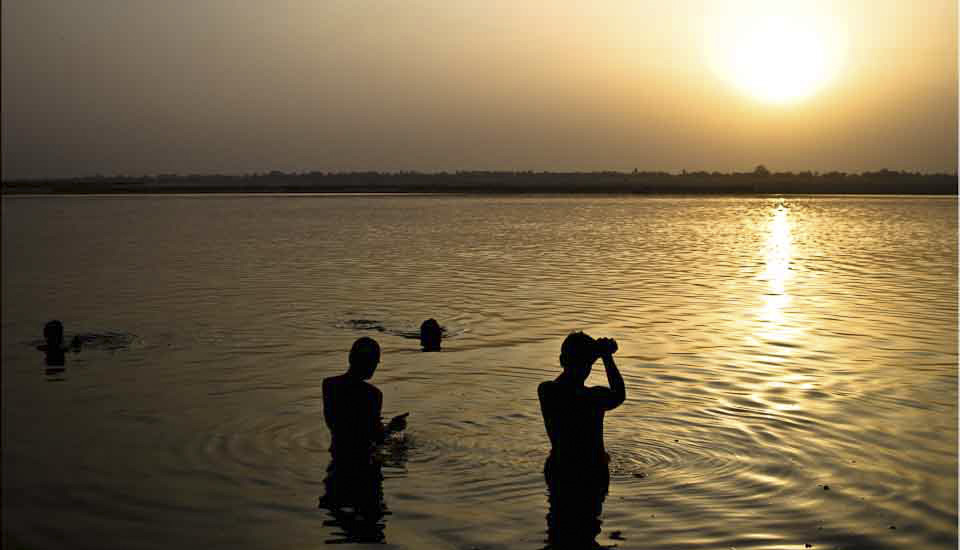
- Performing the Ganga Aarti from Dasaswamedh Ghat, Varanasi
- Buddha Head from Shwedagon Pagoda, Myanmar
- Harry Clarke Window from Dingle, Ireland
- Novice Monk Shwe Yan Pyay Monastery, Myanmar
Packets of 10 for $AU50.
Or - pick any photo from my Flickr or Wanders blog photos.

.jpg)
.jpg)
.jpg)








 If these students (and teachers) continue to work as hard as they are currently doing, they will go far in the future.


 We hope to get back there one day soon.