Women in a Blue Street Autumn rain washes the narrow, winding streets in the medina – the old city – of Chefchaouen: a blue-washed delight in Morocco’s northwestern Rif Mountains.
I loved Chefchaouen.
I never quite managed to pronounce it though!
The name of this charming little city in the mountains of northwestern Morocco comes from an Arabic word chef meaning “to look” and a Berber word echaouen meaning “antlers” or “horns”; the term refers to the two most prominent mountain peaks that overlook the city, rising up like the horns of an animal.
The fortified city was founded in 1471 by a distant descendant of the Islamic Prophet Muhammad. It was intended as a defence against potential attacks by Portuguese invaders. In addition to local Berbers, the original settlers were predominantly Andalusi Muslims and Sephardic Jews who were escaping the Iberian Peninsula during and after the SpanishReconquista.
Today, Chefchaouen is known as the Blue Pearl of Morocco.
Most of that Jewish population left for Israel when it was formed in 1948, but the practice of painting the buildings in the medina blue lives on. Some say the colour repels mosquitoes. Some maintain that the wash of blue and white keeps the houses cooler in summer months.
There are several other possible explanations. What is known for sure is that the colourful streets attract artists and tourists. So, the local government hands out paint brushes to inner-city residents annually to help keep Chefchaouen looking fresh.
Join me for a rainy walk through Morocco’sBlue Pearl:
People Love Chefchaouen! My small group and I drove into the city from Meknes, visiting Volubilis enroute (see: Roman Ruins in Morocco). Naturally, we stopped briefly at the Selfie Spot overlooking the city.
In a Decrepit Courtyard On an early-morning walk from our hotel in the medina, we stopped into a traditional Andalusian courtyard: decaying, but still beautiful.
Plaza Uta el Hammam Our walk took us through through the central plaza. The heart of the medina is shady, cobbled, and surrounded by mountains, cafes, restaurants, and history.
Chefchaouen Rooftops Rooftops rise all around against a backdrop of mountain and low-hanging cloud.
Tourists in Plaza Uta el Hammam It is raining – but softly – just enough to wash the cobbles and brighten the landscape.
A Water Fountain Everywhere you go in Morocco, you will see beautiful public fountains. Naturally, in Chefchaouen, they are blue!
Arched Doorway Intricately patterned floor tiles are another common feature of Moroccan design.
Wall Art Mariano Bertuchi (1884-1955) was a Spanish painter from Granada who painted the landscapes of Morocco and scenes of daily life. He spent a lot of time in this region – relocating to Tetouan just an hour and a half north of here, where he eventually died.
Wall Bracket
Colourful Stairway The laneways are narrow, colourful, and WET!
Steep Stairs and Wall Art Stairs wander off in all directions, and every shade of blue is represented in the paint.
Restaurant el Cielo Tourism has given the little city a boost.
Once an Andalusian Mosque … Built some time between 1540 and 1550, this was once the site of a mosque. I’m not sure what the building is used for today.
A Colourful Corner
Into the Clouds Stairs lead off in all directions.
Water from the Rif Mountains The Ras al-Ma’(Ras El Maa) or Head of the Water is located here, just east of the medina. This natural mountain spring was the original water source for the city.
Ras al-Maa – Head of the Water Particularly valued in the heat of summer, the mountain waters tumble over boulders as they make thier way down hill.
Visitors Leave Their Mark Everybody loves Chefchaouen!
More Blue Stairs
Hotel Daryakout The local boutique hotels compete with each other for Andalusian charm.
Street Lamp
Medieval Alleyway
Another Colourful Staircase
City Water Fountain Our walking tour around the little city takes us back to Plaza Uta el Hammam, where everyday life continues.
Said Our engaging guide – who is wearing a blue scarf in honour of the city – sets us loose for the rest of the day …
In the Laneway … and I wander back through the quiet medina to my room.
Naturally, I got out again later to explore this charming city further – watch this space.
Rowers on a Longboat These war canoes – called kora kora or coracora – are traditional naval vessels in the Indonesian province of Maluku. They were once used to carry men on raids for plunder and/or slaves. Fortunately for us, this one has been sent out to greet our ship as we pass through the Zonnegat Channel and enter the Banda Caldera.
We were in the waters of the fabled Spice Islands of Indonesia.
Today, this archipelago is home to countless islands covered in thick rainforests. The landscape is scarred by years of volcanic eruptions and the underwater-scape comprises stunningly pristine coral reefs populated by every colour fish you can think of.
The Banda Islands are not particularly easy to access, and village infrastructure is patchy. In the late 1990s, sectarian violence in nearby Ambon spilled over, damaging the then-fledgeling tourism industry. We, however, were in our own floating ‘hotel’: the Australian-registered small ship the Coral Geographer. So, we could enjoy visits to the very different local communities while being largely insulated from under-developed facilities.
From the early 16th century, the Banda Islands were home to incredible colonial bloodshed. This was thanks to the European desire for nutmeg and mace, which grew nowhere else in the world. The islands were taken over by the Portuguese in 1511, and then the Dutch arrived in 1599. The Dutch monopolised the local spice trade well into the 17th century. More on all that at some other time – when I make landfall on Banda Neira itself.
Our ship had traveled southeast overnight – traversing the Banda Sea from Saparua (see: Aboard a Ship in the Ceram and Banda Seas). Early in the morning, we were all out on the foredeck of our vessel to enjoy the kora kora canoes as they welcomed us with their rhythmic drumming and guided us into the banda – an Indonesian word derived from Persian, meaning “port” or “haven.”
Then, after a sumptuous breakfast, we were off to snorkel (or dive) on the extensive coral reef that has built itself in the lava flow that runs off Banda Api. On this occasion, my waterproof phone cover failed me completely, and all my pictures are blurry. So, I’ve included a couple taken by crew with their proper underwater housings.
Join me on and in the waters of the caldera around the Banda Islands:
Early Morning Fishermen Fishing is a big industry across the islands. The men are out early to cast their heavy nets from their wooden longboats.
Waiting for the Welcome We are all out on deck early for the kora kora. Like many others, I had my coffee in hand.
Towards Banda Neira The eponymous town that is the nerve-center of the island of Banda Neira comes into view as we work our way through the channel.
Landslip on Banda Api Between 1586 and 1988, the volcano on Banda Api erupted over twenty times. Evidence from the 1988 eruption, which killed three people, is still visible.
Mosque on Banda Api The 1800 islanders resident at the time of the last volcano were evacuated, but a small community has moved back.
Welcome Longboat Finally! The welcome canoes – one either side of us – come into view.
Boats in the Harbour Our kora kora welcome boats are not the only vessel in the little harbour.
Keeping Time A drummer on the boat keeps the rhythm for the rowers. He throws us a cheeky smile from the prow.
Paddlers in the Stern These boats are about ten metres (33 feet) long and very narrow. They sit low, and weigh about four tons.
Fishing Boat The wooden fishing boats are laden with heavy nets as they head out to open waters.
Lima Saudara – Five Brothers The men smile and wave as they pass our vessel.
Boats in the Harbour
Kora Kora War Canoe The steep, jungle-clad hills around the water-filled caldera rise up on Banda Neira, and the longboat races towards the village.
Crew Member at the Prow The cruise staff keep a sharp lookout …
Working the Anchor … and once they are happy with the ship’s location …
Anchor Winch … the anchor is dropped into position.
NMI: Snorkeling in the Lava Flow Crew-member Jess got a shot of me engaging in a lazy snorkel in the reef off Banda Api.
NMI: Fish in the Lava Flow Jess also caught a striated surgeonfish (Ctenochaetus striatus) and a Moorish idol (Zanclus cornutus) – just two of the many species in the waters here.
From My Window The little mosque on Banda Api beckons through my porthole. I was looking forward to a visit the next morning.
Sesame Crusted Tuna Steak with Nori and Rice Shipboard life revolves around meals!
We were surrounded by greenery; as much as I enjoyed being in and on the water, I couldn’t wait to get out and explore on land!
I made sure to be on time for the tenders heading to the historic town of Banda Neira after lunch.
Munnar Tea From high in a hill station in the Western Ghats, I have views over the extensive tea plantations, and down to the three rivers that give the town of Munnar, in India’s Kerala Province, its name.
Finally!
The day dawned clear, and while the mists cloaked the distant mountains, the extensive green hills covered in tea bushes and silver oak trees that surrounded my ‘resort’ had at long-last come into view.
I had booked myself in for a week’s stay above Munnar, a town in the Western Ghats in India’s southern state of Kerala (see: In the Green Tea Plantations of Munnar). This hill station was once a resort for the British Raj elite; today it is surrounded by tea plantations first established in the late 19th century. It is clearly a popular holiday destination for local families: I seemed to be the only ‘foreigner’ in the district.
But, the rain had finally stopped! My driver wasn’t due to return from Kochi until the afternoon, so I took my cameras for a walk to a local waterfall.
The Periya Canal Waterfall is an overflow from a man-made canal, and even though it was a Sunday, the roadside was busy with people washing their cars and trucks with the ‘free’ water. It was a pleasant short walk, and it was good to get out of my room.
Join me for a stroll:
Malabar Flameback Woodpecker – Chrysocolaptes Socialis Endemic to this region of southwestern India with its foothill forests and wet lowlands, this beautiful bird was outside my room when I woke in the morning.
The Winding Road Below I’m not a tea drinker. As this is India, I couldnot get a decent cup of coffee in the breakfast room. I could – at least – look over the patterns made by the tidy evergreen tea plants (Camellia sinensis) below. Against the hill, silver oak trees (Grevillea robusta), native to Australia, provide shelter from strong winds and shade from the sun.
Red-Whiskered Bulbul – Pycnonotus Jocosus On of the things that always amazes me about India – especially given its enormous population – is the wildlife everywhere. After breakfast, a melodious warble attracts my attention to a native bulbul on a sign along the road.
Deliveries on a Bike Bikes are a cheap and popular mode of transport; riders are often laden with goods as they make their way around the potholes.
Pots and Pans and Potholes
Over Munnar I continue to get views over the tea and down to the river confluence as I walk along the dusty road.
Tea Leaves Fresh buds of tea leaves rise from the neatly trimmed bushes.
Into the Distance Up the road, rocky bluffs rise above the tea.
Pedestrian with a Load I am not the only pedestrian on the road: everywhere you go in India, you will see people walking with loads on their heads.
Bird on a Wire According to Google, this is a western yellow wagtail (Motacilla flava). To me, it is a reminder of Leonard Cohen.
Periya Canal Waterfall It turns out that this little waterfall is an overflow from a canal.
Washing the Car The waterfall’s location – next to the road – makes it a popular car-wash spot.
Corn-Seller The spot’s popularity means that the vendors are out with their wares.
Washing the TukTuk All manner of vehicles are being washed in turn.
Tea on the Hill
A Colourful Fence Local buildings are wildly colourful. Apparently, this is a temple to a popular Indian Hindu goddess.
Sales Kiosk Little stalls with sweets, tobacco, and soft drink are everywhere.
Tea and a Bluff
Green After days of rain, the tea bushes are green and fresh.
Chestnut-Headed Bee-Eater – Merops Leschenaulti My lenses don’t have the range and I don’t have the patience … but I spent ages watching these fast-moving little guys darting around the bushes.
Tea Sales Later that day, I visited an outlet – and bought some tea I would never drink.
The best part of being a lone foreigner in a strange (but safe) environment is getting a glimpse into ordinary life.
Buying a few packs of tea I would never drink is a small price to pay!
Japanese Maple – Acer Palmatum These popular imported deciduous trees thrive in the cool temperate climate of Mount Tomah in Australia’sBlue Mountains; they put on a magnificent, full-colour display in autumn.
Like the changing of the year, the transition of the seasons makes for a good time to reflect: to sweep out the old and make way for new growth.
One of the sites developed and managed by the Royal Botanic Gardens and Domain Trust based in Sydney, these gardens sit at 1,000 metres (3281 feet) above sea level in the UNESCO World Heritage-listed Blue Mountains. The gardens, in the Jamison Valley’s rainforest, are home to more than 4,000 species of plants. They extend over 28 hectares (69 acres) of beautifully manicured gardens and wandering pathways.
The altitude and location give the gardens their cool temperate climate, making them suitable for many exotic and unusual plants from around the world. Unlike much of Australia, there are four distinct seasons here – meaning that the non-indigenous plants can properly show off their colourful autumn displays.
I had always meant to visit – but never quite made it. On one of my visits to the other side of the Blue Mountains (eg: Wanders Blue Mountains), friends of mine suggested it as a halfway meeting point for a get-together. I made sure to bring the cameras, and arrive early enough to wander through some of the pathways before lunch.
Join me for some of the brilliant colours of change:
Entry to the Blue Mountains Botanic Garden The expansive viewing deck and visitor centre offer views over the gardens to the Jamison Valley and the mountains beyond.
Basalt Rock Spiral This elegant sundial sculpture was built from local basalt rock, formed from volcanic lava flows between 14 and 17 million years ago. When it decomposes, this basalt produces the rich, fertile, red/brown soil that gives this pocket of the Blue Mountains its rich diversity of plant life.
Trees in the Gardens
Weeping Japanese Maple – Acer Palmatum var. Dissectum There are over 1,000 varieties (cultivars) of Japanese maples, defined by vast differences in leaf shape, size, and color.
Golden Full Moon Maple – Acer Shirasawanum Aureum
Red Blooms Rhododendrons are another large group of plants: from small shrubs to the giant trees in the Himalayas.
Colours in the Garden Every turn in the path brings a new colour palette.
Red Japanese Maple – Acer Palmatum
Sun in the Maples
Leaves on Fire Japanese maples (acer palmatum) put on a brilliant autumn display.
Norway Maple – Acer Platanoides There are about 132 species of maple trees (Acer) across the world, with all but one being native to the northern hemisphere.
Looking up to Bellbird Cafe
Stone Spiral From the Bellbird Cafe, there are views down over the granite sundial that was installed in 1992 to commemorate the garden’s fifth anniversary.
Soft Tree Fern – Dicksonia Antarctica Native to eastern Australia, soft tree ferns are found in rainforests, wet sclerophyll forests, and gardens, from south-east Queensland to Tasmania.
Red and Blue
Tulip Tree – Liriodendron Tulipifera
Rocks in the Rockpool
Waterfall in the Rock Garden
Parrot Pitcherplant – Sarracenia Psittacina The special soils around the rock pool support a wide variety of plants from around the world.
The fresh air and vibrant colours make for a lovely place to spend some time in rest and refection.
Wishing you and yours a happy and peaceful New Year.
Salads, Skewers, and Terrine Food is the centre of French life – which is why the market hall in Cahors, Southern France, calls itself “le cœur et l’âme de la ville” – “the heart and soul of the city”.
If you Google “French” and “food” you will get chapter and verse on culinary artistry, precision techniques, high-quality ingredients, and deep cultural significance.
On my first trip to France – many, many years ago – I was working for some friends at a small auberge in Parignargues. There, I was introduced to concept of the gastronomic meal: we hosted a few weddings where the set regime of courses seemed to go forever. Plate after plate: a starter, a salad course, a fish course, a soup course, a meat course (or two), a desert course, and finally the traditional wedding cake: a croquembouche – that towering concoction of profiteroles (cream puffs) glued together with spun sugar. At the end of serving the meal, late into the night, I was always dead on my feet.
But, it was if I had been adopted: as I said goodnight to our guests, they all insisted on kissing me three times on the cheeks in farewell. This social practice of setting structured multi-course meals to celebrate important life events is so central to French life that the it is listed by UNESCO for its Intangible Cultural Heritage.
I was reminded of the importance of food to the French on my most recent stay. I was visiting with a long-time friend and her partner in Cahors in Southern France, and discussions about meals were central to our days. Even “simple” home-cooked plates were works of art, and eating out was an absolute event.
Join me for a small taste of regional cuisine:
Presentation Plus! Even dinner at home is a work of art. Sausages from one’s favourite butcher are teamed with locally sourced vegetables, rich Dauphinoise potatoes, and a lovingly made sauce.
Wine and Gin I had forgotten that shops and services in Southern France typically close for two or more hours in the middle of the day, so it was a few days before I found the market hall open when I was free.
Olives I love markets: the colours, patterns, and textures are everywhere. Of course, low light and cramped, busy spaces make for a photographic challenge.
At the Counter The market is only closed on Mondays and Public Holidays. Deliberating over what to buy for the next meal is an almost daily event.
Cheeses As Kate says in the movie French Kiss: “Those French…. they have a whole relationship with dairy products I don’t understand.” Cheese is a central part of that relationship, …
Bouton de Culotte … and it comes in every shape and size. These little “panty buttons” are made from whole raw milk.
In the Market Hall Built in 1865, the hall itself was originally a grain market. Across the 1930s, local agricultural practices changed, and the market began to offer a broader range of foods. That wonderful roof was renovated 1960s and 70s, and the stalls have been revamped many times.
Truffle Sauce Several species of truffle are prized as food, with different types historically found across different regions of France and Italy. Today, truffles are cultivated and harvested in natural environments around the world, but they are still associated with haute cuisine.
Meringues Light, airy, and sweet: meringues are a French invention, first recorded in a French printed cookbook in 1692.
Vegetable Pie
Pissaladière A regional specialty, the pissaladière, is a pastry or flatbread base covered in a thick layer of sweet, slow-cooked caramelized onions, and garnished with anchovy fillets and black olives. The first written recipe was found in Provence in a document dated 879 CE.
Choosing Groceries I love watching the thoughtfulness with which people choose their items.
Local Specialities Shop windows in the old town feature colourful displays of local specialities.
Sales Clerks at the Counter My friend was after something particular, so we stopped into another specialty shop.
Portrait of a French Salesclerk This young salesman was remarkably patient with my very-bad French!
Home-Made Pissaladière … to enjoy the beautifully-hand crafted (and tasty!) tart that Patrick has made for our lunch.
Fine Dining in Restaurant Les Jardins True French know where the good restaurants are hidden! Parnac is only 20km (12mi) from Cahors, and only a half-hour drive – but it feels like more on dark country roads. This tiny restaurant with strictly-timed bookings has a set seven-course menu. This is our third course: “Noix De Veau De Montamel En Mi-Cuisson Bavaroise De Thon, Concasse De Tomate Et Sarriette Dernieres Courgettes En Grenobloise“; medium-rare veal from Montamel with tuna Bavarian cream, crushed tomatoes and savory zucchini Grenobloise.
The Cheese Course: Assiette De Fromages Et Condiments My companions analysed each plate carefully.
Creamy Matcha Tea Shortcrust Pastry and Fresh Strawberry Mochi Ice Cream, Barley Pudding with Roasted Watermelon and Strawberry Water
Champignons Farci au Fromage Frais aux Herbes Échalotes et Pignons de Pin Back in Paris after my delicious southern sojourn, I stuck to a single course – but enjoyed it just as much!
Here’s hoping you enjoy good food and great company over this festive season.
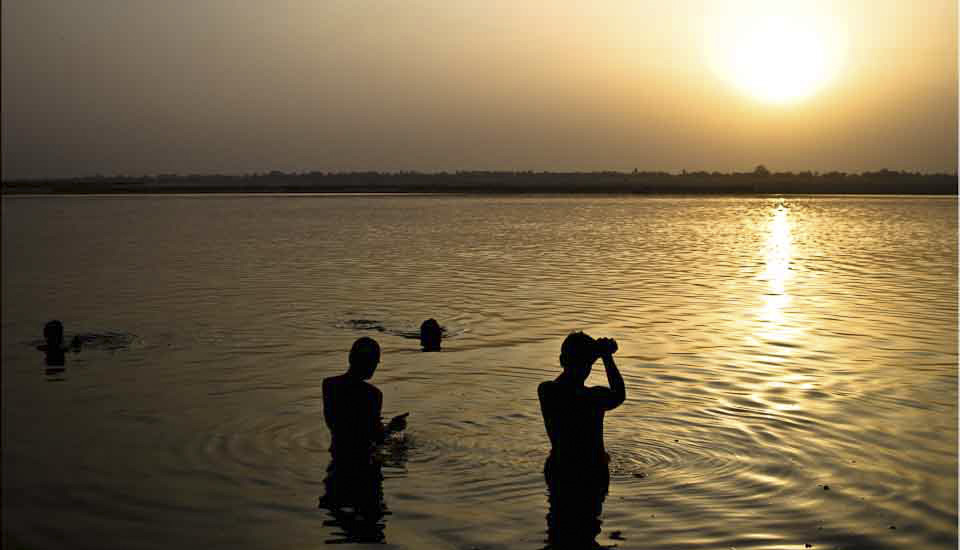
- Performing the Ganga Aarti from Dasaswamedh Ghat, Varanasi
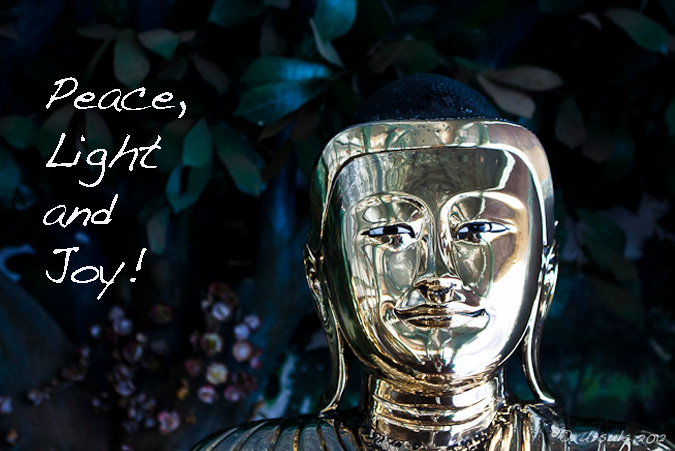
- Buddha Head from Shwedagon Pagoda, Myanmar
- Harry Clarke Window from Dingle, Ireland
- Novice Monk Shwe Yan Pyay Monastery, Myanmar
Packets of 10 for $AU50.
Or - pick any photo from my Flickr or Wanders blog photos.

.jpg)
.jpg)
.jpg)









 Buying a few packs of tea I would never drink is a small price to pay!


 Here’s hoping you enjoy good food and great company over this festive season.