Mother and Cub Grizzly You could hear a pin drop on our idling boat in Khutzeymateen Inlet as we watched a female grizzly with her male cub digging for clams on the foreshore in the distance.
We’re going on a bear hunt.
We’re going to catch a big one.
What a beautiful day!
We’re not scared.
– Michael Rosen
We were going on a bear hunt – in search of grizzlies (Ursus arctos horribilis) in the Canadian wilds – from the safety of the water.
I had booked myself onto a cruise with Prince Rupert Adventure Tours, out of the northern-coastal British Columbia city of Prince Rupert (see: Butze Rapids) and into the Khutzeeymateen Provincial Park, also known as Khutzeymateen/K’tzim-A-Deen Grizzly Sanctuary.
Our 72-foot catamaran, the Inside Passage, headed out of rainy Prince Rupert, north through Chatham Sound, and followed the Khutzeymateen Inlet into the rugged coastal mountain valley that currently houses a population of approximately 50 grizzly bears.
Khutzeymateen is a native Tsimshian word meaning ‘a confined space for salmon and bears’. The lands here have been the traditional territories of the Coast Tsimshian (Metlakatla and Lax Kw’alaams First Nations) since time immemorial. In 2008, the Khutzeymateen Inlet Conservancy was established to ensure the protection of grizzly habitat, while maintaining the traditional social, ceremonial, and cultural land uses of the First Nations.
The Conservancy also oversees the development of responsible recreational opportunities and sustainable resource use. Commercial bear-viewing guides, like those I was travelling with, are licenced through the park management.
Let’s go hunt some bears!
Ferry Port It was a rainy morning on the harbour. Prince Rupert is the rainiest city in Canada, so you have to expect it!
Young Guide Once installed on our comfy passenger catamaran, we are given the usual briefing about facilities and safety aboard the vessel.
Green Island We pull away from the port and into the cloud-covered, island-dotted, rainy channels.
Tall Trees and Rough Rocks This is wild country: there are no roads and very few small communities.
On the Bridge Our man on the helm keeps a close watch on the waters.
The Texture of Trees
Bear in the Distance How sharp are your eyes? Our first grizzly is a long way away, ambling through the impossibly-green grass on the shoreline of our first cove.
Reflections of Trees As we back out of the cove, I amuse myself by enjoying the patterns of the old growth temperate rainforest on the waters.
Khutzeymateen Chanel The mountains – some of them snow-dusted – rise steeply all around us.
Almost Abstract : Waves on Shore The colours and patterns in the waters are magnificent. Those are Douglas fir (Pseudotsuga menziesii) and Sitka spruce (Picea sitchensis) growing to the water’s edge.
Nature’s Artworks : Reflections in the Wake There are those who believe that the fluid patterns reflected in BC waters had a strong influence on traditional native art.
Mountains Behind The landscape is so large!
The Inside Passage Our cheerful yellow catamaran stands out against the overcast sky.
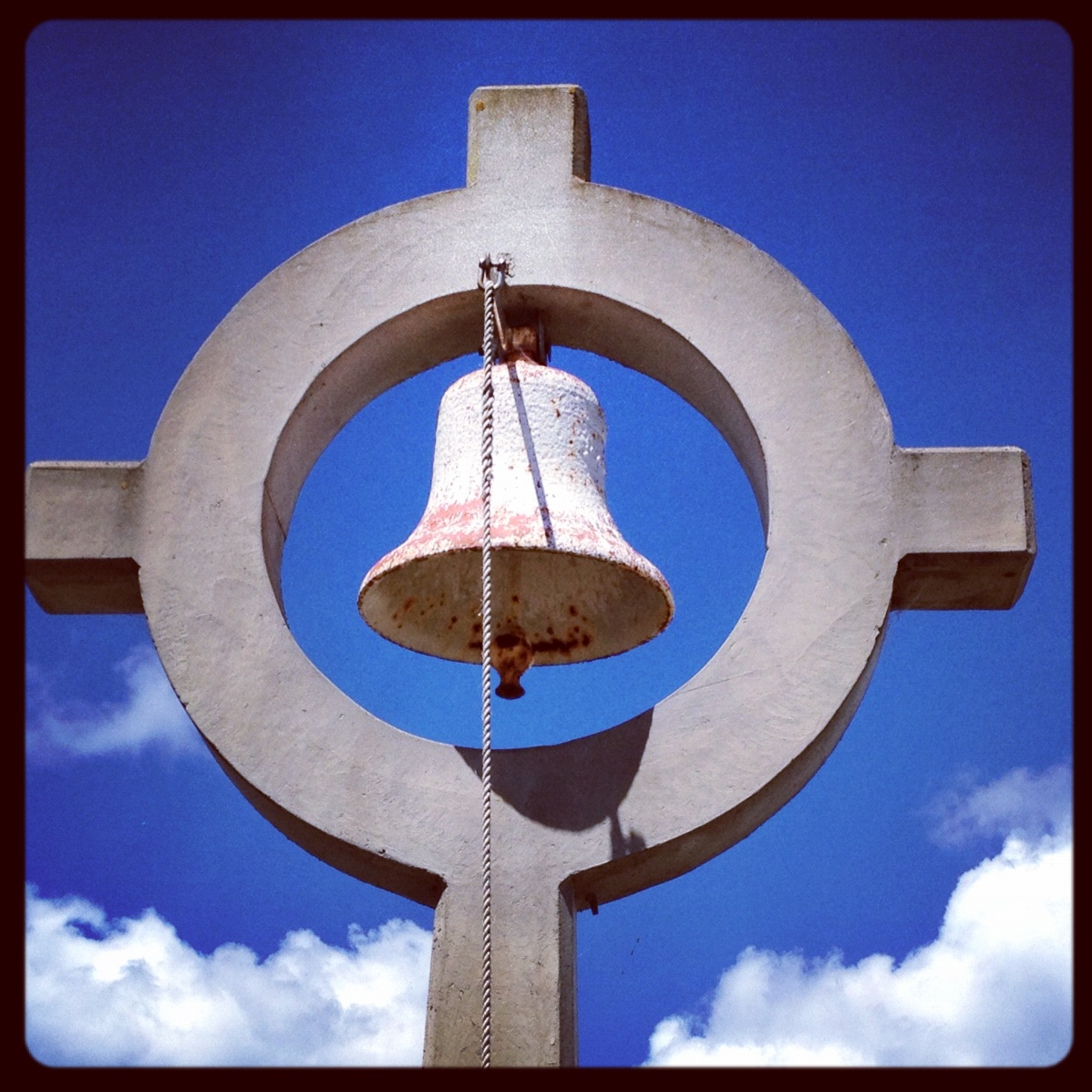
Ship’s Bell
Bear on the Shoreline Our eagle-eyed skipper has found another bear – this one close enough I can see the frightening length of its claws!
Bear on the Move The local grizzlies have not been out of hibernation long; they prowl the shoreline in search of food and mates. The speed with which this one moves gives me pause!
Boats and Boathouse
Lens Envy! Our skipper is carrying some heavy fire-power – a 400mm lens with an extender. I’m so jealous! There was a cushioned cradle on the bow so he could stabilize the heavy lens and the resulting shots were beyond anything I could manage with my little rig!
Keeping Watch The staff know which of the bears have been seen recently, and keep a close watch on the shoreline.
Wake Patterns
Landscape on the Sound
Chewing Grass I think this beautiful blond bear was my favourite.
Teeth S/he might be grazing on the rich grasses in the the intertidal wetlands, but you can just see the long incisors and imagine the damage they could do.
Grizzly in the Grass We never got very close to the next bear, who was eating grass next to a pretty creek.
Watching a Bear You can see how far away we’ve had to stop! It is important that the visitors don’t disrupt the bears’ natural behaviours.
A Mouth full of Grass
Mother and Cub This duo was digging for clams – another popular grizzly food.
Bald Eagles Incoming When we were almost back at port, we were cued to expect something special. The sky above us filled with raptors.
Bald Eagle Diving The operators had thrown some pork fat into the waters, and bald eagles swooped in from all directions to feed.
Competition The fight for the scraps was fierce!
Eagle on the Wing The speed and focus of the incoming birds was absolutely exhilarating!
Back in Prince Rupert Harbour
Watching the grizzlies was a special privilege, and we were very lucky to see as many as we did.
I was just as taken by the waterscapes along the way – and watching those bald eagles swoop and dive was absolutely thrilling!
A Winding Street in Lefkes Even when the autumn evening light is fading; even where the paint and wash are peeling, Paros in the Greek Cyclades is a joy.
I loved Greece!
Each day seemed better than the last.
A trip to the Greek Cyclades had been on my wish-list forever. I finally managed to get there as tourist destinations were welcoming travellers back after long months of Covid-19 restrictions. With a small group organised by Intrepid, I had arrived on Paros by ferry one warm autumn day and had spent the early afternoon exploring the island’s main town of Parikia (see: A Slice of Paradise). It was already after 5PM when we all set off in a minibus to have a look at the rest of the island.
But, even in September, the days are long over the Aegean Sea: we were bestowed with beautiful weather and nice light as we drove to the centre of the island to the mountain village of Lefkes, and then north to the harbourside fishing village of Naoussa (Naousa).
Both villages date back to medieval times and are best explored on foot.
The tiny village of Lefkes (population: 611) is quintessentially Cycladic, with narrow laneways of whitewashed buildings trimmed in blue. Once the capital of the island, many of the old and somewhat dilapidated buildings seem deserted – but even they are picturesque and framed by colourful splashes of bougainvillea.
Naoussa is a beautiful fishing village sitting on a large bay in the northern part of the island. The remains of a late 13th century Venetian castle in the port attest to the town’s long history. Naoussa is larger (population: 3,134) and more upmarket than Lefkes: the waters are crowded with colorful wooden boats and the foreshore is packed with tables belonging to the restaurants and bars fronting the harbour. Its charming winding streets and alleyways are dotted with tiny shops, bars, and restaurants. After dark, the nightclubs cater to the party crowd.
Come explore:
Ancient Olive Tree We stopped briefly in the Anelipsi area, outside Lefkes, to admire an ancient olive tree. I don’t know how old it is – there is one on Crete estimated to be to be 4,000 years old – but it is certainly battle-scarred. (iPhone12Pro)
Church of Agia Triada We also have views over the main church of Lefkes: the unique Greek Orthodox Church of Agia Triada (Holy Trinity), built from marble between 1830 and 1835.
Lefkiano Restaurant Courtyard Lefkes is an archetypal Cycladic village boasting small squares, narrow and twisting stone laneways, traditional whitewashed buildings, and plenty of contrasting blue trim.
Duranta Erecta Flowering plants and shrubs are everywhere.
Another Square Streets wander of in all directions and every square invites you to shop or sit for a wine or coffee.
Local in a Laneway
Ruins Even the tumbled-down abandoned buildings have charm!
Cats on the Stairs There are cats everywhere in Greece – and they all look well cared for.
Paved Laneway The historic Church of Agia Triada commands attention in the small town. (iPhone12Pro)
Young Women in the Square
Church of Agia Triada The impressive Byzantine basilica has been listed as a monument of special significance by the Greek Ministry of Culture. Much of the main building is made from the locally-sourced precious Parian marble, known for its fine-grained semi-transparent luminescence.
Belltower The elegant bell towers stand out against the Aegean sky.
Orthodox Church in the Countryside From the hillside, there are views back down over village churches …
Windmill on the Hill … and up over the stone fences to a traditional whitewashed windmill.
Paved Street Even in the evening shadows, the bougainvillea brightens the narrow streets.
Scenes From A Bus : Rocky Walls along the Byzantine Road Back in the bus and heading north, we were able to see the ancient road that links the towns of Lefkes and Prodromos. Dating to 1000 CE, the road, which is paved with marble, is now a popular hiking trail. (iPhone12Pro)
Sunset on the Harbour We arrived in Naoussa just in time to watch the sun drop over the harbour.
Naoussa Town Square The falling light doesn’t slow the activity in the streets. (iPhone12Pro)
The Venetian Fort In the old fishing harbour, tourists clamber over the remains of a 15th century Venetian fortress.
Agios Faneromeni (Panagía) Orthodox Church Warm light bathes all the white buildings that line the waterfront.
Greek Orthodox Chapel of Agios Nikolaos This small church right on the harbor serves sailors in what is still a traditional fishing village. The courtyard is full of early diners from a nearby restaurant.
Naoussa Harbourfront The waterfront is packed with buildings, and the sea wall is full of restaurant tables.
Evening over Naoussa
Sunset on the Naoussa Harbour The water is quiet as the evening puts on one last display of magnificent colour.
It is time for us to return to our hotel in Parikia.
I absolutely loved Paros with its charming Cycladic villages and wonderful landscape.
Lilac Lily – Schelhammera Undulata There is something so cheerful and hopeful about spring wildflowers. An October walk on the Bundian Way Story Trail from Cocora Beach to Quarantine Bay in Eden, on Australia’s Sapphire Coast, was an absolute balm.
“I sit here beside Gudu the ocean, and watch the light glimmer and sparkle on the water. The sea breeze wraps around me and I am reminded of the stories the old people have told me, about Gudu, and how we have been here since the country changed from warm to cold and back again.”
It is spring in the southern hemisphere – a time of warming temperatures, new beginnings, and hope.
I’ve just returned to Australia, after an extended period in a Northern Hemisphere autumn, and have been suffering post-trip malaise. So, more than ever, the flowers on the jacaranda trees have been a welcome sight – lifting my spirits and sending me back to old photo-files from springs past.
While I was away, I was walking many kilometres a day: exploring cities, markets, and remote mountains. As I’ve said before (see: The Pambula River Walk), when I’m at home I have the tendency to hike much less: usually simply walking out-and-back on the boardwalk along my estuary, and only sometimes going the extra five minutes to reach the ocean!
I was pleased to rediscover a rare folder of almost-forgotten local photos from a short walk I made along the Story Trail section of the Bundian Way.
The Bundian Way is an ancient 365 km (227 mile) pathway that Aboriginal people from Yuin, Ngarigo, Jait, and Bidawal Country have used since time immemorial. It has been pushed into the background by new highways and modern rhythms, but once upon a time it allowed these different peoples to gather on the shores of Turemulerrer(Twofold Bay) in the spring for the whale migration, and to meet at ceremonial places near Targangal (Mount Kosciuszko) to collect bogong moths (Agrotis infusa) in summer.
I first learned about the Bundian Way by reading On Track, a book by the author, naturalist, and walker John Blay, telling of his search for the old pathways through that wild and rugged landscape between Australia’s highest mountain and the ocean. His work, in conjunction with local Indigenous communities, lead to the pathway being listed on the NSW State Heritage Register in 2013 for its cultural, historical, and wilderness significance.
There are plans to develop the Bundian Way into a long-distance track – but at this point in time, only short sections are formally open to walkers. One of these sections – the 1.8 km (1.1 mi) Story Trail – is literally in my backyard. It opened in 2016 – so I’m a bit ashamed that it took me so long to check it out!
The trail starts at Cocora Beach, a short drive from my house, and leads through native bushland up over Cocora Point and to Budginbro Lookout, along Bungo Beach and finishes at Quarantine Bay. It hadn’t occurred to me to pack the cameras, so all these photos are taken on my old iPhone12Pro.
Come and smell the sea air and enjoy the flowers!
Pigface – Carpobrotus Glaucescens Endemic to eastern Australia, pigface or iceplant is a succulent that loves the sandy soil along our coastline. The flowers always make me smile.
Nature’s Artworks : Seagrass on the Sand
Waves and a Rock Formation Cocora Beach is a stretch of sandy beach on the shores of magnificent Twofold Bay.
Cocoro Point The craggy rocks at southern edge keep the family-friendly waters sheltered and calm.
Weecon Cove A number of pleasure boats make their home here in Twofold Bay (see: On Eden Waters).
Rocky Textures and a View Over the lichen-covered rippled rock, we look back across Eden Harbour and to the Eagles Claw.
Gum Trees The trail winds up through native bushland to the Budginbro Lookout, …
Budginbro Lookout … where there are views over Quarantine Bay to Mount Imlay in the distance.
Almost Abstract : Water Colours Below the Budginbro Lookout, the crystal clear waters show off the patterns in the sand and rock.
Selfie on the Path
Tiny Treasures : Libertia The evergreen Libertia is a small perennial plant native to South America, Australia, New Guinea, and New Zealand.
Mangaema Creek
Common Heath – Epacris Impressa
Natures Sculpture : Folding Rocks into the Sea The jagged rocks of Oman Point at the south end of Bungo Beach jut out into Twofold Bay.
Nature’s Sculpture : I See Animals In The Rock At the north end of the beach, the boulders look to me like creatures.
Sunshine in My Eyes … High overhead, the sun shines through the gum trees.
Ferns on the Sandy Path It’s an out-and-back track. As I turn around to retrace my steps, I can’t help but marvel at how different the path looks from the other side!
Bush Daisies – Olearia Gravis Clumps of native wildflowers line the walkway.
Nature’s Bouquet A tangle of purple (Hovia) and yellow (Pultenaea) endemic flowering peas add a splash of colour.
The Sheoaks are Singing – Listen to The Wind In The Trees
More Pigface – Carpobrotus Glaucescens Patches of cheerful iceplants are everywhere.
View over Quarantine Bay
A Creek through the Tangled Undergrowth
Back on the Bay Before long, I’m on Cocora Beach again, overlooking the boats on Weecon Cove …
… and smiling.
“We are taught all spirits must be treated with equal respect…. The spirits of our country are powerful and it is our responsibility to treat them with care, if we wish to be provided with their gifts. We also know our strength as a people is not in the sinew of our muscles, or in mastery of country, but in the collective knowledge of our stories.”
Layers of Colours It was a tough climb: I was averaging a slow 30 minutes per kilometre! But, views like this – across Morocco’s High Atlas Mountains and through the Imlil Valley – made it worth it.
The High Atlas Mountains in central Morocco rise from the Atlantic coast and stretch east to the Moroccan-Algerian border.
This is a rugged landscape, inhabited by hardy Berbers – more properly called by their endonym Amazigh or Imazighen, meaning ‘Free Person’ or ‘Free People’. They live in small villages with narrow lanes lined with traditional mud-brick houses. There is often a kasbah, surrounded by fortified walls, and there is always a mosque, with a simple square minaret tower. Some of these hamlets are accessed only by rough roads and goat tracks.
The Amazigh have lived here forever – and many aspects of their culture and daily life have remained unchanged. Indigenous to the Maghreb region of northwestern Africa, cave art and other artifacts show that the Imazighen have been there from at least 10,000 BCE. They were first mentioned as Barabara and Beraberata in Ancient Egyptian writings, and some scholars believe this – rather than the Ancient Greek ‘barbarian’ – is the root of the name given to them by outsiders.
The Imazighen or Berbers are actually a number of distinct ethnic groups with different, but closely related languages and dialects grouped under the generic name Tamazight. This is represented by a unique script, Tifinagh, with its roots in the Libyco-Berber alphabet used during the first millennium BCE. As one guide from the region explained: people in neighbouring valleys might speak mutually unintelligible dialects. Children going to school must first learn standard Tamazight – one of the official languages of Morocco – before going on to learn Arabic and then French.
This helps illustrate how remote – and independent – these ‘Free People’ are.
I had been seduced by pictures of hiking in dramatic snow-dusted mountains and the offer of a stay in a kasbah. After all, who doesn’t want an excuse to say: “Meet me at the Kasbah!” And, any visitor to these pages knows I love walking (eg: Sapphire Coast; Butze Rapids).
But, I had clearly bitten off more than I could chew! I was staying in the small mountain village of Imlil, 1,800 metres (5,900 ft) above sea level. To reach my accommodation at the local kasbah (Kasbah du Toubkal), I had to walk 15 minutes up a steep and rubble-strewn incline – and had to stop every five minutes to catch my breath!
The next day, my Berber guide met me for an 8 kilometre (5 mile) hike around the Imlil Valley. Sounds easy, right? You wouldn’t need a guide at home! But, walking alone in these mountains is not recommended – and in many places is not allowed. There are virtually no marked trekking routes, and the goat-tracks lead off in all directions. The pathways are rugged, steep, and strewn with scree and donkey-droppings.
That little ‘introductory’ hike took me 4 hours!
On a photographic note: I took a lot of landscape pictures – mostly as an excuse to stop and breathe. People pictures were harder, as I only make pictures with consent and most locals wouldn’t grant permission.
Join me as I attempt to walk in the footsteps of the Amazigh in the High Atlas Mountains.
Breakfast for One You won’t go hungry in Morocco. The strong culture of hospitality means that every meal contains more than one can possibly eat. (iPhone15Pro)
Almost Abstract : Walnut Trunk In Morocco, walnut trees (Juglans regia L.) have long been cultivated for their nuts. Growing in these mountainous areas – predominantly between 800 and 1800 m (2625 – 5900 ft) – they frequently have wonderfully gnarled trunks, which my guide told me was the consequence of insect damage.
Mohamed and the Happy Merchant My local trekking guide Mohamed knows everyone – and is happy to chat with the local shopkeepers in Imlil Village.
Life in the Village Imlil is a relatively new village predominantly catering for the tourists heading to Jbel Toubkal. Rubble and building materials are everywhere, as people attempt to rebuild their lives after the devastating earthquake on September 8th 2023; the epicentre near Oukaïmedene was not so far from here.
Still Life Found : Bike in a Doorway Chinese-made Docker motorcycles seem to be the most common brand here.
Across the Valley Tiny hamlets dot the valley, each one centred on its own mosque. The cultivated groves near the valley waterways are a stark contrast to the rocky, arid mountaintops.
Doorway and Light Some of the buildings are beautifully maintained. The dappled light on the potted plants gives a Mediterranean feel, as the morning heats up.
Woman on her Phone I love the contrasts: a new car and a new mobile phone in an old and sagging street.
Clinging to Life Leaving the village behind, we follow a barely-discernible goat-track up into the mountains. Light catches the desert vegetation that makes its home in the rocky terrain.
Terraces and Building Works It is comforting to see how far down the valley the little hamlets are: it means I am making some progress! There is building work going on everywhere; it’s hard to know what is to meet rising tourist demand, and what is to repair earthquake damage.
Pine Trees in the High Atlas Aleppo pine (Pinus halepensis) and Atlas cedar (Cedrus Atlantica) are native here, …
Pines on the Ridge … and extensive plantings have been undertaken in an attempt to slow erosion.
Pines and Bare Mountainside The colours in the exposed rock-face are incredible.
Villages and Orchards Below Near the waterways, farmers grow cherries, apricots, and all kinds of apples.
Bare Peaks
In the Saddle I’ve climbed almost 400 m (1312 ft) …
Into the Distance … and the views stretch out to the horizon.
More Villages
Mohamed on the Path My mule has long-gone, and my guide – while regularly stopping to encourage me – is well in front.
Vegetation on the Slope The autumn day is hot and sunny; the rocky landscape is host to a variety of dry shrubs.
Village in the Rocks There are countless villages here – and none of them appear on my maps.
Mule Finally! We reach our lunch spot, where ‘my’ mule has been allowed to graze.
Lunch in the Atlas I marvel at the picnic that has been prepared for me. (iPhone15Pro)
Goat
“Main Street” Having made a long loop, we descend into the village of Aroumd …
Gate and Door … where I admire the classic Berber village housing designs.
Imlil Cascades Dropping down further, we visit the small, but pretty waterfall not far from my endpoint. (iPhone15Pro)
Portrait of a Juice Seller This personable young man was doing a brisk trade making juice for all the tourists cooling off at the waterfall.
Of course, having dropped down to the waterfall, we then had to walk back up again!
The climb back up to the kasbah felt even longer and steeper than it had the day before.
Sundown on the Backwaters Could anything be more peaceful? Tourist boats bask in the late afternoon sun on Vembanad Lake and the Kavan River in Kerala, South India.
The heat; the soft chug of the motor; the sun glinting in the hazy sky and off the water; it was one of those iconic ‘Pinch me!’ moments.
I was finally on the backwaters of Kerala in south-western India.
The backwaters are a network of more than 900 km (560 mi) of waterways, stretching north-south on the Malabar Coast, between the Arabian Sea and the Western Ghats. Comprising five large lakes and several brackish lagoons linked by canals – both man made and natural – this interconnected network of waters is fed by 38 rivers whose names depend on the map you are reading. The freshwater from these rivers meets the saltwater from the Arabian Sea, making for a unique and rich ecosystem.
I had travelled down the mountains from the Cardamom Hills in the Western Ghats (see: In India’s Spice Garden) to the small hamlet of Kavanattinkara in Kottayam district with a small group. From there, a boat transported us the short distance up Vembanad Lake to our CGH Earth Coconut Lagoon resort.
This beautiful boutique resort is conscious of the local heritage: the cottages set amongst the luxuriant coconut groves were built from the remnants of relocated and reassembled old mansions – tharavads – that were once the family homes of local nobility.
The resort – which is located between the lake and a river (sometimes identified as the Kavan River) – is also environmentally aware. The lush lands around Vembanad Lake are included in a list of wetlands of international importance, and are a sanctuary for a huge variety of bird life. CoconutLagoon is doing its best to protect the surrounding natural environment through a variety of measures.
We arrived at the resort early enough to enjoy an afternoon cruise on the waters of the lake and river before our magnificent South-Indian dinner and bedding down in rooms fit for royalty.
Come for a magical boat trip:
View from the Bus : In the Western Ghats We were in our bus early, and the mists were still in the trees as we drove west from Idukki and down out of the mountains. (iPhone12Pro)
Picking Tea I was thrilled to spot my first tea-pickers! The bus stopped briefly to allow us a quick look, but the women were a long way up the terraced hill.
Palm Trees from the Bus The Western Ghats are lush and fertile, with a huge range of plants growing. (iPhone12Pro)
Rubber Plantation We made another quick stop for the benefit of those who had never seen rubber trees.
Dockside in Kumarakom We spent the middle of our day in transit, at lunch, and visiting our guide’s home, before finally swapping our bus for a river-transport in Kumarakom Village on Vembanad Lake.
Rippled Waters It was wonderful watching the the life on the shore …
A Boat on the Backwaters … as we chugged up the lake.
Shikaras on the Backwaters The backwaters are known for their houseboats – which we would be boarding the next day – but shikaras: covered, open-sided wooden boats like those found on Dal Lake in Kashmir, are also common.
Welcome When we landed at Coconut Lagoon – which is only accessible by water – we were greeted with scented bindi paste and flowers.
Backwater Boat Late afternoon we had the opportunity for a shikara ride through the water hyacinth (Pontederia crassipes) and the water lilies (Nymphaeaceae) on the backwaters.
Golden Hour on the Kavan River When we looked towards the lowering sun, the light changed and silhouetted the other boats on the water. (iPhone12Pro)
Lilies on the River The water lilies (Nymphaeaceae) have closed for the day.
Tourist Boats The water is almost choked with water hyacinth (Pontederia crassipes), a free-floating perennial originally from South America. One of the fastest-growing plants known, it is now found on every continent except Antarctica. (iPhone12Pro)
Twilight Facing into the late afternoon sun casts a golden glow on the waters. (iPhone12Pro)
Backwater Houseboats Kerala houseboats come in different shapes and sizes, …
Large Houseboat … but they are closed in, with bedrooms, ensuites, a kitchen, and communal living spaces.
Chasing Sunset The tourist shikaras and houseboats are all out on the lake to watch the sun drop in the afternoon sky.
Sundown The colours of the afternoon changed dramatically, depending on which way we looked.
Watching Sunset
Red Sun – Black Bird There is a beautiful calm on the water, as the sun turns red …
Birds on the Wing … and birds swoop and circle overhead.
A Kerala Dance Back on land after dark, we were treated to some traditional Kerala dances, … (iPhone12Pro)
Musicians in the Dining Room … and a lot of food and music. (iPhone12Pro)
As far as introductions to the backwaters of Kerala go, it couldn’t have been more perfect! I went to sleep peacefully – full and happy – among the coconut groves.
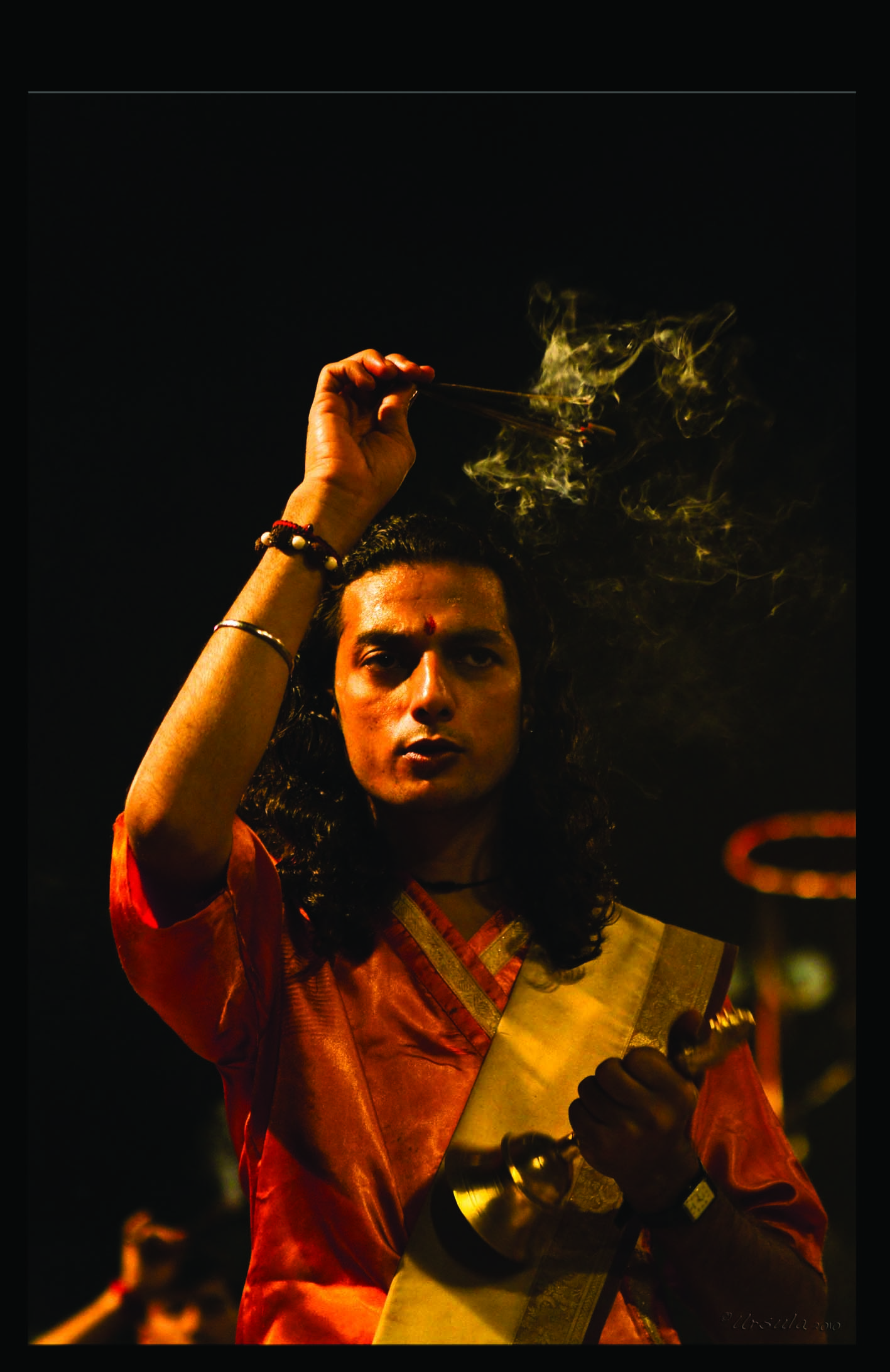
- Performing the Ganga Aarti from Dasaswamedh Ghat, Varanasi
- Buddha Head from Shwedagon Pagoda, Myanmar
- Harry Clarke Window from Dingle, Ireland
- Novice Monk Shwe Yan Pyay Monastery, Myanmar
Packets of 10 for $AU50.
Or - pick any photo from my Flickr or Wanders blog photos.

.jpg)
.jpg)
.jpg)




 I absolutely loved Paros with its charming Cycladic villages and wonderful landscape.
.jpg)


 As far as introductions to the backwaters of Kerala go, it couldn’t have been more perfect! I went to sleep peacefully – full and happy – among the coconut groves.