Almost Sunrise I was on a hill in the Sahara sands at Erg Chebb in Morocco to watch the sun rise over the horizon. (iPhone15Pro)
A new day is full of promise.
As is the New Year.
In theory, we can start again fresh. In practice of course, the dawn is just a continuation of time.
Still, climbing up a sand dune in Erg Chebb in Morocco, not far from the Algerian border, filled me with hope.
I had walked into the dunes the evening before to enjoy the sunset (see: A Night in the Sahara Desert), and set my alarm early to repeat the climb in the murky darkness of morning before the sun was up. I was travelling with a small group, and had spent the night at the Golden Camp, near the town of Merzouga at the very north-western edge of the Sahara Desert. We were surrounded by hills of rippling sand and blanketed by stars.
Join me for a very short walk in the sands of the Sahara.
Predawn in the Dunes Another desert camp, much like ours, comes into view in the early morning light.
Waiting for Sunrise It was quiet, and I only saw one other person against the undulating vastness of the Sahara.
Predawn Dunes Colour creeps into the sky.
Dawn The morning colours over the landscape change quickly.
Orange Sky
Sunrise (iPhone15Pro)
Camels on the Horizon The camels that transport visitors in and out of the desert camps are ready for their first trip.
Three Camels
A Camel In spite of the nasty reputation that camels have …
Camel Portrait … I love their gentle-looking faces.
Bedouin Handler and his Camels A cameleer in his colourful garb readies his team. (iPhone15Pro)
Nature’s Artworks: Waves in the Sand (iPhone15Pro)
Rolling Sands As I make my way back to my tent, I take one last look. (iPhone15Pro)
The new day was well underway: time to prepare to leave the Sahara behind, and look forward to new frontiers.
As this year unfolds, I wish you and yours all the best.
Sundown on the Dunes The desert is a magic place at nightfall – and it was a real gift being able to watch sunset over the dunes of Erg Chebb at the western edge of the Sahara in Morocco.
I’m sure I’m not alone in drawing parallels between the end of the year and the end of a day.
And, seeing camel trains always makes me think of the Christmas story of the three wise men.
This year, my gift to myself was a trip to one of my long-time dream-destinations: Morocco. My three and a half weeks in this colourful North African country was everything I had hoped, and there were countless highlights (eg: Walking around Imlil). Watch this space!
But, as the current year draws to a close, I’ve been taking time to reflect, and I keep thinking about my night in the desert: at the very north-western edge of the Sahara Desert, not far from the Algerian border.
The overnight trip to the Golden Camp, near the small town of Merzouga, involved a short and thrilling ride into the sandy dunes of Erg Chebb, followed by a camel ride on the most uncomfortable seats I’ve ever experienced! My tent in the desert camp was wonderful – complete with hot water and a working wifi. But, while the camp feels secluded, the area is crowded: at night, the sight of the myriad stars was somewhat offset by the noise of the neighbouring campsite only a short distance away.
I walked into the dunes at dusk in search of a peaceful sunset, and found myself surrounded by tire tracks and the noise of evening dune buggies.
So, like this past year, the night wasn’t quiet and it wasn’t peaceful!
But, I do love the desert, and it was a wonderful and unique experience, and I feel extremely fortunate to have enjoyed it.
Join me for an evening in the sands of the Sahara.
The Sahara in our Windscreen We piled into four wheel drives in the small village of Merzouga, and raced west into the Sahara. (iPhone15Pro)
View from the Four Wheel Drive The dunes of the Sahara loop and fold on the arid landscape outside our windows. (iPhone15Pro)
Camels at the Ready The second half of our journey into the Sahara was by camel.
Bedouin The camel handlers are striking in their piled turbans and colourfully embroidered clothes.
Waving Sands It wasn’t easy taking pictures while loping camel-back – but I couldn’t resist! (iPhone15Pro)
Shadow Selfie It’s early evening, and the lowering sun stretches the shadows long across the waving sands. (iPhone15Pro)
A Table on the Hill It’s a quirky scene: delicate furniture sits atop the hard-packed dunes.
Desert Camp Being at the very edge of the vast Sahara, this is a busy region. The neighbouring camp was close by.
Folds of Sand
Nature’s Artworks : Waves and Grass
Desert Patterns Although arid, the desert is not barren. You have to wonder what made these tracks!
Footprint in the Sand The colours change with every shift in the light. I leave my own footprints next to tiny animal tracks as I climb to a vantage point.
Waiting for Sunset The neighbouring dunes are busy as the sun lowers in the sky.
Chasing Sunset Dune buggies, trucks, camels, and people are on every ridge.
People in the Sunset The sky only stays golden for a few minutes …
Sunset in the Dunes … before the sun drops behind the dunes, and people make their way back to their respective camps. For a moment, everything was quiet. (iPhone15Pro)
Camels on the Horizon
Silhouettes On my way back to the camp, I spot some of my travel companions making use of those chairs I saw earlier.
Young Berbers Two local lads were happy to stop and chat.
Portrait of a Young Berber
Warming the Drums After a wonderful Moroccan meal, we were treated to some Gnaoua music under the stars.
It was a treat!
Until next year, wishing you and yours a wonderful holiday season.
Houseboat in the Wetlands Like a dream, a houseboat – and its reflection – glide through the backwaters around Vembanad Lake in Kerala, South India.
I’ve said it before: being on and around the waters of Vembanad Lake in Kerala, South India had a soporific effect on me (see: On the Kerala Backwaters). The heat – and the haze that the heat produced on the water – and soft chugging of the motors of the river traffic had me feeling like I was in a dream. Tropical plants adorned the gardens either side of the waterways, and birds were everywhere. Brightly dressed local residents went about their daily lives in small boats and on walkways at the water’s edge.
I knew this region from other people’s photographs, and was finally getting to visit for myself!
I was travelling with a small group, so all the details were looked after for me. We had spent the night in the beautiful CGH Earth Coconut Lagoon resort in Kottayam district on Vembanad Lake. This area is home to a huge variety of bird life which takes sanctuary in the protected neighbouring wetlands.
The resort offered a guided pre-dawn nature walk, so I set my alarm and got up early to join in. As we walked around the grounds and onto the neighbouring sanctuary, a huge array of birds and plants were pointed out to us. Unfortunately, my telephoto lens is by no means bird-worthy, especially in the low light of morning – but I made several attempts to capture some of the species we spotted.
Mid-morning, our group transferred from the resort to kettuvallam – traditional Kerala houseboats – that were to be our homes for the afternoon and overnight. We cruised slowly through the rivers and canals off Vembanad Lake, taking in the colourful life on the banks of the Pamba River before parking at a mooring as the sun went down.
Join me on the waterways of Kerala.
Indian Crow – Corvus Splendens So ubiquitous around India that the locals call this a house crow or common crow, these greynecked crows struck me as remarkably uncommon! The variants I was used to seeing in North America, Australia – and even Thailand – were pure glossy black.
Asian Openbill – Anastomus Oscitans January is dry season in Kerala, but there is still a lot of water in the landscaped trenches around the resort – making a good spot for a small stork to search for food. The sun hasn’t risen high enough to penetrate the haze and murk of the morning.
Red Water Lily – Nymphaea Rubra The lilies are just opening up to the new day.
Houseboat in the Morning In the low light of morning, Kerala’s famous houseboats are already on the move.
A Stream of Asian Openbills I love the different formations that the birds make overhead in the hazy morning sky.
Asian Openbill – Anastomus Oscitans I manage to pull one in on the zoom; the open beak of this distinctive small stork is just visible.
Indian Pond Heron – Ardeola Grayii Often called a ‘paddybird‘, this small heron is found everywhere in South Asian rice fields.
Purple-Rumped Sunbird – Leptocoma Zeylonica High overhead, we spot a sunbird – probably a male – in the trees.
Powder-Puff Tree – Barringtonia Racemosa The flowers in the resort gardens are much easier to catch!
Kingfisher on a Pole The poles in the floating mass of water hyacinth provide a great perch for birds on the lookout for food.
Two Men in a Boat There is a steady stream of boat traffic on the water. I love how the background fades into the heat-haze.
Full Boat Some of the beasts seem dangerously overloaded!
Cattle Egret – Ardea Ibis I love watching these birds in flight.
Like a Minimalist Painting
Viewing Platforms There are a few hides in the wetlands for serious bird watchers.
Cannonball Tree – Couroupita Guianensis I love these unique flowers. But, I keep watch for any over-hanging fruit: they are called ‘cannonball’ for a reason!
Life on the Water’s Edge Later in the day, we boarded our small houseboats, and set off through the Alleppey Backwaters.
Houseboats on the Pamba River These popular waterways are a labyrinthine network of interconnected canals, rivers, lakes, and inlets, stretching over 900 kilometers.
Pedestrian Bridge The waterways are bustling with movement and crowded with buildings.
Couple on the Bridge
Houseboats and Transport Boats
Women Walking on the Edge Everywhere we look, there is colour and activity.
Women Working The waterways are the centre of daily life.
Doing Laundry
Colourful Tourist Boats Tourism is a major contributor to Kerala’s income.
Brahminy Kite (Haliastur Indus) – I Think? The sky is alive with raptors.
Houseboat at Rest As the day draws to a close, the the houseboats pull into their allocated berths for the night.
Boatman The boatmen make sure the vessels are securely tied up …
Sundown on the Houseboats … and the waterways go quiet.
We ate our wonderful South Indian meal on our houseboat as the sun went down over the Kerala Backwaters and then spent the night in air-conditioned comfort.
The Water Pavilion of Lotus Fragrance The Chinese Garden of Friendship in Darling Harbour was gifted to Sydney by her Chinese sister-city of Guangdong in Guangzhou (Canton). It was formally opened in 1988 during the Bicentennial celebrations – and is where my husband and I later married.
I ♥️ Sydney!
Not only is it an aesthetically beautiful city, but every part of it is home to encapsulated memories I’ve collected over many years.
I get into Sydney at least four times a year: for dance, music, theatre, and/or to catch up with former work friends. One of the great joys of not living in the suburbs anymore is having to stay in the city itself for events – rather than just making the long drive in from the outskirts. This makes city trips events in themselves.
I was cleaning up some photo catalogues and came across a set of pictures from a trip many years ago. We had only recently moved back to Australia and had some appointments in the Central Business District. So, we made the day’s drive north, and stayed in nearby Haymarket.
Haymarket is home to Sydney’s vibrant Chinatown and some of the city’s best markets. It is a short walk from the iconic Town Hall and Queen Victoria Building, and next door to the wonderful Darling Harbour.
Darling Harbour is a waterway that runs along the west of Sydney’s city centre. The lands either side have been re-invented many times over the years, but have operated as a pedestrian and tourist precinct since the 1980s. When my children were school-aged, we would visit regularly during school holidays to take part in the free entertainment that was on offer in the summer. I still like walking around there, any time of year (see: Searching for Christmas Spirit).
The Darling Harbour precinct is currently home to restaurants, bars, a casino, entertainment venues, convention and exhibition spaces, a nightclub, the Australian National Maritime Museum, an IMAX theatre, a Madame Tussauds, the Wildlife Sydney Zoo, and the Sea Life Sydney Aquarium among other attractions. My favourite place within it is the Chinese Garden of Friendship – which is where my husband and I had our wedding.
Join me for a few photographic impressions and memories:
George Street From our hotel eyrie n …
Hay Street … we can watch the world below.
“The Challenge” Our morning stroll takes us through the Hordern Arcade in World Square, where we stop to admire the bronze bull created by Alan Somerville in 1999. The plaque reads: The bull, a mythological beast, is the embodiment of spirituality and symbolises the qualities of strength, endurance and tenacity necessary in meeting the many challenges encountered in achieving success.
Australian White Ibis – Threskiornis Molucca These adaptable native birds, locally known as ‘bin chickens’ for their propensity to search for food in the rubbish, are a familiar part of the Australian natural landscape.
Willows Weeping The tranquil Chinese Friendship Gardens are a tribute to Chinese heritage and culture, and a recognition of that community’s contribution to commercial and social structures in Australia.
The Twin Pavilion The heritage-listed 1.03-hectare (3-acre) garden is modelled after the classic private gardens of the Ming dynasty in China.
Stone Pagoda The garden combines the elements of water, plants, stone, and architecture, attempting to balance the contradictory opposites of yin and yang.
Reading Brook Pavilion Every window frames a scene.
Pomegranate –Punica Granatum The garden was designed and planted by Chinese landscape architects using plants sourced in New South Wales – including many exotic species.
Autumn Zephyrlily – Zephyranthes Candida
Lily Pond
Around the Pond It truly is a tranquil place …
Rooftops and Well-Groomed Plants … and feels miles away from the modern bustle of Sydney.
Gabe in the Gardens We always took pleasure in revisiting.
Almost Abstract – Gardens through the Glass Every new view is a delight.
The Dragon Wall From across the pond, we can admire the ornate, double sided and free-standing glazed terracotta screen. From the government of Guangdong, the wall depicts two dragons – representing New South Wales and Guangdong – in search of the pearl of wisdom. In the background, Sydney Tower rises against the sky, as if to remind us where we are.
Water Park Especially in the heat of summer, the water park in Darling Harbour is attractive to visitors – particularly young ones.
Intermittent Water Spouts These dancing waters were one of my children’s favourite features in the extensive playground area.
The Royal Clock in QVB The nearby Queen Victoria Building is a beautiful block-long heritage-listed late-nineteenth-century building, full of very up-market shops and some interesting novelties. On the hour, the Royal Clock on the upper level rotates through six scenes from English royal history. This one is the execution of King Charles I in 1649.
King Harold Dying at the Battle of Hastings in 1066 Every scene is mesmerising: each mechanical performance is heralded and accompanied by trumpeters at the tops of the clock’s outer turrets.
Queen Victoria Outside the building, the Queen is not amused, and the sky darkens.
We hightailed it back to our hotel before the rains came.
L’Acteur Grec – The Greek Actor – Arthur Bourgeois (1838-1886) This is Paris in autumn: the timeless statues and monuments stand against the golden leaves and rainy skies. Here, in the Luxembourg Garden, a wonderful bronze man rehearses his lines with the dome of the pantheon in the background.
I had forgotten how much I love Paris!
It felt like forever since I had spent time in that wonderful city – and indeed, my last post from there dates to the summer of 2010 (see: Just another Monday Morning) .
These days, I never know how I’m going to feel after squashy plane trips. So, to give myself potentially-needed recovery time after the long travel time from Australia to Europe, I booked two nights in Paris before my onward connections. I found accommodation in the 5th arrondissement: in the heart of the city and within walking distance of the major sights and the direct metro line to and from the airport.
It was a northern autumn, and the skies threatened rain most of my stay. I made the decision to leave the cameras packed, and set off on foot with just my iPhone15Pro – and an umbrella just in case!
Come explore some central Parisian streets and gardens:
People in Motion My plane landed ridiculously early – and by 7am my bags and I were on the TGV (Train à Grande Vitesse) in the Charles de Gaulle Airport and ready to speed our way into the city.
Welcome to Paris! As I rolled my bags through the streets of the city, I couldn’t help but admire the historic architecture – and remember my first-ever trip to the city, which was before bags had wheels! This, the Church of the Val-de-Grâce, was built between 1645 and 1665, and is part of the Museum Of The Armed Forces Health Service complex.
Part of the Public Consciousness Joan Of Arc is known as the Liberator of France. This depiction, by Émile François Chatrousse (1829-1896) is on the Boulevard Saint-Marcel.
In the Jardin des Plantes. Old monuments and tributes to famous personages are everywhere. This one is French sculptor Emmanuel Frémiet (1824 – 1910) by Henri Léon Gréber (1854 – 1941).
The Mexican Hothouse It is hard to believe that this beautiful glass-and-metal confection is almost 200 years old! Designed by Charles Rohault de Fleury (1801 – 1875), it was finished in 1836.
Naturalist Georges Louis Leclerc the Comte De Buffon (1707 – 1788) by Jean Marius Carlus (1852 – 1930) The Jardin des Plantes started life as a medicinal garden in 1640 under King Louis XIII. Later, under the direction of the noted naturalist Buffon, who ran the gardens from 1739 to 1788, they became Europe’s most eminent centre of scientific study of natural history.
Who knew there were so many kinds of Sunflowers? The gardens make for a pleasant environment to walk off jet lag!
A Paris Rain Fortunately, the afternoon rain didn’t last much longer than my coffee!
A Treat on every Building
An Umbrella in the Autumn Rain
The Pont Marie from the Quai des Célestins With the Seine meandering all through the city Paris, it is a city of waterways and old bridges.
A Just Reward I’m so glad I’m no longer a strict vegetarian! Paris is all about food – and this confit du canard was wonderful!
Beautiful Buildings against the Sky
Église Saint-Médard France is still largely Catholic and there is a church on every corner.
Mother Mary The Chapel of the Virgin is an 18th century addition to this 15th century church.
The Archangel and the Saint This bas-relief by Adolphe Verrebout (1847 – 1892), shows Saint Michael appearing to Joan of Arc.
Au Jardin De Mouffetard One of the many things I love about France is the small markets with fresh food.
Oysters at the Poissonnerie Saint Médard All the shops invite you to think about your next meal.
Stone Dome The dome of the monumental Panthéon commands attention at the top of little Rue D’Ulm..
The Panthéon This monument, built between 1758 and 1790, has a confused history. Originally meant to be a church dedicated to Saint Genevieve, it later became a mausoleum for the remains of distinguished French citizens – including Voltaire, Emile Zola, Jean Moulin and Marie Curie.
Jean-Jacques Rousseau (1712—1778) by by André Bizette-Lindet (1906 – 1998) In the Place du Pantheon, a sculpture depicts the influential Swiss-born philosopher, writer, and political theorist.
The Faune Dansant The Dancing Faun by Eugène Louis Lequesne (1815 – 1887) is one of many sculptures in the gardens.
Gendarmerie Two police officers walk the beat in the in the beautiful Jardin du Luxembourg.
La Fontaine Medicis One of the features of the Jardin du Luxembourg is the beautiful Medici Fountain. Built in 1620, the fountain – like the nearby palace and the garden as a whole – was originally commissioned by Marie de’ Medici, the widow of King Henry IV of France and the regent for King Louis XIII. Today, the gardens and palace are owned by the French Senate.
Dôme des Invalides This is a sight I look for on all my stays in Paris: the gilded dome of the tallest church building in the city.
Hôtel National des Invalides Les Invalides was originally a hospital and a soldiers’ retirement home. Today, the complex also contains museums and monuments relating to French military history.
Plat du Jour Every meal in Paris is an event! I found a busy restaurant, and treated myself to the daily special: a wonderful hot goat’s cheese salad, followed by this sea bream fillet with roasted vegetables in a citrus sauce. Delicious!
Next Stop: La Tour Eiffel The iconic tower is a must-see in Paris.
Olympic Remains Paris was still on a high following their hosting of the Summer Olympics.
The Eiffel Tower I’ve been up the tower in the past, so I was happy to admire it from outside the barriers.
La Dame de Fer – The Iron Lady The lacy metal tower was designed and built by engineer Gustave Eiffel (1832 – 1923) for the 1889 World’s Fair and to mark the centennial anniversary of the French Revolution.
Sous la Pluie In the evening it rained again – but that only helps the lovers!
They do say Paris is for lovers – but then, who doesn’t love Paris?
I certainly smiled the whole time I was walking through the elegant streets and parks.
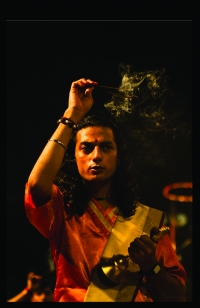
- Performing the Ganga Aarti from Dasaswamedh Ghat, Varanasi
- Buddha Head from Shwedagon Pagoda, Myanmar
- Harry Clarke Window from Dingle, Ireland
- Novice Monk Shwe Yan Pyay Monastery, Myanmar
Packets of 10 for $AU50.
Or - pick any photo from my Flickr or Wanders blog photos.

.jpg)
.jpg)
.jpg)




.jpg)









Beautiful pictures and informative article. Thank you for sharing
Thanks for your visit and lovely comment, Sandra.