.jpg)
Elephants in the Wild
It’s such a privilege witnessing these magnificent African bush elephants (Loxodonta Africana) lumbering across the Masai Mara‘s open savannas in Kenya. I couldn’t help but smile every time I saw them – especially when I watched the females interacting with the young calves.
The grass was as high as an elephant’s eye.
Well – as high as a young elephant’s eye, at least.
The rains came early to the grasslands of East Africa this year. In Kenya’s Masai (Maasai) Mara, February and March were exceptionally wet, and April followed suit (see: The Governors’ Camp Blog). When I arrived in May, rains continued sporadically, the grass was lush and tall, and water sat in puddles on the saturated ground.
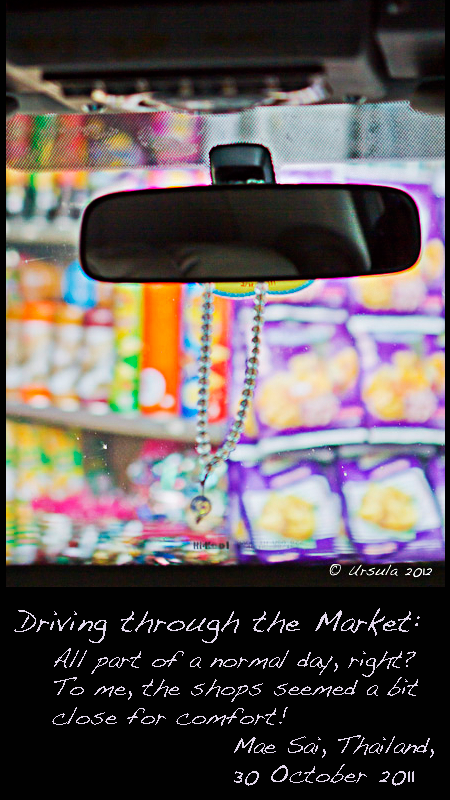
Driving south from Nakuru, where we had spend a day following the birds and animals around Lake Nakuru National Park (see: In Search of the Five #1 and #2), most of our four-hour drive was on paved roads – first the local C57, then onto the Chinese-built C12 Highway. These roads worked their way through small villages, lush farmlands, and colourfully painted cement-block shops with corrugated metal roofs. In contrast to our relatively smooth paved motorway, the rainy weather had reduced most of the frontages and slip roads into a patchwork of ruts, mud, and puddles.
Once we entered the Masai Mara National Park, all semblance of paving disappeared. It is no surprise that only 4WD vehicles – most of them specially-adapted safari Toyota Land Cruisers – can navigate the difficult terrain. To prepare passengers for the extraordinarily rough rides that are the consequence of these dirt roads, drivers promise customers a ‘free Kenyan massage’.
Do join me!
.jpg)
Morning at Ziwa Bush Lodge
Our day starts in a breakfast room just outside the Lake Nakuru National Park. Soft rains keep the dust down and the temperature lower.
.jpg)
Colourful Buildings and Tin Roofs
The morning drive takes us past simple settlements of wooden shanties with corrugated metal roofs.

Scenes from a Land Cruiser
Nakuru County includes high-altitude agricultural zones with rich and fertile soils.
Shop Fronts : Njoro Nakuru County
I am fascinated by the simple row-buildings with their fancy names – like this strip of ‘hotels’ and food outlets.
Safety First?
Different rules are applied to Occupational Health and Safety standards in many countries.
Tano Bora Curio Shop
Decorated with animal murals, this souvenir shop not far outside the Lake Nakuru National Park is a popular stop – and not only because it offers tourists clean and working toilets.
Carved Heads
The inside of the dark store is packed wall-to-wall with all kinds of arts, crafts, and trinkets.
More Scenes From A Land Cruiser
As we continue south, the road is bordered by large acacia trees, rustic outdoor stalls, parked motorcycles, and utility trucks.
Narok Roadside
We cross into Narok County and the rains start again. The ramshackle shop fronts continue and the litter increases.
And the Road gets Worse!
Once we cross into the boundaries of the Mara Conservancies, the asphalt disappears. Surprising, really, considering that tourism is one of the core contributors to Kenya’s economy.
Maasai Cattle
We share the road with Maasai, who live in traditional tribal communities and herd their precious animals the way they always have.
🎶 ‘I’m a GNU – How do you do?’ 🎶
We cross into the Masai Mara National Park – and while the road doesn’t improve, herds of animals now surround us. The first to greet us were the wildebeest. One of the Ugly Five, these are known to me from childhood as gnu, thanks to the amusing song by Flanders and Swan.
Topi Antelope – Damaliscus Lunatus
Thanks to the rich grasses, the animals don’t need to concentrate at the waterholes. Instead, many are not far from the main roads.
Masai (Maasai) Giraffe – Giraffa Tippelskirchi
Who knew there were four species and seven subspecies of giraffe? I didn’t! These ones, sometimes called called the Kilimanjaro giraffe, are found across East Africa.
Ostrich – Struthio Camelus
The only ostivhes we saw were quite distant.
Lioness (Panthera Leo) in the Grass
The lions, on the other hand, pay us no attention as they go about their lives. There is also a male here – hidden by the grass. During their mating season, lions pair off for days on what the guides call their honeymoon. They will mate as often as the female allows until she knows she has conceived.
Sharing Information
Everytime we pass another Land Cruiser, we stop, and the guides chat. They share what they have seen, or ask about the whereabouts of particular animals. My guide was in search of more lions …
African Bush Elephants – Loxodonta Africana
… even though I’m just as happy to watch these gentle giants as they make their way across the landscape.
An African Savanna Elephant
These elephants are the largest and heaviest living land animals. It was once believe there was only one species of African elephant; today, however, these bush or savanna elephants (Loxodonta Africana) are recognised as separate from their much smaller forest cousins (Loxodonta cyclotis).
When your Driver Misjudges the Size of a Mudhole …
In his determined search for lions, my driver managed to get bogged. We were a long time stuck, in spite of the help of two other safari vehicles.
Another Safari Vehicle
All the customized Toyota Land Cruisers are much the same. This one, who tried to come to our aide, belongs to the same company I was travelling with. After an hour or so, a large truck manage to extract our 4×4 …
Lioness on the Dirt
… and we continued on to find the lion pride that my driver was in search of.
Sleeping Lion
Unless you catch them at a hunt, or in the midst ot mating, most of the time lions are simple conserving energy.
Sleeping Lioness
Another Bush Elephant
The light was falling as we made our way back to the park gates.
Black-Backed Jackal – Lupulella Mesomelas
A pretty little jackal was my last sighting before we exited the park and drove the rocky road to my overnight accommodation.
Truly a memorable day!
I had to pack myself off to bed, as we had an early start – back into the wet grasslands – the next morning for a full day of game-driving.
 Until then,
Happy Roads!
Photos: 12May2026