ANZAC Spirit by Brad Lucas
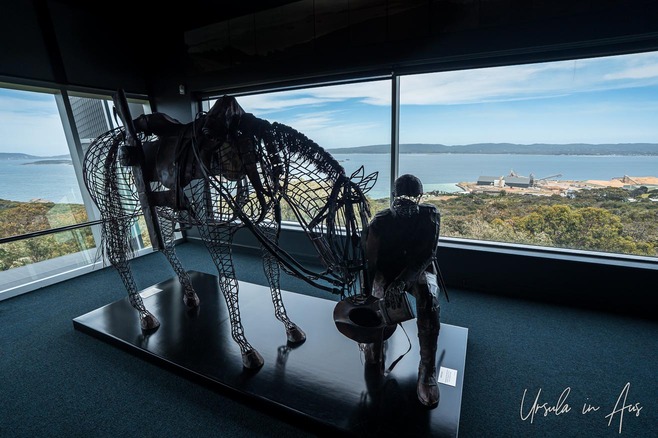
Australia’s National ANZAC Centre sits on Mount Clarence in Albany, Western Australia. This copper sculpture is permanently housed in a dark room in the Centre, overlooking King George Sound where troops (and their horses) first set off for the battlefields of World War I on 1 November 1914. Called “ANZAC Spirit“, the lifesize sculpture depicts a “digger” – an Australian soldier – sharing the last of his water with his horse. “ANZAC spirit” is a revered social and cultural concept reflecting the shared values and character traits believed to have been displayed by the soldiers of the Australian and New Zealand Army Corps (ANZAC) during that war.
Yesterday was Remembrance Day.
On the 11th hour of the 11th day of the 11th month, the people of Allied countries stand solemnly to remember the fallen (and returned) from all wars and to commemorate the end of World War I.
In Australia and New Zealand, these commemorative events are tied to the concept of the ANZAC Spirit – the attributes of mateship, courage, endurance, ingenuity, and larrikinism first attributed to the Australian and New Zealand Army Corps (ANZAC) soldiers fighting in the impossibly harsh conditions of the 1915 Gallipoli Campaign.
The first major convoy of Australian and New Zealand Imperial Expeditionary Forces set off out of King George Sound in Albany, Western Australia on 1 November 1914. Many of those troops ended up in the ill-fated 1915 Battle of Gallipoli. That eight-month campaign became known as a “baptism of fire” for the ANZAC forces. At least 8,709 Australians and 2,779 New Zealanders lost their lives following their attempted landing on the Gallipoli Peninsula in Ottoman Türkiye.
That beach landing point is now known as Anzac Cove. I visited the cove as part of a trip to the Gallipoli Peninsula in 2022 (see: In Remembrance of the ANZACs). On that trip I also visited the trenches and the Lone Pine Memorial and Cemetery. I found it incredibly moving.
Visiting the place where it all started brings the story full circle.
The National Anzac Centre (NAC) on Mount Clarence in Albany, Western Australia, was opened in November 2014. The museum commemorates those First World War combattants, with stories, pictures and records researched and developed in partnership with the Australian War Memorial (see: The Australian War Museum).
The history of the site itself goes back further.
In 1791, Captain George Vancouver claimed southern Western Australia for Britain. He named King George Sound for the reigning monarch, George III, and Princess Royal Harbour for the Queen consort Charlotte. The Princess Royal Fortress was established here on Mount Clarence in 1893. The Garrison Barracks, built in 1891, were in use until the end of the Second World War and are now part of the Princess Royal Fortress Heritage Park.
Come for a visit:
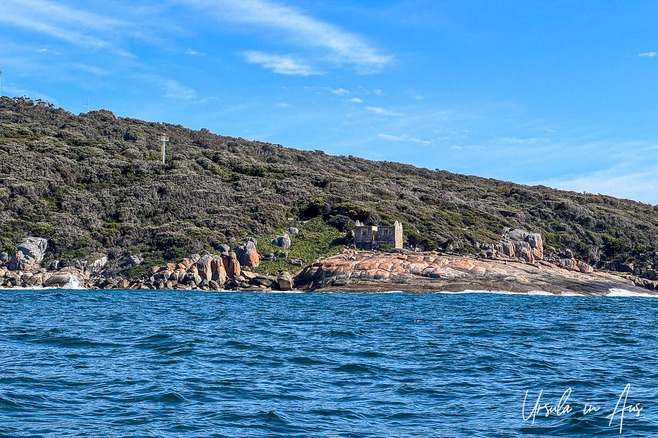
Point King Lighthouse Ruins
This area is layered with history. As we make for shore from our ship in the outer harbour, we get a good view of ruins at the Point King Lighthouse. Built in 1857, the light operated from January 1, 1858 until June 1911. Today, the weathered limestone ruins of the keeper’s four-bedroom cottage stand on a colourful rocky outcrop on the Albany Coast.
For the ANZACs
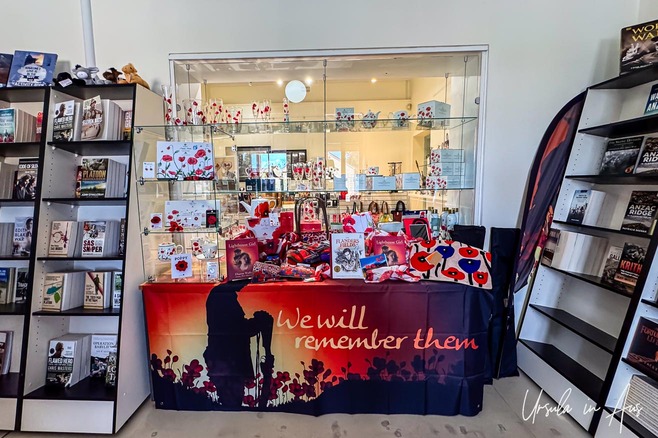
Once we arrive at the Princess Royal Fortress Heritage Park, our first stop is in the Information Centre for tickets and maps. The store holds an admirable range of military books, commemorative biscuit tins, and other assorted souvenirs. It is housed in the historic Military Institute, which was built in 1893.

Overlooking King George Sound
Imagine a fleet of 38 Australian and 10 New Zealand transport ships gathered in the waters below. Around 30,000 Australian and New Zealand troops – and between 11,700 and 12,000 horses – set off from here on November 1st, 1914. Many never returned.
Sandy
The National Anzac Centre is meticulously researched and beautifully laid out. On entry, visitors are given a picture of a soldier which can be used to follow that person’s military history. Visitors are also given small devices allowing them to hear selected recorded diary entries and other stories. The space is softly lit and quiet. This display tells the story of the First Australian Imperial Force (AIF)’s most famous horse.
‘Counting the Cost’
The official count of Australians who died in the Gallipoli Campaign was 8,709. When I visited the landing point on Anzac Cove, and the trenches in 2022, I was amazed that anyone survived! I cannot conceive of surviving in those conditions (see: In Remembrance of the ANZACs).
Still On Patrol – Submariners Memorial
During World War II, a number of American submarines and support vessels sheltered here and at nearby Fremantle. This memorial site honours the 374 officers and 3,131 crewmen lost aboard 52 United States Navy submarines during their Pacific operations.
Merchant Navies Memorial
Naval armaments and artillery form part of an outdoor display.
Anti-Submarine Weaponry
Also on display is an Australian-developed Ikara Anti-Submarine Missile and an American-designed medium-range SM-1 (surface-to-air and anti-ship missile).
To the Bunkers
Sandy trails in distinctive Western-Australian colours lead to the top of Mount Adelaide …
Command Bunker
… winding past the historic coastal defense installations built here from the 1890s through to World War I and World War II to protect the strategic harbor.
Follow the Fleet
The Convoy Memorial Walk runs from the Princess Royal Fortress to Convoy Lookout over King George Sound. At the start of the road stands an artwork inspired by a soldier’s letter to a loved one. Called Longing, Memory, Sight, and created by artists Arif Satar and Audrey Fernandes-Satar, it features an an aluminium sculpture mounted on a granite plinth. The plinth is inscribed with excerpts from soldiers’ letters and postcards.
Pale Wood Sorrel – Oxalis Incarnata
Western Australian Peppermint or Willow Myrtle – Agonis Flexuosa
The bush here looks and smells very different than it does on my eastern side of the country.
Cut-Leaf Guinea Flower or Cutleaf Hibbertia – Hibbertia Cuneiformis
This is one of the many plants endemic to this region.
Naval Discovery Trail
The coastal bushland is interspersed with historic military remains, observation posts, gun placements, and informational signage.
Same, Same, but Different!
Another distinctive myrtle catches my eye; possibly Grampians thryptomene (Thryptomene calycina.)
King George Sound
The Convoy Memorial Walk culminates at the Convoy Lookout.
Heart-Leaved Poison – Gastrolobium Bilobum
Another endemic bush; this member of the pea family commands my attention with its compact flowers.
Southern Cross – Xanthosia Rotundifolia
This perennial herb is native to this south-west portion of Western Australia. The wind came up, so the picture is not as sharp as I’d like, but I couldn’t resist the star-shaped white flowers, named for the constellation in the southern night sky.
Married Quarters
As I work my way back to a waiting car, I admire this semi-detached stone cottage built in 1899.
Back at the Guardhouse
 I head back to the ship with thoughts about the beauty of the bush – and the costs of war.
We Will Remember Them.
Pictures: 29October2026