Men in White One of the many beauties of India is the willingness of people on the street to engage with you, and to be photographed.
Kumbh Melas are among the largest religious gatherings in the world.
According to the BBC News, which published pictures of the 2001 Allahabad Kumbh Mela taken from space, that particular mela was “probably the largest human gathering in history”. The more recent mela in Allahabad (Prayagraj) in 2013 attracted an estimated 120 million devotees over a two month period, with over 30 million bathing on the most auspicious day of the Mauni Amawasya (10 February 2013).
A Kumbh Mela – literally a festival of the kumbh – is a mass pilgrimage during which Hindu faithful gather to bathe in a sacred or holy river. Based on the primary concepts of pilgrimage, religious practice, and sacred sites, the Kumbh Melas were inscribed into UNESCO’s Representative List of the Intangible Cultural Heritage of Humanity in 2017.
A kumbh (or kumbha) is a special pot or pitcher used to collect holy water. It is the also the Hindi name for the astrological sign Aquarius (कुम्भ). In Hindu, Jain, and Buddhist mythology, the kumbha symbolises fertility and the womb. According to Hindu legend, gods and demons fought over a kumbh of nectar that would give them immortality. Today, bathing in India’s sacred rivers during the festival is believed to cleanse a person of all their sins, and free them from the cycle of death and rebirth. Most pilgrims carry kumbh – or other containers, including plastic water bottles – with them, so that they can take holy waters home to loved ones who are unable to make the journey.
There are four main sites in Northern India where Kumbh Melas take place: Haridwar, Allahabad (Prayagraj), Trimbak-Nashik, and Ujjain. The precise date of each mela is carefully calculated based on the the placement of Jupiter (Bṛhaspati), the Sun (Surya) and the Moon (Chandra) in Hindu astrology. Each of these four sites hosts a Kumbh Mela, which lasts six to eight weeks, once every twelve years – and some venues host an Ardh Kumbh Mela (semi kumbh fair) in between.
My news feed has been full of shots from the Ardh Kumbh Mela currently underway in in Allahabad, Uttar Pradesh. This prompted me to return to my archives to pull out pictures I took when I attended the 2010 Kumbh Mela in Haridwar with photographers Gavin Gough and Matt Brandon.
Such a long time ago!
That wasn’t my first trip to India, but it was my first time dealing crowds of that magnitude: on our third day there, the Mauni Amawasya, approximately 10 million people bathed in the Ganges. Most of my small group watched the Peshwai Procession, where the different akhara – or sects – of sadhus take their turns to bathe, from the relative comfort of our hotel lobby rather from the over-crowded ghats. Lucky, really, as seven people were killed in a stampede on the bridges that afternoon – “an unfortunate day in what was almost an incident-free [four-month] megafest for over five crore [50,000,000] devotees from across India.”
What I remember of my days at the culmination of that year’s fair in Haridwar, was the positive vibe across the city. Everyone I met – from local residents and shopkeepers, to pilgrims and sadhus – was full of positive energy and good humour. Even the air – with highs of 38°C most days – was buzzing with heat and energy.
Returning to old photos, taken on an old camera, is always risky. But, I miss India – and dipping into old pictures is the best I can do! These are from my first day in Haridwar – I’m sure I’ll return to the others at some stage.
Come and meet some of the faces in the crowd at the mela.
Pilgrims on the Road When we arrived in Haridwar, the streets were already full of vehicles and pilgrims on foot.
Woman in Yellow There is colour all around: the saris of the women contrast with the walls behind them – …
Women in Pink … as do the patterned pink kurtis.
Three Men in White People are seated all along the roadway, just taking a break or watching the incoming parade.
Doorway One of the things I love about India is the richness of colour and texture where ever you look.
Japamala Prayer Beads Religious paraphernalia is for sale everywhere.
Rickshaw All forms of transport are in use on the road.
Pilgrims on the Road Family groups are keen to be photographed as they travel into town together.
Mother and Child on the Road
Matriarch
Baby in the Crowd
Pilgrims on the Road
Men in Orange
Group Resting I shared more than one cup of masala chai with groups of pilgrims as they made their way into the city for the mela from all around the country.
Kumbh Couple Attending the mela was the dream of a lifetime for many of them.
Inside a Tuk Tuk Our group piles into a local tuk tuk …
Almost Abstract: Inside a Tuk Tuk … for the bumpy ride up the hill …
Overlooking Haridwar … to take advantage of views over the city.
Tuk Tuk Driver Our driver stays close to his vehicle …
Bridges over the Ganges … as we admire the city below.
Uttarakhand Police Officer Even the police officers are friendly as they keep watch at the check-point.
Woman Carrying a Bag People keep walking past the check point, …
Bathing in the Ganges … while those who arrived earlier are already bathing in the holy waters below.
Hindu Offerings Shops selling religious paraphernalia line the road into the city.
Young Aladdin in the Crowd Back down the hill, closer to the river, the streets are getting fuller.
Women on the Road
Man in Saffron
Men on a Balcony Overhead, locals or those already installed in hotels and guesthouses watch on.
Mounted Police Police on horse back keep the crowds in order.
Street Selfie I couldn’t resist taking a photo of myself in the crowd!
Women in the Street And the pilgrims keep coming.
Everyone was so happy!
I was thrilled to be a part of it; such a pity we can’t be like that every day.
[…] is not the first time I’ve returned to this old set of photo-files (see: Faces in the Crowd), but digging through the archives and dusting off some of the pictures I made of the exuberantly […]ReplyCancel
[…] written about the Kumbh Mela before (see: Faces in the Crowd; Crowds on the Move; and Colours in the Crowd). Considered the world’s largest […]ReplyCancel
Gold Creek Falls – Golden Ears Provincial Park The Lower Falls on Gold Creek may only make a 10 metre drop, but they are a beautiful example of the way that water meets the woods in British Columbia, Canada.
I feel most happy when I’m walking amid green woods, listening to white waters and bird song.
One of the things I missed most when I moved from Western Canada to East Coast Australia was the green: that lush green that comes with tall conifers that have grown up through decades (and even centuries) of rainfall; the varied greens of an understory of lichens, mosses and ferns.
Two years in a row we managed short stays in Mission, a small city on the north bank of the Fraser River about 60km inland from Vancouver. On each occasion, we “borrowed” my young first cousins (once removed) and took them with us for short-but-rewarding treks into the woods. The first was a very brief (0.75km return) walk into the Cascade Falls Regional Park to look over the eponymous waterfall. The second, about a year later, was a longer walk (6.5km return) along the Lower Falls Trail in Golden Ears Provincial Park to Gold Creek Falls.
Why not join us!
Welcome to the Woods British Columbia has a lot of woods. In fact, almost 64% of the province (149 million acres) is forested. Not all this forest is protected, however, and only a small percentage is old-growth.
Boy on a Giant Stump A young lad climbing the giant stump of what was probably once a western red cedar gives an idea of the scale of these massive trees.
Cascade Falls Cascade Creek plunges over 30 metres into a large emerald pool before emptying into the Stave Lake Basin (see: Harnessing Energy).
Teenager on the Suspension Bridge The suspension bridge over the falls is a very short walk from the car park, up a steep hill, …
Suspension Bridge … and leads across the canyon …
Visitors to the Falls … to a viewing platform.
Graffiti on the Rails People clearly feel the need to leave their marks!
Cascade Creek and Falls In theory, this is as close as you you can get to the pool beneath the falls; …
Swimmers in the Falls … in practice, people climb down the slippery slope regularly, selfie sticks in tow.
Light through the Bridge Not much light reaches through the suspension bridge mesh …
Under the Bridge … and it is cool and shady underneath – and slippery! Still, people regularly climb down the side here …
Crystal Waters … to access the cold, crystal clear waters in the creek below.
Into the Woods It was about a year later that we walked into another conifer wood, draped in Spanish moss and dappled light.
Moss on the Fallen Trunks What little sun gets through the tall trees gleams on the mossy ground-cover.
Giant Stump I marvel at the girth of the ancient tree trunks, …
Boy on a Boulder … and at the size of some of the boulders strewn along the trail.
Rushing Waters Before long, we can hear the creek beside us as the waters rush over the rocks towards Alouette Lake.
Rocks in the Creek The water – frigidly cold as it races down from the mountain-tops – is emerald green.
Women on the Falls The Lower Falls on Gold Creek are only small, but they are very pretty, and everyone stops to admire them.
Lower Falls – Gold Creek The colours are wonderful!
Kids in the Rocky Creek It’s a hot day, and plenty of people are happy to paddle or bathe in the icy-cold waters.
Path in the Woods It’s the same trail out and back, and we return along the well-groomed path, …
Golden Ears Provincial Park … detouring onto one of the side-trails to admire the beach, and the mountains of Golden Ears Provincial Park behind.
Maple Samaras The sun overhead shines through the maple leaves and the winged seeds that remind me of childhood games.
Orange Mileage Marker According to the trail notes, there are markers in the trees every 500 meters. This was the first one we noticed – and we were almost back at the car!
They might have been short, easy hikes, but they were both extremely rewarding. As I have said before: you can’t beat a walk in a green woods!
Men from the Wild Duck Village Papua New Guinea (PNG) is home to hundreds of distinct traditional social groups, tribes and/or clans – each with their own totems, stories, songs, and dances.
“Development” in Papua New Guinea is a double-edge sword.
It is hard to imagine how the country could be more diverse! This rugged land of rivers teeming with crocodiles and jungle-clad, mosquito-infested mountains, is home to about 8.5 million people. Predominantly Papuans and Austronesians, the population also includes Negritos, Micronesians, and Polynesians.
Papua New Guinea only gained its independence from Australia in 1975 after being ruled by external powers since 1884. In spite of becoming the seventh fastest-growing economy in the world as of 2011 (thanks to the mining and resource sectors), the country still suffers from extreme gender inequities and life expectancy is shorter and infant mortality is higher than in most neighbouring Pacific countries.The extreme isolation imposed by the terrain has helped maintain indigenous traditions, but it has also hindered delivery of education and health services, not to mention basics like water and electricity!
Of course, having all these different groups under loose tribal structures has led to inter-tribal violence, which has become more – rather than less – of a problem in recent years, as semi-automatic machine guns replace spears and machetes. Modern sing sings, based on traditional large-scale cultural gatherings, have been encouraged in an effort to promote peaceful interactions between warring tribes and to attract tourist money into low-income regions.
I was staying in the Middle Sepik village of Kanganaman: two days of rough plane- bus- and boat-travel away from the PNG capital of Port Moresby (see: Welcome to the Spirit House!). The heat and humidity were unrelenting. My fellow-travellers (photographer Karl Grobl from Jim Cline Photo Tours, and several other cultural-photography enthusiasts) and I were camped out in a structure of three bamboo rooms on stilts: women on one side, men on the other, with a common-room in the middle. Our roll-out mattresses were tucked under mosquito nets which blocked any chance of air-flow in the still atmosphere, and offered us NO protection against the clouds of insects in the purpose-built out-house a short walk away. Unlike most local villagers, we had the luxury of a gravity-fed rain-water tank for washing, and a few hours of generated electricity daily to recharge our camera batteries. On the other hand, while I think the locals eat quite well, our food was – at best – ordinary.
In the still, absolute-dark of night, I lay on my mattress drenched in sweat, trying not to scratch the myriad of insect bites on my arm and hoping that the prophylactic antibiotics and vaccinations were protecting me against malaria and Japanese encephalitis. I listened to the constant hum of mosquitos with visions of spam-spaghetti dancing through my over-heated dreams. It was a calm, if somewhat surreal, experience.
The people in this area had almost no contact with Westerners until the 19th century, and their clan culture remains strong. Our village, which has hosted the burgeoning Sepik River Festival since 2014, is an off-shoot of a “parent” village nearby. Each village in the Sepik region has several clans and sub-clans (see: Crocodile Men), with complex inter-relationships of the corresponding totems. It is said that the more diverse clans and spirits a village has, the stronger the village will be – especially in protecting against black magic. Sorcery and “payback” are integral parts of local tribal warfare.
While these smaller sing sing gatherings among neighbouring groups are predominantly friendly, they are also highly competitive: the “richness” and prosperity of surrounding villages are (informally) judged on their make-up and costuming.
This was very much to our benefit, as we were able to watch the men from our village prepare in their spirit house (see: A Black and White View), and photograph the local women helping each other get ready in the Little Spirit House before checking out the groups from neighbouring villages. The visiting performers gathered in small clearings hidden behind the village green; there they crafted their costumes from bird feathers and shells that they had carefully transported from their homes, and leaves and vines they collected from the surrounding jungle. Using mud, clay and tar, they applied their face and body paint, transforming themselves into the creatures of their dances.
Join me as I make some environmental portraits of the men of the Sepik Riversing sing.
Preparations in the Jungle Hidden away from the village greens that link the Kanganaman spirit houses, cultural groups from neighbouring hamlets prepare their costumes and face paint.
Dancer in Feathers Feathers are an integral part of many dance costumes: the cassowary is a totem for our host village of Kanganaman, while the dances of Korogu Village, where this man is from, feature a wild black duck. I’m not sure what species provided the wonderful feathers incorporated in his headdress.
Getting Ready for the Dance The men are completely focussed as they construct their costumes.
Carving Grasses This may be a small, local sing sing, but the focus and attention to detail that goes into constructing the costumes is wonderful to watch.
Masks and Jewellery Shells – which were once important enough to be used as local currency – are still a marker of symbolic wealth. The visiting dancers have brought some of their ornamentation with them: painted bark masks and woven sisal headdresses and belts, some decorated with pig tusks, bird feathers, and shells.
Chewing Betel Nut Almost everyone has a wad of betel nut: areca nut mixed with lime and tobacco, wedged in their mouth. Although technically illegal, the chewing of betel – with its concomitant oral damage – is ubiquitous.
Face Painting In the stifling heat that envelopes us like a wet blanket, the men sit quietly and have their faces painstakingly painted.
Face Painting It is a treat watching the different village designs take shape.
Face Painting
Korogu Cultural Group These dancers from Korogu, East Sepik, have a proud tradition: they were one of the 15 groups who performed at the opening of the Pacific Games held in Port Moresby in 2015.
Man with One Eye Painted
Man being Painted
Making Tail Feathers New costume elements take a long time to put together.
Clay Paint and Sisal Headdress Other costume elements are carefully kept and re-used year after year.
Crocodile Scars and Tail Feathers The costume tail “feathers” are made from all variety of greenery.
Wild Duck Men The dancers spoke their local language and Tok Pisin, but little or no English. If I understood them correctly, their village totem is a local wild duck.
Culture and Dance Group Once they are ready, a group of men pose together with their kundu drums.
Men in Body Paint Brown clay body-paint almost obscures the crocodile scarification on the chests of these men.
Full Face-Paint Thank heavens for the smile (betel-nut damage not-withstanding): this full-face paint is rather ferocious!
Dancing Rhythms It’s early afternoon, and the dancers are finally ready; the troupes make their way out, singing and banging rhythms.
Dancers in front of the Haus Tambaran – the Men’s Spirit House The green in front of the main spirit house in Kanganaman Village is large enough to accommodate a number of dancers. Vendors line the side edges.
Face in the Tail Feathers These dancing costumes are extraordinary! The “tail feathers” are skewered with flowers, fruit and feathers, and almost obscure a spirit mask.
Full Costume The different groups have some fascinating outfits, …
Shells and Sunglasses … which they embellish in their own inimitable style.
Face Paint and a Fur Hat A gum-nut necklace, flower earrings, and a faux-fur hat make for a unique addition to this man’s costume.
Face Paint and Feathers
It was a real pleasure watching the seriousness with which these men prepared for and executed their dances.
I also enjoyed the performances of the women and children – more about them some other time.
Land’s End Shrouded in rain, fog, and sea mist, England’s western-most point can feel like the end of the world.
Weather can make all the difference when you are travelling.
It sets the tone of the landscape and can influence the mood of the visitor.
Back in 2012, my husband and I spent some time in Ireland (For blog posts see: Ireland) and England (eg: Salisbury and Brighton), and we were looking forward to a few days in Cornwall – all during a summer that has since been called the ‘wettest in 100 years’ by the UK Met Office.
The rain wasn’t necessarily a bad thing. Although it makes using bulky DSLR cameras more difficult, given the reputation of the British Isles to be wet and misty, we had umbrellas and raincoats and were anticipating the worst.
My expectations of Cornwall were coloured by books. I imagined a landscape of castle ruins overlooking steep cliffs, and thick woods, like those that were once the roaming grounds of the fabled King Arthur and his knights. I also envisaged the treacherous and moody moors and smugglers’ caves that backdrop Daphne du Maurier’s strong-willed heroines. Then there are the rocky shores and wild winds of Poldark. Of course, Cornwall is also home to charming and picturesque fishing villages, like the fictional Portwenn – home of Doc Martin.
The county lived up to my expectations: it rained most of the time we were there. We had a real challenge getting our suitcases up and down various eternal stairways from the car and through the rain cloud that enveloped us to find our room in the rambling, loose collection of old buildings that was our hotel. (It really pays to travel light anywhere in Europe: unless you stay in sterile, nondescript chain hotels, chances are pretty good that you’ll be carrying your bags a lot further than you expect!) When we went down to breakfast in the morning, the restaurant was full of grumpy golfers who were missing their tee-times because the course was engulfed in fog. We literally could not see out of the windows.
The fog made our days more difficult, but we had only limited time so we carried through with our self-driving sight-seeing plans in spite of reduced visibility. Land’s End was only 7 miles (11 km) away, but it took us much longer than the suggested 20 minutes to get there!
Golf in the Fog It was ten o’clock on a July morning on the Cape Cornwall Golf Course before the fog had lifted sufficiently for the golfers to find their carts.
Land’s End Highway markers tell you when you reach Britain’s Land’s End. (I actually took this shot as we were leaving; I don’t think we even saw the markers when we were driving in!)
Land’s End Arcade Perhaps it is knowing that the weather can be inclement that causes the British to turn features of interest into arcade-type ‘attractions’.
Pathway to the End of the World … It certainly feels as if we are on the edge of nowhere.
“Dangerous Cliffs” The fog ebbs and flows: when it lifts for a moment, we can just see the waves crashing on the rocks below.
Merry Maidens Our next stop, only twenty minutes away, was at a late neolithic stone circle known as Merry Maidens or Stone Dance.
Merry Maidens Stone circles – like this one of 19 granite megaliths – may be common across the British Isles, but they are still magical.
One of the Merry Maidens According to local mythology, each of the stones represents one of nineteen maidens who was petrified for dancing on a Sunday. Two more megaliths some distance away are said to be the pipers who were playing for the young women.
The Coast off Mousehole As we continue our journey east along Cornwall’s south coast, the skies clear somewhat, and we get wonderful views over the delightful fishing village of Mousehole (pronounced Mawzel).
Mousehole Streets All but a local pub in the village was destroyed in the Spanish raids of 1595. Even so, the streets are narrow: winding around blind corners and up and down steep hills.
Mousehole Port Until the 16th century, Mousehole was one of the principal ports on Mount’s Bay.
Mousehole Wharf Today, the sheltered harbour is a haven to small boats …
On the Beach … and holiday-makers. British beach-goes will brave all kinds of weather to get outdoors.
Mousehole Rooftops
St Pol de Léon’s Church Less than five minutes up the road, we had to stop again: the little Paul Parish Church looked just too charming to ignore.
Headstone Headstones provide such an insight into history: this one from the late 1800s honours a master sailer and his wife, who both lived to age 69, but whose two children died in infancy.
Celtic Cross The Cornish people can trace their roots back to the ancient Celtic Britons. This (and other) churchyard features some beautiful Celtic crosses.
Truro The spires of the Gothic Revival Cathedral of the Blessed Virgin Mary rise above the streets of Truro into surprisingly blue skies as we pass through.
Mud Maid The Lost Gardens of Heligan are 200 acres of Victorian gardens that were only rediscovered twenty-five years ago. The mud sculptures in the garden, however, are contemporary works. This one, The Grey Lady by Susan and Peter Hill, was installed in 2007.
Landscape around Pentewan Breaks in the forest give us views over the Cornwall coast.
Green Foliage After the morning’s fog and rain, the greenery is almost blindingly bright in the late afternoon sun.
Undergrowth In a steep-sided valley, ferns and a profusion of warmth-loving plants grow in their own microclimate.
Traditional Charcoal Burner In Cornwall, metal drums were used to burn wood anaerobically to make charcoal. This one was used to produce the charcoal for an art installation: “Growth & Decay” by James Eddy.
Glass House Like every good Victorian garden, the Heligan Gardens have a large glass house to explore.
The Giant’s Head Probably the best known attraction in the gardens is The Giant’s Head mud sculpture commissioned in 1998 to Cornish artists Sue and Pete Hill.
St. Neot Church I couldn’t resist an evening stop at the beautiful Norman church at St Neot, …
Inside St. Neot Church … and a peek inside at its wonderful medieval stained glass windows.
Jamaica Inn Before we crossed the Tamar River out of Cornwall, we had to stop at the notorious smugglers’ inn on Bodmin Moor for Cornish pasties.
The rains followed us as we left our visit to Cornwall behind.
Earlier this year we spent a day in Falmouth – and we got to explore Cornwall in full sunshine (see: Another English Spring), and the countryside felt completely different.
As I said before, weather makes all the difference.
Barred Eagle Owl (Bubo Sumatranus) With its focused gaze, its deadly beak and claws, and its side-ways pointing ear tufts, the barred eagle owl is a force to be reckoned with!
Birds are captivating creatures. With their diverse and colourful plumage, their wide-ranging shapes and behaviours, and the improbability of their flight, they are magical to watch.
I’ve commented before that I have neither the patience nor the equipment to be a proper birdwatcher. But, watch them I do. Whether it is when I’m just sitting on my balcony under trees full of honeyeaters and lorikeets and overlooking an estuary teeming with cormorants, black swans, spoonbills and pelicans, or when I’m on my travels, I find my heart lifts when birds (or other wildlife) catch my eye.
So, when the opportunity to get a little closer to our feathered friends presents itself (e.g.: Flamingo Gardens and On the Perch), I tend to jump at it. A couple of years ago, my husband and I were in Bali, Indonesia, celebrating an anniversary. We’d had a few weeks of immersing in the food and culture: we’d browsed through markets and shops; we’d walked and bicycled through countless rice terraces; we’d admired the beaches; and we’d visited innumerable temples. We were back in Denpasar after criss-crossing the island, and it was time to relax before the flight home the next day; a visit to a local bird park seemed like the ideal low-stress activity.
And it was! The Bali Bird Park, just a half-hour drive from our accommodation in the city, was the perfect day out. The beautifully maintained park is is divided into different zones that house the 250 species of birds in natural habitats recreated to match their origins. These zones focus on the South-east Asian region (Bali, Borneo, Papua, Java and Sumatra), but also include birds from Australia, South Africa and South America. The park features numerous walk-through aviaries, and various birds roam the grounds freely.
We made sure to catch the “Birds of Prey” and the “Bali Rainforest” free-flight demonstrations and took part in several of the feedings that are conducted daily, and we did, indeed “marvel” as the park’s brochure suggested we would. This was a relief – as we’d visited Turtle Island the day before and found it an exceedingly depressing experience. More about that some other time, but in short: I had asked to go to the Turtle Conservation and Education Centre, Serangan – which is a WWF-auspiced facility, but we got “diverted”. This happens in Asia!
The tag-line for the Bali Bird Parkis: “Where Birds and People Meet”.
So, come along and meet some birds.
Magnificent Macaw As soon as we enter the park, the birds are there to greet us.
Those Reptilian Eyes! It is so easy to see the links between birds and their reptilian cousins!
Can You See Them? Caging full of native habitat can leave the visitor at a disadvantage …
Can You See Them Now? … until their eyes adjust, and the birds come into view.
Bali Myna (Leucopsar Rothschildi) Once we knew where to look, we were able to admire the beautiful Bali starlings. Critically-endangered, these birds are Bali’s only endemic vertebrate species.
Common Hill Myna (Gracula Religiosa) Common hill mynas always strike me as uncommonly beautiful.
Australian Pelicans (Pelecanus Conspicillatus) Even if I am kayaking, I never get this close to the pelicans at home. These are the same birds that live in my estuary, but I had no idea they had blue feet!
Introducing “Basic Instinct” A young park staffer introduces the Birds of Prey Show to an audience that is seated and waiting in the bleachers.
Ready to Launch Up in the tower, a handler is ready to launch a white-breasted sea eagle.
Victorious! The white breasted sea eagle has snatched a moving “fish” from the pond, and stands on it, …
White Breasted Sea Eagle and Handler … until its handler comes to carry it away.
Macaws and Handler The macaws also get in on the act, circling overhead before landing on a keeper’s arm.
Sea Eagle
Moustached Parakeet (Psittacula Alexandri Fasciata) Also known as the Java mustached or red-breasted parakeet, this beautiful little bird is endemic to the area from the Himalayas to southern China and Indonesia.
Glossy Ibis – Plegadis Falcinellus The most widespread of the ibis species, this beautiful bird is a far cry from the Australian ibis, ignominiously known as “the bin chicken”.
Hornbill and Visitor A male wreathed hornbill (Rhyticeros undulatus) shares a laugh with my husband – after trying to extract his pen from his top pocket.
Wreathed Hornbills (Rhyticeros Undulatus) These beautiful birds mate for life. The male has the yellow throat pouch; the female’s is blue.
Knobbed Hornbill (Rhyticeros Cassidix) Native to Indonesia, the Sulawesi red-knobbed hornbill is another of the fascinating hornbill varietals.
Feeding the Fowl We headed back to the green in front of the restaurant in time for more bird feeding.
African Crowned Crane – Balearica Regulorum The grey-crowned cranes are are part of the park’s successful breeding program: how cute is the little chick hiding between their legs!
Rhinoceros Hornbill – Buceros Rhinoceros This large forest hornbill flew through its paces for the park visitors.
“Duck Girl” The park is a very hands-on environment: a young visitor is invited to feed the birds.
Moluccan King Parrot (Alisterus Amboinensis) After coffee and bird-feeding, we returned to the Papuan walk-in aviary to enjoy more exotic birds.
Green Snake Our last stop was in the Toraja House, modelled on those built in South Sulawesi. The dark interior is home to nocturnal owls and other creatures.
We greatly enjoyed meeting the birds – and their keepers – in this beautifully maintained park.
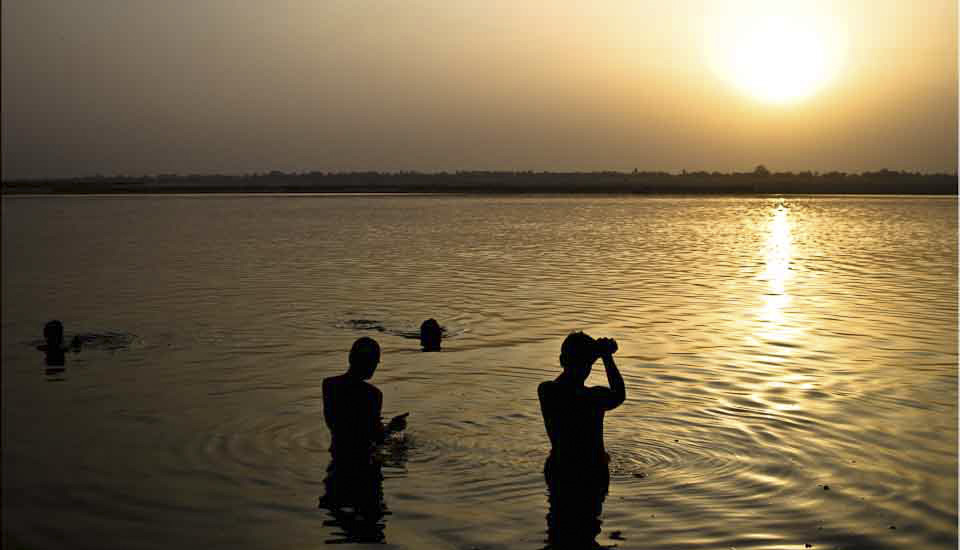
- Performing the Ganga Aarti from Dasaswamedh Ghat, Varanasi
- Buddha Head from Shwedagon Pagoda, Myanmar
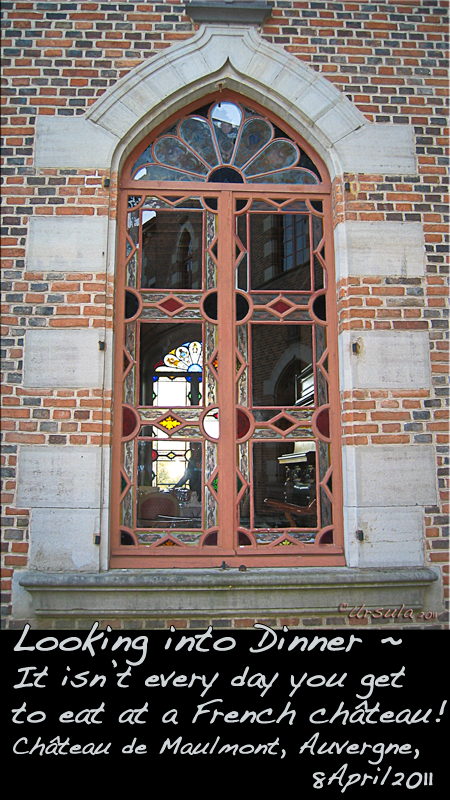
- Harry Clarke Window from Dingle, Ireland
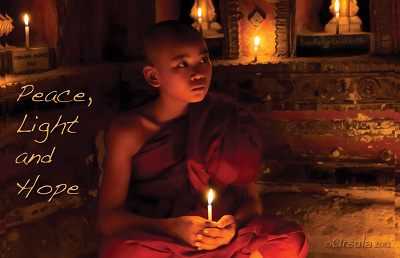
- Novice Monk Shwe Yan Pyay Monastery, Myanmar
Packets of 10 for $AU50.
Or - pick any photo from my Flickr or Wanders blog photos.

.jpg)
.jpg)
.jpg)



.jpg)






 I also enjoyed the performances of the women and children – more about them some other time.


 We greatly enjoyed meeting the birds – and their keepers – in this beautifully maintained park.



[…] is not the first time I’ve returned to this old set of photo-files (see: Faces in the Crowd), but digging through the archives and dusting off some of the pictures I made of the exuberantly […]
[…] written about the Kumbh Mela before (see: Faces in the Crowd; Crowds on the Move; and Colours in the Crowd). Considered the world’s largest […]