Huli Warrior Standing tall and proud in his carefully-applied yellow and red warpaint, and wearing his magnificent headdress made of woven hair adorned with precious parrot and bird of paradise feathers, a Huli Wigman is a formidable sight.
They are as colourful and distinctive as the birds of paradise that live high in the jungle tree-tops.
Today, the iconic Huli Wig Men of Hela Province in the Southern Highlands are immediately recognisable from advertising campaigns promoting travel and sing sings (festivals of culture, music and dance) in Papua New Guinea. Less than 100 years ago, however, they were completely unknown to the outside world.
Numbering between 250,000-800,000 people (sources vary wildly!), the Huli are one of the largest of Papua New Guinea’s more than 7000 different cultural groups. Their oral history traces back over thousands of years to one central ancestor named Hela. He had four sons and a daughter to whom he designated lands, and from whom the Hela nation of tribes – including the Huli – arose.
In the 1930s, Australian explorers and gold prospectors, Mick Leahy and Michael Dwyer, walked across what was then New Guinea, finding – to their surprise – cultivated lands and complex societies of ‘murdering bastards’. It had been assumed by Europeans that the interior of the island was unpopulated and was ‘simply a continuation of precipitous mountains and miasmic jungles’. Of course, the prior claim of the Huli to their own lands was not recognised, and their first contact with outsiders was in November 1934, when the Fox brothers – who had just parted company from Mick and Dan Leahy – killed at least fifty. Although the Huli are legendary for their fearsome warring natures – fighting with other clans over land, pigs, and women – their deadly bows and arrows were no match for European weaponry.
Feuds and clan warfare remain a fact of life today. With conflict over oil and gas production in the region, the failure of royalties to be disbursed as expected, frustrations and cross-cultural misunderstandings, and the easy access to high-powered guns (many trafficked across the border from West Papua), the old ‘rules’ of warfare have broken down, making the region more unpredictable and dangerous than ever.
I stayed well away from known hot-spots!
I was in Paiya Village with photographer Karl Grobl from Jim Cline Photo Toursand a small group of photography enthusiasts. Our hosts had arranged for three Asaro Mudmen (see: Asaro Mudmen), three Chimbu Skeleton Men (Watch this space!) and three Huli Wigmen to come and show us how they prepare themselves for war – or for a sing sing, as is more often the case these days. To be honest, I would not have been as brave about making pictures of these unsmiling and uncommunicative warriors if I had not trusted my hosts! Even without a shared language, I had fun with the Mudmen and Skeleton men; I very seldom achieved even a glimpse of eye contact with the Huli.
Fashioning their skirts, tails and armbands, applying their carefully designed face-paint, and feathering their elaborate headdresses is a long, painstaking process – and it is a wonder the Huli have the energy left over for war or for their peculiar up-and-down jumping Mali dance after hours of preening in the heat and humidity of the jungle. The growing and crafting of the wigs – for the elaborate Hulu headdresses are indeed made of human hair – is a whole other process (which I’ll talk about some other time -watch this space!) that takes many months and a bit of sorcery to create.
Join me in the jungle as they help each other prepare.
Paiya Housing Roads (and the old colonial government) made no inroads here in the Highlands until the mid-1900s, but recent controversial natural gas projects have necessitated the development of highways and infrastructure. Even so, most thatched houses with their packed-mud floors are without electricity or running water.
Orb in its Web The jungle is full of life. High overhead, parrots and birds of paradise can be heard – not that we saw any. What we did see were the huge golden orb spiders (Nephila pilipes) and their resiliant webs.
Putting on his Wig One of the Huli warriors tests out his wig-and-feather headdress.
Ceremonial Winged Wig Most wigmen have more than one headdress; ceremonial wigs sweep up like the wings of a bird.
Paradise and Parrot Feathers Looking at all the feathers that go into sing sing costumes, it is a wonder that there are any bird of paradise or any parrots left!
Hornbill Beak and Boar Tusks Huli men wear hornbill beaks, which symbolise strength and courage in battle, on their backs.
Face Painting The multi-layered face-painting process starts with white clay known as momo and vermilion ochre or goloba, which signifies a warrior.
Chewing a New Paint Brush Paint brushes are made by chewing one end of a soft twig from the surrounding jungle.
Huli Wigman Face Painting Small hand mirrors – or sometimes just broken bits of mirrors – are essential tools. Betal (areca nut) chew and tobacco smoke are everywhere.
Painting the Yellow Ambua, the bright yellow clay, is sacred – although for tourists and expediency, store-bought acrylic paints might be substituted.
Red Eyeliner It has been suggested that the vibrant colours of the face paint not only instil fear in the Huli’s opponents, but also help the Huli men overcome their own fear and prepare themselves for battle (see: Tribal Body Art of PNG).
Fixing the Feathers The final step in preparation is affixing the long feathers that are carefully wrapped up when not in use.
Ceremonial Wig Tattooed, painted and feathered, the Huli Wigman stands tall in his ceremonial costume.
Three Wigmen It is high noon by the time all three men are ready.
Wigmen in the Jungle We gather them together and admire their makeup and traditional woven aprons.
Local Kids Local children watch in fascination …
Kundu Drum … as the men demonstrate their drum rhythms …
Fighting Stance … and attack posture.
In the Jungle These men are completely at home in the jungles where their ancestors have lived for thousands of years; …
Portrait: Huli Man in the Jungle … most of us would be exhausted by the undergrowth and enervated by the heat in no time.
Portrait: Huli Wigman This is my favourite portrait of the day: the club is pointed over my head and I finally have the trace of a smile.
Sometimes you have to work harder than others to bridge cultural gaps – but the effort is always worth it!
Wonderful post Ursula, you always do such an amazing and thorough job telling the story and providing background, factual info and of course you support it all with wonderful images! Bravo!ReplyCancel
[…] private session with three Asaro Mudmen (see: Asaro Mudmen), three Huli Wigmen (see: Huli Wigmen), and three Chimbu Skeleton Men. We watched and photographed as they applied their traditional […]ReplyCancel
[…] are one of the largest ethnic groups – and certainly one of the most distinctive (see: Meet the Huli Wig Men). Unknown to Europeans until 1934, they are believed to have lived in their region for many […]ReplyCancel
Málaga Cathedral Front Renaissance architecture (constructed between 1528 and 1782) and a modern scooter: that is Málaga, Spain – an effortless blend of the old and the new.
Málaga, the southernmost large city in Europe, sits at the crossroads of civilisations on the western shore of the Mediterranean Sea.
One of the oldest cities in Europe – and one of the oldest continuously inhabited cities in the world – Málaga was originally founded by Phoenicians around 770BC. It fell under the authority of Carthage in the 6th or 5th centuryBC. The Punic Wars (264 BC to 146 BC) put the city under Roman rule. After the falls of the Roman and Byzantine Empires, and the demise of the Visigoths, the area was conquered by the Umayyad Caliphate in 711, and it remained under Islamic control for 800 years. Today, archaeological remains and monuments from the Phoenician, Roman, Arabic, Mudéjar (a post-Islamic style that reflects its roots in Moorish taste and workmanship), and Christian eras are on display around the city.
No wonder, then, that the city has reinvented itself as a centre of art and history, marketing itself as a “ciudad de museos donde habite el arte” – or a “city of museums where art inhabits”. We didn’t have time for all the museums: my husband and I had only one day in the region – our floating hotel was one of the more than 220 cruise boats that dock in this port every year; a port that is conveniently close to city centre, and that has 10 quays in use for cruise ships, ferries, cargo ships and recreational boats.
We took advantage of an “included” bus and walking tour of Málaga and set off to explore the city’s rich history and to get a ‘feel’ for the place.
Join us!
Mirador (Viewpoint) de Gibralfaro Our tour bus takes us up a hill towards the ruins of Castillo Gibralfaro, a Moorish castle-fortress dating back to the 10th century. From here, we have a view over the Plaza de Toros de La Malagueta, the heritage-listed Málaga bullring, built in 1874 by Spanish architect Joaquín Rucoba.
Spanish Guide Our guide points out the sights and explains the history of the city, …
Málaga Cruise Port … as we look over the city, and our boat – safely tied up in the cruise port.
Alcazaba and Teatro Romano Our bus took us back into the city, to the entry to the Alcazaba.
Pigeon in the Wall A pigeon guards its cubby hole as we ascend the path, …
Ruins of Teatro Romano … walking up past the remnants of a 1st century BC Roman theatre, which is being restored.
About the Ruins A perspex signboard explains the history of the Roman ruins, and the process of recovery.
The Alcazaba of Málaga The Alcazaba, a palatial fortification built in the early 11th century by the Hammudid dynasty, is the best-preserved Moorish citadel in Spain.
Street Art: la Judería de Málaga We walk through to the historic quarter where the Jewish community lived during the Middle Ages. The proposed site of a new synagogue was covered in murals in 2016 when the planned building project was abandoned.
Málaga Street The Costa del Sol lives up to its sunny reputation as we meander through the charming old quarters.
Pablo Ruiz Picasso In Plaza de la Merced, the square in front of Pablo Picasso’s family home, a life-size bronze statue sits with a pencil and paper. Tourists join him on his marble bench and take selfies.
At the Church Door The Iglesia de SantiagoApóstol (Santiago Church) is the oldest Christian church in Málaga. Built in 1490 on the foundations of a ruined mosque, its architecture reflects its Mudejar origins. Pablo Picasso was given his full 23-word name when he was baptised here in 1881.
Look Up! Narrow street make for an interesting skyline. The square bell tower of the Santiago Church was built in the Mudéjarstyle in the 16th century; the detailing is like fine lacework.
Alcazaba Palace As we walk across Plaza Jesús el Rico, we get another view of Alcazaba Palace, high on a hill overlooking the sea.
Worker One of the things I love about exploring cities …
Man in a Hardhat … is watching as people go about their daily lives.
Street to Malaga Cathedral The city’s most famous monument, Cathedral of Málaga, dominates the skyline.
Málaga Cathedral Tower The Cathedral was built between 1528 and 1782, but only the north tower was ever finished.
Catedral de la Encarnación de Málaga From the front (West) end of the Cathedral, you can see both the finished and unfinished towers.
Frieze Detail : Málaga Cathedral
Guitarist We enjoy a coffee in Plaza del Obispo while listening to music …
Palacio Episcopal … and admiring the ornate buildings around us.
Calle Strachan
Málaga Cathedral We walk along the south of the Cathedral towards the harbour …
Floss Silk Tree – Ceiba Chodatii … and wait for our bus in the small, but exotic, garden that sits opposite the Universidad de Málaga.
Juxtapositions – Parque de Málaga
Town Hall in the Rear Window It might be more like a Salvador Dalí than a Pablo Picasso, but I thought the distorted view of the Malaga Town Hall in a tour bus window was a fitting last image!
Called the gateway to the Costa del Sol, Malaga clearly has a lot to offer.
But, we needed to get back to our boat; lunch was calling!
[…] and the south of France (see: Ancient History: Nîmes) and Spain (see: Layers: Cartagena and Málaga) brings history to life, and makes me marvel at the magnitude of Roman […]ReplyCancel
Pura Taman Saraswati It’s a calming scene: from our seats in Café Lotus in Ubud, we look across the lotus ponds to the beautiful water temple at the end of the path. Everywhere you go in Bali, there is a beautiful balance between the arts (including architecture) and the natural environment.
It’s easy to fall in love with Bali.
The beaches are beautiful, the food is wonderful, the people are friendly, and the culture is unique and richly rewarding.
This little Indonesian island was doubly blessed: firstly, with abundantly productive fields, and secondly, with people who were cooperative, rather than overly competitive, and who therefore shared the products of those fields. The relatively equitable division of food and labour has allowed people time to develop and expand their religious and cultural traditions, and to express these through art, carving, music and dance. Creativity and artistic expressions are nurtured and valued: the evidence of this is in the buildings; in the artworks in the museums and the markets; in the dance and storytelling; in the ritual religious expressions; and even in the fabrics of the the clothing.
Everything on the island is stamped with distinctive Balinese style.
Fallen Frangipani Nothing says “Tropical Paradise” to me quite like a sweet-smelling fallen frangipani (plumeria) blossom on a sandy walkway! (iPhone6)
Chairs in the Sun – Sanur Beach Bali has a reputation as a party paradise for young adults, and has long been a centre for night life and clubbing – but it is easy enough to avoid the noise and crowds! (iPhone6)
Sanur Sunrise The sunrises and sunsets can be spectacular, but Bali is only eight degrees south of the equator, so you have to be quick! (See: Chasing Sunset) (iPhone6)
Temple Pieces The ornate curlicues on temples and houses start somewhere, as we discover when we are bicycling through the Balinese countryside (see: A Ride through the Rice Fields).
Chipping off the Rough Bits Even though the cement pieces are cast in forms, there is a lot of labour in tidying them up …
Sanding … and sanding them smooth.
Baby in the Brickyard Making cement pieces is a family business – and youngsters are expected to fit in.
Water Feature Evidence of intricate concrete- and stone-work is everywhere; …
Ganesh in the Garden … both these water-fountain sculptures are in the gardens of our Ubud guesthouse.
Bull and Griffin Artistic expression is part of Bali’s lifeblood. The Neka Art Museum in Ubud typifies the island’s devotion to the arts: this collection of paintings and sculptures was started by Ubud native, collector and art dealer, Suteja Neka.
Art Museum Windows The interior spaces are as beautiful …
Neka Art Museum … as the buildings and grounds.
Mutual Attraction by Abdul Aziz … to contemporary.
Offering to the Rice Goddess The collected works range from traditional …
Lotus Pond – Museum Puri Lukisan Bali’s oldest art museum is set among lotus ponds …
Museum Puri Lukisan … and terraced gardens.
Wooden Woman The extensive collection in the multiple buildings that comprise the Museum Puri Lukisan cross all periods. My favourites were the works by Ida Bagus Nyana (1912–1985).
Woodcarver Meanwhile, in Mas Village – not far from Ubud – there are woodcarvers hard at work producing art, religious iconography, and trinkets for tourists.
Woodcarvers It’s exacting work. Not all of the products are to my taste, but enough of them are, so that walking into an atelier like this is risky: I always leave with at least one new carving, It’s gratifying when the Australian Quarantine Inspectors cast their eagle-eyes over my purchases, and pronounce: “That’s a nice piece!”
Wooden Torsos The artisans of Mas Village are renowned for the quality and aesthetics of their carvings. (iPhone6)
Batuan Temple Entry in the Rain In another artisan village, Batuan – known for its painting style – the local temple is itself, a work of art.
Candi Bentar – Batuan Temple A classical candi bentar, or split gateway, leads into the 11th century temple.
Bale – Pavilion The shrines of Batuan Temple are neatly laid out in the 0.65Ha (1.6 Acre) complex.
Braving the Rains Even in the rain, there are plenty of visitors admiring the well-preserved sandstone structures.
Shrines in the Jeroan (Inner Courtyard)
Spinning Wheel Another area of creative endeavour is textile production; …
Woman Weaving … much of it using traditional methods.
Painting Prada Dating back to the East Javanese kingdom of Majapahit, prada or perada is the ancient technique of decorating cloth with gold dust or gold leaf mixed into a glue paste. Today, the paste is more likely to be made with gold paint – but it is still a time-consuming process.
Measuring Lengths Batik here also traces its roots back to Java, but many of the local designs are immediately recognisable as Balinese.
These works are all so lovingly and painstakingly produced, it is no wonder Bali attracts artists from around the world to collaborate and deepen their own creative processes.
It’s also no surprise that I always leave the country with a suitcase full of carved wood and printed fabrics.
It’s one way of taking a little of that Balinese style home!
Young Hamar Woman With their ochre-coated hair and unique customs, the small population of Hamar people are probably one of the best-known Omotic tribes.
You could call them Ethiopia’s 0.1%.
That is the approximate proportion that the Hamar (or Hamer) people, an agro-pastoralist tribe in the Omo Valley, make up of Ethiopia’s total.
Most of these Hamer-speaking people still live a traditional, semi-nomadic lifestyle on their fertile tribal lands in the Southern Nations, Nationalities, and Peoples Region (SNNPR) of the country. Care of cattle, agricultural practices, and cultural ceremonies continue much as they have for generations. According to one report I read, only seven members of the tribe have ever finished secondary school. The women and girls grow crops – with a focus on the staple of sorghum – and care for the households, meals (mostly maize or sorghum porridge), and children. Older children take care of the goats. Young men tend the crops and protect the cattle – with AK47s! Older men also look after the cattle and the crops, as well as plowing the fields and looking after the beehives nested in the acacia trees.
A tall, good-looking people, the Hamar are possibly the most recognisable of the Omotic tribes. Men, women, and children generally sport multiple strands of colourful beads. The men often wear a clay cap, decorated with feathers. Like other groups in the region, they can be seen carrying or using their small wooden stools/pillows. Women have elaborately decorated goatskin bibs, which – these days – are reserved for special occasions. They layer themselves in beaded belts, bracelets and necklaces, as well as wearing copper or metal necklaces that signify their marital status (e.g.: first wife, second wife, etc.). Most strikingly, they coat their hair in a clay and butter mixture – reminiscent of the Himba people of distant Namibia (e.g.: The Morning Routine).
The Hamar practice scarification, much of which can be quite beautiful. What is alarming is the significations of some of these scars: men wear rows of pala or “hero scars” which relate directly to the number of tribal enemies they have personally killed. In addition to decorative scars, women proudly display ragged wounds on their backs, which they have received from a ritual (and distressing to most outsiders – including me) whipping that takes place as part of men’s ‘cattle jumping’ ceremony. This is a unique coming-of-age-initiation practice – which I’ll talk more about when I get to those pictures. (see: Coming of Age in a Hamar Village).
I visited the Hamar on a number of occasions as part of a small-group Piper Mackay Photo-Tour to the Omo Valley led by photographer Ben McRae. The attached environmental portraits are from our first trip to a large village not far from our rooms in the market town of Turmi.
Do join me!
Laundry in the River It’s a long drive from our starting accommodation in Arba Minch to the Hamar tribal lands. We stop en route to watch as people go about their daily lives.
Donkey Cart The river is the source of drinking water for the villages around here, so re-usable plastic containers are a valuable resource.
Child in Braids Everywhere we stopped, children would surround us, clamouring for our empty (and full!) drink bottles.
Men on the Horizon Finally! We reach the Hamar village that our guide has negotiated for us to enter. The men carry their Kalashnikovs as they watch the boundaries and the livestock. Power lines run across the landscape, but it is not clear where they stop… I saw little evidence of the use of electricity, although there must be a charging station somewhere for the ubiquitous mobile phones.
Young Hamar Girl These people have the most extraordinary faces! This young girl, with her clay-coated hair and worn blanket, had such expressive eyes.
Hamar Girl She patiently counted the ‘clicks’ of my camera as I took pictures of her against the thorn thickets and dry scrub that extend off towards the distant mountains. This is “pay-per-photo” tourism: Ethiopian tribal groups learned long ago that their traditional appearance is their key to a modern livelihood.
Hamar Woman Such regal bearing! This beautiful woman clearly has an important place in the village, as demonstrated by her heavy metal necklaces. The top one is a burkule or binyere. Made of leather and metal with a large cylindrical detail on the front, the burkule indicates she is her husband’s “first wife”.
Hamar Couple The colourfully woven fabric supporting this man’s cap vie for attention with his wife’s layers of bright beads.
Hamar Child Even young children are draped in layers of beads, interspersed with shells and coins.
Hamar Corral The compounds housing extended family are simple structures.
Shell Necklaces Cowry shells were used as currency across much of Africa until the mid 19th century. As cowry are a sea snail, these valuable shells have probably been purchased at the Turmi market. In Hamar culture, they symbolise womanhood, fertility, birth and wealth.
Seated Hamar Woman This beautiful older woman is wearing her traditional goatskin smock. She is seated on the ground, …
Hamar Man in a Hat … unlike an elderly male close by …
Hamar Man on a Stool … who – like all Hamar males – has his wooden stool to sit on.
Man in a Hat These men! When they are not wearing traditional clay caps, they are rocking jazz hats!
Mother, Child and Attitude
Mother’s Scarred Back … while a young mother looks after her infant.
Hamar Girls A teen girl looks after her younger sibling, …
Young Hamar Woman
The Belly and The Belt I love the contrasts: the tribal belt and scarification against the the modern key!
Hamar Man In the traditional communities I’ve visited, men are more likely to be in Western dress. This may be because they wander away from the home village more often than the women.
Goatskin Smocks A pair of friends show off their traditional goatskin smocks – heavily beaded and adorned with shells.
Young Friends Although these women have similar hairstyles, only one has used the ochre, making for quite a different appearance.
Hamar Attitude I love that strong, direct gaze! These striking looking women are used to being ‘looked at!’
[…] several visits to a large village not far from my accommodation in the market town of Turmi (see: Hamar Village and Hamar Faces). I was travelling with photographer Ben McRae as part of a small-group Piper […]ReplyCancel
[…] made several trips to a large Hamar village not far from our accommodation (see: Hamar Village, Hamar Faces, and Hamar Portraits). This was to be our last session with the tribe before we headed […]ReplyCancel
[…] the beautiful Omo Valley, where our base was in Turmi. Over the next days, we visited Hamar (e.g.: Visit to a Hamar Village, Face in a Hamar Village; Hamar Village Portraits; and Morning Portraits), Daasanach (see: A Visit […]ReplyCancel
Conch Tour Train Key West is a pretty, pedestrian-friendly city of neatly-painted weatherboard houses and leafy streets.
Key West: the land of tropical breezes, fruit cocktails, legendary sunsets and dreams; the home of famous writers, artists, naturalists and presidents; the island city just 144 kilometres (90 miles) north of Cuba, and the southern-most point in the continental United States.
Mile 0!
We made it! My husband and I hadn’t driven the whole US 1 Overseas Highway, which runs 3,813 km (2,369 miles) north-south along the East Coast of the United States. We had actually travelled further: zig-zagging diagonally about 8000 km (4970 miles) from Seattle, Washington in the northwest corner of the country. So, eating key lime pie on a veranda in the city centre: Old Town, overlooking Duval Street, felt like a real accomplishment!
Key West is a compact walking town. We had parked on the outskirts and taken a shuttle into the centre. The Audubon House and the Ernest Hemingway Home and Museum were on my ‘must see’ list; the Harry S. Truman Little White House was on my husband’s. So, fortified with pie and armed with a guide map, we just wandered.
Driving the Bridges Key West is the southernmost island in the Florida Keys. Highway US1 is as much bridge as it is road as it stretches the 190 kilometres (120 miles) from the bulk of Florida, and across countless tropical islands to the tip of the archipelago. In this picture, on the stretch between Bahia Honda Key and West Summerland Key, the derelict Bahia Honda Railroad Bridge sits in the waters of the Atlantic Ocean. (iPhone4S)
“Conch Fritters” Key West owes much to the Bahamian immigrants – referred to as “conchs”,possibly because of their love of shellfish – who have been in the Florida Keys since the 1700s. Originating from a traditional Bahamian recipe, conch fritters are now a famously popular Key West delicacy.
The 65 Foot Lookout Tower This lookout, belonging to The Shipwreck Treasure Museum, is modelled on the observation towers that ‘wreckers’ once used to watch for ships in trouble on the reefs along the coast. They would then race out into the waters to claim lucrative salvage rights.
“Time for Fun” A number of large, trompe l’oeil painted bronze statues by part-time Key West resident Seward Johnson are installed in front of the Custom House, Key West’s Art and History Museum. This six metre (20 foot) depiction of an old fashioned dancing couple was inspired by Auguste Renoir’s painting “Dance in the Country.”
“The Fisherman” Also in front of the Custom House is a life-sized bronze cast statue of Ernest Hemingway as a fisherman.
Chicken in the Road You know you are not in a big city when the chickens wander freely next to the roads!
Audubon House White weatherboard with airy verandahs and shuttered windows: the family home built by Captain John Huling Geiger in the 1840s is typical of Key West housing.
American Coot The noted American ornithologist, naturalist, and painter John James Audubon (1785 – 1851) stayed here in 1832, and the house, which is open to the public, now bears his name. The restored mansion features many of Audubon’s beautiful and detailed illustrations of American birds.
Truman’s Little White House The restored Harry S. Truman Little White House, built in 1890, is also open for guided tours. American Presidents, from Howard Taft to Bill Clinton, are among the notables and dignitaries that have used the residence for meetings and working holidays. President Harry S. Truman spent 175 days of his presidency installed here.
Guide Marta – Little White House The house has seen many historic moments, as the guide explains.
In the Words of the Presidents Naturally, the gift shop focusses on presidential memorabilia and famous quotes.
Pink Frangipani and Spanish Moss The gardens everywhere are lush and beautiful.
Frangipani and Ferns One of my favourite plants, the wonderfully scented frangipani (known as plumeria in this part of the world) is native to the tropics of Florida and Central- and South America.
58 Front Street from Emma Street The houses are set close together, but they all have an airy, spacious feel.
Orange Palm Fruit
Six Toed Cat Cafe Next door to the Hemingway House, the roof of the charming and well-rated Six Toed Cat Cafe is almost covered in “flame tree” flowers. The royal poinciana (Delonix regia) is the city of Key West’s official tree.
Six Toed Cat in the Hemingway House Ernest Hemingway was, among other things, a cat lover. In the 1930s, a sea captain gave Hemingway a white polydactyl (many-toed) kitten named Snow White. Polydactyly in many creatures (including humans) is inherited from a dominant gene. Sailors preferred polydactyl cats because they were thought to be good luck, and it is claimed they are better mousers and have better balance on rough seas.
Hemingway’s Six Toed Cat Hemingway bought his 1851-built Spanish Colonial house in 1931 and lived here until 1940. It is now a museum, and a home for the 40-50 descendants of his cats – about half of whom have extra digits, and all of whom carry the polydactyl gene.
Cat’s Headstones Hemingway named all his cats after famous people – and that tradition has been carried on. Flagstones in the garden mark the deceased.
Hemingway’s Carriage House Hemingway converted the free-standing carriage house into his writing studio, and connected it to the master bedroom in the main house with a second story walkway.
Writer’s Studio The walkway no longer exists, but the studio has been maintained. He wrote some of his best work here, including A Farewell to Arms, Death in the Afternoon, and For Whom the Bell Tolls, before moving to Cuba with his third wife in 1940.
Audubon Layers Key West leaves the visitor with a kaleidoscope of impressions.
I could have stayed for days – but accommodation in Key West is prohibitively expensive, so we had opted to overnight on the less pricy Marathon Key. That way we could still afford a mahi-mahi dinner and a sunset cocktail.
Sadly, we found the car, pointed it north, and left the delightful Key West behind.
With Jimmy Buffett music on the PA system as we drank our fruity drinks and watched the tropical sunset, we could pretend we were back there…
[…] and I made around the United States, we managed to hit the southernmost point of Key West (see: Mile Zero and Hemingway’s Cats). As much as I would have loved to stay in that delightful, laid-back island-city, it was far too […]ReplyCancel
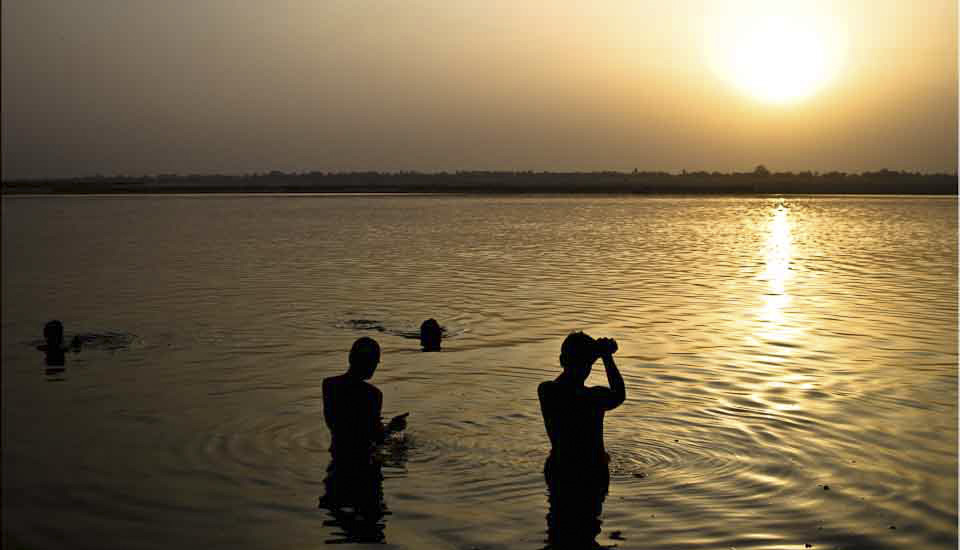
- Performing the Ganga Aarti from Dasaswamedh Ghat, Varanasi
- Buddha Head from Shwedagon Pagoda, Myanmar
- Harry Clarke Window from Dingle, Ireland
- Novice Monk Shwe Yan Pyay Monastery, Myanmar
Packets of 10 for $AU50.
Or - pick any photo from my Flickr or Wanders blog photos.

.jpg)
.jpg)
.jpg)









 It’s also no surprise that I always leave the country with a suitcase full of carved wood and printed fabrics.


 We’ll return to these tribal villages again.





Wonderful post Ursula, you always do such an amazing and thorough job telling the story and providing background, factual info and of course you support it all with wonderful images! Bravo!
Thanks so much, Karl.
I’d do that trip again in a heartbeat! 😀
[…] private session with three Asaro Mudmen (see: Asaro Mudmen), three Huli Wigmen (see: Huli Wigmen), and three Chimbu Skeleton Men. We watched and photographed as they applied their traditional […]
[…] are one of the largest ethnic groups – and certainly one of the most distinctive (see: Meet the Huli Wig Men). Unknown to Europeans until 1934, they are believed to have lived in their region for many […]