Smoking Ganja on the Ganges Marijuana has been a part of the culture in India for thousands of years. It is not uncommon to see sadhus fixing a chillum (a conical clay pipe) full of cannabis or hash and tobacco.
“Respect all religions. Practice your own.”
So said a Swami visiting Australia many years ago in interview when asked if he wished to attract people to his Hindu faith. Proselytisation is an alien concept in Indian religions such as Hinduism, Buddhism, Jainism and Sikhism.
Sectarianism violence has played – and still plays – a central role in the politics of the Indian subcontinent, as it does in the rest of the world. But, my experience on the ground has always been of people for whom religious expression is an integral part of their daily lives, and who are happy to share their rituals with me – and even give me blessings – without any expectation that I believe as they do.
This was certainly the case ten years ago when I was in the most holy Hindu city of Haridwar in Uttarakhand, North India, with photographers Gavin Gough and Matt Brandon to experience the Kumbh Mela.
A large proportion of the more than 10 million people who arrived in the ancient city of Haridwar to take part in the gathering were sadhus – those wandering ascetics seen all across India and the neighbouring countries. These men fascinate me: although the colour of their robes and the design of their tilaka (forehead markings) are meant to show which sect they belong to, I never saw two who looked the same! Indeed, researching the literature only reinforced my confusion about their many different traditions, customs, practices, and beliefs. According to one site (Facts and Details), there are around five million sadhus in the country, belonging to several thousand schools or sects.
On more than one occasion on that long-ago trip, I was offered a share of pipe by one of the sadhus. In most Indian states, possession of marijuana or hashish is a criminal act, and secular people caught indulging can be subject to harsh penalties. But sadhus – many of whom sit in a smoke haze all day – seem to be exempt.
Even more commonly (and possibly just as high-risk for a foreigner!), I was invited to share food that women were making at their camp sites. I’m always moved by how generous people can be with strangers – even when they seem to have so little themselves. I acceded to some of these offers and the food was always wonderful. Fortunately, I suffered no ill effects.
Come with me to the portable campsite in Haridwar and meet a few of the colourful Kumbh Mela pilgrims.
Corral The Bairaagi Campsite outside central Haridwar has an interesting crowd management system.
Sadhu with Japamala Garlands of prayer beads – usually 108 – are commonly used to keep count while reciting prayers or mantras.
“Namaste!” So many of the visiting holy men are quick to greet me.
Smiling Sadhus This was the eve of the holiest day of the kumbh mela: everyone was in a good mood.
Tin Cup The famous Naga sadhus, who are totally naked except for the ash they smear their bodies, were in a remote area of the camp, and I didn’t go looking for them. But, even in the central areas, there were some unique forms of dress.
Rapture This joyful sadhu with his beads, bells, and bone stick, was my favourite; …
Dancing Sadhu … he certainly lived up to the exhortation to dance like nobody is watching.
Reading Prayers Religious study, and philosophical discussion and debate, are a large part of the purpose behind the gathering.
Young Man at the Mela
Guru on a Stage Every colourful tent houses its own sect, and every sect has its own gurus, acolytes, and devotees.
Mixing Tilaka Outside the tents, groups of men are clustered, …
Applying Tilaka … helping each other get ready for the day.
Mixing Colours Tilaka is generally made by mixing freshly ground sandalwood, vermilion, turmeric, or ash with lime or water. The actual composition is prescribed by one’s purpose and religious sect.
Applying Tilaka Tilaka is generally applied with the ring finger to the forehead …
Sadhu Getting Painted … and on the arms, chest, neck, and back: all while reciting prayers or mantras.
Under a Sacred Fig Bodhi trees (ficus religiosa) are found all over Southeast Asia. Sacred in Hinduism and Buddhism, they provide local medicines – and shelter from the heat.
Lighting a Chillum
Concentration
Hindu Man
Many Hands Like an army, a religious festival marches on its stomach. But, making food for the masses is no chore when friends work together.
Cooking Panipuri In one popular street food, semolina pockets are stuffed with cooked potato, onion, and chutney. This version was cooked over a fire fuelled by dried dung.
Watching the Fire The women keep careful watch over the cooking food.
Hands making Food The balls come out of the fire too hot to handle!
Panipuri and Chilli
Bags of Herbs The women have brought their ingredients with them.
Cooked Tomatoes Freshly cooked tomatoes are peeled, before the herbs and spices are added to make a tangy sauce. The end result was wonderfully tasty!
Sadhu in a Niche There is a charismatic holy man in every nook and cranny –
Woman in Purple – and smiles are all around.
The mood over the whole festival grounds was euphoric.
Of course, part of that could have been the cannabis smoke wafting through the air.
[…] (Allahabad), Trimbak (Nashik), and Ujjain. It is a major pilgrimage festival in Hinduism (e.g.: Sadhus, Smoke and Street Food) that includes rituals, religious discussions, devotional singing, and traditional ceremonies. One […]ReplyCancel
Vieux Bassin The multicoloured slate-clad buildings overlooking Honfleur’s old harbour date back to the 15th- and 16th-centuries.
I love the old cobbled cities of Europe, and the historical stories they tell.
I spent some of my school years living in the French-speaking parts of Eastern Canada where the historical root and ties were to France. When I was studying the history of the early European explorers and settlers in Canada, their names were engraved in the streets and monuments all around me. Perhaps this is why, when we were reading about the Seven Years’ War between the British and the French for dominance over their North American territories, I was always on the the side of the French – even though the historical consequences of the pivotal Battle of Quebec in 1759 are known to every Canadian school child.
Half a lifetime later and half a world away, in the parklands along the Seine in Paris (see: Monday Morning in Paris), I was ridiculously excited to come across busts of the best known of those early French colonialists: Jacques Cartier, who gave “Canada” its name, and Samuel de Champlain, the “Father of New France”, who founded some of the earliest European colonies on the North American continent.
Our history books made note of how many trips these men made from their native France, but they didn’t really give one an idea of how long the voyages took, or how dangerous they were in the vessels of the day. Fast-forward a few years, and I was standing in St Malo, Brittany, from whence mariner Jacques Cartier set off on his three exploratory expeditions to North America (see: Saint Malo Brittany). I had taken an hour and a half to motor in on the fast ferry from Jersey in the Channel Islands; Cartier’s first voyage, in 1534, took twenty days of laborious sailing due West across the Atlantic Ocean to what is now Quebec.
Then, a few years ago, I was on a small ocean vessel that was docking in Le Havre for a day: looking at the excursions available to me, I decided on a half-day trip to the medieval town of Honfleur. Located near the mouth of the Seine River, this charming seaside city was once a pivotal maritime port. At least some of Samuel de Champlain’s trips across the Atlantic Ocean to Canada (He made between 21 and 29 in total!) departed from here: his 1608 trip to found a settlement at Quebec City, and some of his other voyages, are commemorated in a plaque inscribed in 1899 and posted at the memorial arch in his honour in the Honfleur’s Old Town.
Although Honfleur is both a river-port and a sea-port, in the 19th century, Le Havre overtook it as a commercial enterprise. Honfleur, however, wins the tourism stakes: Le Havre was devastated by World War II bombing, and has been called one of the France’s ugliest cities. By contrast, Honfleur with its picturesque 17th-century harbour ringed by 15th- and 16th-century buildings has long attracted artists – including impressionists like Claude Monet – yachting travellers, and tourists alike.
Join me for a walk around La Vielle Ville (The Old City).
Honfleur Crossroads The skies are chancy when our bus drops us off, but the spring flowers more than make up for overcast weather.
Poppy in a Garden Bed I love a French spring! The flowers and new growth are magic (see: Les Couleurs de Printemps).
La Vieille Ville Our first glimpse of the Old Town across the Old Harbour is a tantalising jumble of historical periods.
Quai Lepaulmier Wash House Public wash houses were common in Europe before the invention of washing machines. The Honfleur Tourism website lists three: this one was inaugurated in 1867.
Le Lavoir Saint-Léonard The Saint-Léonard wash house is close by; fed by a nearby spring, it was restored in 1807. The gothic-style Église Saint-Léonard sits behind.
Foliage in the Flower Town Honfleur calls itself a “Ville Fleurie” or Flower Town, and the gardens are lovely. I think this is a local dogwood tree.
Église Saint-Léonard A front view of St. Leonard’s Church shows off its flamboyant late-fifteenth century façade and its large octagonal dome-topped tower, dating to 1760. The first church on this site was consecrated in 1186, but destroyed during the Hundred Years War (1337 – 1453).
Jeanne d’Arc –Église Saint-Léonard In France, you are never far from representations of Joan of Arc – one of the country’s nine secondary patron saints, and still a semi-legendary figure almost five centuries after her death.
Jardin du Tripot This modern urban park was designed and developed reusing old materials reclaimed from the old tanneries that once occupied the site. This allows it to seamlessly merge into the historic heart of the Old Town.
Enfant sous un Parapluie French artist Annick Leroy was commissioned to produce works for the space. This fountain depicts a naked girl under an umbrella.
Geese Unfortunately, the water wasn’t running when I was in the garden, so the geese weren’t spitting their waters back into the Claire River below.
Reflections of Old and New
Calvados Country This is apple country: calvados (apple brandy aged in oak barrels) and classic cider are everywhere.
Cour de Roncheville Stone walls, cobbled streets, and courtyards: the whole town is a living museum.
Timber-Framed Buildings Some of the building have been reclaimed and converted into actual museums, like this 16th century prison, which now houses Le Musée d’Ethnographie et d’Art Populaire Normand. The museum recreates domestic and economic life in old Normandy.
Vieux Bassin Back in the open, we again have views of the houses standing higgledy-piggledy along the Old Harbour.
Carrousel à Honfleur Every seaside town has a merry go round. This two-tiered carrousel sits on the Old Harbour …
Merry go Round … and is enjoyed by young and old.
La Lieutenance The 18th century lieutenancy building at the entrance to the old harbour was the home of the Governor, and later the commerce tribunal. It now a houses restaurant.
Memorial to Samuel de Champlain Behind the lieutenancy, a bust of Samuel de Champlain and a plaque in his honour are posted next to the eponymous memorial arch.
Saint Catherine’s Catholic Church The beautiful Saint Catherine’s is France’s largest wooden church. It was built in the 15th century by ships’ carpenters, and is almost entirely covered in wooden shingles.
Local Guide Our walking guide points out some of the building’s finer details.
Saint Catherine’s Bell Tower The church bell is in a separate building across the plaza; it too is covered in chestnut shingles.
Candles Catholicism is the official religion in France, and 80% of the population are nominally Roman Catholic. Saint Catherine’s is still a consecrated building and home to an active parish.
Shuttered Window Back on the narrow streets, everyday life is nestled into the old buildings.
“Honfleur, la Cité des Peintres” One of the earliest the French impressionists, Eugène Boudin was born in Honfleur. The city has long attracted artists.
The Lieutenancy It is all quiet around the Vieux Bassin as we head back towards the outer docks.
Hung out to Dry This is still a working dock; …
Nets and Ropes … and the fishermen keep a close eye on their nets.
Fishing Boats Colourful boats sit in the East Harbour as we return to our own vessel.
I have a confession to make: before we returned to our ship, we indulged in some crêpes à la Normande with apples and Calvados…
But, even without the crêpes and the Canadian connection, Honfleur was a delightful place to explore.
Black Mama Wur Wur Youngster Papua New Guinea is home to an incredible diversity of tribal groups – each with their own customs, stories, dances, and costumes. Many of these are on display at the annual Mount Hagen Cultural Show.
The annual Mount Hagen Sing Sing brings out a mind-boggling array of unique tribal dance troupes.
Papua New Guinea has to be one of the most culturally diverse countries in the world! Although there are just over 7 million people (July 2020 est.) living on the eastern half of the island of New Guinea and the scattering of territorial islands across the Coral Sea and the South Pacific Ocean, these people represent over 7000 different cultural groups and speak 839 discrete indigenous languages. That’s about 12% of the world’s total!
It’s as if every small locality is its own cultural pocket with its own distinct form of dance, music, body paint, costume, weaponry, and storytelling. Around 100 of these distinctive tribal groups travel into Mount Hagen, high in the Wahgi Valley in central mainland Papua New Guinea, for the annual Sing Sing – a festival to share culture, dance and music.
When the Mount Hagen Cultural Show was first started in the early 1960s, it was very much a local affair, intended to preserve and share traditions and calm inter-tribal animosity. Today, the festival is pitched more at domestic and international tourist audiences, and there are prizes for the best performers. Entry ticket prices are high enough to shut out most locals, so they watch the performers as they dance through the streets to enter the grounds, or line up outside the fair grounds, with their noses pressed to the chain wire fencing.
I was in Mount Hagen with photographer Karl Grobl from Jim Cline Photo Tours. My fellow photo-tour participants and I were enjoying virtually unlimited access to groups as they prepared themselves and danced their way around and into the grounds (see: Western Highlands Women).
I would have like to have been able to communicate better and understand more about the actual stories behind the face paint and costumes. But, English is the third or fourth language for anyone who speaks it in the region, and my Tok Pisin, or “New Guinea Pidgin” is almost non-existent.
So, we’ll have to satisfy ourselves with a few portraits. Do join me!
Couple with a Rainbow Umbrella Outside the festival arena, vendors are seated on the ground with their wares on plastic. This man holds an areca nut in one hand, while asking me for a cigarette with the other. Tobacco is often mixed with areca for the betel chew that is ubiquitous across the country.
Blue and White All around the us, people are getting ready for their performances. The variations in the face-paint and costume styles are amazing. I’ve shared pictures of these women before (see: Women of the Western Highlands); I love their serious faces. The nets of moss and hair provide the base for the elaborate headdresses of feathers that will soon be painstakingly constructed.
Man and Child Local people watch with interest as the performers get ready to file into the grounds. Corrugated iron is a regular feature in the buildings.
Penis Gourds Penis sheaths, or koteka, were once commonly worn by men to cover their penises. Made from gourds, woven materials, or a combination of both, the versions for sale to tourists are often less roomy.
Old Uncle in a Hat This old gentleman was selling traditional weapons …
The Pipe Seller … while his neighbour was demonstrating his whistling pipes.
A Western Highland Dance Troupe The sound of kundu drums and singing lets me know where the street leading to the show-grounds is.
Elimbari Culture Group One by one, the groups make their way through the streets towards the entry gate …
Skirts Swirling … with their grass and fibre skirts swirling …
Simbu Play Group “Tail Feathers” … and their tail pieces swishing, as the kundu drums keep up a rhythm.
Men In Brown Feathers Not all of the groups are sign-posted, and not all of the signposts are legible; …
Young Woman in Brown Feathers … my guess based on the style of costume and face paint is that these are coastal or island people.
Young Woman in Feathers and Shells I loved this young woman: her expression was as tender as the soft feathers in her hair.
Mother and Infant A sing sing is a family affair: children are part of the action from their earliest days.
Koglat Mama Every troupe has their own kundu (drum) rhythms as they dance their way towards the entry.
Women in Black and Green
Black Mama Wur Wur Woman
Child in an Islander Group Many of the youngsters are solemn as they sing and dance with their elders.
Papuan Grass Skirts Papua New Guinea includes numerous islands and miles of coastline; …
Hats and Skirts … dance groups from these areas often incorporate large constructions as hats or props (see: Heal our Spirits).
Elaborate Islander Headdresses
Big Eyes
Islander Headdresses These hats have their own stories to tell!
Face Painting The preparation takes hours! A Western Highland man puts the finishing touches on a woman’s face paint before they enter the grounds (see: Women of the Western Highlands).
It wasn’t even noon yet; the temperature kept rising and the groups kept coming…
[…] grounds nice and early, which allows me to chat with performers while they get ready (see also: Tribal Expressions and Women of the Western […]ReplyCancel
Riders at the Rock In the golden light before sunset, tourists on camels work their way across a vast plateau with Uluru as their backdrop.
“Send us more camels!”
Last year when I was in Jordan, that was the exhortation of every second person I met, once they heard I was from Australia (see: Desert Rains and the Seven Pillars). Who knew we actually sell camels to the Middle East? I knew there were feral camels – at least 300,000 at last estimate – all across the outback, but I didn’t know we sold them back from whence they came!
Camels (Camelus dromedarius) aren’t native to Australia: they were introduced in the early 1800s by British explorers and settlers, and used as beasts of burden for the exploration and development of the arid interior.
The first major inland-Australian journey to use camels was the infamous Burke and Wills expedition of 1860. They aimed to cross the country from Melbourne in the south to the Gulf of Carpentaria in the north: roughly 3,250 kilometres (approximately 2,000 miles) of largely unknown terrain. At that time, much of Australia’s interior was unmapped by Europeans, who eschewed indigenous Aboriginal knowledge and still held hopes of a fertile inland sea. The ill-fated Burke and Wills expedition started out on 20 August 1860 with 19 men, 23 horses, 6 wagons, and 26 camels. In spite of numerous rescue parties, only one man – and none of the camels – survived the return trip back south to Melbourne.
That wasn’t the end of the camel’s story though. At least 15,000 camels are estimated to have come to Australia between 1870 and 1900 – mostly from India, but some from North Africa and Arabia. Private stud farms were set up in 1866 and a government camel stud was established in 1894.
It was recognised early on that the animals wouldn’t be much use without their handlers. At first, small groups of cameleers were shipped in and out of Australia at three-year intervals; over time, the cameleers began their own businesses, importing animals and running the camel trains themselves. Commonly referred to as “Afghans” or “Ghans”, these mainly Muslim men were predominantly from British India, although some were from Afghanistan, as well as Egypt and Turkey.
Camels continued to be used for inland exploration and for haulage through the early 1900s. But, the introduction of the Immigration Restriction Act 1901 and the White Australia policy made life more difficult for the cameleers, and the advent of motorised transport put the camels out of work. Rather than shoot their beasts, some cameleers released them into the wild, where subsequent generations have thrived. Although marginally less destructive than other introduced animals in Australia, camels are a severe challenge to the natural environment: they drink huge amounts of water, eat more than 80% of the plant species available, and destroy native animal habitats. They also wreck pipes, fences, and other modern infrastructure and have damaged culturally sensitive heritage sites.
But, rounding them up to be sold back to places like Jordan isn’t so easy!
Even with the Australian Feral Camel Management Project (AFCMP) running from 2009 until 2013, the camel population – and the financial, social, and environmental costs resulting from it – continue to grow.
The Pitjantjatjara people of the Central Australian desert have learnt camel-handling skills, and muster some animals for their own use. There are some Australian commercial operations producing milk and/or meat, and the country is reputedly the biggest exporter of camels in the world. But, the costs associated with live-mustering and handling are high, so live-exports accounts for only a very small proportion of the camel population. While small numbers are sent to the Middle East for breeding and racing purposes, large numbers are culled regularly.
Some animals are lucky enough to make it into the hospitality industry, where operators like Uluru Camel Tours – who I rode into the sunset with – have plans around animal welfare, environmental management, and community sustainability.
Join me and my mount Wally on an evening ride into the Red Centre:
Uluru Camel Farm A short shuttle ride from the Voyages Ayers Rock Resort, the rustic Camel Farm welcomes us.
Camel Farm The Uluru operation is home to 60 camels, mostly male, caught in the wild and trained to be working animals.
Dromedaries at the Farm All the camels here – like most of those in Australia – are one-humped dromedaries, which are suited to the hot desert. Two-humped bactrian camels are built for the cold climate of Central Asia.
Camels at the Ready The camels needed for the evening’s Sunset Tour are ready and waiting in their harnesses and saddles. According to the website, farm owner and experienced cameleer Chris Hill makes all the saddles and harnesses in the saddlery on site.
Camel Portrait To me, it always looks as though they are smiling – even though I know they are just chewing their cuds.
Camel Silhouettes Riding three metres above the ground, we make our way across the red sands …
Red Sands … climbing up the semi-arid dunes in search of a sunset.
Bella in the Sun Our guide and camel handler talks to us about the animals and the local environment as we ride up the dunes.
The Rock Every time I saw this magnificent monolith rising out of the desert plains, I felt a lump in my throat and tears in my eyes. This UNESCO-listed living landscape is magic.
Camel Train Behind us, another camel train threads through the spiky hummocks of spinifex grass and the spindly, fledgeling desert oak trees.
Sun-Flares over Kata Tjuta The lowering sun is directly in our eyes as the camels cross in front of Kata Tjuta– the “Many Heads”.
Sun Flares over Bella and Kata Tjuta Bella keeps us entertained as we ride straight into the setting sun.
Lowering Light on Uluru As the sun continues to drop, the colours on the Uluru and the desert vegetation change constantly.
Riders in Evening Light Although it rained the week before I arrived here, the region had previously suffered a lengthy drought. The dry vegetation takes on a golden glow in the afternoon light.
Sunset on the Clouds From a vantage point at the top of a rise, we watch as the sun sets fire to the clouds over Kata Tjuta.
Kata Juta Skies We are lucky: in this usually dry environment, clear skies are the norm – making for much less interesting sunsets!
Desert Oak I fell in love with the desert oaks (allocasuarina decaisneana) even before I knew their story: these slow growing trees send down a tap-root that can be three times their height. The root can reach a depth of over 10 metres (33 ft), searching for any sub-surface water. Here at Yulara, the southern aquifer is generally between 17 and 26 metres, so these unique trees don’t have to work quite so hard.
In the Skies over Kata Tjuta Flies are a constant in the outback – but that’s not a fly in the darkening sky: it is a helicopter on its own sunset tour.
Uluru Darkening On one side of the plateau in front of us, Uluru falls into darkness; …
Kata Tjuta Sunset … and the skies over The Olgas show their last colours.
These days, there are always questions around the ethics of the use of companion animals, but in the case of the feral camels of the outback, they should be pretty happy to be taken into service at Uluru!
For me, riding camel-back across the Red Centre was a wonderful way to take in the beauty of the changing light over the Uluru-Kata Tjuta National Park.
[…] I could into the short time I had in the area, so I booked myself into a range of activities (see: A Camel Ride into the Red Centre and The Field of Light). On my second morning, I got up pre-dawn to join the SEIT Kata Tjuta tour, […]ReplyCancel
[…] resort, taking in a talk on bush tucker and other activities (Watch this space!), and went for a sunset camel ride. I watched the sunrise and walked into the Walpa Gorge in Kata Tjuta, and I planned to walked […]ReplyCancel
Boy on the Brink Initiation into manhood in tribal Hamar society involves a treacherous run over the backs of cows and steers. In preparation, the boy’s head is partially shaved, he is scrubbed with sand to wash away any sins, and he is smeared with dung to give him strength.
Every society that has been studied by history, anthropology, or sociology, celebrates the passage of its individuals from one social or religious status to another. The ceremonial events that mark these rites of passage can take very different and colourful forms. Many are private affairs, with elders initiating others into secrets that are not shared with outsiders. They often involve ritual marking (circumcision, scarring or tattooing), temporary social isolation, or physical challenges: anything that means that the transition from one group to another, or from one phase of life to another, will not be forgotten.
Sometimes these events are joyous occasions – think weddings or baby-namings – and outsiders are welcome. One of my happiest travel memories is of being dragged into part of an Indian wedding in Rajasthan. Others, while not particularly private, are still challenging for outsiders to comprehend.
Young men of the Hamar tribe in Southern Ethiopia’s Omo Valley participate in a cattle-jumping ceremony called Ukule Bulla. The men (or boys) must run naked, four times, across the backs of ten to fifteen cows and castrated bulls that are held together in a line. Once they have succeeded, they are considered to be adult or Maza (literally: an accomplished one) and can own their own cattle and marry.
So far, so good.
The young men might be understandably anxious about their ability to accomplish this feat, and they are amped up on a strong local coffee brew and local alcohol, but it is the women’s ceremony that is a real challenge for visitors. Before the cow-jumping, they too drink copious amounts, and take part in a noisy, jumping dancing frenzy. At some point during their dance, they insist that their adult male relatives (who are Maza, having already performed their cow jumping, but have not yet married) strike their bare backs with long, wooden whips. The men do not get away with a token ceremonial flagellation: the violent lashings leave open wounds on the backs of women. These become deep scars which the women wear with pride.
Enduring the pain, amid dancing and cheers, is seen as a sign of love and loyalty toward their male relatives. Indeed, the men are considered forever indebted to the women after the ceremony is over.
Once the cattle-jumper has finished his runs, he is draped in an animal skin, blessed, and sent off with the other Maza to have his head fully shaved. The noisy celebrations continue long into the night.
Hamar Lands After a morning spent with the Arbore people (see: Arbore Village Portraits) we were back in the high, open Hamar territory.
Young Hamar Woman Hamar women are easily distinguishable by their clay-and-butter decorated hairstyles, and the cowrie-shell decorated goatskin smocks they wear.
Tourist Trucks This village had a few boys who were going to be cow-jumping; clearly the tourists were also out in force! After a few minutes on the phone, Danny found us another event in a more remote location, and we headed off again.
In the Hamar Village In preparation for the cow jumping, the young man visits all the neighbouring villages to invite everyone to his initiation. As is common in this region, the men here all have their own stools.
Hamar Headband The men and women all love their colourful beaded jewellery and elaborate hairstyles.
Hamar Hat Colourfully woven hats, beaded headbands, and copper bracelets, are all part of the festival attire.
Dancing Group All wearing their traditional goatskins – elaborately decorated with beads and cowries – the female relatives of the initiate dance around in circles singing.
Women Dancing At regular intervals, they stop their circuits to jump up and blow curved horns. The noise is like being in the middle of an Asian traffic jam!
Smoke and Coffee In the lead-up to the cattle jumping, villagers have days of feasting and drinking traditional coffee, sorghum beer, and honey wine.
Dance Circle The jumping, dancing …
Women with Horns … and horn blowing continues.
Woman on the Sidelines The bells on the women’s legs contribute to the cacophony of the dance.
Leg Bells
“It Takes a Village” A cow-jumping is a great opportunity for families to get together. A proud uncle shows off his young niece.
Leaves in her Hair This young woman is a first wife, which we know from her burkule: the leather and metal necklace with its distinctive knob in the front.
Ritual Coffee The visitors share special coffee – or it might be sorghum mash.
Thatched Hamar Hut Some of the huts in the village are quite beautiful.
Hamar Woman in a Wreath
The Initiate This young lad was only eleven years old, and he seemed very small and scared surrounded by his tall elders. Usually the young men who are participating in their cow jumping are older than this, but he is the only son of an ailing father; he needs to be initiated before his father dies.
Men with a Switch The dancing women – who are at least partially intoxicated – call previously initiated male relatives, known as Maza, in to whip them with long, wooden switches.
Scarred Backs Women’s scars are a symbolic mark of their loyalty to their families, demonstrating how they are willing to suffer for their male relatives. The wounds are dressed with lye and dried cow dung, so that the welts will harden into raised and visible scars.
Fabulous Hair I loved checking out the different hair styles, and couldn’t help but wonder how long it takes to create some of the fabulous styles.
Guns Everywhere Automatic weapons are everywhere: these pastoralists need to protect their herds from raiding neighbours.
Steering the Cows Late in afternoon, the villagers gather up a number of cattle …
Holding the Cows by the Tail … and line them up in preparation for the jumping.
Coming! Leaping over the lineup of bulls takes courage and skill; he needs to make four complete passages to ‘pass’.
And Going! The young lad is naked and smeared with dung to give him strength. The strips of tree bark around his chest are a spiritual protection.
Hamar Girl in Sunnies After the jumping, the celebrations continue: the young women look for young men to dance with.
Man in a Feathered Hat Everyone is all smiles now that the jump has been successfully completed.
It was a fascinating, but challenging, afternoon visit.
It hard to know in what form these customs will continue into the future. Tourists, and the money they bring, have been making inroads into Hamar lands for 15+ years, and this is bound to change Hamar society.
Hopefully, they will be tho ones to choose the way in which any changes happen. As one Hamar woman put it:
[…] The Hamar practice scarification, much of which can be quite beautiful. What is alarming is the significations of some of these scars: men wear rows of pala or “hero scars” which relate directly to the number of tribal enemies they have personally killed. In addition to decorative scars, women proudly display ragged wounds on their backs, which they have received from a ritual (and distressing to most outsiders – including me) whipping that takes place as part of men’s ‘cattle jumping’ ceremony. This is a unique coming-of-age-initiation practice – which I’ll talk more about when I get to those pictures. (see: Coming of Age in a Hamar Village). […]ReplyCancel
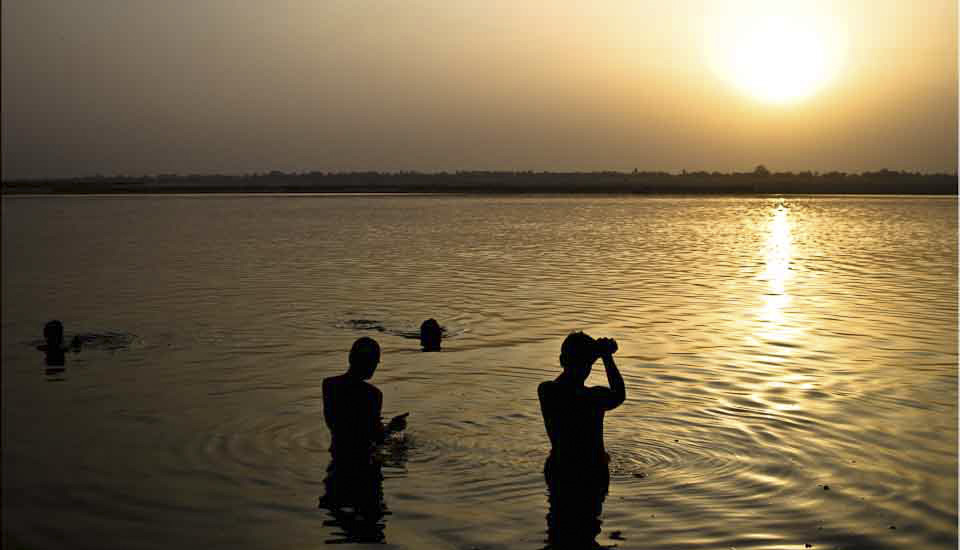
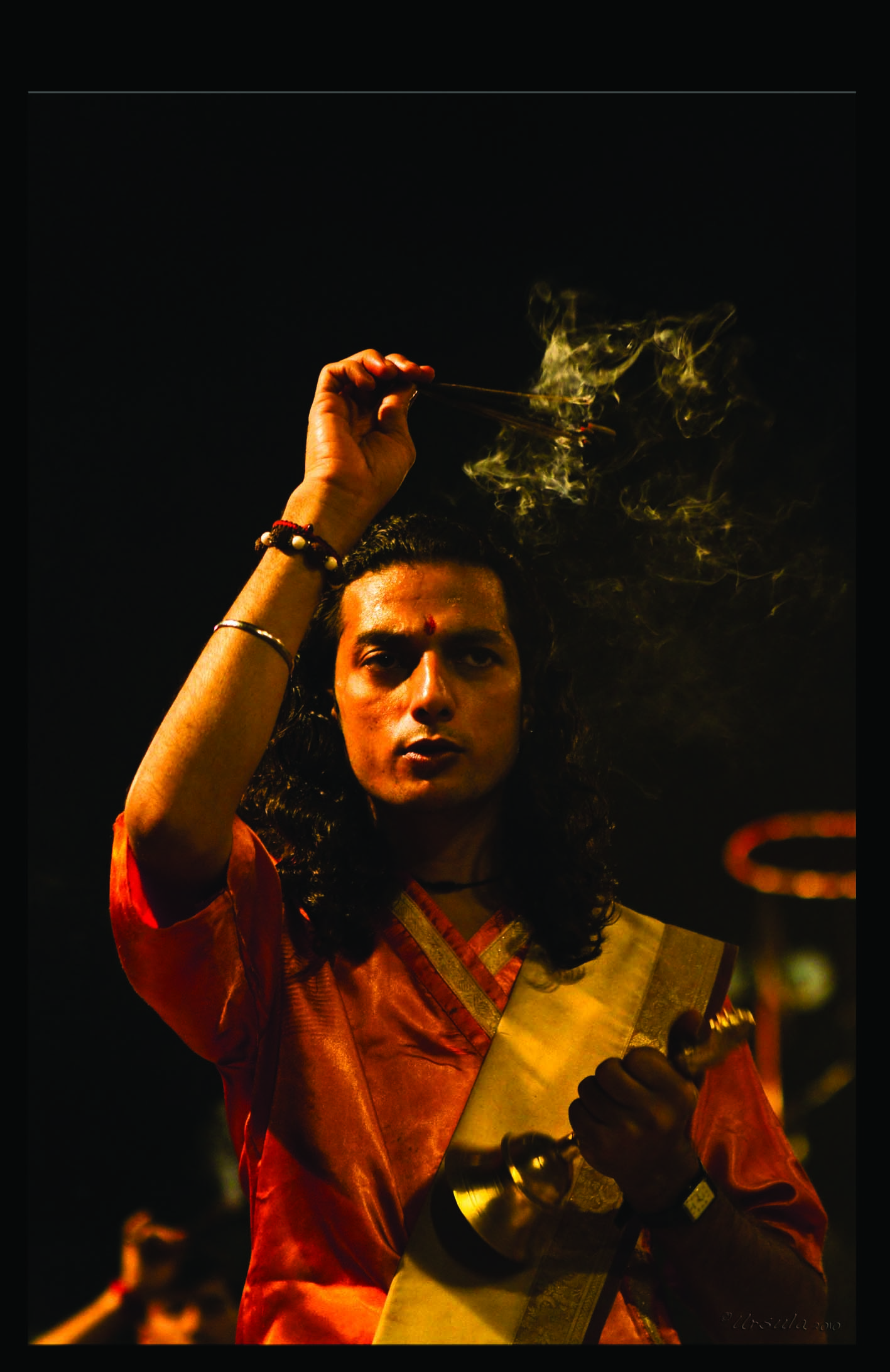
- Performing the Ganga Aarti from Dasaswamedh Ghat, Varanasi
- Buddha Head from Shwedagon Pagoda, Myanmar
- Harry Clarke Window from Dingle, Ireland
- Novice Monk Shwe Yan Pyay Monastery, Myanmar
Packets of 10 for $AU50.
Or - pick any photo from my Flickr or Wanders blog photos.

.jpg)
.jpg)
.jpg)
















[…] (Allahabad), Trimbak (Nashik), and Ujjain. It is a major pilgrimage festival in Hinduism (e.g.: Sadhus, Smoke and Street Food) that includes rituals, religious discussions, devotional singing, and traditional ceremonies. One […]