Temple of Ramesses II – Abu Simbel Visitors are dwarfed by the 20-metre (65 foot) seated Colossi that the Pharaoh Ramesses II had built in his own honour.
The archaeological remains and artefacts that survive to attest to the richness of the almost 30 centuries of civilisation we now call Ancient Egypt (3100-333 BC ) are mind-boggling.
That people between 3000 and 5000 years ago conceived of – and built – the pyramids, tombs, mausoleums, and temples, that scatter along the Nile amazes me. That they built them so well that these structures endure for us to explore and enjoy today is just astonishing!
I was awestruck by each and every archaeological site, but one of my favourites was at Abu Simbel.
Abu Simbel sits 280 kilometres south of Aswan, in what is now the Aswan Governorate of Upper Egypt. During the rule of Pharaoh Ramesses II (1303-1213 BC) – also known as Rameses and Ramses – this was Nubia, and the southern limit of Egyptian control at the time. Ramesses II is often regarded as the greatest pharaoh of the Ancient Egypt’s New Kingdom (1570- c. 1069 BCE). He built a number of temples to impress and intimidate his trading partners and enemies, and to memorialise and deify himself: the most prominent of these are the two temples at Abu Simbel.
The rock-cut temples were originally constructed over three thousand years ago, between 1264 and 1244 BC. The larger of the two, the Great Temple, was dedicated to Ramesses II himself, and the Small Temple, also known as the Temple of Hathor, was dedicated to his chief wife Queen Nefertari. As impressive as these are, over time they fell into disuse. They were almost completely buried in sand when they were rediscovered in 1813. The story goes that a Swiss explorer was led to the site by an Egyptian-Nubian boy called Abu Simbel. By 1909, the sand had been removed, and the site became a popular attraction.
Then, with the building of the world’s largest embankment dam, the 4,000 metres (13,000 ft) long Aswan High Dam – between 1960 and 1970 – the temples were at risk of being lost under the rising waters of Lake Nasser. The Egyptian Government, with the assistance of UNESCO, managed to source international funding to rescue these two temples and the Temple Complex at Philae (see: The Sacred Temple of Isis). Between 1964 and 1968 the Abu Simbel temples were cut into 20 to 30 ton sections, moved and reassembled in the current location which is an artificial cliff 210 m (688ft) back from and 65 m (213 ft) above their original position, and then surrounded by an artificial stone mountain. Getting the orientation right was critical, because the temples were aligned to allow the rising or setting sun to reach the central chamber on the anniversaries of Ramesses II’s ascension to the throne and on his birthday.
Although it is possible to drive the 300 km (168 mile) from Aswan to Abu Simbel, we took an early morning 30-minute flight to the nearby small airport: to my mind, this made the whole trip even more exotic.
It truly is a marvel worth visiting!
Can you Feel the Heat? Aswan is known for its hot desert climate. It is just after ten o’clock on an October morning: the sun is high in a cloudless sky, and heat radiates from the unshaded sandy terrain.
Great Temple of Rameses II As you round the bend, the front of the temple commands the scene. Standing at 33 metres (108 feet) high and 38 metres (125 feet) wide, the Great Temple dwarfs the visitors in the forecourt.
The Temple of Hathor – The Small Temple The nearby temple dedicated to the the Nubian Queen Nefertari, the favourite wife of Rameses II, has six 10-metre (33 foot) statues standing in niches across the front.
Outside the Small Temple Each side of the temple doorway a carved relief of Queen Nefertari is flanked by two statues of Rameses II. It is unusual in Egyptian art for pharaohs to be depicted in the same scale as their wives – and is further demonstration of his esteem for her.
Ramesses II outside the Small Temple In spite of the passage of time, there is a rough-hewn beauty to the original sandstone the temples were carved into.
Hypostyle Hall – The Temple of Hathor The logic escapes me: I could take photos with my phone quite freely inside the temples – but not with my cameras. (iPhone6)
Hathor Column: Hypostyle Hall
Tourists, Columns, and Art
Wall Art Inside the Nefertari Temple Anyone who knows how to ‘read’ these stories could spend hour in here: I just admired the designs and colours. (iPhone6)
Visitors to the Site Back outside in the heat and glare, it’s a short walk between temple entrances.
Great Temple The four seated 20-metre (65 foot) Colossi of Ramesses II are imposing as you approach them.
Temple of Ramesses II The reconstruction and renovation allows a sense of ‘age’ as well as timelessness.
Horus The temple was originally built by Ramesses II to commemorate his victory at the Battle of Kadesh (1274 BC), and is dedicated to the himself and the ancient Egyptian Gods of Amon, Ra, and Ptah. Here, Horus wears the solar disk of the God Ra.
Mut-Tuy and Graffiti At the feet of the Colossi, small figures of members of the Pharaoh’s family. I think this worn figure is the mother of Rameses II.
Queen Nefertari – Left Tucked under the Pharaoh’s knees on either side of the entry, …
Queen Nefertari – Right … the favourite wife stands like mirror images.
Horus and Hieroglyphs
Ramesses II There is a modern, minimalist, beauty in these ancient figures.
Hypostyle Hall Inside the Grand Temple, beautiful Osirian columns represent Ramesses in his deified form. (iPhone6)
Inner Sanctuary : House of the Gods At the heart of the temple, Ramesses II, Ptah (God of creation), Amun (The Creator God), and Ra (Sun God) sit in the dark where the sun only reaches two days a year.
Inside the Main Temple Even with soft modern lighting, the corridors are dim. On the end wall, Amun, the creator God is just visible with his two tall plumes on his head.
Transverse Chamber Inside Abu Simbel Endless stories cover the walls inside the temple: tales of battles and treaties, of divine offerings and rituals. (iPhone6)
Murals in the Transverse Chamber It would take forever to ‘read’ all the stories. (iPhone6)
Cairns on Lake Nasser Outside, more modern people have left their mark.
Behind the Temples I have some time before I have to meet my bus, so I follow the path that leads around the mountain and behind the temples.
Souvenirs There are always souvenir shops between a temple and the exit! I don’t mind: even when I have no intention of buying anything, I like to admire the handicrafts on offer.
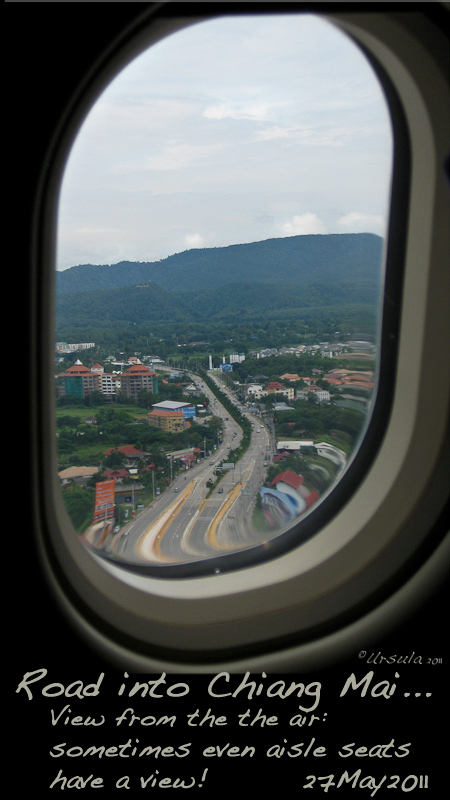
… And Back Again! Too soon we are back on the road, and then in the air, heading north to Aswan. (iPhone6)
Some Ancient Egyptian concepts of life, afterlife, and eternal life, are quite foreign to most of us now. Still, Pharaoh Ramesses II’s attempt to achieve immortality through his colossal stone statues and magnificent temples has been – at least partially – successful.
Feathers, Shells, and Face Paint These Western Highland women have spent hours getting ready – but now they can sing, dance, and enjoy themselves – which is what the Mount Hagen Cultural Show is all about.
Papua New Guinea is known for its colourful tribes. Even the official government tourism site features different tribal groups in their elaborate tradition costumes and face paint.
Of course, the country is also known for its ongoing inter-tribal animosities. Tribal warfare continues to be the subject of regular news reports and academic study.
Papua New Guinea sing sings are gatherings of tribes or villages to show off their distinct culture, dance, and music. The Mount Hagen sing sing started back in the early 1960s, before Independence, as a peacekeeping effort to foster understanding between sparring tribes. The colonial administrators hoped to reduce tribal fighting by promoting positive forms of competition.
Today, this popular event takes place every year on the Saturday and Sunday of the third weekend of August at the Kagamuga Showground in Mount Hagen. Cash prizes and significant prestige are still available to the ‘winners’ in terms of dance, performance, and traditional costume. The festival attracts up to 100 distinctive cultural groups from the Western Highlands Province, and from all over the rest of the country, and is a popular stop on tourist itineraries. As well as bringing in tourist dollars, this festival – and others like it – help to keep indigenous languages and culture alive by valuing the external expressions of these timeless traditions, and encouraging participation by younger community members.
Some years ago, I was at the Mount Hagen Sing Sing Festival with photographerKarl Grobl from Jim Cline Photo Tours and a small group of photography enthusiasts. We spent significant time watching and photographing while the disparate groups they got ready for their performances. The array of distinctive tribal costumes, face-paints, and headdresses was just amazing (see: Mount Hagen)!
The main show runs from about 9am to 2pm, and it was now the last day; I spent the morning in the nearby school where a number of Western Highland troupes were putting the final touches on their outfits and paint (see: Portraits on a Rainy Morning).
When I returned to the main show grounds, it was just in time for the last dances – and a few more colourful portraits.
Join me!
Women’s Practice Session In a corner of the school yard near the Mount Hagen Sing Sing Festival Showgrounds, a Western Highlands women’s group put in a last-minute practice.
Feathers, Fur, and Shells The women’s heavy and elaborate neck scarves are made from colourful cuscus fur interlaced with different types of shells.
Tall against the Sky The women stand proud in the face paint, tall feathered headdresses, heavy shell necklaces and and kina-shell breast plates.
Local Forces A short walk away in a large paddock, a number of tribal groups are getting ready. The police presence is conspicuous and well armed …
Police Special Services Division … but friendly.
Yellow and Black A bilum is an iconic Papua New Guinean string bag made using a knotless netting technique. The same skill goes into making the colourful hats that are stuffed with moss (or other materials) and often decorated with beads, leaves, and feathers.
Concentration Everyone is concentrating on their small, hand-held mirrors. I love the bikini-clad young lady pictured on this one.
Tribal Shields On the way into the show grounds, a number of local items are on display and for sale: carvings; paintings; bilum bags; woven sisal, seagrass, and cane products; and leather goods.
Moikep Bamboo Flute Group Inside the show grounds, colour and sound is everywhere – …
Moikep Man on a Bamboo Flute … but not every group is here to dance, and not every performer is in costume.
Western Highland Women Dancing After they have done a few laps around the exhibition space, the different groups continue dancing in their own little corners – …
Red White and Blue … – somehow managing to ignore competing songs and rhythms just a few feet away.
Tuckered Out Not everyone can last the distance!
Same, Same, but Different! I thought this was the same group I had watched practicing at the school – but they are not! There are small, but significant differences in their headdresses and face paint. And of course, the songs and dances are different.
Mindima Woman In a similar fashion, these headdresses resemble those from Jiwaka, the next province to the west. But, the women’s hand-written cardboard sign identified them as the Mindima Women’s Group, which is from nearby Chimbu (Simbu) Province.
Last Song : Last Dance
Huge Headdress The Chimbu are known for their huge headdresses made from bird of paradise feathers which can be up to one meter long.
Feathers I’m always staggered by the number of rare parrots and other bird parts that make it into these fantastic ceremonial headdresses. Fortunately, they are usually well looked after between festivals, so new headdresses are not needed every year.
Kerapia Boys Hela Wigman As I’ve spoken about before, the Wigmen from Hela Province grow their own hair to make their elaborate headdresses. The young woman’s hat, on the other hand, is constructed from fur and feathers.
Western Highlands Boy
Western Highlands Man Some of the men’s headdresses stand incredibly tall – and it’s hard to get the whole thing into one shot as they loom against the sky. Fortunately, the festival has wrapped up – as it looks like it is going to rain again!
It certainly is – as advertised – a cultural festival for the senses! The kaleidoscope of colours and noise stayed with me for a long time after the last dance was finished.
Kites over Colombo It was a beautiful Sunday afternoon, and families were flying colourful kites over Galle Face Green in Colombo’s Fort District.
Colombo, the commercial capital of Sri Lanka, is a multi-religious, multi-ethnic, multi-cultural city of 5.6 million. Thanks to its large natural harbour and its strategic position along the East–West sea trade routes, the city has a long and colourful history, some of which is still evidenced in the historic colonial buildings dotted between temples and modern sky scrapers.
Colombo was known to Indian, Greek, Persian, Roman, Arab, and Chinese traders for over 2,000 years. Arab traders – whose descendants make up 9.2% of the Sri Lankan population today – settled in the region in the 8th century AD. The Portuguese arrived in Sri Lanka in 1505, establishing a small trading post and laying the foundations for a fort in 1517. This harbour-front area is still called Fort District, even though nothing remains of the fortifications that were elaborated many times over the years: by the original Portuguese, the Dutch, and finally the British, who pulled down the ramparts 1879 when attack by sea was no longer a real threat.
As Colombo’s central business district, Fort features a number of imposing modern high-rises as well as impressive examples of original colonial architecture. What draws locals to the area, however, is the Galle Face Green, the city’s largest open space, stretching for 500 m (1,600 ft) between the multi-story buildings along Galle Road and the foreshore of the Indian Ocean. The Galle Face Green Promenade, was set aside and built in 1859 during the British colonial era (see: Wikipedia).
I was lucky enough to have a friend living and working in the city when I visited some years ago, and as she too is a photography-enthusiast, she guided us to the best districts to walk around. We spent the weekend chatting as we alternated photo-walks with coffee-stops around the city: the temples and narrow streets of Slave Island on the Saturday (see: Buddhas of Colombo and Slave Island Streets) and the streets and parklands of Fort District on the Sunday – culminating at the historic Galle Face Hotel for sunset drinks and flag ceremony.
Do come along!
Old Dutch Hospital We started our Fort photowalk with coffee at the Old Colombo Dutch Hospital – built-for-purpose some time before 1681, and now retrofitted as an upmarket shopping precinct. In contrast to the clay tiles on the roof of the old low-rise building, the shiny towers of Colombo’s World Trade Center rise 43 stories up into the air.
Cargills (Ceylon) Limited Once the home of the Dutch military commander of Galle Fort, the building here was acquired by the Cargills company in 1896, and rebuilt between 1902 and 1906. I don’t know how close the current version is to the original: there is a foundation stone dated 1684 preserved inside.
Sri Lanka Port Authority
Sri Sambuddhaloka Vihare The stupa-shape of this temple just off the busy Lotus Road interchange drew us in. (iPhone6)
Buddhas around the Stupa We did a short circuit to pay our respects, …
In Conversation … and left the locals to their afternoon chat.
Development through the Fence Colombo is a city of waterways: here we are looking towards the Indian Ocean, as we cross over the canal leading out of Beira Lake. (iPhone6)
On the Steps The bridge takes us straight onto Galle Face Green.
Galle Face Beach and Green There is debate as to how this 5 ha (12 acre) ocean-side urban park came by its name. The space was originally set aside so that the Dutch cannons could watch over the sea and was laid out as a promenade by the British in 1859. The building in the background is our destination for sunset drinks: the Galle Face Hotel – established in 1864.
Pinwheels in the Wind This urban park stretches 500 m (1,600 ft) along the coast, and is a popular destination for the city’s residents.
Kite over Colombo The sky overhead was full of colourful kites, and I was a little envious, as I’ve never succeeded in flying one.
l Flying a Kite Even with better-constructed versions than the ones I tried to make as a child, some people still had trouble getting them off the ground.
Kites over the Grand Hyatt
Family in the Park
Kite on Colombo Palaza Tower
Trying to Fly I enjoyed watching this little one as she tried to get her kite off the ground.
When the Grownups Take Over The look on her face when mum stepped in to ‘help’ was priceless.
Spiderman Flying Free This was my favourite: I love how Spiderman is hanging onto his web.
Woman and a Watchtower The lowering sun turns the lifeguard chair liquid …
Sunset in the Flag … and sets fire to the Sri Lankan flag.
Palm Trees in the Table The elegant Galle Face Hotel is one of Sri Lanka’s oldest and most popular hotels. We found a table in the outdoor courtyard. (iPhone6)
Piper Playing In true post-colonial glory, every evening two men come out of the hotel, …
The Flag is Down … and as the pipes play and the sun sets, the Sri Lankan flag is lowered …
Evening Piper at the Fort … and solemnly carried back indoors.
My visit happened to be on November 11th: Remembrance Day in my world, so even though I was in a very different place, while I was listening to a piper at sunset, I could only reflect on Laurence Binyon’s poem For the Fallen, and “…remember them.”
Mono Lake It is like another world: limestone tufa towers rise like strange stalagmites out of the still, salty lake waters in California’s Mono Lake Tufa State Natural Reserve.
The air is hot and still: July afternoon temperatures range from the high twenties (29°C; 84°F) into the mid-thirties (35°C; 95°F) – and rapidly drop into the single digits at nightfall.
The waters are dense and still: the shallow waters that cover about 168 square kilometres (65 square miles) flow in from the surrounding mountains, but don’t flow out again. Mono Lake is the terminal lake in an endorheic basin; thanks to water evaporation into the hot, dry, desert air over the millennia, the salts and minerals that wash into it from Eastern Sierra streams have become more concentrated and now are about two and a half times as salty as the ocean, and very alkaline.
Some say the ancient lake is over 1 million years old: it was formed at least 760,000 years ago, and is among the oldest lakes in North America. Sitting at the north end of the Mono–Inyo Craters volcanic chain, it is thought to be the vestige of an inland sea.
No fish break the surface of the dense waters: there are none here. They can’t survive the hypersalinity and high alkalinity. This is home to single-celled planktonic algae, Mono Lake brine shrimp, alkali flies, and a number of nematodes. And these, in turn, are all an important source of food for migratory and nesting birds. The ancient lake literally teems with bird life, and the longer you stand on the shore, the more you see.
Perhaps the lake’s most remarkable features are the tufa towers: lumpy columns of calcium carbonate – or limestone – that rise out of the still waters like something from another world.
I was there in the early evening with a friend and a tripod: we had spent the morning at the nearby Minaret Vista (see: Minaret Vista), and were hoping for a nice sunset amongst the tufa.
Join me!
An Oasis in the Desert As we walk into the South Tufa Area, Mono Lake and the large volcanic Paoha Island within it, come into view. Naturalists lead free tufa walks here three times daily – which probably explains the clump of people in my view.
Mono Lake Tufa Remains The lake was much larger once. From 1913, the city of Los Angeles diverted waters from feeder rivers, and in 1941 extended the Los Angeles Aqueduct system into the Mono Basin. By 1990, the lake had dropped 14 metres (45 feet) and had lost half its volume relative to the 1941 water level. It took concerted local effort to save the lake, and the state reserve was finally established by California in 1981. Fallen tufa from years past still litter the sandy ground.
South Tufa Area Tufas start their life underwater: calcium-rich freshwater springs bubble up from under the lake bed.
Tall Limestone Tufa The calcium reacts with the carbonates in the lake water, combining to make calcium carbonate, or limestone. The limestone settles as a solid around the spring, and over time, builds up into a tufa tower.
Evening on the Tufas These tufa towers keep growing, as spring waters continue to rise up through them, and leave more deposits as they seep through the surfaces.
People at the Tufas Mountains rise up all around us.
Sage Thrasher (Oreoscoptes Montanus) – I Think! The lake is a mecca for birds and bird watchers.
Birds on Mono Lake
Moonrise over the Tufa Behind us, the moon rises over the tufa in the south east, …
Sunburst on the Tufa … and in the other direction, the lowering sun is reflected in the lake.
Tufa Towers The lengthening shadows highlight the rough surfaces of the limestone columns.
Sandpiper in the Tufa The lake is home to sandpipers, oystercatchers, avocets, phalaropes and other long-billed, long legged waders, who all blend in with the rocks. I had trouble distinguishing one from the other!
Tufa The shapes reflected in the still waters are other-worldly.
Tufa Mirrored They seem to float on the water in the evening light.
Children Collecting Water At the edge of the lake, children collect water to study the brine shrimp and alkali flies up close.
Long-billed Dowitcher (Limnodromus Scolopaceus) or Wilson’s Phalarope (Phalaropus Tricolor) ?
Sage Thrasher (Oreoscoptes Montanus)
Tufas on the Lakeshore
Evening Walk around Mono Lake
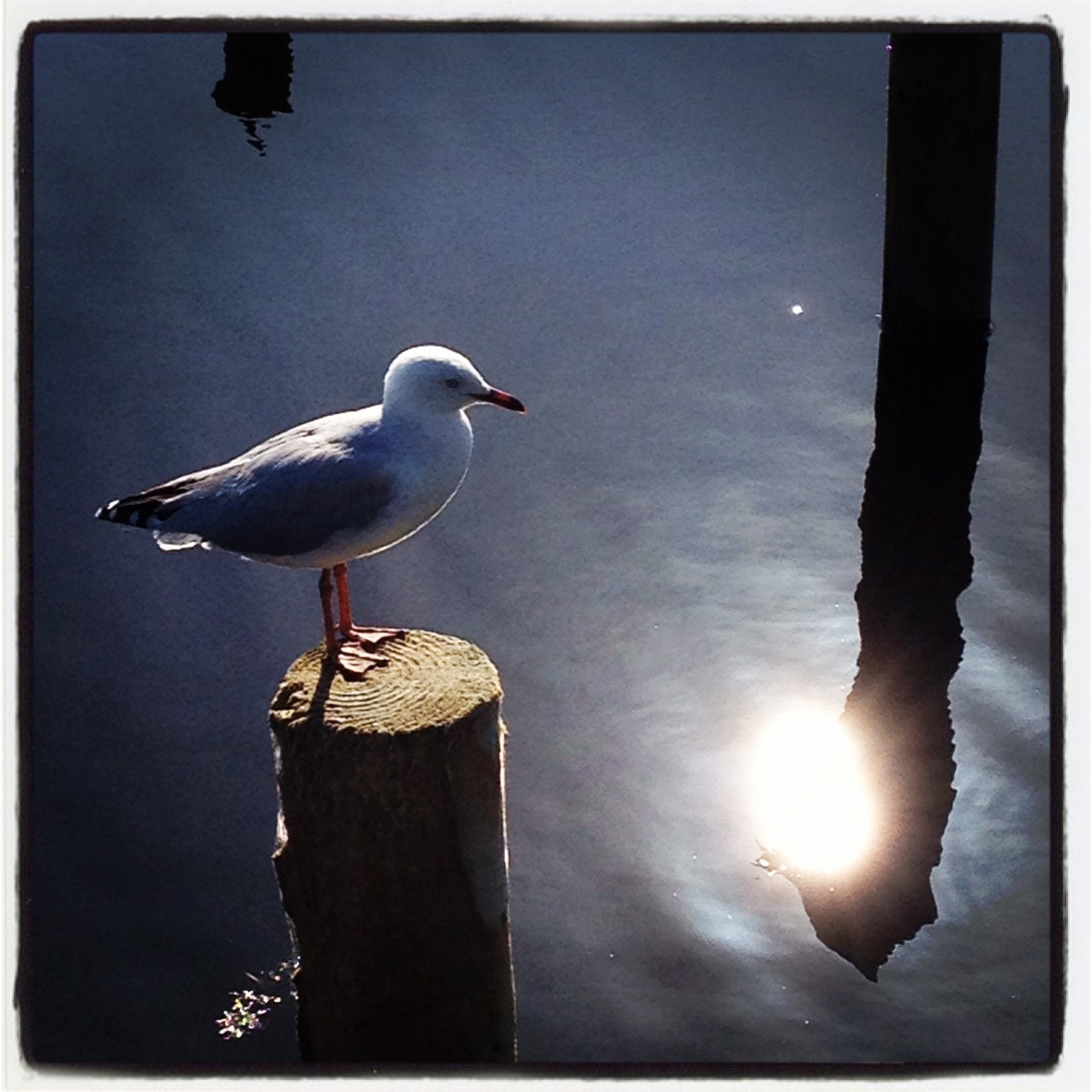
A Seagull in the Looking Glass Mono Lake is home to the largest California gull (Larus californicus) nesting sites in North America, and an estimated 50,000 gulls stop here in summer.
Wilson’s Phalaropes (Phalaropus Tricolor)
Tufas in the Lake The scene is primordial – or like something out of science fiction.
Nesting Osprey Since the mid-1980s, osprey pairs have been nesting on tufa towers in Mono Lake.
Osprey Pair Although the raptors are fish-eaters – and therefore have to hunt for food further afield – the tufa-islands provide nesting sites that ground-based predators can’t access.
Jagged Tufas With my tripod set up near the shoreline, …
Moon over Mono … I can watch the moon rise over the tufa towers …
Tufas in the Twilight … as the sky changes colour over the lake …
Tufa Island after Sunset … and everything goes dark and quiet.
[…] I was visiting a friend who lives part of the year in this magnificent area. We had explored the South Tufa Area of the lake, with its otherworldly tufa towers of limestone rising out of the salty waters the evening before (see: Evening over the Tufa Towers). […]ReplyCancel
Nyangatom Woman On the west banks of the southern Omo River, the Nyangatom tribal people continue to guard their traditions and eke out a living. Nyangatom women can wear up to 8 kg (17 lb) of beads, which they don’t remove. A young girl gets her first strand of beads from her father, and adds more every year.
Life isn’t easy in the lower reaches of Ethiopia’s South Omo Zone.
This is a harsh environment: an arid region with low annual rainfall, where indigenous groups have mastered flood-retreat agriculture on the banks of the Omo River. For generations, a number of distinct ethnic groups have managed to hold onto their languages and cultures, engaging in a semi-nomadic, predominantly pastoral lifestyle on their traditional grazing and agricultural lands.
Roads are poor, infrastructure is virtually non-existent, and towns are few and far between. This very remoteness has allowed sixteen discrete tribal groups from three different language-families to maintain their traditions. One of these groups, the Nilo-Saharan Nyangatom, arrived in the Omo Valley from northern Uganda about 150 years ago.
Thought to number about 30,000 people across South Sudan and Ethiopia, the Nyangatom have a reputation for being aggressive, and conflicts between themselves and neighbouring tribes are not uncommon. The village I visited on the west bank of the Omo River was on contested lands that were reputedly taken from the Kara people in bloody battle (see: Goats and Guns at Sunset).
I was travelling with photographer Ben McRae on a Piper Mackay tour. We were staying in a mobile campsite in Kara territory, organised and set up Grand Holidays Ethiopia. To reach this site, we had driven some distance off the last bitumen road, bouncing across what looked like jungle-clad walking trails. Even in our four-wheel drives, we had to stop periodically to negotiate with fallen trees.
From our campsite, we set off in the relative cool of an equatorial pre-dawn to travel up the river in an outboard boat. After about 40 minutes, we pulled up onto a muddy shore, and then walked about half an hour across a cracked and barren landscape, with little growing except thorn trees.
That is where we found the Nyangatom village.
As I said: these tribes are remote!
Boat Driver on the Omo River The sun is barely sneaking over the horizon as we make our way up the Omo River from Dus Village.
On the River Once our noisy motor is turned off, the river falls back into stillness and silence.
Nyangatom side of the River This is territory the Kara people still believe is theirs; picturing their lush green river-side crops (see: Environmental Portraits), I think the Kara got the better end of the deal!
Nyangatom Donkey Herd As we approach the village, the herdsmen are taking animals out to pasture. This was the first time in the Omo that I saw a herd of donkeys. The Nyangatom use them for haulage and transport – especially when they are moving camp.
Zebu Cattle Further south along the river, large livestock are at extreme risk from sleeping sickness carried by tse tse flies, so large herds of cows there are rare. The Nyangatom are higher up here, and had a great number of humped zebu cattle – well adapted to withstand the local climate.
Nyangatom Youth In the cool morning air, most people carry a blanket for warmth – …
Nyangatom Boy … or at the very least, a length of woven cloth to act as a scarf.
Nyangatom Boy-Child The children love posing …
Nyangatom Boy in a Blanket … for the various cameras …
Showing the Kids their Pictures … and they love seeing the results. The tribal groups in the Omo Valley know that their appearance is of marketable value: in many places, you ‘Pay per Click’. In this village, however, our guide had negotiated a fixed price for the whole village. This gave us much more freedom to wander, and to interact with people more naturally.
Nyangatom Kraal The homes in the settlement are surrounded by a thorn-bush fence. The cattle have their own section of kraal – as do the other animals. Children are everywhere!
Nyangatom Woman Nyangatom men are polygamous, with each wife having her own woven beehive hut.
Nyangatom Woman and her House The flat earth between the beehive huts is neatly swept.
Bangles and Beads Bracelets seem as popular as beads. You can see an example of scarring for beautification on this woman’s arms …
Woman in a Headband … and this woman’s forehead. Some of the beaded necklaces are quite chunky!
Young Nyangatom Man The oldest married Nyangatom man is the uncontested head of his family group. He does not have his own home: he stays with one of his wives. Younger men tend to marry in order of seniority, but even once they are married, the eldest is still the ‘owner’ of all the livestock and children. Other family members have ‘rights of use’, according to their place in the extended family.
Village Goats
A Stool and a Calabash All across the Omo Valley, calabash gourds are hollowed out and dried, and used for drinking and for carrying water. I think this one was filled with fermented sorghum mash.
Woman in a Sheet In a community with a subsistence lifestyle, every purchased product is at a premium: blankets, sheets, and shop-bought clothing around the village are all well-worn.
Outside Nyangatom Homes Men in each tribal group have a slightly different style of wooden stool, which doubles as a head-rest. They carry these around wherever they go. Women squat or sit on the ground.
Woman in Red White and Blue Houses are dark, and the doorways are small and low. Like many other Nyangatom, this woman has facial scars and a small lower-lip plug.
Man in Green Of course, you never quite escape the outside world! Mobile phones are an essential – …
Men with Kalashnikovas … as are the AK-47s that are needed to protect/raid livestock and territory. The Nyangatom people were the first to be armed with modern weaponry, which they brought into the region from neighbouring South Sudan.
Old Man with Ritual Scars Not all scarring is decorative. When a Nyangatom man kills an enemy, his upper body is cut to release any bad blood. This elder took great pride in his badges of honour.
It wasn’t long after meeting this elder that – as we were in the process of leaving the village – we visitors were all corralled by a young herder with his automatic rifle over a misunderstanding about money.
It was very surreal, and, at first I didn’t have the sense to be particularly worried. Fortunately, although the young man was quite serious, our guide was able to persuade him that we had duly paid all requisite fees (quite publicly) to the village elders for distribution.
The people here are under increasing pressure. Like the other tribes in the Lower Omo Valley, the Nyangatom have had to wrestle with the changing environment, and to fight against their neighbours, to carve out and maintain a place.
Encroaching ‘civilisation’ – especially in the form of a giant dam up-stream that is changing the way the river behaves – is putting their whole lifestyle at risk.
This is a different world to the one I live in!
Who knows how much longer their world can survive.
[…] penultimate group we spent time with. I’ve described some of their customs previously (see: Dark Eyes and Layers of Beads). Let’s revisit them before their ways disappear – along with the receding […]ReplyCancel
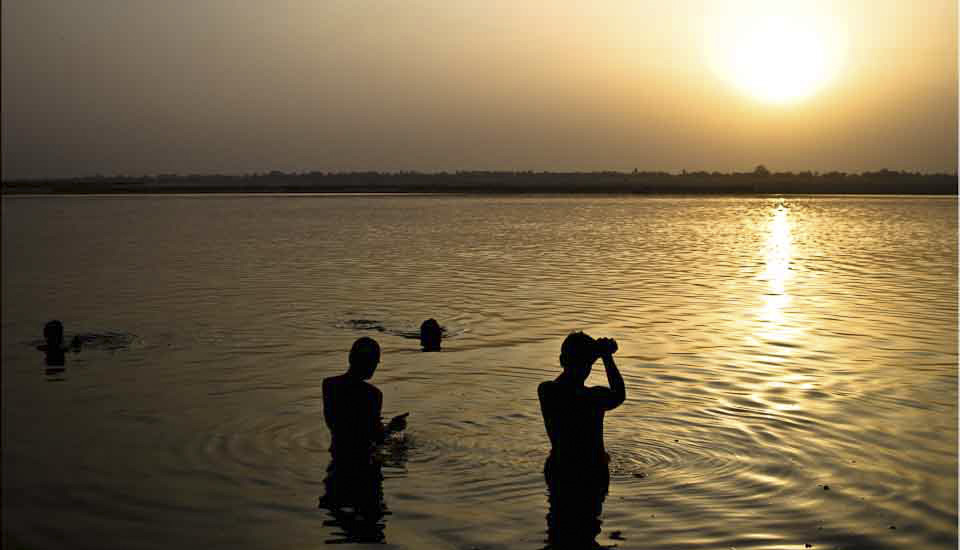
- Performing the Ganga Aarti from Dasaswamedh Ghat, Varanasi
- Buddha Head from Shwedagon Pagoda, Myanmar
- Harry Clarke Window from Dingle, Ireland
- Novice Monk Shwe Yan Pyay Monastery, Myanmar
Packets of 10 for $AU50.
Or - pick any photo from my Flickr or Wanders blog photos.

.jpg)
.jpg)
.jpg)






 I think we were all winners.


 It was a poignant end to a lovely afternoon.
.jpg)


 Truly, like another world.