Fat Little Fish In the Barka Fish Market, lots of fish (that I can’t identify) from the Sea of Oman are in bundles, ready for auction or sale.
As any visitor to these pages knows, I love markets!
Under the care of a guide, I and another solo-female traveller were on our way to visit some of the adobe fortresses for which the Sultanate of Oman is famous. I knew that that would result in history-overload – so, I was especially pleased that our first stop of the morning was at the local fish and vegetable market in the little coastal city of Barka.
In its heyday, Barka was an important port, and under Ahmed (Ahmad) bin Said al-Busaidi, ruler of Oman between 1744 and 1783, the city was the capital for a period of time. Like the current capital Muscat – about 80 kilometres (50 miles) to the east (see: Between the Mountains and the Sea) – Barka is bordered by the Sea of Oman and the Al Hajar mountains.
These days, the town is best known for its old fort – and the lively fish market were are about to visit.
Men Around the Table The auction is in full swing when we arrive at the wet market.
Auctioneer I don’t understand a single word, but I admire the men’s intense focus. I love the different patterns on the men’s kuma (كمة) caps. The hat style originates in Zanzibar and is believed to be a direct result of Oman’s historical ties to its former colony.
Dried Anchovies There is a wide variety of seafood for sale – …
Fish for Sale … – I have no idea what most of the fish are.
Scales
Large Fish
Fisherman The fish couldn’t be fresher: boats pull onto the beach outside, and the men bring the catch into the market.
Bagging the Fish Customers leave with their haul.
Yellow Fish
Chopping Fish Everywhere you look, there is something happening.
Cutting Habbar The pharaoh cuttlefish (Sepia pharaonis) is the most abundant cuttlefish species in the Oman Sea, so I assume that’s what this is.
Cutting Fish Some of the fish are huge!
Sorting Sea Bream Several types of sea bream are available – and it is even farmed in the waters of the Gulf.
Meaty Chunks Probably yellowfin tuna, which is one of the most important sources of livelihood for Omani fisherman. Recent production has increased markedly (see: The Times of Oman).
Thumbs Up I love people’s willingness to be photographed. I personally avoid it at all costs!
More Little Fish
The Mouth of a Fish
Boats on the Beach Outside, the boats come and go, and the work continues.
Lifting the Motor The shoreline is quite shallow; the fishermen lift their outboards and come to a stop on the sand.
Man Carrying Pink Perch The men carry their precious catches straight into the market building.
Master of his Boat When they have finished their business at the market, …
Fisherman in the Water … they push their little boats off the sand …
Leaving Port … and drop their motors in preparation for leaving the harbour.
Heron A heron watches – ever hopeful for pieces of fish.
Another Fisherman Omani fishermen typically turn their keffiyeh (shemagh) scarves into turbans called masar.
Fresh Food Market Outside of the fish market, the road leading to the beach is lined with fresh fruit and vegetables.
Fresh From the Farm The produce section is less formal than the fish market: trestle tables and tailgates do the job.
Woman Selling Flowers The heady smell of jasmine garlands in the heat, the wild colours of everything in sight, and the crush of people all around: that is India!
India is a real experience in sensory overload.
That is true of all the places I’ve visited in the country, but especially true in Varanasi.
Varanasi – previously known as Benares, Banaras, and Kashi – is considered the spiritual capital of India. It is one of the world’s oldest continually inhabited cities, and has been an important centre of Hindu devotion and pilgrimage since ancient times (e.g.: The City of Varanasi). According to Hindu stories, the city was founded by the Shiva, ‘The Auspicious One’, one of the Hindu trinity – the Trimurti. Today, many of the the temples around the city are devoted to Shiva. The city’s location on the left bank of the Ganges, the most sacred river is in Hindu mythology, also makes it a central place for pilgrimage, death, and mourning traditions.
Varanasi is a densely packed metropolis of well over a million residents, and attracts about 2.5 million pilgrims annually. In this holy city full of temples, much of what those people are engaged in is an expression of their (predominantly) Hindu faith. That means that people selling all manners of religious paraphernalia – like colourful flowers, tika powders, and sacred strings – are everywhere. And, for the most part, all these people are willing to share the life that is lived in the streets with strangers like me, and with my cameras.
The city is a hot mess of colour and colourful characters – and a joy to explore.
Cow on the Ghats You won’t go far in India without crossing paths with one – or several – of the zebu cattle that wander freely.
Still Life Found: Paraphernalia These brass pots are kumbhs, which are used to collect water from the Mother Ganga, the sacred river. We also see bowls for mixing, jars of tika powder, flowers for offerings, and combs and mirrors so that everything goes together as it should.
Man in a Scarf Yellow is the colour of Lord Vishnu and red is the colour of positive concepts.
Man in a Tilaka Unlike a bindi, which might be paste or a jewel, a tilaka is always paste or powder, and is usually applied for religious or spiritual reasons.
Men on the Ghats
Marigolds and other Flowers The offerings of flowers to the Gods signify respect and worship. Marigolds represent the sun and symbolise brightness and positive energy.
Floating Candles Diyas are small lamps with a candle surrounded by flowers that are lit for floating as a tribute to the Ganges.
Preparing Offerings Everywhere I look on the ghats of Varanasi, offerings are being carefully prepared.
More Paraphernalia A kautuka is a woven red-yellow coloured ritual protection thread. On the ghats there are plenty of priests offering to weave the threads together around your wrist for you and give you a blessing.
Sadhu with Religious Posters I have remarked many times …
Sadhu in a Topknot … on how unique and different the various sadhus are!
Beads and Saffron Powder On the streets leading towards the ghats and the sacred river, colour is everywhere.
Rings Brass, copper, and other semi-precious metals are laid out for sale in the street; …
Hands around the Jewellery … visitors to the city all want to take home a souvenir of their pilgrimage.
Shells and Prayer Beads The shankha, or conch, is a symbol of purity, brilliance and auspiciousness, and has a significant place in the aratis (see: Life and Death on the Ganges) that are performed on the ghats.
Cooking Samosas Street food is fresh, tasty, and abundant.
Sadhu Walking Varanasi streets are full of people, …
People in the Streets … coming and going.
Trinket Shop Crowded shops of all types line the narrow streets.
Seller of Religious Iconography It is impossible to count the Gods in the Hindu pantheon, but it is easy to find models of the most popular ones.
Lord Ganesha As the remover of obstacles, Ganesh/a is worshiped before starting anything new. Naturally, he can be bought in many colours.
Kids in the Market The children are beautiful – but I have to wonder where their guardians are, and what their future opportunities might be.
Sadhu in a Saffron Headscarf
The Trishula – Shiva’s Trident
Shakti Yoni and Shiva Nandi A yoni – Sanskrit for womb – is a representation of the Hindu goddess Shakti. Nandi, which means “giving delight or joy,” is the sacred bull of the god Shiva. Both are common symbols in Shaivite temples.
Shiva and Nandi All around the streets, images of Shiva and his faithful mount Nandi are there to remind us we are in a city that worships Shiva as the Supreme Being.
This is just a small selection of some of the colour that adorns the streets in this deeply religious city.
Snow Gums Eucalyptus pauciflora, commonly known as snow gums, twist and turn on the hillside, shaped by countless seasons of cold and windy Australian alpine conditions. (31August2016)
It is currently winter in Australia. I’m wrapped up in a blanket and wearing my sheep-skin ugg boots. It is so cold in my house that the olive oil has solidified!
Given the country’s (warranted) reputation for sunshine and glorious beaches, it might be hard to believe that winter is a real thing. But, even though the lowest average temperature in the winter months of June, July, and August is a moderate 5°C (41°F), it is a big country with plenty of variation.
Many years ago while travelling up a gondola to Whistler Mountain in Canada, I met an Australian who proudly informed us all that Australia gets more snow than Austria. I can’t verify that, but it is true that we get more snow than Switzerland! (See: Fun Facts about Australia). Australia is the lowest continent in the world – so although the alpine regions are not high in altitude when compared with the mountains on other land masses, they rise up from a very low base. The aptly named Snowy Mountains in southeastern New South Wales are only a short distance from the coast, and therefore attract a lot of precipitation which falls as snow most winters. For a short – albeit enthusiastic – season between mid-June and late-September, a number of resorts in these mountains play host to a range of winter sports. The natural snowpack is not usually deep, but modern snow-making equipment supplements it when the weather permits.
I’ve often shared pictures from summer walks in those areas (eg: Ursula’s Weekly Wanders = Kosciuszko) and from early autumn drives (see: The Snowy). On winter visits, however, I’m usually on skis and not carrying my cameras around. But, as I freeze here on the coast, waiting for my turn at the mountain slopes in a few days, I thought I’d revisit old iPhone pictures and share some Aussie snow with you.
Snowboarders on the Hill From the top of the Front Valley, you can look down over the Perisher Ski Resort complex and the lodges behind. (04September2014)
Afternoon Sun By early afternoon the sun is lowering over Back Perisher Mountain – the days are not much longer than the snow season. (04September2014)
Iced-Up Snow Gums Some years are colder than others, … (05September2014)
Frozen Snow Gums … and the boughs of the white sally (snow gums) bend under the weight of the ice on their evergreen leaves. (05September2014)
Mountain Top These mountains might be low, but they are still above the treeline – which is about 1800 metres or 5900 feet. Here, the wind sweeps across the bare, rocky landscape. (05September2014 )
Perisher Creek and Rock Creek The waters under the banked-up snow flow all year at the edge of the resort. (06September2014)
Goggle Selfie Every year I try to catch my reflection in someone’s goggles. (06September2014)
Top of the Range Some days you can see forever: to the end of the snow fields, towards Lake Jindabyne, and over the Dividing Range beyond. (06September2014)
Snowboarders on the Chair The skies are blue … (06September2014)
Skiers on the Chair … and people are smiling. (06September2014)
Eucalyptus Pauciflora The snow gum thrives on cold slopes above 700 m (2,300 ft). The colours of the bark can change dramatically with the weather conditions. (14September2015)
On Perisher In seasons when the snow is light, granitic rocks and alpine heath remain visible. (14September2015)
Sunburst on the Chairlift We normally ride the Kosciuszko Chairlift in summertime – towards some wonderful alpine walks. (28August2016)
Kosciuszko Chairlift The chair rises 560 vertical metres (1837 ft) from the Thredbo Valley to the top of the Ramshead Range. (28August2016)
Kosciuszko Express From the Eagles Nest Restaurant (1937 m – 6354 ft), on the Ramshead,we can watch people getting on and off the chair. (28August2016)
Almost Abstract : Raindrops The light snow falls as rain when it hits the warm restaurant windows. (28August2016)
Almost Abstract : Icicles As a child, I loved finding icicles and watching them slow-drip; turns out I’m just as fascinated as an adult! (28August2016)
Chairlift over Thredbo Thredbo is at the edge of the snow fields; the snow hasn’t reached the hills across the road from us. (28August2016)
On the Slopes The chair offers beautiful views down the alpine slopes and into the village. (28August2016)
Like an Impressionistic Painting : New Gum Leaves The blur of bluish green leaves against slim red stems and white snow and frost remind me of an impressionistic painting. (28August2016)
Shiny Crust on Back Perisher Temperature variations and a sunny afternoon can lead to a blinding brightness. (29August2016)
Skiers at the Top of the Hill By contrast, the next morning the light is muted and the colours are pastel. (30August2016)
Blue Cow Expressway Perisher Ski Resort is four separate historical ski areas linked together by a series of lifts and trails. (30August2016)
Early Melt Every season is different: this one was determined to end early. The snowpack at the base of the resort is melting. (31August2016)
Pleasant Valley Chair On a foggy morning, I have half the mountain to myself. (01September2016)
Whiteout Fortunately, Pleasant Valley is mostly wide and rolling green runs, so the lack of visibility is less of a problem! (02September2016)
Snow Fences (03September2016)
That frozen fence is further proof that Australia really does have winter.
After two years of Covid closures, we are pretty excited by this year’s abundant falls, which led to resorts opening a week early and to accommodation being largely sold out for much of the season.
I’m just hoping the snow lasts until I get my chance to get out of my frozen house and onto the slopes!
The Bruvik Fjord from the Bergensbanen Touted as one of Europe’s most beautiful train journeys, the train trip between Bergen and Oslo traverses some magnificent Norwegian scenery.
Scandinavian travel sites call it one of Europe’s most beautiful train journeys.
Even in April and May, the season that Norwegians call ‘late winter’, the views from the train between Bergen and Oslo are magnificent, alternating between stark rugged beauty and picturesque charm.
My husband and I were travelling on a small ocean cruise from Barcelona, Spain to Bergen, Norway. When I looked at flights from Bergen to the rest of the world, I discovered none went where I wanted to go! So, if we had to travel to Oslo anyway, why not do it by rail, and enjoy some of the magnificent scenery that Western Norway offers?
I had booked part of our ticketing online through the official Norway Trains website. When the time came to travel, my husband was unable to join me – for reasons our travel insurance didn’t cover. My helper at the NSB office in Bergen credited me the unused ticket portions with good humour, excellent English, and no questions asked! I was most impressed.
The full trip connecting Norway’s two major cities – Bergen and Oslo – takes just under seven hours. I broke my journey about two hours east of Bergen, at the little mountain station Myrdal. There I was able to pick up the magnificent Flåm line (see: Down the Hill and Back Again) and enjoy a foray into the UNESCO-listed Norwegianfjord landscape(see: On Aurlandsfjord and Nærøyfjord).
The Bergensbanen line runs a total of 496 kilometers (308 miles) through about 182 tunnels into gneiss mountains and along one of the world’s highest stretches of track across the Hardangervidda Plateau. This is an unbelievably rugged landscape, with mountains rising high and fjords cutting deep.
The construction of the railway was exceptionally challenging, needing countless man-hours in a region of high altitudes with no roads, and subject to freezing temperatures and heavy snowfall. It was built between 1875 and 1909, against a backdrop of political infighting and fiscal recession. Although the first trains ran in 1907, heavy snowfalls closed the line again for months. When the service was finally officially opened in 1909, King Haakon VII called it the Norwegian engineering masterpiece of his generation.
Today, the system is electric, and the carriages are clean, spacious, comfortable, and wifi equipped.
Add to that incomparable views, and you truly have a great trip!
Leaving Bergen One of the many beauties of European train travel is the ease: the Bergen Train Station was quite literally across a cobbled road from my hotel room. Bergen itself is a most delightful city (see: Cobbled Streets and Wooden Buildings) – although as we draw away from it by rail, we can’t really see the extensive UNESCO-listed historic quarters.
North Sea or Bruvik Fjord? Before long, we are running into rugged mountains and alongside massive waterways; I don’t know where the North Sea ends and Bruvik Fjord begins.
A Dusting of Snow on Rugged Rocks I can’t help but have admiration for the engineers who managed to build a rail line through this unremittingly rugged terrain.
Hamlet from Train Apparently there are 20-odd stops on the line (I didn’t count them). Many are at little fjord villages with limited or no road access.
Settlement from the Train Everywhere I look, the houses are neat, wooden, and cheerfully painted.
Shallow Waters At the foot of the mountains, fast, shallow rivers race across valley floors.
Scenery from the Train Just a few minutes later, and the waters look deep and quiet.
Rocks and Rapids
Outside Voss Station Voss Station – in Vossevangen, a village of over 6000 people – was one of our more substantial stops.
Troll at Voss Station A tourist shop pays tribute to the Old Norse beings found all over Norway.
Golden Hillside Before long, we are back on our way. Spring has made little inroads on the grassy banks that have spent a long winter under snow.
Trees and Houses While some of the grasses have greened up, the deciduous trees are still winter-bare.
April Snows We come out of another tunnel into a winter wonderworld. (iPhone6)
Bridge in the Snow It looks like someone has been skiing across that bridge below us!
Spring Snow There is a road down there… it and the waterways stretch off through the valley and into the mountains.
Upsete Station Some of these stations are tiny: aside from one specialist tourist accommodation, there is not much else here at Upsete. I’m off at the next stop to pick up the only intersecting rail line, the Flåmsbana.
Selfie : Myrdal Station Two days later – after riding down and up again on the Flåmsbana and exploring the waterfalls and fjords of the Flåmsdalen, I’m back in Myrdal station with enough time for lunch while waiting for the next Bergensbanen east.
Arrival A light flurry of snow is falling as the train west arrives …
Workers on the Platform … and leaves again. Soon it is my turn, and we set off east.
Winter Whiteout The train emerges from a 10,300-metre-long (6.4 mile) railway tunnel into a snowy whiteout near Finse, which is the highest station, at 1,222 meters (4,009 ft).
Memories of Winter It is little wonder that polar explorers Nansen, Amundsen and Shackleton used this area as and extreme training grounds, and George Lucas chose it as the location of Hoth for Star Wars Episode V.
Green Light We are getting closer to major centres.
Norwegian Woods We travel through many miles of aptly named Norway spruce (Picea abies) and mountain birch (Betula pubescens) …
Afternoon Mists … as the sun gets lower and we get closer to Oslo.
It is a marvelous journey – one I would do again.
And of course, accessing my hotel in Oslo (see: Sculptured Parks and City Spaces) from the train station was an absolute breeze!
A Woman and her Pony A Quechuan woman follows the classic Inca Trail, built as a communication and pilgrimage route between the 1400s and 1500s, to take her wares into the Andes.
In Cusco, a woman having breakfast at our hotel was complaining about her muscle aches and pains. She had just returned from the Inca Trail, and when I said we were starting it the next day, she looked me up and down and said: “Well, I hope you are fit!” in portentous tones.
What had I let myself in for?
Before daybreak the next day, our group of six trekkers, thirteen porters, and two guides were on a bus to Ollantaytambo, the starting point. There, we bought the essentials from the local vendors: garish Machu Picchu sun-hats, bamboo walking sticks, and a supply of coca candies to supplement the Argentinean chocolate I had brought with me. We were already dressed in the ‘trekker uniform’: sturdy walking shoes, dun or khaki pants with multiple pockets and zips, and quick-dry shirts over colourful long-sleeved thermal tees. To complete the outfit, you need at least: a backpack, a drink carrier, a camera bag (I had my little Canon Ixus), and assorted jackets and/or jumpers, all attached somewhere on your person. We set off over the railway line and past the first checkpoint at Piscacucho, or Kilometer 82 (2709 m / 8888 ft), into the Machu Picchu National Park, swinging our sticks and smiling.
The smiles lasted until the first elevations and the midday rains took their toll.
The trek follows just a small part – 42 kilometers (26 miles) – of the much larger UNESCO-listed complex of roads built by the Inca throughout the Andes Mountains. The Qhapaq Ñan, as this system was known, is an extraordinary network built across one of the world’s most extreme geographical terrains.
Even though we only had to carry ‘day packs’: eight kilos of water, electrolyte drink, spare clothing, sun screen, bug repellent, toilet paper, snacks, cameras, and rain gear, you’d be surprised how quickly it starts to feel heavy!
That first morning we passed a number of people coming towards us along the trail. Had they decided to walk back after reaching Machu Picchu? No, they had succumbed to altitude sickness, and were being escorted off the track. What was particularly ominous was the fact that they were all younger than us – well, let’s be truthful; almost everyone on the track was younger than us. Altitude sickness, in its early stages takes the form of headaches (which we all suffered to a lesser or greater extent), vomiting and diarrhoea. That combined with somewhat primitive plumbing facilities, well, you don’t want to know…
When we walked it back in 2006, the trail was already strictly regulated. Only 500 people were on it at any one time: 200 tourists and guides, and 300 porters. Given that these people are divided across the three to four days it takes to walk, there are likely to be only 150 people in any particular section. As a consequence, we got to recognize some of the other trekkers, and even developed ‘friendly’ competitions between groups. Naturally, ours was the best group! We could dine-out on some of the stories of misfortunes that befell other travellers.
Starting at an elevation of 2500 metres, we walked a mere 14 kilometres that first day.
It only felt like 100!
Andes in the Clouds The highest mountains outside of Asia, the Andes divide Peru from north to south, and command your attention wherever you are.
Machu Picchu Hats My goodness we were brave! Big smiles and silly hats: we had no idea what was in store for us.
Porters Bundle the Packs By industry standard, porters are limited to carrying 25-kilo loads. These bundles include our tents and bedrolls, a 4-kilo bag of personal belongings per tourist, and all the kitchen supplies.
Camino Inka – Inca Trail A quick group photo at Piscacucho, Km 82, and we are off.
Urubamba River The river we follow for much of our day is raging and swollen: flooding rains have washed out sections of the trail.
Vegetation The Andes are subject to clear vertical climatic zones. This middle zone has a temperate and semi-humid (tierra templada) climate, which produces a lush and varied vegetation that fascinated me.
Prickly Pear – Opuntia Ficus-Indica Cactaceae Cacti become more common as we wind upward into the higher reaches.
Urubamba Valley Already we have climbed a long way up from the Urubamba River. You can just see the ruins in the valley, and the stone terraces and storage houses on the hillside across from us. We had seen ruined storehouses up close on Pinkuylluna at Ollantaytambo the day before (see: The Sacred Valley).
Our First Ruins I believe these are the Qoriwayrachina (‘Where the Gold is Vented’) Ruins. The stonework is amazing!
Local Guide Elvis
Llaqtapata Terraces and Storehouses (2840 m) at Patallacta The Inca civilization flourished between 1400 and 1533 CE and left extensive ruins behind.
Roger One of our two guides gives us a run-down of the local history.
Blue-Team Porters Meanwhile, the porters load up and set off again.
Village in the Green Rainy season runs from November through to March, so in early April everything is lush and green.
Blooming Tree The variety of plant life is amazing.
Succulents on the Embankment
‘Porters!’ The rule of the track is that you give way to porters. This provides a much appreciated excuse to pause on what feels like an unremittingly upward climb.
Angel’s Trumpets Brugmansia flowers are beautiful but potentially dangerous, causing serious mental and physical reactions – or death. Shamen in the Amazon use them in controlled doses.
Raining Again! The rain makes the track extra slippery. What fun!
Yellow Wildflowers Admiring the flora gives me a opportunity to stop and rest my legs.
‘Shopping Center’ The offer to use credit cards is a joke, as the closest electricity is a half day’s walk away!
Close to our Campsite Now we just have to wait for our porters to arrive with our tents and dinner!
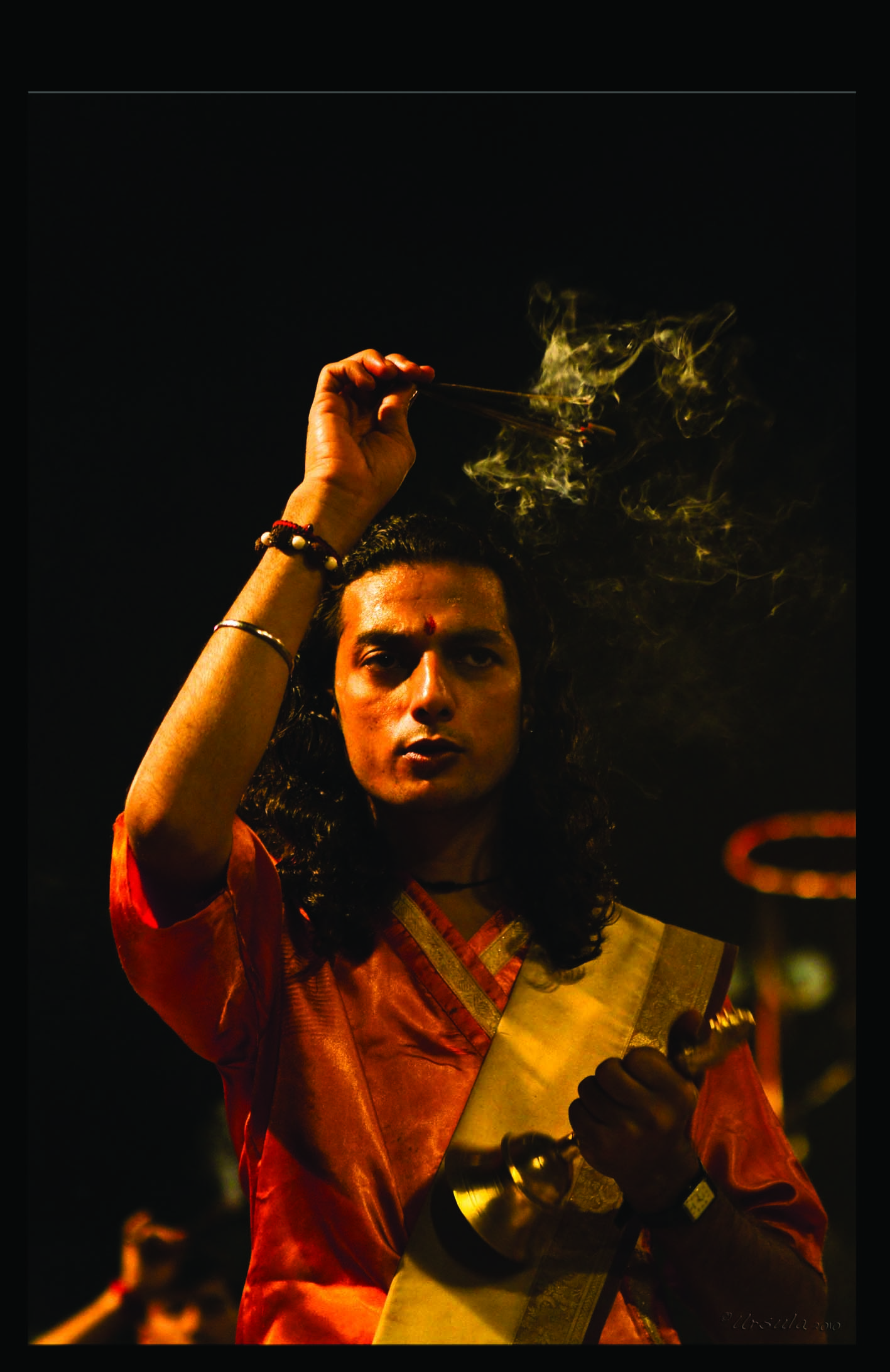
- Performing the Ganga Aarti from Dasaswamedh Ghat, Varanasi
- Buddha Head from Shwedagon Pagoda, Myanmar
- Harry Clarke Window from Dingle, Ireland
- Novice Monk Shwe Yan Pyay Monastery, Myanmar
Packets of 10 for $AU50.
Or - pick any photo from my Flickr or Wanders blog photos.

.jpg)
.jpg)
.jpg)








 That’s European train travel for you.