Stop and Smell the Flowers Yass is a charming heritage town south-west of Sydney on the Hume Highway. I’d driven past or through many times – but had never actually stopped! (iPhone6)
Do you find you tend to ignore your own backyard?
I often do. I’ll go to great lengths and distances to visit places afar, while making little time for sights closer to home.
But, away from the more-populated coast, country New South Wales (like country Queensland) has some attractive old towns, with interesting histories, and main streets lined with old colonial and federation architecture.
Take Yass, for example. First settled by Europeans in 1830, this charming sheep-farming community boasts a number of well-preserved 19th-century heritage buildings. Sitting where it does, 280 km (174 mi) south-west of Sydney on the Hume Highway, it was on our path if ever we drove from Sydney to Melbourne. We’d remark on the signposts – the name amused my children – as we skirted it enroute to Canberra or the Snowy Mountains.
Then, finally, it landed more squarely on my path. We were travelling south from the Hunter Valley and had appointments in Canberra. An overnight stop in Yass made sense.
And when we took our walk in the morning, we were rewarded.
Later that same day, on our way home to the Far South Coast, we stopped for a photo-walk in the equally-historic town of Bungendore on the other side of Canberra. Laid out in a Georgian-influenced grid by colonial government surveyor James Larmer in 1837, this small town on the Kings Highway near Lake George grew after the railway arrived in early 1885.
I’d been through Bungendore many times when taking the alternate route between Sydney and the Snowy Mountains. I loved stopping there for coffee and a visit to the most-excellent Wood Works shop in the centre of town, but had never explored further.
I couldn’t find much information about some of the buildings in town, but we enjoy our unstructured walk-about.
Both towns were a delight and well worth visiting.
Yass Valley Courthouse Designed by Scotsman James Barnet, who was the serving Colonial Architect for Colonial New South Wales (1862 – 1890), this building opened in 1880, replacing an earlier 1847 structure. (iPhone6)
National Australia Bank Surveyor and architect John Frederick Hilly designed a number of churches and public buildings in Sydney. This bank building – originally belonging to the Commercial Banking Company of Sydney Limited – was built in 1872. (iPhone6)
Westpac Bank Building This beautiful Victorian building, dating to 1886, originally housed the Australian Joint Stock Bank. Bank of New South Wales (Westpac) took the building over in 1931. Today – like so many other rural services – it is permanently closed. (iPhone6)
Reflections of the Old Railway Bridge Yass was connected to the New South Wales Government Railways’ Main Southern railway line in 1892. This heritage-listed, single span lightweight bridge across the Yass River carried the Yass Town Tramway. It was the first American-style Pratt-truss railway bridge in NSW. Although it closed to regular service in 1988, it is still sound. (iPhone6)
Spring Blossoms It is October, so the fruit trees of Bungendore are in full bloom.
Bungendore Real Estate Agent Many of the businesses in town occupy charming old country buildings.
Royal Hotel Originally opened in 1883, the Royal Hotel features the elegant ironwork typical in Australian buildings from the period. It closed in 2020 (some years after this photo was taken) for a complete internal renovation, reopening for business early this year.
Gibraltar Street
Philip’s Anglican Church One of many churches around town, the old stone building housing St Philip’s was finished in 1865. As far as I can tell, the church has operated continuously since then.
Corrugated Iron and Brick Chimney Pots
Bungendore Post Office Built in 1882, the post-office complex includes a three-bedroom residence in a separate building from the business.
A Leafy School of Arts Building (1890)
Gallipoli Memorial Most Australian towns have a tribute to the soldiers they lost on the Gallipoli Peninsula in WWI (see: In Remembrance of the ANZACs).
Empty Lots and Old Buildings
St Joseph’s Convent This impressive double- and triple-brick two-storey building opened in 1891, and often housed Australia’s only beatified Catholic saint, St Mary of the Cross MacKillop. It is now privately owned.
A Bee in the Capeweed (Arctotheca Calendula)
A Gate on the Wild Garden I can’t help but admire the old ironwork that was a feature of so many properties.
St Mary’s Catholic Church Opened in 1862, this church is still in use.
Inside St Mary’s It was closed, but I had a peep through the window.
Sulphur Crested Cockatoo – Cacatua Galerita These noisy birds are everywhere; they love the seeds in the tall trees.
Wisteria This is another common sight in spring: wisteria was popular with early settlers, and can be seen in hedges everywhere.
Bungendore Shops It is time for afternoon tea, so we make our way back to the tourist centre.
Bungendore Wood Works This is my absolute favourite spot in town: full of beautiful artworks crafted from fine woods. I often bring overseas visitors here.
The Hannah Cabinet This magnificent piece inside the Wood Works was painstakingly crafted by Geoff Hannah over six and a half years. After this photo was taken, the cabinet was acquired by Lismore Regional Gallery, where it was damaged in the devastating floods of 2022 (see: ABC Flood Damaged Artworks).
The Wood Works has lots of smaller pieces, and I usually end up going home with something new – whether for myself or as a gift.
They also have a coffee shop – and that’s where we ended up before finishing our drive home.
Flower Seller The flower market in Madurai, Tamil Nadu, is one of the biggest markets in India, selling all manner of flora to local and export traders.
Like other Indian cities, Madurai in the southern state of Tamil Nadu offers up some magnificent palace and temple architecture.
But, it was the life in the streets that I loved best.
I was travelling around South India with a small group. We had driven to Madurai from Thanjavur the day before, stopping to visit two old and notable Hindu temples in Tiruchirappalli on the way (see: Temples and Street Scenes).
We had another temple on our itinerary for the day ahead: the historic Arulmigu Meenakshi Sundareswarar Temple, also known as Arulmigu Meenakshi Amman Thirukkovil, built in the late 12th, early 13th century. But, it was India’sRepublic Day – and clearly half the local populace had the same destination in mind. The temple is a major pilgrimage destination within Tamil Shaivism traditions, and the public holiday was an auspicious day for weddings, baptisms, and just paying respects in general. In spite of our guide’s best efforts, we were looking at more than an hour in a queue before being allowed through the temple’s impressive doors.
We had already visited the city’s renowned flower market and the impressive 17th century Thirumalai Nayak Palace – both of which I loved, so I was not too disappointed when the group opted to wander and shop, rather than stand in line. I was happy to engage with locals on the street and to view some of the impressive and colourful gopurams (monumental towers) from the rooftop of a nearby shop.
Join me in the streets of Madurai.
Mattuthavani Flower Market All manner of flowers – mostly grown in the nearby foothills – are for sale.
Crowd in the Market The flower market is open 24 hours most days, with early mornings reputed to be the busiest. We arrived relatively late: around 9:30 am, but the laneways were still crowded.
Flowers for Sale According to some reports, there are about 10 tonnes of flowers on display.
Bags of Flowers Wikipedia put the number of growers selling their flowers in the market at about 2000 daily (see: Madurai).
Value Adding Everywhere you look, hands are busy at work, fashioning flowers and ribbons together to make elaborate garlands.
Jasmine Garlands Finished garlands are mostly destined to be temple offerings. The local jasmine – Madurai Malli – smells divine.
In a Market Laneway
Women with Lotus Flowers Lotuses are another popular local offering.
Crafting the Lotus The flower is associated with the Hindu God Vishnu and Goddess Lakshmi.
Opening the Lotus Flowers A powerful symbol in Hinduism and Buddhism, …
A Lotus Flower … the lotus represents purity, strength, resilience, and rebirth.
Jasmine in the Flower Stalls
Vandiyur Mariamman Teppakulam On our way back to the centre of the city, we stopped to admire the huge, man-made Vandiyur Mariamman water tank, connected to the nearby Vaigai River with underground channels. The tank – and the temple in the middle – was built in 1645 by King Tirumala Nayaka (spellings vary).
Drying Dyed Threads At the side of the road alongside the tank was the most extraordinary scene: …
Freshly Dyed Threads … meters of threads intended to be woven into sari cloth were stretched out to dry. Men keep the freshly dyed threads moving, so they don’t stick together.
Kingfisher Meanwhile, a little kingfisher watches the tank for food.
Thirumalai Nayak Palace Clocktower Our next stop was at a palace built by King Tirumala Nayaka in 1636, using bricks excavated while digging the tank we had just visited. The clock is wrong – it is 10:30 in the morning.
Main Hall The Thirumalai Nayak Palace (spellings vary) is elegantly beautiful. The story is that the king enlisted the help of an Italian architect. Art historians doubt this, suggesting that this fine example of Vijayanagara architecture came about because of the influence of the many Portuguese, Dutch, and other European traders, missionaries, and visiting travelers in this region at the time.
Decorated Arches The delicate colours and detail everywhere are mind-boggling. The brick structure was finished-off with a stucco called chunnam made from shell lime mixed with egg white. This results in the glossy, smooth texture.
A Griffini-Like Creature
Painted Ceiling Detail The ceilings of the palace are richly decorated.
Visitor to the Palace
Light and Colour The internal pillars and external walls launch high overhead to give an open, airy feel.
Narasimhar – God of Yoga What was the Dance Hall now houses a display of archaeological objects – some dating back to 2000 BCE. Unfortunately, the space is dark, dusty, and unkempt. It’s sad to see precious historical objects so poorly cared for.
In the Streets: Still Life Found In the centre of town, we attempt to access the Meenakshi Amman Hindu Temple.
Entry Gate: Meenakshi Sundareswarar Temple It doesn’t look that crowded – what we didn’t realise was that police and security forces had people lining up all along the outside walls of the temple. (Phone12Pro)
Flower Seller I amused myself by chatting with one of the many venders outside the temple. She pinned my purchase of Madurai Malli into my hair for me. (Phone12Pro)
Bride and Groom Republic Day is an auspicious time for blessings on any event, and there were a number of wedding parties outside the temple. Looking at the elaborate garlands worn by the bride and groom, you start to understand where some of the tonnes of flowers at the market end up! (Phone12Pro)
‘Baptism’ It’s a bit like a baptism – on an auspicious day (like Republic Day) towards the end of a baby’s first year, their head is shaved and the hair given to the household God. The infant is then washed, dried, and their head covered in yellow paste. This little girl was not impressed, but her family were in a celebratory mood. (Phone12Pro)
Our next stop was at the impressive and educative Gandhi Museum, where I was reminded of Mohandas Karamchand Gandhi’s background and enormous influence on India and the broader world. It was in Madurai, in 1921, that Gandhi renounced European-style clothing and decided to wear the white loincloth that he considered symbolic of India’s poor.
I left Madurai with countless colourful impressions – as well as some new carved elephants, and some embroidered cottons. 😊
All the Way from Chad With accompaniment only from percussive hand-claps and large painted gourds, Les Aunties take to the Friday Evening Concert Bowl Stage to sing joyful songs of protest against oppression.
From the First People of Comox Valley, Canada, to the landlocked central African nation of Chad; from acoustic guitar folk harmonies to cross-cultural genre-bending musical layers; from unaccompanied voices and percussions to complex and layered instrumental blends – the Vancouver Island Musicfest in July had no apparent boundaries. Even if I’d had an idea what to expect, I still would have been surprised.
I was meant to be attending the festival with a friend who had taken part before; unfortunately, she became ill and couldn’t make it. But, I love live music (see: Music in the Snowy Mountains) and I already had my ticket and my accommodation in nearby Courtenay – so off I went.
I had a lot of difficulty deciding how to organise my pictures. (I also had difficulty taking them – more on that some other time!) In the end, I’ve simply grouped them on a timeline.
So, this short set is from Day 1, Friday evening July 12th, when only one stage was running. Technical difficulties meant that things kicked off late, but started with the Welcome from the local First People’s Kumugwe Dancers. In addition to welcoming us to their traditional lands, they invited three Maori visitors from New Zealand to the stage to present their cultural dance. I spoke to one of the New Zealanders afterwards: he had never before performed in public! The dance they had conducted on stage was usually part of their family cultural gatherings.
The nine energetic singers who form Les Aunties were on next, with their musical entreaties to educate and empower women. They sang to us, in their charmingly accented native French overlaid on rhythmic African harmonies, about the ongoing hardships for women in Chad in Central Africa. In complete contrast, Second Moon, who had just flown in from South Korea, thrilled the audience with traditional Pansori sounds mixed with Irish instruments. The lead singer, Danhae Oh, can hold a note longer than I have heard in a long time! Their set was cut short by organisers trying to get the timing back on track – much to the disappointment of all those seated around me.
Folk-duo the Milk Carton Kids from Los Angeles followed, with their distinctively Simon-and-Garfunkely sound. For those you of not from North America, back before the days of plastic bottles, the faces and descriptions of missing children were often printed on milk cartons – in the hope that someone would recognise them. Those were the original ‘Milk carton kids.’
Then, another complete shift, and we were treated to four gifted virtuoso musicians: multi-Grammy-winning banjo player Béla Fleck, pre-eminent classical tabla artist Zakir Hussain, outstanding double bassist Edgar Meyer, and brilliant classical Indian flautist Rakesh Chaurasia, play together as As We Speak. It shouldn’t work, but it does! I was not the only audience member smiling and breathless.
Join me for some musical portraits:
“Welcome” Chief Wedlidi Speck, Hereditary Chief of the G’ixsam Clan of the Kwakiutl, with cultural connections to the Kwakwaka’wakw, Nuu-chah-nulth, and Northern Vancouver Island Coast Salish tribes, …
Blankets, Buttons, and Fringes … opened the music festival and introduced the Kumugwe Dancers.
Wolf Headdresses The Kumugwe Dancers performed a number of dances. In this region, the wolf represents loyalty, strong family ties, good communication, education, understanding, and intelligence.
A Sea of Hats Temperatures were in the comfortably low 20° C (70° F), but it had been a cold spring and there was little shade. Locals (and I) kept well covered. (iPhone15Pro)
Traditional Dress More Kumugwe Dancers in blanket capes and fur headdresses – traditional dress on Vancouver Island shows a lot of cross-over with First Nation groups from further north, like Haida and Tlingit.
A Sunny Afternoon According to rules posted everywhere, chairs or tarps are not meant to be left unattended. Even so, there are a lot of empty seats where people have staked out their territory.
Stories of Tchad Les Aunties took to the stage with their wonderful voices – and sad stories in charmingly accented French.
Singing for Les Aunties The Republic of Chad was a French colony until 1960; the official languages are French and Arabic. Ongoing conflicts and structural challenges have resulted in a serious deterioration in the living conditions of women – which these strong women sing about.
Food Trucks One of the great pleasures of festivals is enjoying foods I wouldn’t normally eat.
Yunjeong Jo on Violin The seven-piece Second Moon from South Korea took to the stage with vigour – in spite of just arriving into the country.
“Traditional Pansori Meets Western Music” I can’t quite get a handle on what Pansori is, but one description says the traditional Korean style involves a ‘clown’ singing of his trials and tribulations to the accompaniment of one or two drums.
Danhae Oh In Pansori, a clown sings with a fan in their right hand. Danhae Oh had us gasping over his vocal range and breath control.
In a Gat – a Korean Hat Multi-instrumentalist Hyunbo Kim plays Irish whistle …
Hyunbo Kim … and electric bagpipes, among other instruments.
The Milk Carton Kids Kenneth Pattengale and Joey Ryan formed their folk duo in 2011 and have recently released their seventh studio album.
Vocal Harmonies The beautifully blended voices of The Milk Carton Kids have a distinctly Simon & Garfunkel feel.
Sound Check Even watching the technicians getting the balances right for As We Speak was riveting!
As We Speak A true collaboration among virtuosos Béla Fleck, Zakir Hussain, Edgar Meyer, and Rakesh Chaurasia, this ensemble alternated between working together and showcasing individual talent.
Edgar Meyer, Rakesh Chaurasia, and Zakir Hussain Double bassist and composer Edgar Meyer has Western classical music roots, while Rakesh Chaurasia has mastered techniques of Indian classical music. The superb tabla of Zakir Hussain had me dreaming of India and camel riding.
Béla Fleck on Banjo American banjo player Béla Fleck plays music including bluegrass, jazz, classical, rock, and various world music genres.
As We Speak on the Stage The combined effect was breathtaking, and well worth the price of the ticket.
That set alone was worth the price of admission! I bought the CD (which, unfortunately I cannot share as my computer doesn’t have a reader), and took myself home for a shower.
And, I was not the only audience member to call it quits at that point, feeling quite sated – and quite looking forward to the next day.
Looking out from the Hidden Monasteries Dating back to the Byzantine, the old fortified monastery of Philosophos Menalon, on the western side of the Lousios Gorge in Arcadia, was reputedly home to a secret Orthodox school during the Ottoman rule of Greece (1453 – 1821).
They had me at “walk”.
Then they told me I’d visit ancient Orthodox monasteries and be treated to Coffee & Greek Delight. What a joy!
I was travelling around Greece with a small group: we had wound our way east from Olympia on the Peloponnese Peninsula (see: In the Footsteps of the Gods), and driven high into the Peloponnese Mountains. There, we stopped in the charming stone-built village of Dimitsana, staying two nights in a guesthouse on the steep slopes of Mt. Mainalo overlooking the Lousios River.
This gave us a full day to explore nearby villages and a small section of the Menalon Trail.
What is now called the Menalon Trail is a 75 kilometre (47 mile) track from Stemnitsa to Lagkadia, following ancient mountain tracks historically used to get people and mules between villages and monasteries. Paths run every-which-way, and we were able to dip into the track to visit the tenth-century Byzantine monastery of Philosophou (Philosophos/Filosofou) and the amazing working monastery of Prodromos.
The mountains around the Lousios Valley are spectacular and layered with history. The Lousios River is said to be where Zeus was bathed as an infant. The ancient Arcadian town of Teuthis, which was part of the Trojan War and the colonization of Megalopolis, was where Dimitsana now sits. Sections of the old walls remain. The word ‘monastery’ comes from the Greek monazein “to live alone”: hermits and monks have stayed in caves that overlook the Lousios Gorge for centuries.
The Monastery of the Philosopher, on the west side of the gorge, was founded by 963 by Ioannis Lampardopoulos from Dimitsana, and is thought to be the oldest monastery in Arcadia. In more recent times, a krifó scholió, a secret school, is said to have operated here to teach children Greek language and religion during the Ottoman occupation, and it is where the Greek Revolution of 1821 against that occupation began.
On the opposite side of the Lousios Gorge, about 200 metres above the bed of the river, the incredible Prodromos Monastery follows a ledge in the cliff face. Dedicated to John the Baptist (Agios Ioannis Prodromos), it was built in the 16th century on foundations dating to 1167. It survived a 1779 attack by Albanian troops under the Ottoman command and became a refuge and hospital for fighters during the Greek Revolution.
Today, the monks in Prodromos offer coffee and Greek Delight to appropriately-dressed visitors during open hours. I loved it!
Come explore:
Moni Philosophou The start of our walk takes us over the domed basilica of the ‘new’ Filosofou Monastery, which has perched on the west side of the Lousios Gorge since 1691.
Stairs on the Trail From the ‘new’ monastery, we follow a paved path down the mountainside …
Stairs Up … arriving at older sections of path that seem to lead us into the mountain itself. The red sign with the squiggled ‘M’ on it is an official Menalon Trail marker.
Through the Tunnels The old monastery is nestled into narrow cavities eroded and carved into the mountainside.
Hidden Corridors There are six to seven meters – sometimes less – between the outer wall and the rock face.
The Old Philosophou Monastery Fading religious frescoes can be seen (no photos allowed!) inside the small chapel.
Ancient Corridors The views across the valley are incredible!
View from a Hole-in-the-Wall
Walking through Corridors Like the monasteries of Meteora (see: A Walk through Ancient Monasteries), the wild inaccessibility of these places allowed the Orthodox monks and their traditions to survive the long Ottoman rule.
Path in the Woods The path continues down into the Lousios valley.
Cyclamen and Ivy
Waterfall on a Mountain Stream This section of trail is sometimes called The Prayers’ Gorge – probably for the pilgrims who walked through here.
Monastery on the Hill Once we cross the stream over to the other side of the valley, we can see the incredible Prodromou Monastery, built into the steep cliff high above us.
Heliotropium Europaeum and Crocus Flavus
Orthodox Dome It’s a steep climb up from the valley floor …
In the Monastery … to the courtyard of the Prodromou Monastery. Cats are everywhere!
Into the Monastery Built in the 16th century, today Prodromou is one of the largest and most historic monasteries in the Peloponnese. We are welcomed with coffee and sweets.
Holy Church of the Transfiguration of the Savior After our visit to the ancient monastery, we continue our trek upward until we reach another orthodox church and a roadway, where our transport waits.
View into the Valley There is an overlook nearby, and we pause to admire the valley.
Coffee and Greek Delight It’s all about the food! The coffee at Prodromou tasted even better after our walk. (iPhone12Pro)
… When in Greece … Lunch in Stemnitsa was lemony grilled lamb chops. How do chips and salads taste so good? (iPhone12Pro)
Country Lanes – Mountain Village After lunch, I take the time to wander the charming streets of Stemnítsa. (iPhone12Pro)
Roadside Shrine We return to Dimitsana, where the streets are just as delightful.
Stone Buildings Modern five-star accommodation hides behind traditional building fronts.
Dimitsana Street Stonework is everywhere – some of it dates to the ancient town of Teuthis
Dimitsana on the Hill
View from my Balcony After dark, Dimitsana is lit up like a fairytale. (iPhone12Pro)
It is such a beautiful area!
I’m not sure which I enjoyed more, the walking or the food.
Number Thirteen Orange The austere Outback landscape around Lightning Ridge is populated by rugged individuals with a sense of hope and humour. The tourism ‘office’ with its Car Door self-driving tours is clearly in on the joke.
The air pulsates with dry heat. The sky and earth vibrate with impossible colours. You are surrounded by rusted equipment, reclaimed tyres, and expensive solar panels; it is impossible to discern what is in use and what has been abandoned. Houses are fashioned from old campers and railway carriages, or lovingly created out of mud bricks and empty beer bottles and cans. These are the ultimate recyclers, but it begs the question: who drank the contents of all those containers?
Lightning Ridge, a small outback Australian town in north-western New South Wales, is like nowhere else. Legend says it was named for a farmer, who – with his dog and several hundred sheep – was killed there during a fierce electrical storm in the 1870s. While sheep (and goat) grazing still occurs on these arid lands, opals were discovered late in the year 1900, changing the landscape forever.
Today, this is still opal mining territory, where you could dig forever in the airless underground and not make much of a living, or you could find a seam of precious black opal and strike it rich. It takes a hardy creativity – and a sense of hope and humour – to live here.
I had two nights stopped in town on the long drive home from Northern Queensland (see: Back Roads in Country Queensland). We were still in the grips of Covid-19 travel bans and lockdowns, and as I was prohibited from travelling overseas, I was ticking off some of the local destinations that had long been on my list.
The already sparsely-populated settlement was as quiet as a ghost town. Transient miners come and go, and like much of the tourism industry at that time, many of the attractions in Lightning Ridge were closed. None of the advertised tours were operating. Restaurants and services were taking turns being open. In addition to Covid restrictions, it was HOT. Although technically autumn, March temperatures routinely reach 42°C (107.6°F). Overnight lows seldom drop below 19°C (66.2°F).
An impromptu visit to the local tourism ‘office’ of volunteers paid off. For gold coins, you can buy maps of the self-driving ‘Car Door Tours’ that use painted car doors scattered on the landscape to guide you through the local sights (see: Lightning Ridge Visitors Guide). A social-distancing bonanza!
Most of these ‘Tours’ are short circuits around town, but the Orange Door Tour is a suggested day trip to the Grawin Opal Fields, about 40 km (25 mi) southwest of Lightning Ridge as the crow flies. In a car, the turn off for the tour is 57 km (35 mi) out of town, and takes you onto some very bumpy and dusty corrugated dirt roads.
But, I’m not precious about the condition of my car, and I’m always up for an interesting drive. Join me in the mining fields of Grawin and Cumborah, and – of course – Lightning Ridge.
“Watch Your Head” After settling into my cabin at a local caravan park, I set off on foot in search of dinner – checking out some local sites along the way. Cooper’s Cottage, built in 1916 on Morilla Street, is a typical miner’s home constructed from whatever could be found lying around. (iPhone12Pro)
Car in the Carport My morning walk takes me past another miner’s hut – this one built in 1932. Heritage Cottage has been preserved as a museum by the local Historical Society. Thanks to Covid19, it was closed – but I was able to walk around to admire the outdoor displays. (iPhone12Pro)
Lightning Ridge ‘Rocket’ After breakfast, I set off in my vehicle to find the Orange Car Door tour. On the way to the junction of the Bill O’Brien Way (the local road) and the Castlereagh Highway, I stopped to photograph the Welcome display. This includes a giant opal agitator crafted out of the rear-end of an old cement mixer. These are used to wash the clay in order to reveal any precious gems.
Stanley the Giant Emu My second stop was a few minutes down the highway, where a quirky 18 metre (59 foot) emu stands watch.
Volkswagen Beetle Body Made from more than a tonne of scrap metal, Stanly is the dream-child of local artist John Murray.
Golf Course Sign I was aiming to have lunch at Grawin’s Club in the Scrub, a registered sports club. I was grateful for the quirky signage: I would have been convinced that I’d missed a turn somewhere otherwise! (iPhone12Pro)
Welcome to the Club in the Scrub Like many other local buildings, the club comprised a lot of corrugated iron.
To the Men’s Shed I parked the car, and went for a short walk around the small community.
Tip Truck Opal mining involves moving a lot of dirt. Every operator owns a tipper truck.
Equipment Rubber tyres don’t do well in this environment.
Cactus The climate here is classified as hot and semiarid.
Mining Rig This is a typical small-claim opal mining set-up: a shaft is drilled into the earth and a hoist is used to bucket material up from the ground into a truck. A ventilation shaft comes up out of the depths.
Accommodation Setup Some of the homes look more permanent than others. Solar panels are essential to off-grid living.
Home Complex Water tanks are a necessity, and shade is at a premium.
Bedford Truck
Meet the Locals The club was doing a good trade when I stopped in.
Glengarry Hilton Back in the car, I drove past the rough-and-ready airstrip and opal dumps to the neighbouring community of Glengarry, where I pass what was the first pub on the Opal Fields.
Mobile Speed Camera Ahead So much signage is ‘recovered’ that I never knew what was real. In any event, I didn’t get a ticket! (iPhone12Pro)
Another Inn The Grawin opal fields might not have much of a population – but they do have three pubs! I stopped at the Sheepyard Inn for an early afternoon coffee. Wonderful place.
Rusty Vehicles The locality of Sheepyards is still home to some agricultural activity, but opal mining – and tourism – have taken over in importance.
Opal Dirt Dumps Who knows? You could get lucky fossicking in the giant dumps of opal dirt.
Another Old Truck
The Sheepyard And Community War Memorial This quiet place is a tribute to the locals who served and fell in conflicts over the years.
Tribute to the Veterans Built by miners, many of whom were themselves Vietnam Veterans, the ironstone boulders and their memorial plaques are a sombre sight.
Emus in the Road
A Hot Semiarid Landscape
Red Door Tour The next morning before continuing my drive south, I took in a few more local landmarks. With all the mines and museums closed, I was restricted to ‘above ground’ sights. This is the entry to Wallangulla, or Old Town, – where the first opal rush boomed from 1906.
Safety First There are vents and pits everywhere: it pays to watch your step!
Bottles and Tins Some of the homes here are established and extensive, complete with solar hot water and electricity. Collected stone, glass bottles, and aluminum cans make inexpensive building supplies – and great insulators.
The Ridge Castle Next door, Ridge Castle, also built from found materials, operates as a holiday accommodation.
Amigo’s Castle Nearby, owner-built Amigo’s Castle usually offers tours.
Private Not everyone wants visitors!
Shaft The covers on open ventilation shafts are often makeshift. (iPhone12Pro)
At Home in the Junk Yard
Those beautiful old vehicles will continue to rust, until some imaginative local artist builds them into a sculpture, or a resourceful Ridge resident incorporates them into a home design.
Lightning Ridge is full of innovative and ingenious people, thriving in the harsh conditions around them.
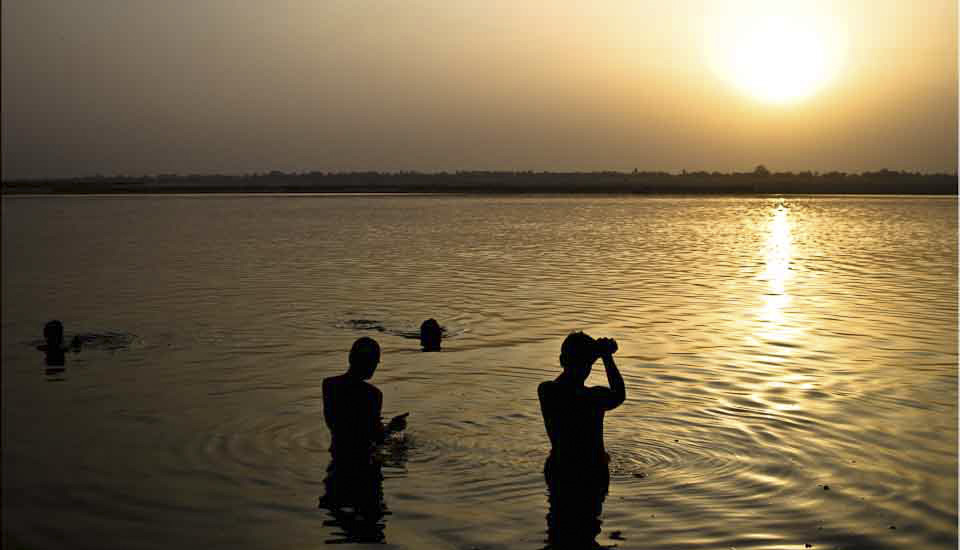
- Performing the Ganga Aarti from Dasaswamedh Ghat, Varanasi
- Buddha Head from Shwedagon Pagoda, Myanmar
- Harry Clarke Window from Dingle, Ireland
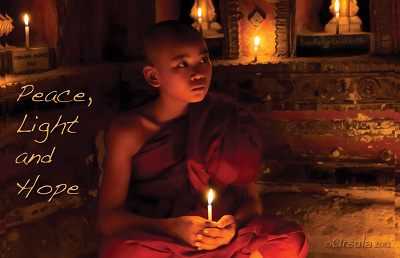
- Novice Monk Shwe Yan Pyay Monastery, Myanmar
Packets of 10 for $AU50.
Or - pick any photo from my Flickr or Wanders blog photos.

.jpg)
.jpg)
.jpg)






 I left Madurai with countless colourful impressions – as well as some new carved elephants, and some embroidered cottons. 😊


 It is such a beautiful area!
.jpg)