Flowers in the Rocks The mountains of Southern California are well known for their sunny blue skies and outdoor activities.
California, the third largest state in the USA, covers some remarkable terrain. With almost 900 miles (1450 km) of Pacific coastline and several mountain ranges, the topography ranges from magnificent forests of giant redwoods to the subtropical Mojave desert.
The state is also home to two of the US’s top-five most populous cities, with their notorious fogs and smogs, and home to my least favourite airport. If I have to travel through Los Angeles International Airport (LAX), I always heave a sigh of relief when I break free from it.
So it was last June: we dragged our bags out of one of LAX’s terminals, got into a shuttle bus, and finally pointed our rental car east towards San Bernardino. We drove along the multi-lane Foothill Freeway(Interstate 210), not slowing down until we escaped the basin of smog that hung over the lowlands, and started climbing into the San Bernardino Mountains and some welcome fresh air.
Our final destination was the small resort city of Big Bear Lake. The lake for which the city is named is Southern California’s largest recreation lake, and the surrounding hills are criss-crossed with hiking and biking trails.
One of the most popular walks is the short, steep Castle Rock Trail; I was glad I had a new walking stick!
Join us for an uphill-hike.
California Highway 210 Over an hour out of Los Angeles, and the smog is still with us, hanging over the San Bernardino lowlands and almost obscuring the mountains ahead. (iPhone6)
Bend in the Road Finally we rise up out of the smog, into the fresh air above, twisting and curving our way up into the mountains. (iPhone6)
Pathway up to Castle Rock The Castle Rock Trail is a short (1.3 mile; 2 km), but very steep, walk up to a beautiful rocky crag. The return route is by the same track.
Path to Castle Rock The first half of the hike is the steepest; we ascended through granite boulders and shrubs …
Sun in the Pines … as tall pines touched the sky over our heads.
Rocky Pathway The dry, sandy ground is littered with boulders.
Western Fence Lizard The sun has brought out countless little lizards – almost invisible against their rocky back-drop.
Tree Trunk Most of the trees here are Jeffrey Pine, but there are also Ponderosa Pine, White Fir, Western Cedar and Incense Cedar.
Tree Tops The pines are incredibly tall and straight.
Walkers on the Path Because this trail is so popular, it has a reputation for being over-crowded. We were lucky – even though it was a Saturday, the other walkers were scattered.
Blossoms on the Bushes The summer heat has brought out the blossoms. I thought this was Ocean Spray (Holodiscus discolor), but now I’m not sure.
Steep Climb It feels as if the path will never level out, as we gain over 500 feet (152 m) …
Rocky Terrain … before cresting into more level – but just as rocky – terrain.
Uprooted Trees Fallen trees line the pathway like sculptured art; –
Almost Abstract – their intricate surfaces polished by wind and sand.
Sap on a Log Like jewelled amber, beads of sap sit against slowly decaying wood.
Textured Wood
Rock with Character Finally! Another signpost, indicating that we are on track, comes into view.
Tree on a Rock Castle Rock itself requires a bit of clambering; with two cameras and a tricky knee, I decided against it! It was nice enough sitting on the view points just below the summit.
Pine Needles
Purple Wildflowers As we walk carefully back down the hill, we pause to admire the various wildflowers.
Indian Paintbrush (Castilleja)
Like a Sphinx The lake comes back into view as we descend …
Long Shadows … into long afternoon shadows.
The walk down the hill was much quicker than the walk up! While it was only a short hike, the combination of heat, elevation gain (690 ft / 211 m), and starting altitude (Big Bear Lake sits at 6,752 ft / 2,058 m), had us happily exhausted by the time we returned to our car.
Still, we recovered enough over dinner that we were out on a different track the next day. 😀
[…] It was early summer – hot and dry – when we stayed there; ideal walking weather. Unfortunately, I was not-long off crutches after breaking my knee, and for the first several days had to satisfy myself with moderate strolls around town. Towards the end of the week, though, my husband and I grabbed our walking sticks and challenged ourselves to the short, but very steep, Castle Rock Trail. […]ReplyCancel
Epupa Falls Epupa Falls is a series of cascades stretching about 1.5km through the Kunene Region. This is the northern-most point in Namibia, where the Kunene River forms the border with Angola. (ISO100 16mm f/16 30sec Crop)
It is a primordial landscape, born out of the very heart of the pre-Jurassic Gondwana super-continent.
The Kunene Region in Northern Namibia is dry, mountainous, and underdeveloped. It is home to semi-nomadic tribes whose ways of life have barely changed for hundreds of years (see: Women of the Himba, and Himba Model Shoot).
The Kunene River, which starts in the Angolan highlands and runs 1,050 kilometres to the Atlantic Ocean, is the only perennial river within the ecoregion. The river marks the Angola-Namibia border and tumbles over Epupa Falls at a gorge formed between 2,100 million and 1,750 million years ago.
Although the time-lines are wildly different, I had no trouble imagining dinosaurs walking among the primitive baobab trees that cling to the rocky river banks.
That was, of course, once we got there.
I and four other photography enthusiasts were travelling with photographer Ben McRae and local guide, driver, chief cook and bottle-washer, Morne Griffiths, across the vast expanses that comprise Namibia.
I knew we’d be camping for the next several nights, so I treated myself to a small cabin with a plywood bed the night we stopped in Kamanjab, and enjoyed a decent sleep and a shower with water so splayed that I got my exercise dancing around, trying to get wet without getting scalded; facilities in Namibia can be “rustic”. After a very early hot breakfast, we started our journey of 440 kilometres north through the dry winter landscape dressed in subdued autumnal colours; about six bumpy hours past hornbills perched on electrical wires, ostriches and giraffes loping in the distance, and long-horned cows and humped brahman along the roadside. Gradually, the thorn trees gave way to palm forests, and we came across our first giant baobabs.
Nothing, though, prepared me for the magnificent Epupa Falls.
Join me in Namibia’s timeless Kunene.
Rosy-Faced Lovebird (Agapornis Roseicollis) The sun wasn’t yet up and the winter air was still cold – but the birds were already gathered around the feeder in the rest-camp courtyard in Kamanjab.
View from the Truck We set off early morning, heading out on the long, dusty roads north to Epupa. (iPhone6)
Baobab The mighty baobas (Adansonia digitata) grow along the side of the road.
“Make your Mark” There is an African proverb: “Knowledge and wisdom are like a Baobab tree, one person’s arms cannot encompass it.” The trunks are huge, with an average diameter of 5 m (16 ft).
Scars and Textures Baobab trees frequently live for between 1,000 – 3,000 years. Their succulent trunks have a high resistance to drought and fire.
Look Up! In the right soil, baobabs grow quickly, and can reach between 5–25 m (16–82 ft) in height.
Nests in the Branches
Cairn or Shrine
View from the Truck Leaving the baobab tree behind, we rejoin the the road and climb the rocky hills to Epupa. (iPhone6)
Above Epupa Falls After pitching our tents in the allocated camping spot, we join the other visitors on the dry, rocky terrain above the falls. (ISO200 70mm f/4 1:320sec)
Afternoon above the Falls The afternoon sun still packs heat as the shadows deepen and grow longer. It is not as quiet as it looks, however: the roar of the falls, just hidden from sight, is palpable. (ISO200 24mm f/11 1:100sec)
Epupa Falls Nothing had prepared me for the first sight of the magnificent falls, with the waters of the Kunene tumbling straight down the rocky gorge separating Namibia from Angola. (ISO200 70mm f/3.5 1:400sec)
Below the Falls Before sun-up the next morning, I grabbed a head-lamp and tripod and picked my way carefully over the jagged, primordial landscape below the main falls. Countless waterfalls tumble into the river below from all directions. (ISO 100 70mm f/25 3.2sec)
Morning on the Falls (ISO6400 200mm f/2.8 1/400sec)
Solitude As early as I was, I wasn’t the first. Photographer Ben McRae had already found a spot on the ancient rocks. (ISO800 16mm f/2.8 1/100sec)
Sunrise (ISO200 24mm f/5.6 1/200sec)
Sunrise (ISO100 70mm f/32 3.2sec)
Below the Falls Epupa Falls are thought to be the oldest rock formation in Namibia, between 2,100 million and 1,750 million years old. (ISO400 35mm f/6.3 1/60sec)
Kunene River As the sky finally lightens, the green river contrasts with the ancient rocks of the gorge. (ISO100 16mm f/5.0 1/60sec)
Water on the Rocks (ISO100 200mm f32 2.0sec)
Morning Light on the Baobabs The spray from the falls backlights the baobabs. (ISO100 175mm f/32 0.8sec)
Angola over the River Angola looks wild and empty across the river. (ISO100 30mm f/7.1 1/60sec)
Baobab Trees The giant baobabs have a shallow roots, spreading further than the height of the trees, allowing them to cling to the river banks and survive the dry climate. (ISO400 70mm f/8.0 1/400sec)
Baobab Trees It’s a pre-historic landscape: baobab trees are among the oldest living trees in the world. (ISO100 70mm f/2.8 1/400sec)
Leaves on a Baobab Tree To conserve moisture, baobabs only have leaves about three months a year, during the wet season. (ISO100 35mm f/14 1/60sec)
Top of the Falls (ISO100 200mm f/32 0.6sec)
Top of the Falls “Epupa” is a Herero word for “foam”; the falls are named for the the foam created by the tumbling water. (ISO200 70mm f/5.6 1/400sec)
Girls at the top of the Falls The morning sun lights up this “foam” at the rocky top of Epupa Falls. (ISO100 200mm f/2.8 1/400sec)
Since 2012, Himba chiefs have been protesting against a proposed dam on the Kunene River in the Baynes Mountains. The dam might bring in economic development to the region but would irreparably change the traditional ways of life, and this ancient landscape itself.
[…] after breaking camp the day before at Epupa in northern-most Namibia (see: North to Epupa) – and had entered Etosha National Park just before noon. Our first […]ReplyCancel
[…] Omarunga Camp, within earshot of the magnificent Epupa Falls on the Kunene River (see: Landscapes of the Kunene). Our trip-organiser, photographer Ben McRae had a shoot planned for the late afternoon, and it was […]ReplyCancel
Zähringerbrunnen : the Zähringer Fountain In the UNESCO-listed medieval city-centre of Bern, a fountain topped by a bear in full armour, with a cub at his feet, was built in 1535 as a commemoration to Berchtold von Zähringer, who founded the city in 1191. (iPhone5)
The Swiss city of Bern is indelibly associated with bears. The bear has featured on the city seal and coat of arms since at least the 1220s. Stories relating to the keeping of live bears in a Bärengraben (bear pit) in the centre of the city – in what is still called Bärenplatz(Bear Plaza) –date back to the 1440s (or 1513 – depending on your source!).
Legend has it that Bern was named for the bear that Berchtold V, Duke of Zähringen, came across in the wood that was to be cleared for his new city. He had vowed to name the city for the first animal he saw on his hunt.
This story is widely questioned. For a long time it was thought that the city might have been named after the Italian city of Verona, then known as Bern in Middle High German. Scholars since the 1980s, however, think the name is of Celtic origin.
What is not in question is that Berthold V founded Bern in 1191. He had been charged with establishing a city to help solidify his family’s position over their land holdings. The Zähringer ruling family, decreed dukes by the German king, held much of what is today Switzerland – then considered part of southern Burgundy. In order to reinforce their position in the region, they started or expanded a number of settlements.
For Bern, Berchtold V chose an easily defensible, long and narrow hilly peninsula, surrounded by the Aare river on three sides. Somehow, the old city has managed to retain its medieval charm, while functioning in the modern world. Tram tracks run down the cobbled streets; up-market hotels, fashionable boutiques, and quirky coffee shops are tucked into the covered, arcaded sidewalks. Everywhere you turn, there are colourful statues and fountains and clock towers. Guild flags hang from the buildings that once housed them; canton flags hang from the Renaissance-style Bundeshaus (Parliament Building); geraniums hang from every window. It is the best-preserved historic town centre in Switzerland, and – as the “Old City of Berne” – it was UNESCO-heritage listed in 1983.
The beauty of travelling in Europe is that everything is accessible by train. My husband and I were travelling from England. Friends of ours from Zurich met up with us, and we spent a leisurely day walking around the Old City.
Busker on a Dudelsackspieler Evening in the centre of Old Bern is lively, in spite of a threat of rain. (iPhone5)
Parliament House Evening clouds hang over the buildings used by the National Council and the Council of States. (iPhone5)
Nine Men’s Morris The restaurants fill up as people stroll the streets. (iPhone5)
Bundes Platz – Parliament Square
Flags of the Cantons – Bundeshaus
To the Bundeshaus Terraces An archway leads to the back of the parliament buildings, …
Woman in the Fountain … where there are gardens …
View from the Bundeshaus Terraces … and views over the red-roofed buildings below.
BEKB Bank Building, Bundesplatz
Bern Old City Streets Trams and pedestrians share the old cobbled streets.
Zytglogge Bern’s 800-year-old mechanical clock in its 23-meter tower is one of the the city’s most famous landmarks.
Lion – Marktgasse (iPhone5)
Old Clock Tower – Zytglogge The Old Clock Tower, built by Caspar Brunner between 1527 and 1530, in what was once Bern’s west gate
Medieval Bern The buildings in the Old City include 15th-century arcades of painted limestone.
Doors to the Underground on Kramgasse Intriguing slanted doors lead down to cellar stores and coffee shops.
Monkey Guild Statue
Zähringerbrunnen and Zytglogge on Kramgasse Medieval clock towers and Renaissance fountains are features of the Old City.
Vennerbrunnen – Ensign Fountain The ensign, carrying a flag with the bear of Bern, promises to protect the city.
Das Berner Rathaus – City Hall
Medieval Ships and Dreams There are plenty of shops to fire the imagination.
The Fast-Flowing Aare To reach the Rose Garden and the Bear Park, we crossed the Nydeggbrücke over the Aare River.
The Old Bärengraben – Bear Pit Bern’s first captive bears were held at Bärenplatz (Bear Square) in the Old City from the 1400s or 1500s. The bear enclosures here were first opened in 1857, and were upgraded numerous times. Due to ongoing protests from animal rights groups, the newer Bärenpark was opened in 2009, and this section of pit became an information area, access to the Bärengraben’s shop, and a performance space.
Eurasian brown bear (Ursus arctos arctos) The bears remaining here, near the old enclosures look healthy, but forlorn.
Funding Cobbles Contributors to the improvements are commemorated in the walkways.
View over Old Bern At the Rose Gardens, we enjoyed a late lunch – and views over the old city.
The Bärenpark We walked back down the hill through the Bärenpark – opened in 2009 –
Eurasian Brown Bear (Ursus Arctos Arctos) – where the bears have more room to roam between the old Bärengraben and the bank of the River Aare.
Waiting for the Zytglogge We made our way back through the old city, where people were waiting at the east face –
Zytglogge – for the old clock to perform. At four minutes to the hour, the clock’s mechanical figures (including bears, a crowing cock, a fool, a knight, and a piper) begin their procession.
On Swiss Rail We collected our bags, made our way to the train station, and – sadly – left Bern behind.
It was a delightful city to visit.
Like I said – that’s the beauty of Europe: every delightful city is just a rail-trip away.
[…] It was summer – many years ago now – and we had several weeks in which to explore Switzerland. On the advice of Swiss friends, we had pre-purchased Swiss Rail Passes and had already enjoyed making extensive use of them to get around the country (eg: Wanderweg around the Pfäffikersee; Balade Des Fontaines, Aigle; Château de Chillon; Schaffhausen and Neuhausen am Rheinfall; Gruyères; The Salt Mines of Bex; Leysin; Lucerne; Bern). […]ReplyCancel
Vietnamese Spices and Rice Noodles Street food gives you insight into local culture, but it can be risky when you are travelling; sometimes it is safer to eat the five-star version as prepared in the pristine environment of a modern resort.
It can be relaxing to travel like a “tourist”: to find a haven in crisp sheets and smiling staff who speak your language, after a hectic day in a bustling foreign environment.
I usually avoid up-market resorts – mostly because I’d rather travel twice as often than pay twice as much. But, every so often, an offer comes to my attention, one that fits in so neatly with other plans we have already made, that I can’t resist.
The resort itself and the package-deal we got was bliss: wonderful food, daily massages, an included cooking lesson, yoga classes and gym, a bicycle tour and other daily activities, shuttles into Hội An and Đà Nẵng, smiling and attentive (but not intrusive) staff… the list went on. Our only complaint was the weather: winter was colder, wetter, and had hung on longer, than any of the locals could remember – but we couldn’t really blame the resort for that!
Put your feet up and settle back into some true Asian comfort.
Water Lily Nothing says “Southeast Asia” to me like waterlilies in beautifully manicured ponds.
Rural Mural When you see the conical hats working in the rice fields, you can be nowhere but Vietnam.
Gardener Even in the rain, the staff are hard at work maintaining the grounds. (iPhone6)
Morning on the Beach Fishermen have their rods set on the quiet winter beach. No holiday-makers are around; it is far too cold to swim. (iPhone6)
Sand Crab(iPhone6)
Naman Retreat’s Hay Hay Restaurant With bamboo walls and a thatched roof, the Hay Hay Restaurant, designed by locally-based Vo Trong Nghia Architects, is an intriguing fusion of contemporary design and Vietnamese tradition. (iPhone6)
Resort Dining Room Inside, bent bamboo pillars reach high …
Vaulted Bamboo Ceiling … up to the vaulted ceiling. Different types of bamboo, chosen for their properties of strength, rigidity or flexibility, have gone into the construction of the airy resort buildings.
Breakfast Bar When I saw the breakfast selection, I was in heaven! (iphone6)
Display Kitchen Mid-morning, we were back in the dining room for our cooking lesson.
Smiling Chef Vu, whose official designation according to his name-tag, is “Flame Keeper Captain”, greets us and gives us our Cooking Class Recipe card.
Spring Roll Ingredients The rice-paper wrappers and filling ingredients are laid out and ready.
Chef Vu Vu describes the ingredients and explains the process of making the dipping sauce for traditional Vietnamese fresh spring rolls.
Whisking Sauce He whisks the coconut juice, white sugar, melted rock sugar, salt lemon juice, chilli, garlic and fish sauce together, …
Whisking Sauce … beating vigorously until the ingredients are well combined.
Rolling Spring Rolls Once the sauce is made, Vu demonstrates how to roll the prawns, pork belly, mint, coriander, and bean sprouts into their parcels. I love the contrast between his simple Buddhist bracelet and his jewel-studded gold ring.
Vietnamese Traditional Fresh Spring Rolls When we’ve made our own spring rolls, we get to eat them. Lunch is served!
Making Pho: Traditional Vietnamese Beef Noodle Soup As we enjoy our spring rolls, Vu tells us how to make Vietnam’s best-known soup: Pho.
Chef with a Frypan With a sous chef watching on, Vu adds ingredients to a heavy frypan …
Ingredients in the Pan … and cooks them up.
Talking about Pho Although pho is now known around the world, the noodle soup is thought to originate near Hanoi in the early 20th century, influenced by both Chinese and French cooking traditions.
Chef Making Soup Although the soup stock has simmered for 10 hours, pho is delightfully fresh tasting. Vu puts freshly cooked noodles, cooked beef, and fresh herbs into bowls before topping the dishes with the broth.
Chatting with the Guests As we finish up our soup, Vu takes time to review his cooking class and chat with participants.
Sprouting Rice Rice, sprouting in watery rice paddies where it is grown by dint of backbreaking labour, is central to Vietnamese life. Dotted around the Naman Retreat buildings, beautiful bronze sculptures of rice sprouts are reflected in granite ponds.
It was a beautiful combination:-
We had a haven where we could retreat from any hustle and bustle, while being immersed in the very best of Vietnamese food and culture.
Portrait of a Man in a Turban Textured walls and colourful turbans: you don’t need to go far in India to find a photographic subject. (Khejarla, Rajasthan)
I still think of it as the hotel that tried to kill me.
Well, shock and asphyxiate me; “kill” might be a bit extreme.
I was looking forward to our stay at the heritage “resort”, Fort Khejarla Hotel, 85 km east of Jodhpur in Rajasthan. My husband and I had stayed in a couple of old palaces on an earlier tour through Northern India and had thoroughly enjoyed the experience. On this trip, I was travelling with a photographic group under the tutelage of photographer Karl Grobl and the watchful eye of local guide DV Singh.
Khejarla Fort Fairytale turrets rise up over the 400-year-old walls built by the Rajputs. (iPhone 4S)
Inner Courtyard, Khejarla Fort Morning light slants through the delicate arches and over the ancient crumbling red sandstone bricks (iPhone 4S).
I was thrilled with my room: cool marble floors, a four-poster bed all to myself, and even a sitting alcove, complete with velvet-covered antique furniture. I bounded out of the suite and crossed into the courtyard, where a shoemaker was selling his wares. I bought slippers for my absent husband and an embroidered silk jacket for myself before checking at the office for a hairdryer.
Back in my room after dinner, I slipped off my shoes and went to wash my face. The light switch zapped me. I tried to turn on the water at the sink: the taps shocked me. I called for a technician, who finally arrived in his black patent shoes and shiny blue pants. Of course, the electrically charged particles ignored him.
He turned on the shower water; I put my hand towards it and you could see the electricity arcing towards me. “Ah,” said the technician (translated by DV), “it’s because you have bare feet!”
They decided the mini-electric water-heater might be to blame, and installed me in the room next door. Not as nice, but less “shocking”.
Or so I thought.
While working on my computer, I noticed a funny smell – which I’d previously attributed to an oil burner left in the room – coming from the bathroom. The hair dryer which they had lent me was on fire, and it had attacked my waterproof plastic toiletry bag. Before long, toxic fumes were choking me, the fire was spreading, and I was despairing of anyone hearing my cries for help as I attempted to smother the flames with towels.
That I am still here clearly indicates I was eventually heard. The fire in my room was dealt with as I sat, like a limp, soot-blackened rag-doll, raspy-voiced and quite exhausted, in the courtyard outside my room.
The next room I was given was a palatial suite in the newer sections of the building. I retrieved what was left of my toiletries and finally got my shower and hair-wash before tumbling, completely worn out, into bed.
Of course, photo trips sleep in for no one. Bright and early the next morning, I was out in the streets of the modest surrounding community with my camera, making portraits wherever I could find them. Even with no voice, I had no trouble gaining consent from the friendly people of Khejarla.
Join me for a walk through town, and some street portraits – Indian style.
School Girls It is early morning, and the light has not yet fully reached into the narrow streets. Young women in their pristine salwar kameez walk to school.
“Kids wil be Kids” Younger school children goof around when they see the camera, ….
Schoolgirl … but without invitation, they line up against gates and doorways, …
Schoolchildren … with their siblings …
Schoolboy … or alone, looking boldly and clear-eyed at the lens.
Schoolboy Around every new corner, the backgrounds, the light, and the colours change.
Two Men on a Motorcycle
Shopkeeper Shopkeepers wait for customers…
Customer at the Counter … and customers stop to chat.
Shopkeeper Even though they know I’m not buying anything, they are generous with their smiles.
Child with Finger-Goggles Once the school-children have passed, the streets are the domain of the younger kids, …
Children in the Street … with their cheeky faces and brightly coloured “civvies”.
Man and Child
Woman in a Doorway
Green Chillies There is plenty of food available on the streets: fresh …
Street Food … and freshly cooked. I have no idea what some of it is.
Ribbons and Beads
Khejarla Man
Three Amigos Children are everywhere: I’m not sure why so many are out of school.
Woman in the Street Everywhere, “life” happens in the dusty streets.
Boy at the Gate The young ones are curious about the stranger.
Men in the Doorway Men take a break from their labour to check out the woman with the camera …
Discussion on the Stoop … or just to chat with their friends and neighbours.
Shopkeeper
Three Men
Cows in the Street It wouldn’t be India unless there were cows in the dusty streets, …
Woman with a Bundle … women carrying things on their heads, …
Child Minding … or young children looking after their younger siblings.
Places to Go … … things to do. Life goes on.
I enjoyed my time in the streets of Khejarla; it was engaging without being too “enlivening”.
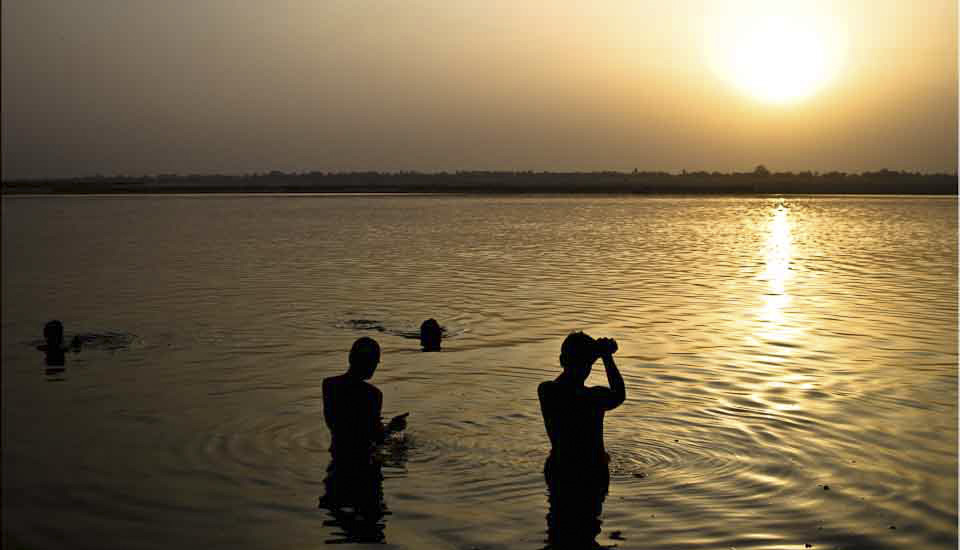
- Performing the Ganga Aarti from Dasaswamedh Ghat, Varanasi
- Buddha Head from Shwedagon Pagoda, Myanmar
- Harry Clarke Window from Dingle, Ireland
- Novice Monk Shwe Yan Pyay Monastery, Myanmar
Packets of 10 for $AU50.
Or - pick any photo from my Flickr or Wanders blog photos.

.jpg)
.jpg)
.jpg)











 We had a haven where we could retreat from any hustle and bustle, while being immersed in the very best of Vietnamese food and culture.


 Until next time ~



[…] It was early summer – hot and dry – when we stayed there; ideal walking weather. Unfortunately, I was not-long off crutches after breaking my knee, and for the first several days had to satisfy myself with moderate strolls around town. Towards the end of the week, though, my husband and I grabbed our walking sticks and challenged ourselves to the short, but very steep, Castle Rock Trail. […]