The Kunene River The dry heat shimmers and the winter colours vibrate on the Kunene River between Angola and Namibia.
It is hot in the northern reaches of Namibia.
Very hot.
Even in August, in the middle of the dry, winter season, when night temperatures can drop below 10°C (which is pretty cool when you are camping!), the sun rises early and bakes the arid landscape. By mid-morning, the daily highs of 30°C+ have already been reached.
I was tenting at Omarunga Camp, within earshot of the magnificent Epupa Falls on the Kunene River (see: Landscapes of the Kunene). Our trip-organiser, photographer Ben McRae had a shoot planned for the late afternoon, and it was tempting to sit out the heat of the day in the shade, watching the birds on the Kunene riverbank.
But, Omarunga offers an afternoon guided walk upstream along the Kunene River in search of crocodiles. After too many miles bumping across Namibia’s rough roads, a leisurely walk was just what the doctor ordered!
Crocodile on the Kunene River Another tourist with binoculars pointed out the crocodile sitting, almost invisible with its mouth open on the rocks in the middle of the river; truth is, I thought it was a fake, until it closed its maw and slithered out of sight!
Angola across the River The Omarunga Camp common area, attached to the restaurant and bar, is a delightful place to sit on the banks of the Kunene River…
Mourning Collared Dove (Streptopelia Decipiens) … and watch the native birds …
Finches, Blue Waxbills, and Laughing Doves … who take advantage of the seed and water left out for them.
Golden Weaver (Ploceus Xanthops)
Golden Weavers (Ploceus Xanthops) I could have watched the various birds for hours!
The Yard Outside the tourist campsites and cabins, the homesteads are modest.
Donkeys Dainty donkeys scrabble around for food in the dry ground.
Young Himba Men Bathing This is Himba territory; as we round a bend, we come across a group of young men with their distinctive hairstyles.
Local Guide Our guide stops regularly to point out plants that have medicinal or aromatic uses.
Crocodile Tail He also spots a crocodile – who declines to show us anything but its back end.
Petroglyphs Rock carvings dot the sandstone all along the Kunene River – probably made by stone-age hunter-gatherers around 6000 years ago.
Mountains in the Distance The water is so quiet here …
Rock in the Kunene River … that the reflections shimmer in the heat.
The Kunene River The calm is so different from the noise of the falls just a few miles downstream!
Kunene Scrub The 1,050 kilometre-long river is one of the few perennial rivers in Namibia, …
Succulent … and the plants on the riverbank are clearly adapted to the arid climate.
Tourists on the River
Crocodile Finally! Just before we have to turn around and head back to camp, we spot the front end of a large crocodile.
Top of the Falls I got back to the campsite and followed the waters to the top of the falls, …
Epupa Falls … where the nature of the river changes completely, as it races roaring through a primordial landscape of baobabs and into a deep ravine.
In Search of a Location To round out a day on the river, we are headed further downstream in search of a location to make portraits of two traditionally-dressed young Himba men (see: Himba Model Shoot).
The landscapes in the different regions of Namibia all have real and discrete personalities.
The Kunene River is no exception, with each section distinctive from the next.
Bicycle Rickshaw Driver The pedicab drivers know where the resort shuttle buses will drop their customers off, and are ready and waiting.
I had a map and a plan.
Turns out, I needn’t have bothered!
We were headed into Đà Nẵng for a February afternoon, and I had done my homework. But, as soon as my husband and I alighted from our resort shuttle bus, we were greeted by a smiling pedicab driver who cheerfully persuaded us we could not possibly walk to the places we wanted to visit. He offered – for a small fee – the services of himself and his friend for a few hours.
And so we set off: two foreign tourists feeling like royalty perched in our individual rickshaws while our drivers cycled madly through the broad, tree-lined streets of Central Vietnam’s largest city. Lonely Planet says Danang“has few conventional sightseeing spots”, but we found plenty of places to keep us occupied and interested.
Join me for a tour of Vietnam’s third largest city.
Đà Nẵng Street Scenes Although Danang is the busiest city on Vietnam’s central coast – a major port and the commercial and educational center of the region – the streets still feel quiet and safe as we are cycled through them.
High-Wire Repairs Like many other places in Asia, the telephone and electrical wires mass in a tangle overhead. Workers regularly take their lives into their own hands!
Trung Hưng Bửu Tòa Our first stop was at the Cao Daist Missionary Church. A monotheistic religion built on the fundamental doctrines of Taoism, Confucianism, and Buddhism, Cao Đàioriginated in South Vietnam around 1919.
Inside Danang’s Cao Daist Missionary Church The religion has between three- and eight-million adherents in Vietnam, with and estimated 30,000 in the Vietnamese diaspora. This temple in Danang serves about 50,000 followers.
All-Seeing Cao Daist Eye The symbol of the faith is the Left Eye of God. In Danang, this all-seeing eye is painted on a large globe: symbolising the universe and source of all life.
Courtyard: Bảo Tàng Đà Nẵng The Museum of Danang was built between 2005 and 2011.
Trung Tâm Hành Chính Đà Nẵng The Danang City Administration Center – across the road from the Museum – seems to symbolise the city’s desire to move away from it’s reputation as a provincial backwater. Finished in 2014, the 34-story building is an eye-catching, if impractical, addition to the waterfront.
Specimens We were underwhelmed by the exhibits in the Museum of Danang. The first (of three) floors is devoted to Natural and Social History.
Tượng Phật A Di Đà (XVII-XIX) The museum contains historical relics, like this one of Amitābha, a celestial Buddha important in Mahāyāna Buddhism.
Fish Praying Dioramas in dark corners illustrate traditional central-coastal community practices – like this one depicting the annual Cau Ngu Festival where people pray for a good fish harvest.
Danang Skyline There are nice views over the city from the Museum of Danang stairwells.
Commemorating the War and the US Presence The second floor of the museum is devoted to Danang’s long struggle with war. In recent history, France attacked the city in 1858. The Americans landed in 1965, and set up a large military complex nearby. The last American ground combat operations departed in 1972, after which the city was taken by the North Vietnamese in 1975.
Opera Masks The museum’s third floor houses ethnic and cultural artefacts.
Đà Nẵng Cathedral Sacred Heart Cathedral in Danang was built in 1923 for the city’s French residents. It is known as the Con Ga Church(Rooster Church) because of the tiny French rooster high on the steeple.
Đà Nẵng Cathedral Grounds The church now serves a Catholic community of over 4000.
Danang Diocese Bishops House The Sacred Heart Cathedral is home to the Roman Catholic diocese of Đà Nẵng, under the Province of Hue.
Museum of Cham Sculpture Danang’s origins date back to the ancient kingdom of Champa, which governed Southern Vietnam from 192 A.D to 1697.
Cham Sculpture The Cham were an Indic civilisation: some say indigenous to Vietnam; others believe the were originally colonists from the Indonesian islands.
Cham Sculpture After a thousand years of skirmishes – and trade – with the people of Java, the Khmer of Angkor in Cambodia, and the Đại Việt of northern Vietnam, the Champa civilisation finally lost its independence to the Đại Việt. The museum houses painstakingly recovered sandstone and terracotta artworks dating from the 7th to the 15th centuries.
Golden Buddha Our next stop, at Phap Lam Pagoda, was a complete contrast.
Lady Buddha, the Bodhisattva of Mercy Phap Lam Pagoda seemed to be a popular place for Buddhist worship, …
Students Posing … although the young people there were happy to cluster together to have their pictures made.
Prayers in the Shrine I lost count of how many different shrines were housed around the Phap Lam Temple.
Another Shrine – Chùa Pháp Lâm
The Con Market After settling up with our pedicab drivers, we made our way into the colourful Con Market.
Saleswoman in the Con Market The sales people were all very welcoming, …
“Wake up the Ideas” … and were especially happy when we actually made purchases.
We bought enough rich Vietnamese coffee to share with our neighbours, and made our way back into the street in time to collect the shuttle back to our resort.
Somehow, our negotiations with our rickshaw bicycle drivers got lost in translation, and we ended up paying more than we thought we had agreed to.
Still, it was well worth it, and our head-driver was right: we would have never have seen as many sights if we’d tried to visit them on foot.
Roos on the Flats Kangaroos love open grasslands – like those found near the campground at Geehi Flats in Australia’s Snowy Mountain region. (02January2016)
The New Year’s period is a time when we can look back over the recent past and start to make plans for the coming 12 months.
As regular visitors to these pages know, I usually escape to the mountains during this time, preferring some quiet contemplation over the noisy drunken revelry that is more common in the city – not that we don’t partake of a glass (or more) of champagne to commemorate the passing of another year!
The change-over from 2015 to 2016 was no exception.
My husband and I tucked ourselves into our tiny space in Jindabyne, on the outskirts of Kosciuszko National Park. Usually we plan at least one ambitious alpine walk (e.g.: Bookends on 2013,Alpine Bookends 2014,Illawong Lodge, Guthega, orSummer Walks in the High Country), but last summer we took it a bit easier. I was still recuperating from a broken knee and still hadn’t recovered my stamina and range of movement.
And, it rained … and rained, and rained some more.
As a consequence, we stayed indoors. A lot. When we did get out on foot or on bicycle, it was around Jindabyne and its lake, close to the Kosciuszko roadways after a drive, or on walks around the village of Thredbo, rather than more strenuous hikes further afield.
These meanderings still yielded some lovely sights – and plenty of time to dream big for the year to come.
Lake Jindabyne There is a well-maintained shared path for walkers and cyclists along the foreshore of Lake Jindabyne. We make regular use of it. (01January2016 – iPhone6)
Charlotte Pass At the first opportunity, we always drive up to Charlotte Pass – … (01January2016 – iPhone6)
Wet Snow Gum (Eucalyptus Pauciflora) … – no matter what the weather – … (01January2016 – iPhone6)
Silver Snow Daisies (Celmisia longifolia) … to check out the state of the alpine flora. (01January2016 – iPhone6)
Roos on the Road With a forecasted break in the clouds, we drove to the Geehi FlatsCampground – starting point for the 5.5 km walk around the Old Geehi Huts. (02January2016)
Geehi Hut Nankervis Hut, more commonly known as Geehi Hut, was originally built in 1952 as a outpost for graziers. (02January2016)
River Stones and Concrete The five historic huts along the Old Geehi Hut bushwalking track were built out of the round river stones readily available from the Swampy Plain River. (02January2016)
Inside – Outside (Geehi Hut – 02January2016)
The Swimming Hole Outside Geehi Hut, the abundant river rocks have been sculpted to make a safe – though cold – swimming area in the Swampy Plain River. (02January2016)
“Our Country – Our Heritage” Many of the sites here have cultural significance to Australia’s First Peoples. (02January2016)
Roos on the Flats Plenty of eastern grey kangaroos (macropus giganteus) hang around the grassy flat plains. (02January2016)
Whispy Blossoms Clouds of cream blossoms wave over our heads, and the hot summer air is delicately scented with the smells of the Australian bush. (02January2016)
Cricket on the Lawn Across the river and up the track, families are playing holiday cricket outside Keebles Hut. (02January2016)
Inside Keeble’s Hut Built in 1942 as a fishing lodge, Keeble’s Hut is quite cozy inside. (02January2016)
Crossing the Swampy Plains River Keebles Hut is a popular campsite, accessible by four wheel drive. (02January2016)
Rider on the Golf Course Loop The day after our walk around Geehi Flats, the rains returned. It was almost a week before we had clear enough weather to drive up the mountains to Thredbo, where we walked around the golf course. (08January2016)
Grass Trigger Plant (Stylidium Graminifolium) An easy 4km loop leads through alpine forest …
Orange Everlasting (Bracteantha Subundulata) … where the delicate alpine wildflowers are in bloom. (08January2016)
Thredbo River The loop then follows the very pretty Thredbo River back to Thredbo Village. (08January2016)
Dead Horse Gap Walk A week later we returned to the Snowy Mountains for the annual Thredbo Blues Festival (“Let’s Dance the Blues”) and a trek down the 10km Dead Horse Gap Walk. (16January2016)
Gum Trees on the Path Finally! There were a few sunny days around Lake Jindabyne, … (19January2016 – iPhone6)
Sir Paweł Edmund Strzelecki … where the Polish explorer Strzelecki pointed us back to Mount Kosciuszko, which he climbed and named in 1840. (18January2016 – iPhone6)
And what a year 2016 has been!
For much of the year, I have been feeling a sense of loss and shock. I can’t wait to get back to the mountains to recover.
Making Dal It’s dark, hot, and humid in the kitchens of the Gurdwara Sis Ganj Sahib, one of the nine historical Sikh temples in Delhi.
“I have always thought of Christmas time, when it has come round, as a good time; a kind, forgiving, charitable time; the only time I know of, in the long calendar of the year, when men and women seem by one consent to open their shut-up hearts freely, and to think of people below them as if they really were fellow passengers to the grave, and not another race of creatures bound on other journeys.”
~A Christmas Carol (1843), Charles Dickens
It’s that time of year again: when the sun reaches its zenith (or nadir, depending which hemisphere you live in) and families get together to celebrate whatever the customary celebration is in their particular household.
As much as I love the idea of Christmas, and the idea of “a kind, forgiving, charitable time”, I am much more impressed with people who live their belief in treating each other well on a daily – rather than seasonal – basis.
This is part of why I was so impressed to learn about langar.
It was my first visit to a Sikh Temple: the ancient Gurdwara Sis Ganj Sahib in Chandni Chowk, Old Delhi. It was a November mid-morning, and music and prayers were in progress in the sumptuous and gilded Darbar Sahib (Prayer Hall). But, it was in the kitchen areas and out on the roof-top that the real life of the temple was happening: countless volunteers of all ages were performing seva, or selfless service, by preparing and cooking copious amounts of food – pumpkin, dal, roti and kheer (rice pudding) – for anyone who wanted to enter the temple to eat.
Langar (ਲੰਗਰ) is a Punjabi word for kitchen or canteen. In the Sikh religion, the meaning of langar extends to include the communal cooking, serving, and eating of traditional North Indian vegetarian food in a Gurdwara (a Sikh house of worship) – although the concept of free food for the needy pre-dates the Sikh religion, with a long history in Chishtī Sufism in Afghanistan and the Indian subcontinent.
Guru Nanak, who founded Sikhism in the Punjab in 1469, is said to have started the langar custom when he fed hungry Sadhus with money intended for trade goods. Mata Khivi, the wife of Second Guru Angad Dev, expanded the langar to include seva, or altruistic selfless service, by serving alongside the the first five gurus in the Gur ka Langar, the Guru’s free kitchen. Third Guru Amar Das added pangat sangat, the idea that every one, regardless of rank, sits and eats together as equals in the congregation.
Today, no matter who you are, regardless of gender, religion, ethnicity, age or status, as long as you bare your feet, cover your head, and behave with decorum, you are welcome in any Sikhlangar hall, where – between midday and midnight – you can enjoy a nourishing meal.
Pangat sangat; nourishment of body and soul.
Gurudwara Sis Ganj Sahib The domes of this Sikh temple – first established in 1783 – rise over the narrow streets of Chandni Chowk in Old Delhi.
Sikh in Purple and Orange Visiters to the temple can enjoy rooftop views over the old city.
Music and Prayers Prayer and meditation are an integral part of Sikhism; inside the Gurdwara, worship includes the singing of traditional hymns.
Sikh Woman The people inside Gurudwara Sis Ganj Sahib are relaxed and unhurried.
In the Kitchen The tiled walls of one the communal kitchens are scrubbed and ready for langar – the preparation and sharing of boundless food.
Women at Work On a rooftop balcony, women work together paring pumpkin.
Men Cutting Pumpkin The Guru Granth Sahib – the Sikh scripture – explicitly states that males and females are equal; …
Cutting Pumpkin … watching the men and women of the temple doing seva (service) side by side demonstrates this equality in action.
Peeling Pumpkin Performing seva is a family affair.
Making Chapati Dough Chapati (or roti) is a staple of meals at the temple. To make enough involves a bit of a production line!
Rolling Chapati Dough has to be portioned, rolled out, …
Making Chapati … and flattened.
Flattening Chapati The word Chapati is from the Hindicapātī, from capānā, meaning to ‘flatten or roll out.’
Chapati Flying Flattened chapati …
Cooking Chapati … are placed on the griddle …
Cooking Chapati … where they are carefully watched over.
Making Dal Dal is another staple of a North Indian vegetarian diet. Light angles into a dark room where it simmers.
Tea Break
Prayers on the Roof A section of roof – away from those preparing vegetables – is devoted to prayers.
“Waheguru” Roughly translated as “Wondrous Enlightener”, Waheguru is the name Sikhs use when referring to their monotheistic God.
Boys on the Rooftop Anyone is welcome at the temple. I’m guessing these lads are not Sikh because their hair has been cut. Many Hindu children visit from the streets because they know they will get fed, and Sikhs do not proselytize, so the meals here are indeed “free”.
Prayers Indoors Back in the the Darbar Sahib or Prayer Hall, the music …
The Darbar Sahib … and prayers continue.
Sikh Guardian at the Gate I pass the kindly-faced Guardian as I leave the temple and reclaim my shoes.
I always drop a little something into the collection boxes at temples and churches when I take pictures in them. Before I left the Gurdwara Sis Ganj Sahib, I looked for a place for donations.
I couldn’t find one;
I guess there really is such a thing as a free lunch!
But, it only happens because the “Three Pillars of Sikh Principle” expect devotees to give their time in service, and to donate a ten percent tithe from their “honest earnings”.
That sounds a bit like what Charles Dickens called Christmas spirit:
“I will honor Christmas in my heart, and try to keep it all the year.”
Fantastic reportage and photographs, Ursula! Again, you have educated and entertained us with your informative commentary and compelling images. Thanks for sharing.ReplyCancel
Wild Geraniums (Geranium Maculatum) on the Ivy Creek Overlook Trail Even on a hot spring day, there is plenty of shade to be found in the woods of Virginia’s Blue Ridge Mountains.
Whatever else one might say about the US, driving there is a pleasure. Whether you are speeding along the main highways, or winding down the back roads, you’ll find things well signposted – and the many National Parks and other places of interest are easily accessible.
My husband and I have covered a lot of territory across the US in rental cars in the past several years. Last May, as an adjunct to visiting with family scattered over three states, we drove the length of the Skyline Drive, Virginia’s National Scenic Byway.
Because of mountain bends and wildlife, the maximum speed along Skyline Drive is 35 mph (56 kph). So, it takes at least three hours to drive the whole 105 miles (169 km) from one end of the Shenandoah National Park to the other – that’s assuming you don’t hit traffic, go for a hike, or stop at any of the 75 scenic overlooks.
Established in 1935, the park was cobbled together from more than 1000 privately owned tracts of land, and now encompasses 300 square miles of the Blue Ridge Mountains – a physiographic section of the largerAppalachian Mountainsrange. It boasts in excess of 500 miles of hiking tracks, including 101 miles of the famous Appalachian Trail, whichruns through 14 states from Maine to Georgia.
As is our habit, we ended up with less time than we had originally hoped for. But, we still allocated a full day: entering the park from the north at Mile 0, Front Royal Entrance Station, late one afternoon, and crossing onto the Blue Ridge Parkway (more about that some other time) at Mile 105, Rockfish Gap (South) Entrance Station, in the afternoon of the next day. That allowed us time for a short walk each day, generous meal stops, visits to National Park Visitor Centers, and plenty of scenic stops at a selection of the many overlooks.
Join me for a scenic drive and a couple of short hikes.
Baby Bears Mama black bear was too fast for me! A mobile phone shot of her two cubs through the front windscreen was the best I could manage before they disappeared into the woods. (iPhone6)
View from Dickey Ridge The Dickey Ridge Visitor Center near the North Entrance has all the information one might need about the park and affords long views across the Shenandoah Valley.
Information Signposting – Dickey Ridge All of the “Scenic Overlooks” have sign-posting with facts about the view, the wildlife, or the broader park itself.
Skyline Drive The park is 95% forested. In spring the deciduous trees are multiple shades of fresh green with their new leaves.
North Mount Marshall Viewpoint Track It’s a short walk, just off Skyline Drive from the Mount Marshall Parking Area, to the Marshall Viewpoint.
Wild Geranium (Geranium Maculatum) The ground either side of the track is covered with spring flowers.
Bluets (Houstonia Caerulea)
North American Millipede (Narceus Americanus) Millipedes were all along the track – and could move surprisingly quickly when they noticed us!
View from Mount Marshall Viewpoint
Virginia White-Tailed Deer – Cervidae Odocoileus Virginianus In the darkening woods, a white-tailed doe watches us as we return to our car.
Methodist Church – Sperryville We slipped off the Skyline Drive at the Thornton Gap Entrance Station to spend the night in nearby Culpeper, Virginia. On our way back to the Shenandoah National Park the next morning, we stopped at the charming town of Sperryville.
Sperryville Home Some of the architecture in Sperryville is classically beautiful – like this private family home built in 1890.
Sperryville Shops The tourists shops in Sperryville are stocked with traditional Appalachian crafts, …
Sperryville Glass … artisanal foods, and local artworks. (iPhone6)
Thornton Gap Tunnel Back on the Skyline Drive, our first stop was at the Thornton Tunnel Overlook.
Leaves – Thornton Gap New leaves wave overhead …
Thornton Gap … and the mountains roll off into the distance.
Stony Man Mountain Overlook Can you see the man’s face on the side of the mountain?
Blue Ridge Mountains Haze blankets the farmlands that dot the Shenandoah Valley.
Civilian Conservation Corps (CCC) Worker A statue dedicated to the memory of the workers from the CCC, a public work relief program that operated during the Great Depression. These workers helped build this National Park. (iPhone6)
Turkey Vulture (Cathartes Aura)
Another Overlook We didn’t stop at every one of the 75 overlooks – but we did stop at quite a few.
Ivy Creek Overlook Our last stop was at the Ivy Creek Overlook, …
Virginiana Spiderwort (Tradescantia Virginiana) … where we went for another walk through the Virginia woods, along a short portion of the famous Appalachian Trail.
A signboard at one of the overlooks describes the many moods of the mountains and valleys, and how they change at the different times of day or year, reacting to different temperature and weather. It quotes Heraclitus of Ephesus:
“No man ever steps in the same river twice, for it’s not the same river and he’s not the same man.”
We’d drive it again – more slowly next time – in any season.
[…] from the Skyline Drive in Shenandoah National Park (see: In the Virginia Woods), and runs 469 miles (755 km) to the Great Smoky Mountains National Park and […]ReplyCancel
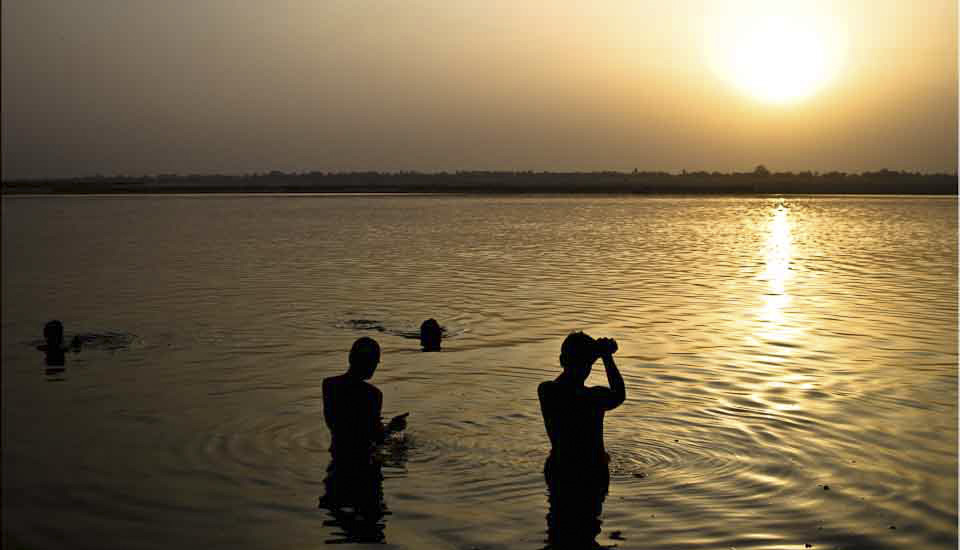
- Performing the Ganga Aarti from Dasaswamedh Ghat, Varanasi
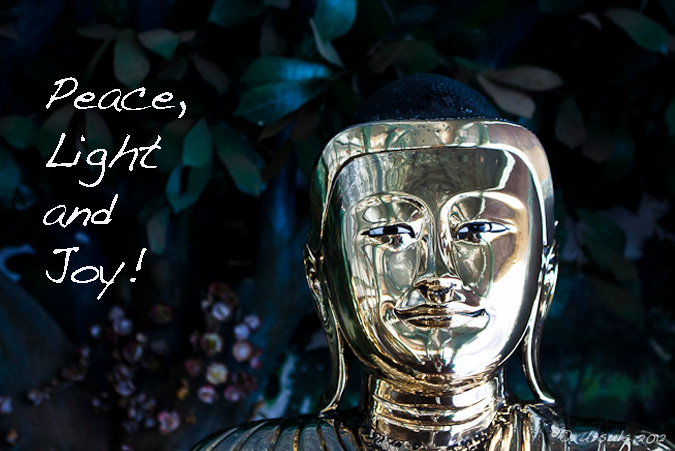
- Buddha Head from Shwedagon Pagoda, Myanmar
- Harry Clarke Window from Dingle, Ireland
- Novice Monk Shwe Yan Pyay Monastery, Myanmar
Packets of 10 for $AU50.
Or - pick any photo from my Flickr or Wanders blog photos.

.jpg)
.jpg)
.jpg)