Columns Rising Built during the second century CE, the Propylaeum (temple entrance) of the Sanctuary of Zeus in Jerash, Jordan, still rises up in graceful beauty – in defiance of over 2000 years of looting, erosion, and earthquakes.
“What did the Romans ever do for us?”
I love that line from Monty Python’sLife of Brian and have thought it appropriate in many circumstances. Naturally, it came to mind when I was wandering through the magnificent Roman ruins of Jerash – Ancient Gerasa or Garshu – in northern Jordan. These extensive ruins, so far away from the epicentre of the Roman City-State, are an imposing illustration of one of the greatest empires the world has seen.
I’m not a great student of history, and most of what I know about the Roman Empire comes from the Colleen McCulloughMasters of Rome historical novels. But, wandering across archaeological sites as far-flung as South Wales (i.e.: Caerleon – watch this space!) and the south of France (see: Ancient History: Nîmes) and Spain (see: Layers: Cartagena and Málaga) brings history to life, and makes me marvel at the magnitude of Roman rule.
Of course, the ancient Romans impacted more than just landscape: they influenced our modern military, political, legal, and social institutions, as well as leaving their mark on Western language, literature, art, infrastructure, and city-planning. But, it is in the remains of roads, aqueducts, and buildings constructed around two thousand years ago, that their reach is made visible.
Jerash has been called“Pompeii of the East” because it is so well-preserved, thanks to the dry regional climate: it is considered to be one of the best preserved sites of Roman architecture outside Italy. A marble plaque at the entrance tells the visitor: Jerash was founded during the fourth century B.C. under the Alexander of Macedon, even though there is evidence of the site having been continuously settled from the Neolithic Period (10,000–4,500 BCE).
The Roman Emperor Trajan (98-117 CE) incorporated the city of Jerash into the newly established Roman province of Arabia in 106 CE. Under Roman rule, the city entered a golden age of development and prosperity, and when Emperor Hadrian (117-138 CE) visited in CE 130, the city had grown to a population of 20,000. Many of the ruins we see today were built in preparation for that visit. The local architect Diororas is credited with the revolutionary construction techniques used to erect the vaulted domes of the South Theatre and the entrance to the Temple of Zeus.
The site itself is huge – and predominantly without shade or good signposting. I only visited about half of the ruins: I wish I’d had a paper map! I had to be back at an appointed time, and I had no sense of how far some of the temples I didn’t visit were.
Even so, I marvelled at everything I did see and explore. There is something awe-inspiring about walking through structures that were part of people’s lives so many year ago.
The Arch of Hadrian Entry to the extensive ruins of ancient Gerasa are through the 11-metre high triple-arched gateway. Built to honour the visit of Roman Emperor Hadrian to the city in the winter of AD 129–130, it was originally twice the height and probably had three wooden doors.
Roof Detail : Arch of Hadrian Major reconstruction was conducted on the arch in 2005: the repaired detailing is quite beautiful.
Fallen Cornice Immediately inside the ancient outpost, examples of beautifully carved stone lie around waiting for the next restoration project.
Ancient Mosaic Tiles The beautifully restored mosaic floor of the Church of Marianos (AD 570 -749) is a lovely example of the decor in the Byzantine churches of the time.
Outside the Hippodrome Although not as big as the one in Rome, the Hippodrome in Jerash is the best preserved example in the world.
Horse and Handler Inside the hippodrome, there are a few dainty horses with their young handlers.
Nooks and Crannies The greenery is a welcome break: the site is is very hot, with the sun bouncing off the stones and bricks and tiles all around us.
Temple of Zeus Temple ruins dominate the horizon around us.
South Gate Originally, there were four gates through the city wall into the city proper; this gate at the south was probably built in AD 130.
Arch Entry The 3.5km-long boundary walls surround a square kilometre of the ancient city.
Rocks and Columns
Rubble and Ruins The renovation work is ongoing around the South Theatre.
South Theatre Inside the South Theatre, which held over 3,000 spectators, …
Piper in the Theatre … we get a sense of the wonderful acoustics when the Jordanian Bagpipe Band starts playing. I thought the pipes were originally Turkish, but there are those who claim they are a Roman invention.
Inscriptions – South Theatre The theatre was supported by the rich, and inscriptions in Latin denote who has sponsored any given section of seating.
On the Phone Surrounded by 56 columns – each made from four blocks of stone – the oval-shaped plaza outside the South Theatre makes a good resting spot for visitors.
Columns on the Hill More columns lead into the Temple of Zeus.
Columns and Cornice Up on the Temple of Zeus, the fallen ornaments are as interesting as those still on the columns.
Carved Cornice The details of the fallen cornice pieces are beautiful …
Oval Plaza and Modern Jerash … and the views over the colonnaded Oval Plaza and towards the new city are wonderful.
Lines and Curves
Cardo Maximus There is something about walking on a Roman road: knowing you are on diagonal paving slabs that were laid two millennia ago! It is a tribute to Roman engineering that these streets are still intact.
Columns and Walls
Wall Detail Every where you look, there are beautifully carved details on columns, or in the niches in the walls.
With more time, I would have explored the rest of the site, but what I did visit was amazing.
It is hard to believe that the people of the Roman Empire walked those same roads…
Upper Falls The waterfalls that dot the Hocking Hills State Park are easily accessible via a network of walking trails. The bridge over the Upper Falls is a charming extension of the beautiful cliffs of Black Hand Sandstone either side.
Hocking Hills State Park, in the American state of Ohio, comprises 2,356 acres (9.53 km2) of caves, waterfalls, trees, and hiking trails. The park is known for the dramatic geologic features that, over the aeons, have carved themselves into the surrounding Black Hand Sandstone.
Black Hand Sandstone is the name given to an early Mississippian (about 355 million years old) coarse, sometimes conglomeratic, quartz sandstone. Endemic to Ohio, this massive sandstone rock was named for a location (Black Hand Gorge on the Licking River) rather than for its colour – which ranges from tan to orange. (If you are into geology, the Time Scavengers blog on Black Hand Sandstone includes a wealth of detail and illustrative photos.)
Hocking Hills State Park has over 40 kilometres (25 miles) of hiking trails that criss-cross through six distinctly different natural areas, each featuring magnificent natural sandstone rock formations. The Park itself sits within a larger network of nine State Parks and Nature Preserves, three State Forests, and a National Forest, meaning that visitors are spoiled for choice.
Fortunately, we had the advantage of local knowledge!
My husband and I were visiting relatives living about an hour and a half away from the entrance to the Park. On a lovely summer Sunday afternoon, we strolled around the most popular walk: the 10 kilometre (6 mile) Old Man’s Cave Hiking Trail loop. This is a lovely trail, which includes a lot of steps, but meanders through beautiful hemlock and beech trees, taking in a magnificent landscape of cliffs, caves, and waterfalls. We included a section of the Grandma Gatewood Trail to Cedar Falls, and so were on a portion of the much longer Buckeye Trail, which is in turn, part of two national systems: the North Country Scenic Trail and America’s Discovery Trail.
Join me for a lovely afternoon walk:
Old Man’s Cave Trail From the carpark, our trail winds down through tall trees into a dark gorge …
Stone Bridge over Old Man’s Creek … that was carved deep through the sandstone by Old Man’s Creek over the millennia.
Lower Falls and Old Man’s Cave Black Hand Sandstone is made up of almost pure quartz sand and pebbles that is resistant to erosion. The softer middle portions of the rock have weathered more, resulting in recesses and rock-shelter caves all through this area. Brothers Nathaniel and Pat Rayon, came to the region in 1795 and lived in this cave briefly, but the cave was named for the hermit Richard Rowe who lived and died here in the early 1800s.
Lower Falls It is a beautiful and dramatic landscape of gorges and overhangs; waterfalls are common where the Black Hand Sandstone is exposed.
Mossy Rocks
Another Stone Bridge These old weathered stone bridges help to illustrate how long the park has been popular.
Cedar Falls Queer Creek tumbles 15 metres (50 feet) into a pond below. Cedar Falls is the largest waterfall by volume in the Hocking Hills region. Towering eastern hemlocks (not cedars, as the early settlers misidentified them) stretch up all around us.
Roots and Reflections
Stone Bridge on the Buckeye Trail
Stairs and Pathways All of the stairways are winding; many are steep.
Caves in the Cliffs If you look at the two tiny walkers on the path here, you can get a sense of how massive the cliffs and overhands are, and the height of the stately trees.
More Stairs
Young Girl and her Selfie Visitors of all ages take advantage of the beautiful surrounds to take pictures.
Patterns in the Rocks For years, water has worked it’s way into cracks and crevices
Moss and Ferns Moisture and low light along the creek bed promotes the growth of moss and ferns.
Out of the Tunnel
A-Frame and Step Bridges
Step Bridge The stepped bridge on the Old Man’s Cave – Cedar Falls Loop Hike is made of independent concrete pillars with cantilevered platforms attached.
Another Bridge Every bridge we cross is unique and different!
Holes in the Rocks All around us, crevices and caves have been carved into the rocks.
Devil’s Bathtub The Devil’s Bathtub is one of the more dramatic features along the Old Man’s Cave Trail: more than one log has been sucked into this vortex over the years!
Under the Upper Falls Technically, paddling and swimming are not allowed in State Parks, but plenty of people enjoy cooling off at the waterways.
Upper Falls The Upper Falls are not huge, but they are magically pretty.
Initials on an American Beech Tree Wherever you go in the world, people feel the need to leave their mark!
“Do Not Enter” Some trails are off-limits.
Fungus on a Tree Trunk
Water Flume For the sake of our youngest walker, we stopped at the Hocking Hills Gem Mine.
Panning for Treasures At the ‘Gem Mine’, rough that has been purchased at the shop can be sluiced using pans that are supplied, …
Arrowhead and Gems … and flint arrowheads and precious gems can be recovered.
We drove home with good memories, lots of photos, a few precious gems, and an ancient flint arrowhead.
Not bad for an afternoon walk in an exceptionally pretty place!
Ray Beadle in the Kosciusko Room Is there anything more uplifting than watching a musician who just loves to play? Ray Beadle’s joy is infectious!
We had a rough start to the year in South Eastern Australia. Instead of fire-works and revelry on New Year’s Eve, the sports and school grounds near my house were full of displaced campers, forced north by the East Gippsland fires ravaging coastal Victoria. On what would ordinarily be one of their busiest nights, our pubs closed their doors, and businesses focussed on feeding the evacuees.
Three days later, our whole town shut down. We sat glued to our radios and checked phones and computers regularly for emergency updates. With our cars packed up with anything indispensable, we watched as what was now called the Border Fire continued its relentless march north. The over-whelmed Fire and Rescue Services repeated their warnings that they would work to save lives, but not property.
My plan had been to head west, but then the word came through: more fires, further inland, had swept north, and Kosciuszko National Park was being evacuated of tourists. The planned annual Blues Festival in Thredbo was put on hold as fires licked at the edges of that little alpine community. For another two weeks, we watched helplessly as our country burned.
Finally, only three days before the festival was due to take place, easing fire conditions allowed the National Parks to reopen the Alpine resorts, and the Thredbo Blues Festival was back on. Access to all trails outside of Thredbo’s boundaries remained off limits, so bush walks were off the agenda, but at least the music would go ahead.
A lot of people couldn’t change their plans again at the last minute; friends of mine who were meant to have joined me had made other commitments during the long period of uncertainty.
But I had my Early-Bird weekend pass and needed a smile. So, I pointed my car up the hill, and aimed for the blues music that would make it all feel better.
Up Brown Mountain After drought conditions and months of fires, we were treated to some rain and mist as I drove up and over the first mountain between me and the High Country. (iPhone6)
Getting the Party Started On the opening Friday afternoon, the audiences were still thin on the ground – but they were enthusiastic! Psycho Zydeco opened proceedings in The Pub.
Shane Pacey Some artists are almost local household names: Shane Pacey is a hard-working musician who I see (and enjoy!) regularly.
Dave Fester The drummer with the Shane Pacey Trio is always fun to watch. In the darkened space of the Kosciuszko Room, it is hard to believe it is still daylight (albeit raining) outside. These shots are taken on my old Canon 6D with a EF70-200 lens (with no Image Stabilisation!) at 1/400 sec,f 2.8 and ISO 3200, and post-processed in an archaic version of Lightroom.
Richard Perso After such a long period of tension from the fires, none of us dared complain about the rain. But, I have no doubt the owner of the House of Ullr was pleased that this new “sun room” was finished in time for the festival: last year, this space was open to the elements. We were able to enjoy Richard Persoand his original songs – complete with didgeridoo and guitar accompaniments – in dry comfort while the rain showers came and went outside.
Microphone in Focus Back in the Lounge Bar, Jordan Thomas and his ‘alternate country and blues’ trio take to the stage.
Jordan Thomas I was introduced to these guys last year, and was quite taken with their smooth grooves …
Craig Renneberg … and relaxed double bass.
Swamp Stompers Often drummers are left completely in the dark, so I was happy to catch a shot of this one in a patch of light in the Schuss Bar.
Steve Edmonds Blues Quartet Eponymous band leader Steve Edmonds is the consummate professional; …
Keyboard – Steve Edmonds Blues Quartet … he and the rest of the band …
Double Bass – Steve Edmonds Blues Quartet … all have a way of making you feel special.
Blues in Colour : Steve Edmonds Blues Quartet
Ron King The Foreday Riders have been playing blues for over 50 years. Ron King is one of the founding members.
Jeff King Brother Jeff King is the other founding member.
Tyrone Vaughan’s Guitar Tyrone Vaughan grew up with impeccable musical credentials in Austin, Texas. Truthfully, I was as much in awe of his turquoise jewellery as his guitar chops.
Double-Neck Guitar … CJ Raggatt shows off a double-neck guitar of his own design.
8 Ball Aitken Australian singer, songwriter, and slide guitarist 8 Ball Aitken plays his own take on Louisiana swamp music.
The Blues in Full Colour Ray Beadle, who was featured on George Washingmachine’sBlues Rinse LP, joins him on stage. They are all having too much fun!
19-Twenty This is another group I’ve seen before: the absolutely frenetic crowd-pleasing energy of Kane Dennelly, Syd Green, and John Gwilliam is hard to capture.
Harry Ashton Band Young Harry Ashton and his band made for a colourful end to my weekend. Some people call the blues ‘simple’ music – and it might be – but in the hands of this Sydney Conservatorium student and his cohort, it is also excellent.
According to a 2016 article in Psychology Today, singing the blues is good for you.
Eyes and Earrings In the unforgiving light of an African morning, a young woman from the Arbore tribe in the Omo Valley allows me (for a price!) to take her picture. I think she is stunning, but neither the harsh light, nor the artificial nature of our interaction, can do justice to her commanding beauty.
Village visits in the Omo Valley in Ethiopia are like nothing I’ve experienced before!
The region is still tribal, and each ethnic group maintains its own customs. What all the tribes have in common is a “pay-per-shot” mentality, meaning that visiting tourists pay for each picture they take. While I see this as entirely fair – after all, why shouldn’t tribal groups trade on their distinctiveness – it does distort the concept of environmental portraiture.
Studio portraits are taken under controlled lighting and precisely edited to produce perfection. At the other extreme, street portraits are candid, and in many instances, taken without the knowledge of the subject. My preferred modus operandi is between these two points: informal people-shots made with permission, but without staging. In the Omo Valley, this was impossible: the pay-per-click mindset meant that photographic subjects were very much actors in their own shots.
And, that is as it should be! I couldn’t help but wonder, however, how much control or self-determination individual tribal members have over the rest of their lives.
These groups fascinate me: the Arbore number less than 7,000, divided across four villages along the Weito (Weyto or Woito) River. Their funeral and marriage ceremonies date back generations, as do their customs of dress, and practices of day-to-day living. Their traditional method of sorghum cultivation depends on seasonal rains and flooding, and they divide and allocate land collectively each season, giving priority to widows, orphans, and the poorest. Wealth is measured by the number of cattle owned by an individual, and this importance is reflected in the tribal name, “Land of the Bulls”: with Ar meaning “bull” and bore meaning “land”.
Unlike their fearsome and aggressive tribal neighbours, the Arbore engage in a wide regional network of exchange of gifts and goods, and get along with their neighbours. They are also protected by a legend that promises a curse if they are attacked!
I guess my questions about these groups are more political than cultural: outside their demand for 10 birr/photo, how much control over their lives do they really have, when ‘culture’ dictates their dress, their hairstyles, and their bodies. Until marriage, Arbore girls shave their heads as an indication of virginity and they are circumcised as a pre-requisite to marriage.
These questions were too big for my short visit! I was with photographer Ben McRae, as part of a small-group Piper Mackay Photo-Tour, and we were all doing our best to have a meaningful engagement – without the benefit of a common language – with these delightful people. I’ve shared some of the pictures I took previously (see: Portraits in an Arbore Village).
Please enjoy a few more:
Old Woman Once women are married, they keep their hair in tightly plaited corn-rows. Metal earrings are popular.
Woman with Animal Feed Everyone knows their place: daily jobs are divided according to age and gender.
Arbore Child While we are in the village, the children stick close to their elders. By the colourful beads and shaved head, I’m guessing this is a girl.
Mother and Child The children are curious about us – as long as mum is close by! The women keep a length of black cloth (bleached navy blue-looking by the sun) as a cover against the searing heat.
Three Generations Most of the men are probably out with the grazing animals.
Beads and Attitude Arbore women are known for their layers of beaded adornments.
Arresting Eyes
Man in a Head-Wrap The men commonly wrap a white cloth around their heads.
Young Man in a Choker They, too, love colourful beads and sport unique jewellery: this choker features a metal watch strap …
Young Man from the Back … and is neatly tied off at the back.
Man with his Stick The men spend a lot of time in the pastures with their animals, which is why they are usually seen with their sticks and their stools.
Milking the Goat Goats are central to the Arbore – and naturally, I had to pay extra to include this one in my photo!
Young Mother and Child
Young Woman
Old Man Livestock have a high economic and social value: with a crook and a stool, you are never too old to look after the precious cattle.
Mother and Kids All around the kraal, people are gathered in clumps hoping to get their turn in front of the camera’s lens.
Arbore Families The village, with its tall, elegant huts made from reeds and grass, is set against a beautiful backdrop of steep mountains.
Young Arbore Wife People marry young: judging by how long this young woman’s hair is, she has been married quite a while!
Arbore Elder Mother (or mother-in-law?) is on hand for advice.
Young Gniro I’ve shared pictures of eight-year old Gniro before (see: Portraits in an Arbore Village): I was fascinated by her calm self-possessed manner.
Young Man and the Goats My last image as we were leaving the village was of one of the young men with a small herd of goats.
There was a wonderful energy around this village, and the people were warm and welcoming. They consider themselves rich with all their cows and goats.
It is hard for me to imagine a way of life more ‘foreign’!
Another wonderful set of images, with equally delightful captions, and explanations. I always enjoy seeing your images and reading about your many adventures. Bravo again Ursula! I’m anxious to see what’s next.ReplyCancel
Shoppers in Main Street, Batticaloa Every November, the height of the retreating monsoon drops a rainy deluge on the East Coast of Sri Lanka – but everyday life goes on.
“There’s no such thing as bad weather, only unsuitable clothing.” ― Alfred Wainwright
After living in the tropics for many years, I should be used to rain.
But, this past week I’ve been trapped indoors as my portion of East Coast Australia has been battened down against heavy rainfall, gale-force winds, and the threat of severe thunderstorms. Some parts of the state had evacuation warnings. The good news was that the dump of water (temporarily) extinguished all the bush fires that had been burning for weeks.
I closed all my windows against driving, slanting rains, and double-checked the whereabouts of batteries and candles in case of power outages. Unable to hear the tv or radio for the noise of passing squalls, I wondered how people in the tropics cope with this sort of weather yearly – and often twice a year.
Somehow, tropical locals take it in their stride. They wear plastic flip-flops that don’t fall apart in puddles and light clothing that dries quickly once the downpours stop. Whether riding bicycles, walking, or driving motorcycles, they carry umbrellas that – magically – don’t seem to turn inside out. Even at the height of rainy season, vendors display products outdoors, dragging plastic awnings or sheeting quickly across shop fronts each time the skies open.
My last experience of monsoonal travel was on the East Coast of Sri Lanka – in a region so low that within 90 minutes of the beginning of the December 2004 tsunami, it was swamped by a wall of water up to 4.7 metres (15 ft) high. This coast has nothing between it and the north-east monsoon that occurs at the end of every year, bringing heavy rains from October through December.
Naturally, the “best time to visit” sits outside the seasonal monsoons, but my travel dates had been organised to conform with other commitments. How bad could it be?
My stay was in November, and – as you would expect from the forecast averages – it rained every day. Unfortunately, it was a particularly wet year, so it also rained most of the day the whole time I was there.
But, you can’t hide out in a room – even a comfortable room – forever.
After checking maps and the internet, I organised with a local tuk tuk driver to go to the area’s main attraction: the ‘famous’ Batticaloa Fort. “Views across the lagoon are magnificent,” enthused the Lonely Planet.
Of course, the Lonely Planet didn’t factor in the rain!
Traditional Boat on the Beach The rains are sporadic, and the weather is temperate-to-warm: … (iPhone6)
Pasikuda Beach … so there is no excuse not to walk along the empty beach in the mornings.(iPhone6)
Crows on the Beach The wild weather leaves a residue at the high tide mark, and crows explore this for treasures. (iPhone6)
Boat on the Beach (iPhone6)
Footprints on the Beach My tracks are the only ones I see. (iPhone6)
Selfie in a Tuk-Tuk The easiest way to escape a rain-locked resort is to hire a local auto rickshaw. Of course, I found it helpful to check the compendium in my room, and the internet, to explore sight-seeing options before negotiating with three-wheeler drivers – especially as their English can be patchy, and my Sinhala and Tamil are non-existent.
Temple Grounds At my tuk-tuk driver’s suggestion, we stop at one of the many Hindu temples in this predominantly Tamil region.
Hindu Temple As is the case with most Hindu architecture, the temples here have highly decorative exteriors, covered with layers of carved and painted images of deities.
Hindu Priest The temple interior is dark. A priest tends one of the shines …
Worshipper … while a worshipper make her ways around the colourful interior.
Flowers on the Step Offerings can be found everywhere.
Saris in the Rain Tucked back into my tuk tuk, at least I can stay mostly dry – ….
Schoolgirls in the Rain … unlike the poor people walking in the street.
Street Scenes The rain blurs my view as people on bicycles and motorcycles wrestle with umbrellas and raincoats in the road.
School Girls in White I can never get my whites that bright!
Hindu Temple We make a brief stop at another Tamil Hindu temple along the road. While my driver goes to make an offering, …
Beautiful Smiles … I chat with the young men outside.
Batticaloa Railway Station My driver was very keen to show me all around the railway station. It is listed as a ‘must-visit attraction’ on local websites, and while it was clean and tidy, I could find no information explaining what made it particularly noteworthy.
A Golden Book By contrast, the outline of the history of the nearby “Dutch Fort” (built by the Portuguese!) is inscribed in a golden book outside the Batticaloa Fort entrance. As a testament to the colonial history of this region, the original cannon in the background features a Dutch East India stamp.
Old Fort Wall Batticaloa Fort was built by the Portuguese in 1628 …
Fortress Corner … and the surrounding walls are impressive. The rain is still falling, and the fortress grounds are uneven and soggy with long grass.
Watch Turret Even though the fort sits on one of the many islets off Batticaloa, protected by the Batticaloa Lagoon on two sides and a canal on the other two sides, it was captured by the Dutch in 1638, only ten years after being built.
Cannon in the Rain and Mud From 1745, the fort was used by the British, and an English cannon still looks out towards the Indian Ocean. (iPhone6)
Ruined Bell Tower The remains of the original bell tower rise out of the wet and unruly grass.
Inside the Fort Parts of the fort are in reasonable condition …
Women in the Rain .. and currently house several government administrative offices.
Government Workers Employees in the administrative offices are not too busy to step outside into the rainy corridors for a chat, a smile, …
Floating Boats … and to race paper boats in the flooded gutters.
Man in Main Street The rain continues in Batticaloa …
Main Street … but the streets are busy with people going about their business.
Motorcycle in the Rain We start the journey back north. My cameras and I are getting very wet in the back seat of my tuk tuk – the roll-down plastic windows are no match for highway driving! Even so, I feel very fortunate compared with motorcycle riders trying to protect themselves with umbrellas.
Flooded Mangroves Mangroves, with their multiple aerial roots, are well adapted to regular flooding.
Riding in the Rain
The Colours of Poetry The rain and the plastic windows render the street scenes almost abstract, and a favourite line from an Al Stewart song comes to mind: “… in a silk dress running Like a watercolour in the rain …”
After being wet all day, I revelled in a nice hot shower.
And, I wondered again how the locals manage it, year after year –
[…] was also a delightful surprise. I expected (and got) colonial architecture and Hindu temples (see: Temples, Rains, and Ruins), but the number and variety of Buddhist sites in the country (eg: Dambulla Cave; Avukana Buddha; […]ReplyCancel
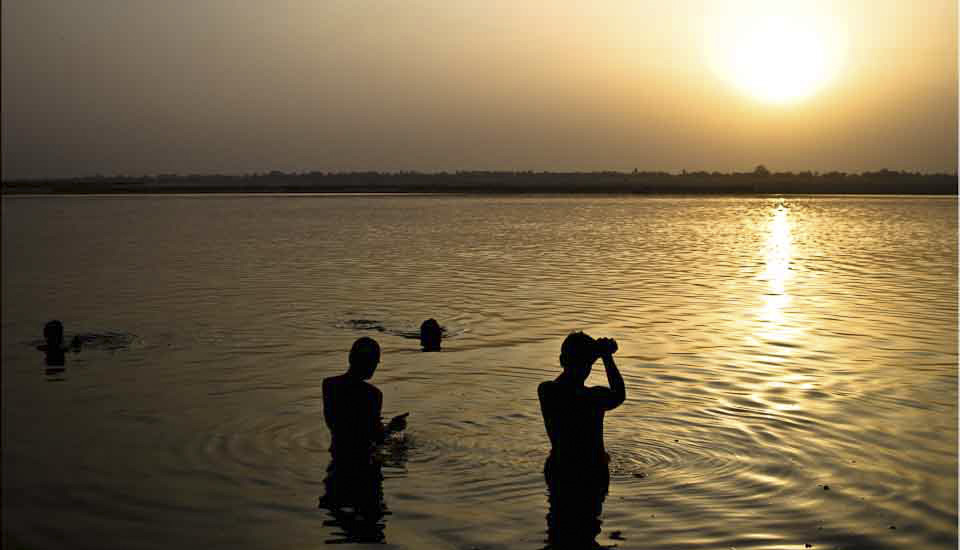
- Performing the Ganga Aarti from Dasaswamedh Ghat, Varanasi
- Buddha Head from Shwedagon Pagoda, Myanmar
- Harry Clarke Window from Dingle, Ireland
- Novice Monk Shwe Yan Pyay Monastery, Myanmar
Packets of 10 for $AU50.
Or - pick any photo from my Flickr or Wanders blog photos.

.jpg)
.jpg)
.jpg)








 And, I wondered again how the locals manage it, year after year –