Blue Domes and Whitewashed Walls Santorini is – as they say – everything a Greek island should be. And Oía, that charming village sitting on the northwestern edge of a stunningly beautiful caldera, is the absolute cream.
I had to keep pinching myself!
Santorini lives up to its hype. This southernmost island in the Greek Cyclades is probably the country’s most-visited island. Rightly known for its extraordinary natural beauty, it is a popular travel destination for people the world over.
It was certainly on my bucket list!
Of course, the downside of the island’s popularity is that is also expensive and crowded. I read one blogger who complained about the price of his coffee – even while extolling the view that comes for free! During the peak season – July and August – the island is packed with tourists. Cruise ships offload thousands of day-trippers to add to the throngs.
I was travelling in late-September, during the more-reasonable and less-crowded shoulder season – and Covid19 lockdowns had not long since ended. Even so, there were queues of tourists and Instagrammers waiting for their turns at the most iconic viewpoints.
But, I was finally there! The weather was glorious, the food and wine were sublime, and the views were everything you could hope for.
We had arrived on Santorini from Naxos the day before, and spent the afternoon exploring the capital town of Fira where we were staying (see: Iconic Blue and White). On this particular morning, I – and one other person in the small group I was travelling with – had got up very early to walk from our hotel in Firostefani, north along the edge of the ruined caldera that formed the island, to the picturesque town of Oia (see: A Santorini Sunrise).
When we arrived there, we were free to explore Oia itself before checking out some of the wineries Santorini is also famous for.
Coming into Oia As we come to the tail end of our walk from Fira – some 10+ km (6.2 mi) away – the whitewashed houses and blue-domed churches on the outskirts of Oia come into view.
Church of Agios Georgios This large, creamy yellow Orthodox church with its contrasting blue domes stands out from all the other white churches in Oia.
Oia Those iconic whitewashed buildings and blue Orthodox church domes are everywhere you look. The other Santorini islands that are the remains of that spectacular caldera wrap themselves around us on the horizon.
The Virgin Mary of the Akathist Hymn Church Every Greek church seems to have several names! This one is also known as the Church of Panagia Akathistos Hymn. With its six-piece bell tower, it is a commanding example of Santorini’s typical architecture. Located in the main square, it is the most famous church in Oia.
Photo Shoot Our guide leads us to “THE spot” – but, plenty of people are there already with their selfie sticks, or with actual photographers in tow!
A Classic View This is the Greek Orthodox dome that makes it into so many postcards. Far below, life goes on on the flooded caldera that is now a protected harbour. (iPhone12Pro)
Pumice Cliffs Buildings cling to the rough cliffs that rise up steeply from the water.
Souvenir Stand Watercolours and postcards are popular souvenirs. (iPhone12Pro)
Looking Down to Ammoudi Bay The inter-island ferries land in Órmos, further south on the island – but there are plenty of tourist boats in the fishing port of Ammoudi Bay.
The Bells of Oia Another classic postcard view – with just enough breeze to lift the flag! (iPhone12Pro)
Bells over the Caldera That view! Who can get enough?
The Castle of Oia on the Clifftop The ruins of the 15th-century Venetian fortress are a popular sunset spot. We won’t be in town that long.
Through the Gate
Windmill Windmills like this one dot the islands. In the old days, these windmills were used to grind grain. This famous windmill in Oia is a signature Santorini landmark. Although the windmills are no longer functional, many – like this one – have been preserved as a reminder of the island’s past. Some have been retrofitted as tavernas or tourist accommodation.
It isn’t ALL Whitewash! Rendered stone was a common building material. In a region prone to earthquakes, plenty of buildings like this mini market are in need of repair. (iPhone12Pro)
Oia on the Edge Who can resist one last look before we head back to our hotel in Fira?
The Venetsanos Winery In the afternoon, we head back out to learn about the unique (and expensive!) Santorini wines.
The History of Santorini Wine Santorini’s Mediterranean climate, unique terroir, and ancient vines all contribute to the exceptional quality of the local wines.
Boats on the Caldera Venetsanos Winery is located overlooking the magnificent caldera, right above the port of Athinios, so we have magnificent views for our tasting.
Young Server at the Venetsanos Winery Fortunately, we have some snacks to compliment our wine.
Modern Sculpture and Old Equipment Our second wine tasting was at the Estate Argyros.
Over the Vineyards to Anafi Estate Argyros is in Episkopi Gonia, a village on the other side of Santorini, so we have views over the Aegean Sea.
Our Sommelier Our hostess explains the wines as we taste them.
Last Light over Anafi Meanwhile, the sun sets on our last evening on Santorini.
I returned to my room a little tipsy and a whole lot sad knowing that this was my last day on this spectacularly beautiful island.
Bald Eagles on the Rocks The eagles that congregate around the waters of Haida Gwaii, off the northwestern coast of Canada’sBritish Columbia, are so numerous that they almost seem commonplace. Photo: 14June2022
You are never far from water on Haida Gwaii.
This collection of around 150 islands in northwestern British Columbia (BC), Canada is home to the people of the Haida Nation – and has been for at least 13,000 years.
The archipelago sits between 55 and 125 km (34 and 78 mi) from the BC mainland to the east. For animals and people alike, the only way to access the islands is by water or air. Most people arrive – as I did – via a weather-dependent 7 or 8 hour ferry trip across the shallow Hecate Strait from the northern BC city of Prince Rupert (see: Local History in Wood and Water). The relative isolation from the mainland has resulted in a unique bioculture that is home to many endemic plants and animals.
People’s lives here are integrated with the surrounding waters, with boats and seaplanes being the only means of accessing many locations. I spent a full on one boat, visiting abandoned ancient Haida villages that cannot be reached any other way (see: Gwaii Haanas National Park and Haida Heritage Site).
Bald eagles (Haliaeetus leucocephalus) live here, watching over the waters in search of prey. The only eagles unique to North America, they are fast and powerful hunters with extraordinary eyesight. Perhaps less elegantly, they are alopportunistic – and can be seen eating carrion on roadways or scavenging near boat launches and rubbish tips. It is such a contrast to the days of my youth, when they were on the brink of extinction, and we dewy-eyed idealists backed the ban on DDT and helped collect it for managed disposal.
The birds have bounced back since then, and are present in countless numbers in these northern woods and waters. I never tire of watching them.
A Modest Breakfast After a start like this, you’d better get out and expend some energy! (iPhone12Pro) Photo: 13June2022
Canoes on the Foreshore Boats are the lifeblood here. Modern fiberglass canoes and aluminium outboards have mostly replaced the beautifully carved and painted red-cedar log canoes that the Haida are known for. (iPhone12Pro) Photo: 10June2022
Overlooking the Islands of Skidegate Inlet You are never far from water in Haida Gwaii. My first modest room in Daajing Giids – formerly known as Queen Charlotte – gave me views over Skidegate Channel. (iPhone12Pro) Photo: 10June2022
Waiting for the Next Floatplane Skidegate Inlet is home to a number of commercial and private floatplane services. These small propellor planes are the primary means of reaching many difficult-to-access spots around the islands. Between flights, the pier is quiet. (iPhone12Pro) Photo: 13June2022
Evening on the Charlotte Wharf The boat harbour, by contrast, is a noisy jumble of vessels. It is nine o’clock at night, but at 53° north, and just over a week before summer solstice, the days are long. (iPhone12Pro) Photo: 13June2022
Scavengers on the Waterfront Bald eagles will happily scavenge for their food. Someone has left offal on the Skidegate boat ramp. Photo: 14June2022
Keeping Watch I’m parked in the queue for the BC Ferries vessel which will transport me and my rental car to the next island. This gives me time to watch the birds – who are not very bothered by my presence. Photo: 14June2022
Juvenile and Adult Bald eagles are relatively slow-growers, with juveniles typically retaining their dark brown feathers, overlaid with messy white streaking, until their fifth year. Look at the powerful curve of those beaks! Photo: 14June2022
Those Eyes! It is not for nothing that we refer to “eagle-eyed”. Bald eagles have 20/5 vision: they see at 20 feet what we can see at 5 feet. They also have UV light perception and a 340-degree field of view. Photo: 14June2022
On the Rocks Bald eagles truly are magnificent creatures, growing to between 4.5 to 6.8 kg (10 to 15 pounds), with wingspans of up to 2.4 meters (8 feet). The large crows in the scene give you an idea of their size. Photo: 14June2022
On the Alliford Bay Ferry BC Ferries are an extension – albeit, a user-pays extension – of the local highway network. I was on my way from Graham Island (Kiis Gwaay) in the north, across the Skidegate Channel to Moresby Island (T’aawxii X̱aaydag̱a Gwaay.yaay linag̱waay or Gwaay Haanas) in the south.
Channel Marker on Skidegate Channel It is a 20 minute crossing, with plenty of scenery along the way.
Grasses on Moresby Island Off the ferry, I take the time to regroup, check maps, and appreciate my surrounds.
Thimbleberry – Rubus Parviflorus It has been a cold spring: the local berries are flowering, but not yet showing any fruit.
A Curve of Beach
Black Guillemot or Tystie – Cepphus Grylle Neither my lenses nor my temperament lend themselves to birdwatching, …
Semipalmated Plover – Charadrius Semipalmatus … but when birds present themselves, I do my best! These guys were tiny: sparrow-sized.
House Near Sandspit Only 325 people (2021) live on Moresby Island, so there is plenty of space! I’m guessing these people work at the little airport in the background.
Salmon Burger and Caesar Salad There aren’t a lot of services on Moresby Island, so locating the pop-up food-van was essential – and rewardingly tasty. (iPhone12Pro)
Sandspit Harbour Back on the waterfront …
Juvenile … I get the opportunity to watch more eagles go about their day.
Eagle in Flight (iPhone12Pro)
Ferry on the Sound The ferries continue their passages – silent except for the occasional sounding of their whistles. Photo: 14June2022
The waters around Haida Gwaii are magical, surrounded by magnificent mountains and teeming with life.
I enjoyed every minute I spent in this beautiful archipelago.
Vegetable Sales I love the freshness that you can almost taste in the vibrant colours of the vegetables on offer in the street markets in Nowhatta, Srinagar, in India’s Kashmir. I especially love the friendly faces of the vendors who know perfectly well that I am unlikely to buy anything.
Any visitor to these pages knows I love markets.
So, on my first day in Srinagar, the largest city and summer capital of the union territory of Jammu and Kashmir, India, I was in my element. The itinerary had us walking through various old streets and markets.
I was travelling with a small group of photography enthusiasts. We spent part of our first morning in the old streets around Srinagar’s oldest mosque (see: Shah-e-Hamadan Masjid and Srinagar Street Scenes).
From there, our walking trip took us through the narrow bustling streets in the old city of Srinagar, where I had plenty of time to interact with the locals and make naturalistic environmental portraits of people as they went about their daily lives.
We slowly made our way towards one of the largest mosques in Kashmir: the Jamia Masjid in Srinagar Nowhatta. The extensive Jamia Market complex which neighbours the mosque houses traditional arts, handicrafts, jewelry, spices, and fabrics – and attracts tourists and locals alike.
Later in the day, we visited a small, crowded workshop to learn about the process of making Kashmir’s famous papier-mâché (paper mache) products.
Of course, all the handicrafts and other items for sale were quite beautiful – but I was more interested in the people themselves.
On a photographic note: I was dealing with new cameras that are of a different make to my old ones. I couldn’t work out many of the settings and couldn’t get the focal points where I wanted them. As a consequence, some of the pictures I took had very ‘soft’ focus, or focus in the wrong spot. Hopefully, none of those will slip through here – but, as my eyes are also a bit ‘soft’, anything is possible!
Brush Salesman The narrow streets on the short walk between the Shah-e-Hamdan Mosque and the Jamia Masjid are lined with shops packed with products. Even so, some vendors manage without a shop-front, like this young man with his bicycle laden with brooms.
Warm Smiles I can’t help but admire the relaxed and friendly demeanor of the local shopkeepers.
In the Spices Many of the shop spaces are packed full – with hardly any room left for their minders
In the Grains Many of us who have spent our lives in chairs have no hope of being able to sit and kneel the way that even older people can in Asia!
In the Copper Every little shopfront has its own specialty.
Metal Worker Sparks fly in a dark corner where a man hammers out a tin cup.
Surrounded by Copper Everyone has a phone – and can keep themselves occupied between customers.
Fresh Vegetables I can hear the crunch! (iPhone12Pro)
Tallying the Purchases I love watching the interactions in markets – there is always so much going on.
Old Man There are some real characters in the streets.
Lotus Roots
Making and Selling Samosas Freshly cooked food is never far away. (iPhone12Pro)
Samosa Cook in a Topi
Woman in the Apples Most of the vendors here are men; this was the only woman I saw.
A Kashmiri Kitchen We made a short stop in a traditional Kashmiri family home – a narrow, multi-story building that houses an extended family. I love the shiny utensils hanging in their niche.
Speakers on the Rooftop The design of the Jamia Masjid is influenced by Persian architecture, with pagoda-like pyramidal roofs at each of its four corners. The mosque was originally built between 1394 and 1402, and has long been the centre of religious and political life in Srinagar.
Selling Islamic Decor Jamia Market is next door to the Jamia Masjid. Unsurprisingly, an Islamic wall-art store with Arabic calligraphy and motifs is the first shop that catches my eye.
Dyeing Fabrics In another corner of the market, men are hand-dyeing fabrics.
Portrait of a Young Man
Shiny Pots Later in the afternoon, we stop in at Kawoosa Arts and Crafts to learn how papier-mâché is made.
Hanging Decorations The workshop exports goods all around the world. Piles of products fill every corner as shipments are readied; small cones hang from the wooden slats in the ceiling while the requisite number is made for an order.
Moulding the Paper Layers
Applying Paint and Shellac
Delicate Paintwork An artisan finds a patch of window light to illuminate the platter he is working on. It is time-consuming and delicate work.
Outside the Window
Lacquered Paper Mache Inexpensive – but beautifully made – trinkets like these can be found all over India, but there is something special about finding them at their source. (iPhone12Pro)
I love shopping with the camera! It was a great introduction to this colourful and unique region, and I was very much looking forward to experiencing more.
I was quite pleased with myself: I managed to not buy anything.
A Pedicab in Mainstreet It is not yet noon, but the tropical sun beats down on the tidy packed-dirt street running through the little settlement of Doom. Becaks – or pedicabs – are one of the primary modes of transportation – for goods and people – on this car-free island in Southwest Papua, Indonesia.
Don’t panic!
Doom Island, also spelled Dum, and pronounced /dɒm/, actually means “island with many fruit trees” in the language of the Malamooi, the local indigenous people. This small island sits a half a degree south of the equator, just about 3 kilometres (1.9 mi) away from mainland Sorong, the largest city and capital of Southwest Papua, Indonesia.
We were not doomed, merely plagued – plagued by mechanical, bureaucratic, and communication problems that I have alluded to before (see: Pulau Manim and Pulau Wayag). We were meant to be in the pristine waters around Raja Ampat, but instead were anchored in the industrial port of Sorong, the logistics hub for Indonesia’s thriving eastern oil and gas frontier.
Still, lemonade from lemons …
The just-over 100 passengers on our small ship, the Australian-registered Coral Geographer, were serviced by a wonderful tour crew. The crew organised island visits for us, making use of the vessel’s tenders while the mother-ship was hobbled.
So, not long before high-noon one equatorial day, we set off like mad dogs and Englishmen to a nearby island.
I’m not the only one who has noted the unwelcoming appearance of the docks on Doom (see: The Contented Traveller: Doom Island), while also admiring the tidy town and the friendly locals. This tiny island – just 5 square kilometers, or 500 hectares – has a rich and varied history. It was once a part of the Sultanate of Tidore – a major regional power known for its spice trade – and first appeared in Dutch records in 1863. It was colonised shortly thereafter and became a Dutch administrative post in the early 1900s. Many of the cultural, religious, and architectural influences of that era linger.
During the Second World War, Japanese forces occupied and fortified the island, and parts of the network of tunnels and bunkers they built survive to this day – in spite of sustained bombardment by American and Australian aircraft during the war.
Today, the densely populated town differs from nearby Sorong in that it is mostly inhabited by people who originate in other regions: they are predominantly of Javanese, Butonese, Buginese, or Torajan descent.
Three local guides met us and set off on tours of the island’s historical high-points. I was more interested in getting away from the gaggle of fellow passengers who were being led around in the unremitting heat, and wandered away from them to explore by myself. The island is tiny – just 5 square kilometres, or 500 hectares – so there was little chance of getting lost.
Still, I turned on my walking tracker – just in case!
Houses on the Shore The shore is lined with ramshackle wooden and corrugated iron houses, and the jungle rises close behind.
Two Local Lads Once we had been greeted to the island, I broke away from the group and set off into the streets. These young lads are a perfect illustration of the different ethnic groups that have made Doom home.
YPK Bethel Doom Junior High School Depending on the source, there are between 9,500 and 16,000 inhabitants on the island. Either way, the local high school is tidy, and a reasonable size.
Rangoon Creeper or Chinese Honeysuckle – Combretum Indicum The vegetation in the tropics is often sprawling and random – and always colourful.
A Colourful Pedicab Strangely enough, becaks are exclusive to Doom – you don’t find them in nearby Sorong.
“Motor Becak” The becak drivers are kept busy – mostly with local business, although some of the ship’s passengers make use of them.
Local Police Station
Young Girl The locals are as curious about me as I am about them – and very willing to be photographed.
Saleslady Some of the houses along the main street have tables of produce for sale outside.
Father and Daughter
Another Veggie Stand Another stand with onions, garlic, and other assorted vegetables, fruit, and spice, is laid out in the shade of a porch.
Woman in Red The saleslady is happy to stop and smile as I pass.
Local Children Everyone wants their picture made – with the hand gestures and funny faces so common across the region.
Young Child I loved this solemn little face!
Young Men Even the local lads are happy to give me a smile – just a tilt of my head and a lift of the camera, and they strike a pose.
Local Residents Everywhere I go, locals gather for my cameras.
Young Women
A Quiet Street The streets are clean and empty under the almost-noon sky.
Jesus on a Wall This is a predominantly Christian community.
Mosque Dome Even so, there are a couple of mosques on the island.
Corrugated Walls Pathways run between some of the buildings, and I get occasional views of the ocean.
Denny in the Becak Rank Back at the wharf, I find a seat and some shade – and have a lovely conversation with the clever and enterprising young man who is managing the drivers.
Boats on the Wharf A jumble of boats are tied up at the wharf where I wait for our tender.
The residents on this delightful little island full of fruit trees certainly made me feel welcome, and i enjoyed my wander around their community.
Unnamed and Unsigned This nature-inspired bas relief sculpture was carved in the 1980s into the wall of what-was-then a mostly-deserted towpath along the Lot River in the south of France. Today, Daniel Monnier’s work – often referred to as Le Lot – is a magnificent drawcard on the now-popular walk between Bouziès and Saint-Cirq Lapopie.
The Lot is the longest tributary river in France. Its source is high in the Cévennes, from where it winds around 485 kilometres (301 mi) in a mostly westerly direction across south-central France, flowing into the Garonne near Aiguillon in the southwest.
From the Middle Ages until into the 20th century, the river was the cheapest and easiest way to transport goods. Gabarres (barges) carried iron ore, coal, grains, tobacco, and wine down river to Bordeaux. The return trips up-river carried salt, stockfish, and manufactured goods.
Trips upriver were undertaken with the aid of teams of men or draught animals who walked on shore alongside the river on towpaths (chemins de halage) with ropes, pulling the barges upstream against the current.
Just outside the tiny hamlet of Bouziès, about a thirty minute drive from Cahors, limestone cliffs rise steeply from the water on both sides of the river – making walking along the banks at water-level impossible. In a feat of engineering between 1843 and 1847, almost a kilometre (0.62 miles) of 2-metre (6.6 foot) high, open-sided tunnels were carved out of the cliff, allowing haulage teams to pass. It is the only river towpath in France known to have been built this way.
Not so many years after the towpath was finished, the train arrived in Bouzies. Commercial shipping on the Lot stopped and the river was removed from the list of navigable waterways in 1926. The path became overgrown, and was more-or-less ignored until an artist from Toulouse – Daniel Monnier – found it while on a walking trip in 1984. He spent two years getting permits from various local authorities before commencing his self-funded bas relief that would be part of the natural scenery around it.
Today, Daniel Monnier’s semi-abstract representation of the river and its fauna, flora, rocks, fossils, and whirlpools is one of the highlights along the walk from the port of Bouziès and the medieval village of Saint-Cirq Lapopie.
I was staying with friends in nearby Cahors (see: Modern Life in a Medieval City). We parked near the start of the Chemin de Halage, with the intention of walking the full 3.5 km (2.2 mi) to Saint-Cirq Lapopie – but the weather was against us.
So, we walked out to the end of the Chemin de Halage and back to the car.
This decision allowed me more time to enjoy the wonderful sculptures along the way, the bas-relief on the towpath itself, and the scenery all around.
Grab an umbrella and come along!
Bouziès Parking Lot It was a beautiful autumn day when we reached the parking lot at the start of our walk. The white and ochre limestone cliffs rise steeply on the other side of the river.
Overgrown Waymarker in the Green
“Dry Dock” Before the arrival of the railways, this was an important port. In 1990, the river was reopened to recreational boats. You can rent pleasure boats and houseboats in nearby Cahors, or can put your own boat to water either side of this area.
Lines and Curves I love the lines and textures of old wooden boats.
Grass Growing This particular boat has been out ot the river for a while!
L’Acanthe – Acanthus Acanthus are a flowering plant native to the Mediterranean Basin.
On the Path The sky closes in as we start out on the flat and even path from the carpark to the Halage.
Les Herculéennes De Bouzies Installed here in 2017, The Herculeans are a large work in locally-sourced wood and stone. According to the long interpretation on a nearby sign-board, the artist, sculptor, and architect, Laurent Reynés, sees the work as “contemporary Neolithic art” providing a direct link between Nature and Man.
The Woods
“Borne 1989” This elegant sculpture by artist Daniel Monnier is carved into a boundary stone from the nearby hamlet of La Trapelle.
Into the Cliffs Soon, the limestone cliffs close in …
Look Up! … and rise up all around.
Cave in the Cliff The limestone is pockmarked with caves and crevices – many which have been used; the Pech Merle Caves near here contain Paleolithic drawings which are over 29,000 years old.
Rain on the River
Ganil Lock To control water flow on the river, 75 weirs and a number of locks were built in the early 1800s. The manual lock in the distance has been restored and is in regular use.
“Le Lot” This beautiful and surreal bas relief depicting the life of the river took Daniel Monnier nine months across 1987 to 1989 to sculpt.
Along the Towpath The carved-out cliff is rough-hewn either side of of the bas relief.
Walkers on the Path The path leads away from the river and back into the green.
Pleasure Boat on the Lot
Cottage in the Mists The weather deteriorates, so we turn around …
Daniel Monnier’s Le Lot … and walk back – appreciating the bas relief from the other side.
Wildflowers
M Le Mammouth “Le fabuleux voyage – À la recherche de la lumière….” “The fabulous journey – In search of the light…” Some of the Prehistoric drawings in the nearby Pech Merle Caves include depictions of mammoths. This one was sculpted by Eric Manes-Malmon and Yvan Mathis in 2013, and installed here in 2016.
Passing the sculptures again means we are almost back at the car.
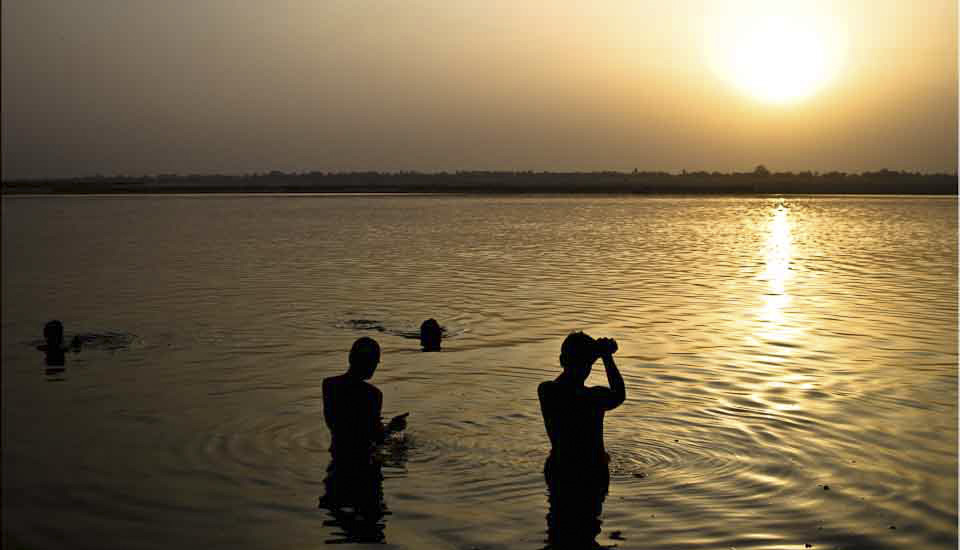
- Performing the Ganga Aarti from Dasaswamedh Ghat, Varanasi
- Buddha Head from Shwedagon Pagoda, Myanmar
- Harry Clarke Window from Dingle, Ireland
- Novice Monk Shwe Yan Pyay Monastery, Myanmar
Packets of 10 for $AU50.
Or - pick any photo from my Flickr or Wanders blog photos.

.jpg)
.jpg)
.jpg)

 I returned to my room a little tipsy and a whole lot sad knowing that this was my last day on this spectacularly beautiful island.






 After all, it was only our first full day!


 Until next time,


 And the rain continues!