The Changing of the Greek Guard Every Sunday, at 11am, there is a formal changing of the guard in Syntagma Square, Athens. The traditionally dressed Evzones, or Presidential Guards, are a ceremonial infantry unit that guard the Tomb of the Unknown Soldier and the Presidential Mansion.
Having spent most of my life in what the West calls the “New World” or the “Colonies”, I haven’t had a lot of access to the great cities of Europe. So, when the opportunity arises to visit one of those historical cities, I am thrilled!
I had two short stops in Athens: I had spent a week wandering around Crete on my own (see: Weekly Wanders Crete) and flew back into Athens to meet up with a small group with whom I then toured the mainland. After a week, we returned from the Peloponnesus (see: Ouzo for Breakfast) and stopped in the city for two short nights.
Of course, it wasn’t long enough! But the hotel chosen by the tour company was exceptionally well-located: a short walk from Syntagma Square and with views of the city and the Acropolis from its rooftop restaurant. So, I made the best of it.
Join me for some highlights.
The Parthenon on the Hill I arrived into the metropolis very late afternoon, but had time to appreciate the view from the rooftop restaurant …(iPhone12Pro)
Sunset over Athens … before the sun came down over the sprawling city of Athens. (iPhone12Pro)
Parliament House The next morning, phone and map in hand, I set off for a walk up the road, and found myself at the austere Neoclassical Parliament House on Syntagma (Constitution) Square. Built between 1836 and 1842, it was originally the palace of the King of Greece. (iPhone12Pro)
Aischylos – the Father of Tragedy (525-456) For my morning walks, I always aim for the green patches on the map. That lead me past a number of bronze statues on the main road …(iPhone12Pro)
Georgios Souris – Greek Poet (1853 – 1919) … and to busts of important local poets in the charming Zappeion Garden. (iPhone12Pro)
The Rooftops of Athens I was back at my hotel in time for breakfast on the rooftop, and enjoyed some clear morning views. Unfortunately, the lack of smoking prohibition meant that my neighbour, six inches away from my table, was puffing away on a foul-smelling local cigarette. (iPhone12Pro)
The Erechtheion and Athens The next day, my new group and I had an early-morning tour of the Acropolis (see: On the Acropolis).
Temple of Olympian Zeus On our way through the centre of the city, we stopped at the Temple of Olympian Zeus. Originally started in the 6th century BCE, it was finally finished under the Roman Emperor Hadrian in the 2nd century CE. It fell into disuse after being pillaged in 267 CE, and was mostly hidden by scaffolding during our visit. (iPhone12Pro)
The Olympieion At one time, this was the largest temple in Greece, but it is hard now to get a sense of its former glory.
Digging at the Temple Archaeologists perform painstaking excavation works under the supervision of the Ephorate of Antiquities.
Fallen Corinthian Column Once, the temple included 104 colossal columns of fine marble.
Flags in the Stadium Our next stop was at the Panathenaic Stadium, built entirely of marble in 330-329 BCE. It was the site of the first Modern Olympics in 1896 and is still in use today.
Statue of Archbishop Damaskinos by Greek Sculptor Fanis Sakellariou Damaskinos Papandreou (1891 – 1949) was the archbishop of Athens and All Greece from 1941 until his death in 1949. He was also the Prime Minister of Greece for a time.
Holy Metropolitan Church of the Annunciation to the Virgin Mary This magnificent three-aisled basilica was begun in 1842 and finished 20 years later. It was largely built from marble recovered from 72 demolished churches around Athens.
Athens Street One of the joys of travel has to be the unique shopping experience! I had a wonderful time exploring the shops in the Plaka neighborhood. It has been described as a village within the city (see: Athens: the Plaka).
Flag On The Hill Plaka sits under the rocky outcrop that houses the Acropolis.
A Local Hero In a public square nearby, a statue pays tribute to Yannis Makriyannis (1797-1864), a military officer who participated in the liberation war of Greece against Ottoman Empire.
Arch of Hadrian Our last stop before we drive out of the city towards Meteora (see: A Walk through Ancient Monasteries) was at Hadrian’s Gate, an 18m (59 ft) monumental gateway built in 131 CE.
The Pigeon A week later I was back on the Athens hotel rooftop fighting a pigeon for my morning toast. (iPhone12Pro)
Carrying the Standard There was already a crowd in Syntagma Square when I arrived for the Sunday morning changing of the guard.
Fancy Sleeves and Bayonets Every element of the distinctive Evzone uniform has a meaning tied to Greece’s modern history and national identity. The red Pharion (cap) they wear symbolises the blood spilled by the warriors during the liberation struggles, and the black silk tassel represents tears for the losses endured.
Stepping Out The Fustanella, the kilt, is made of 30 meters of white fabric with 400 pleats, which represent the number of years of Turkish occupation. The Fermeli (vest) is beautifully hand-embroidered with cultural designs in white or gilt thread.
National Police Officer
Stepping Out The uniform of the Cretans, with its blue breeches and white leather boots, is worn for parades and official ceremonies. (iPhone12Pro)
Pom Poms Traditionally, the large black tassel on the tsarouhi (shoe) concealed blades that could be used in close-range combat. (iPhone12Pro)
Officer Marching The uniform of the officers more closely resembles the dress worn by klephts – the brigands and/or freedom fighters who battled against the Ottoman occupiers. Officers are armed with a pála, a kilij-style curved scimitar. (iPhone12Pro)
Street Musicians Evening in the cobbled streets near our hotel are charming – and a little cooler than the wickedly hot days.
The Church of Panagia Kapnikarea There is a new delight on every corner. Probably built around 1050 … (iPhone12Pro)
Busking … the beautiful little Church of Panagia Kapnikarea is one of the oldest in Athens. (iPhone12Pro)
In the Streets of Monastiraki We are headed to the Monastiraki district for alfresco dining across from the Museum of Modern Greek Culture and evening views up to that ever-present Acropolis. (iPhone12Pro)
Night Lights on The Acropolis Back at the hotel after dark, I snuck up to the now-quiet rooftop for one last look at that incredible monument on the hill. (iPhone12Pro)
Collecting Wood Chips On the long wharf, privately owned by Allied Natural Wood Exports, a freighter fills its belly with controversial wood chips.
The little Port of Eden, near where I live in Far South New South Wales (NSW), is a busy working seaport.
Situated on Twofold Bay, halfway between Sydney and Melbourne, it is one of the deepest natural harbours in the Southern Hemisphere. This makes it ideal for large vessels – including the Royal Australian Navy ships who regularly pull into their designated wharf while on maneuvers or to access the nearby land-based munitions store. The port hosts an Australian Border Force office, and services the occasional import and export vessels, with the principal export being timber products – including wood chips from the local factory. It has long been home to a small fishing fleet.
Today, tourism is a growing business.
Every year, principally in October and November, thousands of humpback whale migrate close to the Eden coastline as they make their way south to feeding grounds in Antarctica. Many are females, with new calves born in the warmer waters further north. For several months, whale watching trips can advertise ‘guaranteed sightings’ of these magnificent creatures.
An expanded dock in Eden has seen a growth in the number of cruise ships stopping in town, with 41 of them stopping during the 2023/24 season. Smaller operators take tourists on fishing charters or whale watching trips. A number of pleasure boats and recreational fishing vessels make their home here, and it is a welcome refuge for long-distance yachts in inclement weather.
To keep a listening watch over the many vessels on the waters here, Marine Rescue NSW operates a Search and Rescue Centre (SARC) in Eden – and it was as a volunteer with that organisation that I was invited onto an October whale-watching cruise on the Cat Balou catamaran. The vessel and her company have changed owners since, but they are still whale-watching along the Sapphire Coast.
This was not my first trip out on that catamarin (see: Watching Water and Watching Water 2), and I had learned that seeing a whale was a bit like the blind men and the elephant: you might see a blow, or a hump, or a tail, but you were unlikely to see the whole animal!
Still, I love being on the water, so I jumped at the offer. We were still in the grips of Covid-19 restrictions, which meant reduced passenger numbers on the boat, making it even more special.
On a photographic note: my brain was on a go-slow, and I lost a lot of pictures because I didn’t set my camera speed to compensate for the motion of the vessel on the water. Oh well!
I hope you enjoy what I salvaged:
Leaving Twofold Bay Twofold Bay was named by English explorer and naval surgeon George Bass (1771 –1803) for its two bights. A range of working vessels berth here in Eden Harbour.
Tugboats in Snug Cove With large ships visiting regularly, two tugs sit at the ready in the harbour.
Pelicans in Snug Cove Where there are fishing boats – and fish – there are bound to be gulls and pelicans.
Australian Pelican – Pelecanus Conspicillatus Australian pelicans are large water birds – although they are only medium-sized by pelican standards. They have the longest bill of any living bird.
Cat Balou There is plenty of room on the deck of the catamaran to move around.
Ship on the Navy Dock It is a busy day on the water. A large freighter is moored here on the Navy Wharf; in the distance, another freighter takes on a load of wood chips at the private pier.
Workers on a Visiting Ship We pull along side, and I can watch the seamen who look tiny on the decks. I couldn’t distinguish their language, but a lot of the seafarers on these freighters are from the Philippines.
Red Rocks on East Boyd Bay This coast is known for its sapphire blue waters, white beaches, and red rocks coloured by iron oxide.
Cormorants on the Marker Great cormorants (Phalacrocorax carbo) are one of three types we see regularly around this coast.
Private Wharf Timber exports are still a big part of the local economy. The bush fires of 2019-20 raged through here in early January 2020: a pile of woodchips from the mill ended up burning for days. Blackened tree trunks are still visible from the water.
Boyd’s Tower The square tower on Red Point was built from Pyrmont (Sydney) sandstone in 1847 by Scottish entrepreneur Benjamin Boyd. The January 2020 fires razed the bush here; although the ground is greening up, the trees are still skeletons.
South of Red Point We round the aptly-named Red Point. The commanding twenty-three metre (75 ft) Boyd’s Tower was intended as a private lighthouse, but was only ever used as a lookout in the days of Eden’s whale hunting.
Whale Tail The eagle eyes of our captain have spotted a whale.
Dolphin Abstract A school of dolphins play with the boat. We get bottlenose and common dolphins around here, but with the distortion from the waters, I have no idea which these are.
Humpback Back As I said earlier, the shape and enormous size of a humpback is impossible to discern from the bits that make it above the water.
Dolphin The dolphins are a joy to watch as they bullet past the boat.
Splash! Clearly, the whales are breaching the water – just not where we can see them properly! That is Mount Imlay in the background, rising up from the landscape.
Another Whale Tail Closer to the vessel, the best we can spot are tail-slaps …
White Fluke … and the flash of a tail’s underside as the giant mammal does a deep-dive and disappears.
A Suggestion of Dolphins
The Captain’s Chair
Australasian Gannet – Morus Serrator Given how uncooperative the whales and dolphins had been …
Morus Serrator – Australasian Gannet … I was thrilled to capture some local bird-life!
White-Bellied Sea-Eagle – Haliaeetus Leucogaster The eagle was much further away, but I love watching them against the sky.
Colourful Vegetables I love the fresh-food markets of India, with their multicoloured foodstuffs and smiling people. This one in the town of Usilampatti in Tamil Nadu offered a range of fresh produce.
One of the things I love about India – and which always surprises me – is the extent and beauty of the countryside.
As of April 2023, India was estimated to have overtaken China as the most populous country in the world. In spite of that, you can drive great distances through an agrarian landscape, where people are thinly scattered as they engage in labour-intensive farming activities and small industry.
We were driving on a small-group adventure across South India in a mini bus. Having toured Tamil Nadu and Pondicherry in the east for nine days (see: Weekly Wanders Tamil Nadu), we were en route to neighbouring Kerala in the west.
We had driven for about an hour, west out of Madurai (see: Life Colour and Crowds), passing large fields – both fallow and neatly planted – before we stopped in Usilampatti for a walk through the morning market. Usilampatti is classified as a ‘town’, even though it has ten times the population of my home town!
Any visitor to these pages knows I love markets – so I was very pleased with the stop and the chance to interact with the locals away from the typical ‘tourist sites’.
The terrain around Usilampatti consists of pocket of red clay, making the area home to small brickwork factories. We stopped at one to watch the labourers form up the clay for sun-drying and kiln baking. Our guide makes this particular cottage industry a regular stop on his tours, and had collected all our hotel toothbrush kits for the children of the workers. I was pleased to see that the children themselves were in school: literacy rates in this part of India are much better than the national average.
Join me exploring some ‘town life’ in Southern India:
Scenes from a Bus : Mountains in the Distance We are not far out of Madurai on India’s NH85 when we leave all traces of that ancient city on the Vaigai River behind. (iPhone 12Pro)
Man with his Vegetable Baskets It is barely 9:00am in the morning but the Usilampatti market is already hot and bustling. (iPhone12Pro)
Aubergines – Eggplants – Brinjal – Baigan Whatever local name you give to solanum melongena, it is a staple in Indian cooking.
Baskets of Veggies in the Market The colours everywhere are wild!
Bitter Melon – Momordica Charantia This fruit is used in numerous dishes in South Indian cuisine.
Woman Fixing Flowers Everywhere you go in India, you find flowers woven into garlands for temple offerings. It is the seated patience of the people painstakingly putting the garlands together that always amazes me!
Flower Stalls There are a number of outlets selling garlands; they all look the same to me!
Fish Sellers I don’t know if these are fresh or salt water; we’re a decent distance from the ocean or any sizeable lakes.
Boys in the Market
Men in the Market The locals are all friendly and welcoming.
Market Corridor Light and dark alternate wildly with makeshift shade covers in place to protect the produce.
A Man in the Coconuts
Fruit Truck Near the main road outside the market, an opportunistic vender tries to capture passing trade.
Usilampatti Brickworks A short distance down the road, we stop at a small brick factory, and learn how clay building bricks are made. This is a labour intensive exercise, and historically, working conditions in brick yards were very poor (see: The Dark Side of the India Economic Boom).
Rows of Bricks Brick manufacture is growing as the demand for building products expands. Even a small factory like this one can produce 16,000 bricks a day.
Moving the Brick Forms There is concern about the reduction in fertile topsoil as a consequence of brick production. It is hard and repetitive work: a slurry of brick mud is packed into a form, smoothed out …
MNR Bricks … and stamped with a company logo before the form is removed and the bricks are left to dry in the sun.
Patterns in the Brickworks I love the pattern the repeated bricks make. (iPhone12Pro)
Woman at the Usilampatti Brickworks We thank the co-owner of the factory and take our leave.
Rows And Lines Two hours later, the vegetables still line up in the field and the mountains around Uthamapalayam dance on the horizon. (iPhone12Pro)
Our little group continued west, climbing into the Nilgiri Mountains – part of the Western Ghats – and finally into the Cardamom Hills of Kerala.
A History of Sacred Steel with the Lee Boys and Calvin Cooke The Grassy Knoll is a well-named little stage set-up at the Vancouver Island MusicFest. I was there bright and early on the Saturday morning – with a freshly-brewed coffee in hand and the sun overhead – to hear Alvin Lee explain the concept of ‘Sacred Steel’ and to demonstrate the sounds.
From folk to flamenco, from guzheng to Gypsy jazz, from poetry to Asian fusion: the lineup on day 2 of the 30th annual Vancouver Island Musicfest in Comox, BC, was undoubtedly eclectic!
Unlike the evening before (see: Expanding Boundaries: Vancouver Island Musicfest #1) when only the Concert Bowl mainstage was in play, during the day on the Saturday, five additional stages were operating. Four of these were due to start by 10:00am. Clearly I was going to have my work cut out for me.
The weather was glorious when I arrived in the morning to check out the site. Map and program in hand, I made my way to the Grassy Knoll, a small stage on a grassy hillock with facing bleachers intended to create a mini amphitheatre feeling. I managed to grab a coffee and arrive just as Alvin Lee (Uncle Al) was about to explain the roots of what they call “Sacred steel”: a unique form of blues-based Gospel music infused with rhythm and blues, jazz, rock, funk, hip-hop, country, and influences from other cultures.
Meanwhile, all around the site, single performers, bands, and even groups of bands were starting up. I wandered around enjoying the sun, the music, the venue, and the surrounding woods, taking in as much as I could. Some of the programs were billed as workshops / discussions; others were groupings of different artists under thematic titles; and the rest of the performances were more conventional ‘concerts’.
It was a long and full day which was musically rewarding.
Photographically, however, I struggled. Several of the volunteer organisers took issue with me carrying cameras around – although none could articulate what the actual problem was. I was well out of the way each time I was spoken to, and everyone else was taking video and still pictures with their phones! But, this made me extra mindful to not get in the way – however briefly. The stage set-up requires people at the front to sit, so walking around and getting any close-up pictures was almost impossible.
Add to this the bright sun, shaded woods and stages, and the very dark interior of The Barn, and I was constantly changing settings on cameras with which I’m still not adept.
But, it was a long day and I did take a lot of pictures in spite of it all – always hoping for ‘the one’. I’ve decided to allow myself a few extra images in this set, and to try to keep the words to a minimum.
Enjoy!
The Lee Boys Alvin Lee on lead guitar demonstrates the progression of sounds in what is called ‘Sacred Steel’ Gospel music.
“Living Legend” Calvin Cooke Eighty years old, and nominally retired, Calvin Cooke has been immersed in the Sacred Steel gospel traditions of Afro-American Pentecostal churches all his life, and has clearly earned the “Living Legend” sobriquet.
Peter Paul Van Camp By way of complete contrast to the joyful, heartfelt gospel I had left behind, I found Peter Paul Van Camp reading one of his quirky and thoughtful poems on the Grierson Stage.
Lester Quitzau The session is called Poems, Prayers and Promises, and includes a number of performers for whom the words are as important as the harmony – like award winning Roots/Blues singer songwriter Lester Quitzau.
Woodland Stage Determined to explore the whole festival venue, I found myself at the little Woodland Stage. Set up like a Gypsy tent in the forest, it is an intimate performance space.
Christy Vanden The set at the Woodland Stage was half way through, but I was there long enough to admire Christy Vanden’s delicate guitar and sweet vocals.
Gordie Tentrees Next up on the Woodland Stage were some irreverent and mesmerising story-telling songs from International Acoustic Music Award winner Gordie Tentrees.
Gordie Tentrees & Jaxon Haldane He was joined on stage by Jaxon Haldane, who is as magic on the guitar and banjo as he is producing hauntingly eerie sounds on the wood saw.
John McLachlan on the Concert Bowl Stage
Asian Culture Old and New Back on the Grierson Stage, three separate musical acts were collected for an Asian-influenced session …
Jing Xia … called: Asian Culture Old and New. Award winning guzheng artist Jing Xia joyfully shares her music.
Danhae Oh Second Moon, whom I’d seen briefly the day before (see: Expanding Boundaries), took their turn on the Asian Culture stage. Danhae Oh’s vocal prowess is breathtaking!
Yunjeong Jo – Second Moon
Hyunbo Kim – Second Moon
Multi-Instrumentalist Benj Rowland on Hurdy-Gurdy In The Barn, the composite session is entitled: Who Are We?
Grace Petrie and Ben Moss Independant English folk singer-songwriters who collaborated on the Barn Stage, these two performed some sweet-sounding but hard-hitting songs. (iPhone15Pro)
Belén Rojas and Friend As part of the Chilean duo Chola y Gitano, Bella and another musician who’s name I couldn’t find, provide accompaniment to …
Gitano (Gypsy) … Damián Gallardo as he performs …
Damián Gallardo … some dramatically percussive footwork.
Workshop on Slide Guitar Back outside amongst the trees, Lester Quitzau was on the Crossroads Stage talking about – and demonstrating – the way different well-known artists had approached slide guitar over the years.
1951 Austin Panel Van Music festivals are often associated with hippies and camping out. This delightful installation by Burnaby resident Lyle Brown-John plays on those ideas.
Christy Vanden In another themed session in The Barn, some of the Canadian performers at the festival paid “Tribute to the Great Canadian Songwriters”.
Wayne Levesque On the Grassy Knoll, Wayne Levesque tells stories of living and working in the wilds of BC.
Stephanie Chou As if by way of complete contrast, the next performance on the Concert Bowl Stage was the Stephanie Chou Quintet. New York-based composer, saxophonist, and singer Stephanie Chou blends Chinese musical influences with Western jazz.
Leon Timbo The Concert Bowl Stage was the only one still operating. I seated myself as centrally as I could and enjoyed some very different musical genres. Country-soul singer-songwriter Leon Timbo’s style incorporates soul, gospel, and funk.
Leo Kottke Fancy-fingered and softly spoken, acoustic guitarist Leo Kottke followed.
Lucinda Williams Multi-Grammy-winning country blues songwriter Lucinda Williams had the audience on its feet.
Night had descended, and the audience no longer heeded the signage about sitting areas. People rushed in front of the stage and blocked the view of those of us who’d sat patiently in the full sun all afternoon.
I decided to forgo the last act of the day and headed to the Merch tent to buy some new CDs before heading home.
It had been a good day, and I certainly got my steps in!
Old and New Every nook and cranny in Greece is layered in history. For example: in the middle of Nafplio Harbour there is a beautiful, historic castle – Bourtzi Castle Fortress – built by the Venetians between 1471 and 1473. On ancient Mount Arachnaion in the background, controversial wind turbines generate energy for the Peloponnese region.
I loved everything about Greece.
I love Greek coffee and food. I loved the landscape and the architecture, and the history layered within it all. I loved how the place names were both exotic and vaguely familiar from long-forgotten school lessons.
And, I loved the variety that was in every day of the small-group tour I took part in on the mainland.
In just one morning on the Peloponnese Peninsula, we drove through the spectacular mountains and charming villages between Dimitsana (see: Mountain Villages and Hidden Monasteries) and Nafplion (Nafplio), where we visited a family run distillery to learn about the making of ouzo, that anise-infused quintessentially Greek liquor. An alcohol taste-testing at ten in the morning is a risky business: I bought more than one bottle!
We were given a few free hours to explore the sites, streets, shops, and eateries of Nafplio, a delightful seaside town that was once the capital of Greece. Then, back in our bus to continue across the Peloponnese to ancient Epidaurus (Epidavros), the most famous healing centre of the AncientGreek and Roman world. There, we had a locally guided tour of the museum and the magnificent UNESCO-listed third-century theatre.
Our last stop of the day before continuing to Athens was at the Corinth Canal. First conceived of in the 7th century BCE, and finally completed and opened in 1893, this 6.4 km (4.0 mile) cleft through the Isthmus of Corinth is interesting, but too narrow to be of much practical value today.
Do join me:
Morning in Dimitsana I was enchanted by the mountain village of Dimitsana: the view from my balcony was mesmerising. (iPhone12Pro)
Scenes from a Bus : Argos Crossroads Our morning trip takes us through dramatic mountains and attractive villages. (iPhone12Pro)
The Owner of the Karonis Distillery Just outside of Nafplio, fifth-generation distiller Yiannis Karonis welcomes us to his property. He introduces us to the process of distilling alcohol from grapes in large copper vats, …
Dried Angelica … and shows us some of the fruits, herbs, and spices that go into the making of ouzo, tsipouro (raki), and specialty Greek liqueurs.
In the Karonis Distillery Museum The family-owned Karonis Distillery first opened in 1869 – and has collected some historic memorabilia along the way.
Keys to the Safe I love these old keys – they have such character!
Bell Tower After the Venetian Bourtzi Castle Fortress in Nafplio Harbour, my first sighting in the city itself was the bell tower of the Orthodox Church of Panagia. In Medieval and Modern Greek, Panagia is one of the affectionate titles for Mary; this church is devoted to the Presentation of Virgin Mary. The church itself dates the the 15th century, and was significantly changed during the second Venetian occupation (around 1700), the bell tower was added in 1907.
Statue of King Otto King Otto was a young Bavarian Prince who reigned over the newly-independent Kingdom of Greece from 1832 until he was deposed in 1862. This bronze statue in Nafplio’s Trion Navarchon Square was created by Florinian artist Nikolaos Dogoulis (1937 – 2013).
Palamidi Fortress Built by the Venetians between 1711 and 1714, this baroque fort has commanding views over the Argolic Gulf, the city of Nafplio, and the surrounding countryside. In spite of that, it was captured by the Ottomans in 1715.
Old Doorway Some of the buildings around town are showing their age.
Archimandrite Christoforos Kokinis You are never far from a reminder of the Orthodox faith. An archimandrite is the superior of a large monastery or group of monasteries.
Nafplion Housefronts
Pensiones The cobbled streets and laneways are a delight to wander.
Kokkinou Steps It is easy to get your exercise!
Ottoman Fountain There is a surprise around every corner.
Colourful Cloths The streets are lined with cheerful restaurants, …
Stylised Ancient Greek Horse … clothing boutiques, and arts and craft stores.
Coffee Pot I stopped in a gorgeous jewellery boutique and bought myself a pair of earrings inscribed with a Greek love poem in elegant calligraphy. Then, it was definitely time for a Greek coffee and some lunch. (iPhone12Pro)
A Deconstructed Falafel with Bulgur Sokaki (“Back Alley”) Fresh and delicious! (iPhone12Pro)
Waterfront Musings The waterfront is serene in the midday sun; Bourtzi Castle floats off on the other side of the harbour. (iPhone12Pro)
Local Guide Just half an hour later, we were on the other side of the peninsula at Epidaurus to meet our local guide.
Medicinal Scripts and Potions in Ancient Greek UNESCO touts the Sanctuary of Asklepios at Epidaurus as a testament to the healing cults of the Ancient World and the turning-point in terms of emergence of scientific medicine. The stone tablets recovered around the site are effectively medicinal treatment plans. (iPhone12Pro)
Draping Fabric in Marble The Archaeological Museum of Epidaurus is one of the oldest museums of ancient Greek architecture. I was allowed my phone inside, but not my cameras. (iPhone12Pro)
Metal Tools Originally, the site had major religious importance in the cult of Asclepius. Over time, practitioners began using herbs, cleansing rituals, and other techniques that transformed treatments from divine to more scientific. (iPhone12Pro)
The Corinth Canal Our last stop on the Peloponnese was at the rather impressive canal that joins the Gulf of Corinth in the Ionian Sea with the Saronic Gulf in the Aegean Sea.
From ouzo to earrings, from mountain villages to coastal cities, from modern boutiques and trendy cafés to ancient healing spas … Talk about variety!
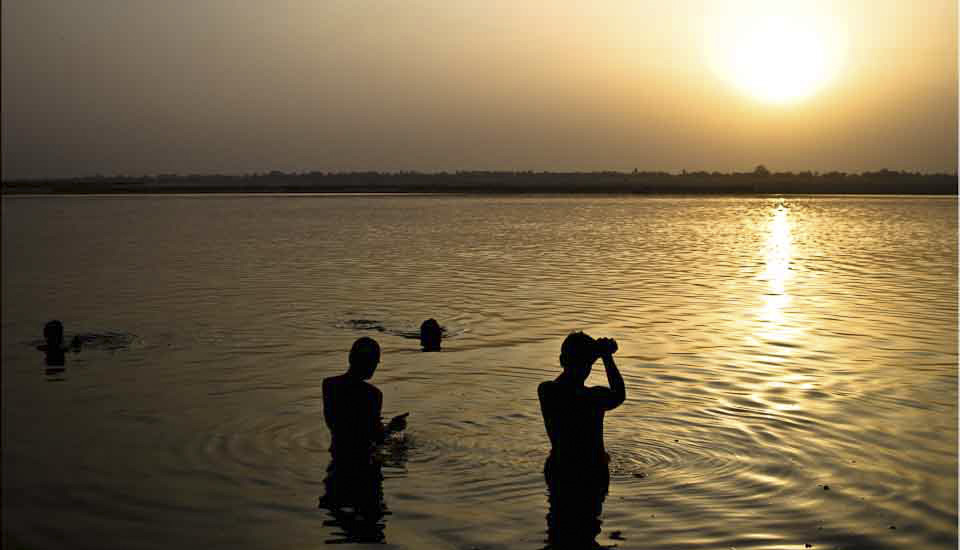
- Performing the Ganga Aarti from Dasaswamedh Ghat, Varanasi
- Buddha Head from Shwedagon Pagoda, Myanmar
- Harry Clarke Window from Dingle, Ireland
- Novice Monk Shwe Yan Pyay Monastery, Myanmar
Packets of 10 for $AU50.
Or - pick any photo from my Flickr or Wanders blog photos.

.jpg)
.jpg)
.jpg)

 Until next time,
.jpg)







 More on that some other time.