Colours, Layers and Textures: Shopping for Surin Silks ~ Ban Khwao Sinarin
Isn’t the English language wonderful? In the title “Weaving Communities” you probably read ‘weaving’ as an adjective – that is, communities that exist about or for weaving. But, weaving is more usually a verb: the art of forming something, (a fabric or a fabric item; a basket, a story, a rug, a community…) into a pattern by interlacing long threads passing in one direction with others at a right angle.
"Interlacing Threads at Right-Angles"
As I mentioned last week, I had the pleasure of visiting a number of villages in Surin; villages where both meanings are true. These are communities of weavers who produce beautiful textiles, and it is the act of producing these textiles that binds the community members together and allows the communities to grow and flourish while staying grounded in traditional values and practices.
Traditionally, women and girls produced silks and cottons for their household to use and to present to the local temple. In the old days, bells were attached to the moving parts of looms, so that local bachelors knew that ‘a modest, hardworking, diligent girl’ who might make a good wife, was hard at work. Every village in Surin has at least one loom, and although weaving usually only takes place in the free time when the rice harvest is in, most villages these days manage to produce silk for sale, to supplement their meagre cash-crop income.
Some communities, however, have taken the traditionally sought-after Surin silks to a whole new level. The first place we visited, Thasawang Silk Village, has been developed into an atelier of world standard by Ajarn Weeratham Trakulngernthai. A. Weeratham studied Arts before returning to the village to expand the silk production there to such an extent that he was chosen to design and produce the gift-silks for the international leaders visiting Thailand for APEC, 2003. He also produces much of the silk used by the Thai royal family.
This community of artists is involved in every aspect of silk-making. One purpose-build open-air building houses two-story looms operated by three or four workers.
Experience at the Head of the Two-Story Loom
Concentration ~ Tying off Threads
Young Women at the Sides
Young Woman in the Weave
Women at the Loom: Sitting at the Side and Standing Underneath
Silk Thread: Weft ~ Warp ~ Weave
Fine Weaving in Process
Golden Brocade Silk
Lunch Time! The Two-Story Looms at Rest...
Precious Gold Embroidery
Ajarn Weeratham Explaining Traditional Silk Patterns
Silk sales take place in expensive up-market shops, street stalls and in the downstairs open areas of village houses; anywhere that the community has a bit extra to sell and the buyers are ready.
Surin boasts 700 traditional silk designs, many which were of Khmer origins. They involve complex weaving or dying processes, or both. Many villages produce “Mut Mee” or tie-dyed silk. The warp threads are wound onto a frame of the correct size, banana fibre is carefully tied around sections of thread according to a specific pattern, and then the whole frame is dipped in dye. When the dye is dry, the fibre is carefully cut away and the undyed spots are dabbed with other colours.
Mut Mee at Ban Khwao Sinarin
Producing Mut Mee Silk
Careful Mut-Mee Hands
Reeling the Silk
What impressed me, even more than the silks, however, was the way silk production, as a community cottage industry, drew the neighbourhoods together. Because it is such a labour-intensive and important industry, there is meaningful work for everyone, and the loom or looms become the village centre. At Ban Khwao Sinarin, when it was getting too dark for the carful attention that preparing and weaving Mut-Mee silks require, the traditional instruments came out and the singing and dancing started. The undisputed star of this impromptu “show” was the master-weaver’s eight-year-old daughter. One of my Thai companions said: “I am so glad that this is still happening in my country!” I completely understood her emotional pride.
Traditional Dancer ~ Khwao Sinarin
Toothless Smiles!
Khwao Sinarin Family
Dad and Daughter in the Dance
It was truly an enchanting experience, and a reminder of the true value of locally produced, hand-crafted products. ‘Till next time…
[..] Today I was reading this fantastic blog post and I wanted to link to it. [..]…ReplyCancel
Andy Varga -April 6, 2012 - 7:10 am
Hi Ursula – thanks for your fascinating blog about Surin produced silk – and great photos. I’d love to visit those villages and find out more about silk production. Could you put me in touch with someone who could organise a visit for me? Best wishes and keep up the good work!ReplyCancel
Hi Andy,
I’m glad you enjoyed the photos.
My visit was with the Thai Textile Society. They organised it through a Thai travel agency: Ubon Jinda Travel (+66 86 777 2118). Our guide, Pradit Deerorb (+66 83 364 1182) loves textiles and speaks good English. I can’t find email addresses for any of them, and as our visit was a long time ago, my information might be out of date.
But the places we visited are well known to any Surin agent (and are geo-tagged on my Flickr site) so any licensed agent in the area should be able to help you.
I hope this helps! Cheers.ReplyCancel
The only downside, for me, of traveling to up-country Thailand, is that I end up with so many pictures I have trouble figuring out how to organise them!
I spent last weekend in Northeast Thailand (Isaan): Ubon Ratchathani, Sisaket and Surin. I was with a group of women from all parts of the world who were traveling, as members of The Thai Textile Society, in search of silks. Surin, in particular, has been producing beautifully hand-woven fine silk fabrics for over two thousand years. I was predominantly in search of images, although I confess that I also returned home with more than a few pieces of silk and cotton!
Silk production is a major cottage industry in this area, and is a source of community pride as well as income. Every stage of the production, from the growing and harvesting of the silk worms (sericulture), to the treating and dying of the threads, and finally the designing and weaving of the patterns, follows centuries-old traditions. For the sake of some sort of coherence, I decided to start at the beginning with the sericulture itself, and move on to the design, weaving and finished products next week.
Silk production is an incredibly labour intensive and costly job: about 3,000 cocoons and a lot of time are needed for just one meter of woven fabric.
Cocoons ~ like Cotton Candy
"Stoving" or "stifling" the chrysalis and "reeling" the threads
While this process is undeniably rough on the silk worms, there is, at least, no waste. Rejected shells are made into artificial flowers and other ornaments, the filaments become fabrics and the worms themselves become food.
"Chim Dai! ชิมได้!" "Have a taste!" Thanks, but no...
Explaining the Process of Reeling and Re-Reeling
Re-Reeling the silk fibres renders the filament a more even texture
Silk fibres ~ Rough-Raw and Smooth-Treated
After a lengthy treatment process, the silk filaments are ready for dying. Although commercial chemical dyes are sometimes used, most of the producers in Surin prefer the traditional, natural dyes from their own gardens.
Bixa Orellana: a source of red and orange dye
Tools of the Silk production trade
Isaan Workers in their Typical "Protective" Clothing, Keeping the Surrounds Tidy
Green Leaves and Yellow Silk
Dried Persimmon Peels make Red
Dye-Fires Burning
Boiling Dye Fires in the Yard
Terracotta Indigo Pots
Making the popular indigo-coloured silk is a laborious process of plunging and wringing...
... twisting and circling.
The skein of wet indigo silk needs to be kept in perpetual motion!
Threads on the Line ~ Dyed and Drying
Dyed, Spooled and Ready for weaving!
As I said earlier, it is a long and involved process just to produce these fine silk filaments, which are not yet the beautifully coloured and textured fabrics they are destined to become!
Hi Ursula,
Thanks for sending me the link of your website, I love it 🙂 and such interesting stories with wonderful images. Congratulations. Did you build the site yourself after your course?
Take care for now
Lesley XReplyCancel
Ursula -December 4, 2010 - 12:17 pm
Hi Lesley!
Thanks for stopping in – I’m glad you like it. The “design” is a bought theme (same as Jackie’s)… although my html skills are improving – slowly… 😉ReplyCancel
Patama -December 4, 2010 - 3:26 pm
Hello Aj. Ursula
Wow, I’m Thai but I never been to Isaan, that’s bad.
and you didn’t try the worms 🙂 (me neither)
Patama AnnReplyCancel
Thanks, Larry. Enjoy your time in Aus. 🙂ReplyCancel
Ulli Pluemacher -February 7, 2011 - 7:02 am
Hi Ursula,
thank you for sharing this interesting information and beautiful photos!ReplyCancel
Ursula -February 7, 2011 - 7:11 am
Hi Ulli! So glad you stopping in to have a look. 🙂ReplyCancel
Ines -February 16, 2011 - 2:31 pm
Hi,
Very nice pictures! We would like to go to Isaan/Surin too, to see the silk production. Is it possible to specify where in Surin this is because I don’t know whether it is hard to find a place where you can see all the steps of making silk.
ThanksReplyCancel
[..] Today I was reading this great blog post and I wanted to link to it. [..]…ReplyCancel
yuwadee -August 10, 2013 - 9:17 am
hi. I’m a thai people and I come from Surin my proven also make silk. and my mom also make silk every step must talk a long time. but silk very wonderful. in my proven have many people make silk. here we have big land It can make farm I think if some one want to run besiness of silk I think very good.
but here me make for use in family. but I hope one day if have some one want to make besiness about silk and order from my proven every body here will got income from silk.ReplyCancel
สวัสดี Yuwadee,
You are right – most families make silk for themselves. But, it is beautiful, and many people will buy it if they know where to find it! 😀ReplyCancel
I had a lot of enthusiastic response to last week’s “Wander”; clearly the good works that are happening in Mae Hong Son province, in Northwestern Thailand, strike a chord with many people.
Driving into Hills and Valleys
Big Smiles
Over the years, a number of interested parties, sponsors and sponsors’ representatives have accompanied Susan Race, who established “THEP -Thailand Hilltribe Education Projects”, on her trips north to organise and supervise the various building projects in marginalized ‘Hills’ schools in Mae Hong Son. Not surprisingly, these visitors, like myself, have been impressed by the practical projects that have been undertaken to support the educational needs of local children, and have also come away from these visits with vivid memories of the beauty of the area and the warmth of the people.
Susan tells the story about one of her first projects: a cement floor. In the hills, most houses are on stilts, with woven bamboo flooring over a wooden frame. This is practical enough for small buildings, built on uneven ground and steep slopes, but doesn’t work very well for larger, public buildings. The Thai government has undertaken to build classrooms in all villages, but does not supply sufficient funding for auxilliary buildings like cafeterias, dormitories or libraries. If you are in a Hill village school compound, and you see a solid building, chances are pretty good that it will have a plaque on it naming the sponoring organization!
A Donated Building ~ Huay Pheung Mai School
Pre-Class Reading
Seven years ago, there was no electricity at the school; now there is satellite!
Anyway, Susan, who at the time was part of a women’s organization who had money to donate to charity, heard the story of a remote school with a lunch/cafeteria shelter (I think it was) with a dirt floor. She organised the money for the cement and materials needed to put a proper floor in, but NOT for labour costs. She was able to visit the project while it was in the works, and observed first hand the school staff, including the director, breaking up the gravel, mixing and pouring; in short, laying the floor themselves after finishing a long, arduous day at their normal jobs.
For me, this story is such an apt metaphor for the projects themselves: good buildings, like a good education, require a solid foundation; if you want people to take ownership of a project (or their own learning) give them the tools they need rather than doing the job for them; and with the right tools and materials, and a bit of guidance, co-operation and goodwill, people can accomplish almost anything.
Tools in the School Yard
Look Up!
Men at Work
At one of the schools we visited, a new building was being constructed in true Thai style: workers in thongs or bare feet were smiling, up in the rafters without the benefits of harnesses, while on the ground materials were everywhere. The building was not going up exactly to plan – but it was going up, and that, after all, was the main thing! The children in the playground at this idyllic but remote school were oblivious to the work going on in their midst.
Mae Toh School Yard
Typical Thai Classroom Windows
Giggles
Have Camera ~ Find Kids!
School Shoes outside the Classroom
Late for Class!
Traditional Thai Dancers
Attractive and ‘Modern’ Mae Toh…
…but, five minutes up the road, the electricity and ‘modern’ stops.
Two Young Karen Children Looking to the Future
Layered Dusk ~ Mae Hong Son
The trip is at an end ~ the last smile for the road
Great post as always, lovely to hear good news stories of people making changes themselves and not waiting for someone else to do it for them. thanks for the share!ReplyCancel
Ursula -November 26, 2010 - 1:27 am
Thanks to my two most loyal followers for stopping by. 😀ReplyCancel
[…] of these charitable organisations. I’ve been on these trips before (see: Budding Potentials, Building Futures, and Schools), and what always impresses me – other than the beauty of the countryside […]ReplyCancel
Henny de Groot -February 19, 2012 - 3:52 am
Thank you for your nice informational articles…
I love to read and see those nice pictures.
If I have a car I would love to travel to all your
places….
Best regards,
HdG
PattayaReplyCancel
[…] deep in the hills of Mae Hong Son. I’ve talked about previous trips (Budding Potentials, Building Better Futures, Schools at the end of the Road, and True Colours) in several previous posts, but I never tire of […]ReplyCancel
[…] mentioned THEP and the work it does several times before (Budding Potentials 1, Building Better Futures, Schools at the End of the Road, True Thai Colours, and For the […]ReplyCancel
“Turn your face to the sun and the shadows fall behind you.”
(Variously attributed to Charlotte Whitton or Maori Proverbs)
Budding, Blooming, Falling
Have you ever noticed that the people who achieve the most good for their community or for the community at large “Just do it!” They don’t fuss, or brag or grandstand; they just get on with the job at hand, behaving as if working for the good of others is a natural, normal thing to do.
What has this got to do with the quote I started with or with the Mexican Sunflower pictured, you might well ask?
Well, this last weekend I was privileged to accompany a number of hard-working under-recognised people (Thai and otherwise) on a whirlwind round of student-scholarship interviews and school-project visits in the northwest border province of Mae Hong Son. The projects and scholarships, which all aim to help seriously disadvantaged children in ‘The Hills’ continue their studies if they wish to, are funded by various institutions and individuals and managed through “THEP -Thailand Hilltribe Education Projects” and “ISGF – International Support Group Foundation”.
Communities in the remote Hilltribe areas tend to be quite small and marginalized. Although most now have some form of school in the vicinity, these schools are seriously under-resourced and usually do not include the higher grades. Historically, most children in these areas left school early, at least in part because they had no other choice, and either worked in the rice fields with their parents or moved to ‘the big city’ as unskilled labour. Projects like the ones I visited fund dormitories, canteens and other facilities at the larger schools so that children from outlying areas have the option of ‘boarding’ in their area instead of travelling great distances over virtually impassable roads, or dropping out completely.
Although education in Thailand is ostensibly free, this does not include the cost of books, extra-curricular activities, transport or accommodation, etc. While these costs may seem small, to subsistence families receiving very little in the way of government support, they are prohibitive, and many bright children are forced to leave school early. The individual scholarships help students from extremely disadvantaged families cope with these expenses and complete their basic education.
Misty Morning School Yard
Ready for the “Unveiling” ~ The New Dormitory
Cement Mixer at the Ready for the Next Project
Cooking Up Breakfast in the Village
Family Breakfast of Spicy Fried Green Beans
Modern Karen Hill-House
Karen Elder with Traditional Protective Tattoos
Watching the Big Kids go off to School
Morning in the Schoolyard ~ Mother’s Club
Peek-a-Boo!
Lined Up to Greet the Visitors
Karen Girl
Karen Boy
Boys will be Boys!
Beetle-Nut Break
A Happy Community ~ New Dormitory and Other Goodies
Some Like it Hot!
Watching the Baby
Typical Simple Karen Kitchen
Storage Area in a Poor Karen Farmer’s House
The main purpose of our trip was to check on the progress of scholarship recipients and the various projects, but it wasn’t all work! We joined the many people who travel north this time of year to visit the fields of wild Mexican Sunflowers which turn the hills around Khun Yuam a golden yellow. Walking up the mountain (Doi Mae U-Kho), I thought of the quote from that extraordinary educator Hellen Keller: “Keep your face to the sunshine and you cannot see the shadow.”
The Hills are Alive!
Hmong Market Colours
Mae Hong Son Curves
Turn your Face to the Sun!
Like the buds of these cheerful flowers, the children we’d been visiting were full of bright potential… How they will turn out, is anybody’s guess.
If you are anything like me, you get on with your daily life, doing “good” in small bits when it is relatively easy: donating here, direct deposits there, sponsoring children through big tax-deductible organisations, buying bits of bushland for animals, gift shopping from WWF and Oxfam, fund-raisers, charity walks and runs, and periods of unpaid work. Small stuff, really, considering how lucky most of us are! Hopefully, each small drop helps fill the bucket… but the need is still so great.
I personally am thrilled to have found an organisation whose work is congruent with my beliefs, and I plan to do more (watch this space!). In the meantime, if you want to help the easy way, I’m sure they’d be happy to take your money.
“We may have found a cure for most evils; but we have found no remedy for the worst of them all — the apathy of human beings.” – – Helen Keller
Very good and thought provoking. Like it heaps!ReplyCancel
Patama -November 19, 2010 - 11:22 pm
My friend works at Mae hong son and he always told me how beautiful it is 🙂ReplyCancel
Ursula -November 20, 2010 - 4:50 am
It sure is, Patama! You need to go and visit your friend one day. 🙂ReplyCancel
Susan Race -November 22, 2010 - 10:41 am
Thank you Ursula for the special comments and recognition. We were lucky to have you along on the trip. The photos are beautiful.ReplyCancel
Karen Gray -November 22, 2010 - 11:18 am
I have seen many THEP projects firsthand. They are remarkable and make a huge difference to the life of hilltribe people in Thailand. Thanks for sharing.ReplyCancel
Ursula -November 22, 2010 - 11:56 am
They are great, aren’t they Karen! We had a terrific trip.
Thanks for having me along, Susan. 😀ReplyCancel
THEP. Has made it possible for many of us to help others while sharing and living in this beautiful country. No wonder some of us cannot leave. Thank you Susan and Khun PanwadeeReplyCancel
Ursula -November 22, 2010 - 2:40 pm
Thanks, Bill – glad you enjoyed it!
Too right, Kathy! It’s a great place to be. 😀ReplyCancel
Bill -November 22, 2010 - 2:14 pm
Beautiful, beautiful. Thanks for sharing your trip with us Ursula.ReplyCancel
Lynda -November 23, 2010 - 9:31 am
I have enjoyed a couple of THEP visits in the Mae Sariang area with Susan and seen the completion various projects in villages and schools that have been funded by different voluntary charitable groups. What a difference it has made to the lives of the children and their families. Your photos brought back fond memories of my visits.ReplyCancel
I really hope to join one of Susan’s trips before I leave Thailand next July. Many of my BWG friends have had first hand experience and tell me it is the best way to see real Thailand.
Please let me know when you are going up to Mae Hong Song again.
[…] Projects, one of these charitable organisations. I’ve been on these trips before (see: Budding Potentials, Building Futures, and Schools), and what always impresses me – other than the beauty of the […]ReplyCancel
[…] had a lot of enthusiastic response to last week’s “Wander”; clearly the good works that are happening in Mae Hong Son province, in Northwestern Thailand, […]ReplyCancel
[…] to visit schools deep in the hills of Mae Hong Son. I’ve talked about previous trips (Budding Potentials, Building Better Futures, Schools at the end of the Road, and True Colours) in several previous […]ReplyCancel
[…] Education Projects. I’ve mentioned THEP and the work it does several times before (Budding Potentials 1, Building Better Futures, Schools at the End of the Road, True Thai Colours, and For the […]ReplyCancel
Hello Ursula,
I’d love to engage with communities of this region and help contribute art projects for free. Adding color to community, teaching teamwork and collaboration, and self expression. Youth and adults, potentially in schools or marketplaces, wherever art can help to enhance daily life.
Currently in Pai preparing a mural project here, preparing to explore the Mae Hong Son area in the coming weeks to inquire about potential projects.
Do you have any insight or leads into whom I may be able to contact to engage in such projects?
Hi Robert,
Thanks for your visit to my site. I’m sure lots of schools would be interested in what you do, but it is often difficult to fit short-term projects into full school programs.
My THEP contact is not in Thailand at the moment, and is focussed on projects and scholarships. One of the teachers involved in THEP is now in a school in Chiang Mai, I think. Her English is reasonably good, and you might like to contact her through Facebook Messenger: https://www.facebook.com/krusa.inta
Good luck!ReplyCancel
Honour Guard ~ Tomb of the Unknown Soldier, Arlington National Cemetery, Arlington, VA
For The Fallen
Laurence Binyon, Cornwall, 1915
With proud thanksgiving, a mother for her children,
England mourns for her dead across the sea.
Flash of her flesh they were, spirit of her spirit,
Fallen in the cause of the free.
Solemn the drums thrill: Death august and royal
Sings sorrow up into immortal spheres.
There is music in the midst of desolation
And a glory that shines upon our tears.
They went with songs to the battle, they were young,
Straight of limb, true of eye, steady and aglow.
They were staunch to the end against odds uncounted,
They fell with their faces to the foe.
They shall grow not old, as we that are left grow old:
Age shall not weary them, nor the years condemn.
At the going down of the sun and in the morning
We will remember them.
Tomb of the Unknown Soldiers, Arlington Cemetery
Presenting Arms for the Changing of the Guard, Tomb of the Unknown Soldier, Arlington National Cemetery, Arlington, VA
“How many deaths will it take ’till he knows that too many people have died?” Bob Dylan, Blowin’ In The Wind
A Life Cut Short ~ Arlington National Cemetery, Arlington, VA
Flags of the Fathers ~ Iwo Jima Memorial, Arlington VA
Helping Hands Together ~ Iwo Jima Memorial
Women at War ~ The Mall, Washington DC
War Fatigue ~ The National World War II Memorial, Washington DC
The Passing Parade of Fallen ~ Vietnam Veterans Memorial, Washington DC
Names of the Fallen ~ Vietnam Veterans Memorial, Washington DC
Washington, DC photos taken 10th October, 2010. Photos from Arlington,VA taken 11th October, 2010.
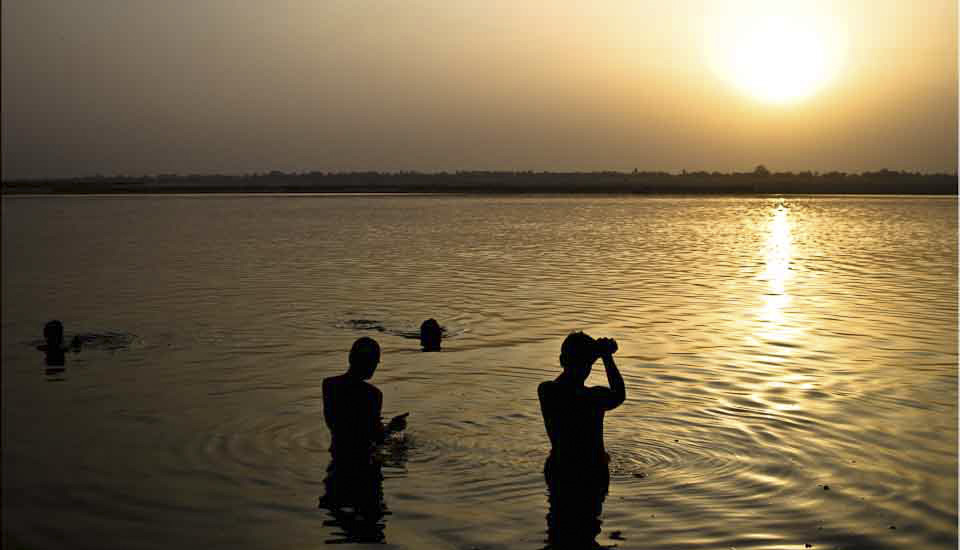
- Performing the Ganga Aarti from Dasaswamedh Ghat, Varanasi
- Buddha Head from Shwedagon Pagoda, Myanmar
- Harry Clarke Window from Dingle, Ireland
- Novice Monk Shwe Yan Pyay Monastery, Myanmar
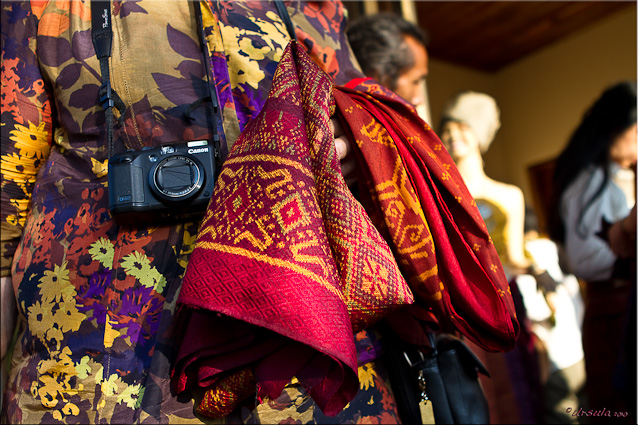
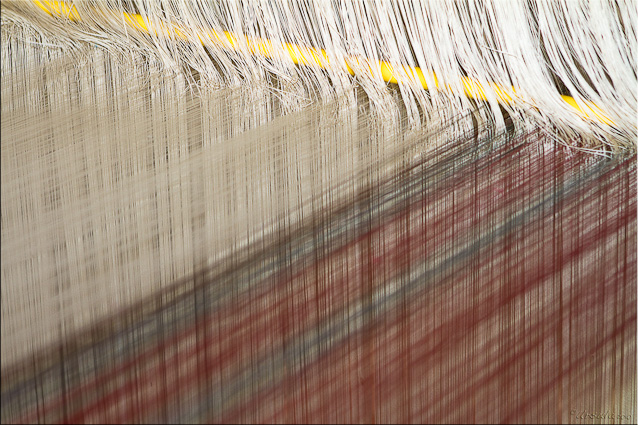
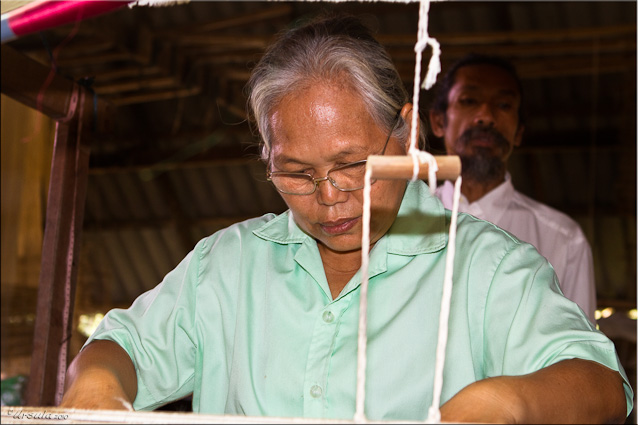
Packets of 10 for $AU50.
Or - pick any photo from my Flickr or Wanders blog photos.










 If you are interested in learning more about projects conducted through





lovely
Wonderful set of photos and really interesting text.
Thanks, Gabe and Guava!
It’s always nice to know someone is out there. 🙂
what an amazing life(&)style these people lead and a reminder of the people who make this amazing silk…just lovely
really interested site and images. I wish you a nice week with
beautiful things, Dietmut
Hi Dietmut!
I’m so glad you stopped by. I hope you will pop in regularly. Have a good week yourself! 🙂
Cool, a really interesting post!…
[..] Today I was reading this fantastic blog post and I wanted to link to it. [..]…
Hi Ursula – thanks for your fascinating blog about Surin produced silk – and great photos. I’d love to visit those villages and find out more about silk production. Could you put me in touch with someone who could organise a visit for me? Best wishes and keep up the good work!
Hi Andy,
I’m glad you enjoyed the photos.
My visit was with the Thai Textile Society. They organised it through a Thai travel agency: Ubon Jinda Travel (+66 86 777 2118). Our guide, Pradit Deerorb (+66 83 364 1182) loves textiles and speaks good English. I can’t find email addresses for any of them, and as our visit was a long time ago, my information might be out of date.
But the places we visited are well known to any Surin agent (and are geo-tagged on my Flickr site) so any licensed agent in the area should be able to help you.
I hope this helps! Cheers.