Jakslak on the Ridge There is a harsh beauty in the untamed landscape of Western Mongolia; to the Kazakh eagle hunters, the golden eagle represents the wind, the open space, the isolation, and the freedom that can be found here.
The landscape around the Altai Mountains of far-western Bayan-Ölgii Province in Mongolia is as untamed as the people and animals who live there. The cold desert climate experiences dustings of snowfall – but little rain – and the measured temperatures – ranging from -22.6C (-8.68F) on a January night to 22.6° (72.7F) on a July afternoon – don’t reflect the winds that blow across the high plateaus. The ground is rocky, supporting only small shrubs and grasses; while it is sufficient for nomadic grazing, I saw no farms or greenhouses. The area is isolated enough to be home to a number of endangered animals and a small population (about 90,000 in 2013) of hardy inhabitants: mostly (93%) consisting of Mongolia’s minority Kazakhs.
These Kazakhs – a Turkic people who arose as a unique tribal identity between 1456 and 1465 in the steppes of Eurasia – brought their language, their culture, and their tradition of eagle hunting with them through the mountains to this corner of Mongolia. Isolation has allowed them to keep their customs largely intact: here in the Altai Mountains, a dwindling number pass down the centuries-old art of eagle hunting.
It’s not an easy life: to be a proper berkutchi – as eagle hunters are called in the Kazakh language – they must first find a nest and capture a young female bird from under her parents’ watchful eyes. They then hood the fledgling, tether her and lovingly hand-rear her. When she is big enough, they teach her to come when called and land on her master’s arm, and to hunt down prey and give it to her handler.
Of course, as is the case with any animal training, repetition is the key – and even then, things don’t always go to plan!
Thanks to Mongolian guides G and Segi of Shaman Toursand photographers Jeffrey Chapman and Winslow Lockhart from Within the Frame, I was in Bayan-Ölgii staying with a family of semi-nomadic Kazakhs. On the third day of following our hosts out into the surrounding hills while they got their golden eagles ready for the the winter hunting season, one of the younger birds attacked the family dog instead of landing on her trainer’s arm. Even with intervention from the eagle hunters, the dog came off second-best and limped home with some nasty injuries. These impressive birds may be guided in their hunting behaviours, but they are never entirely tame!
A Lanscape of Rocks All the ground here – from the sharp scree on the mountain hillsides to the rounded rocks covering the high plateaus and the shallow riverbeds – is awash with rocks.
A Lanscape of Rocks In many places, there are no roads; our Russian UAZ 4WD vehicles just aimed for the shallowest stretch of river and hoped for the best.
Rocky Ground The ground is fairly inhospitable here above the tree line. Still, dry grasses and small lichen and shrubs find nurture in unlikely places.
Yaks on the Plateau The sparse vegetation is one of the reasons that the nomads follow their herds, …
Domestic Yak on the Plateau … moving to new pastures each season with their sheep, goats, horses and camels, or in this case, yaks.
Jakslak on the Ridge Training golden eagles to respond to their “masters” takes a lot of practice and repetition. On our third day with a family of Kazakh eagle hunters, we follow half of them up to a high rocky ridge.
Jakslak on the Ridge Training doesn’t always go to plan: Jakslak bears old scars (not from this bird) from a hunt gone awry. The hunters are always gentle and affectionate with their massive raptors – but things can still go wrong.
Jakslak Launches an Eagle From high on a ridge, eagle trainers launch the huge birds to another handler who is whistling below.
Sarkhad on the Ridge I don’t know which is more majestic: the magnificent golden eagle with her deadly beak and talons, or her handsome Kazakh-Mongolian handler in his lavish malakhai fox-fur hat. Family patriarch Sarkhad has caught and trained several of these awe-inspiring raptors in his life.
Family on a Ridge Today, Sarkhad is here to help his 13-year-old granddaughter Nurguli practice her eagle-release techniques.
Eagle Huntress on a Ridge The golden eagle looks almost as big as the petite Nurguli …
Eagle Huntress Launching her Bird … as she helps it launch into the air.
Razdak and his Pony Down the hillside, Razdak calls the eagle and tempts it with a meaty bone.
Razdak Catching an Eagle This time, the eagle lands beautifully on Razdak’s arm. It was during one of these training runs that Nuguli’s young eagle attacked the family dog instead of flying to the handler calling her.
Sarkhad and his Eagle The practice is repeated a few times with each of the birds that are being exercised: …
Sarkhad Launching an Eagle … releasing the bird, …
Razdak Catching an Eagle … and catching it on the fly.
Golden Eagle and her Companions These birds weigh between 3 and 7 kg (6.6 – 15.4 lbs) and have wingspans of 1.8 – 2.3 m (5’9″ – 7’5″); their Kazakh handlers are not that tall! There is a forked wood perch attached to the saddle to help support the bird while they are riding.
Jakslak and his Eagle
Razdak and his Eagle
Eagle Huntress Nurguli was at home with her eagle – but was less comfortable with us interlopers.
Eagle Huntress Every so often, one of the guides would manage to engage her in her native Kazakh, and a smile would illuminate her face.
Watching young Nurguli with her golden eagle made me wonder about her world and her place in the future. To be an eagle hunter in this modern age might seem like an odd choice to many of us: but it is a choice. Two of Sarkhad’s sons are in Ulaanbaatar earning their livings (and supplementing the family’s income) in more “conventional” ways.
But, the love that these eagle hunters have for their bird and their environment is evident, and there must be a real satisfaction in wearing the traditional clothing that has been painstakingly made and embroidered by one’s wife or mother, and the hats trimmed with pelts from foxes or rabbits brought down by a bird one has trained oneself.
They have a difficult life, but they are their own masters.
Focus on Little Georgia The official camera operators get prime locations as they record live performances.
I’ve said it before: for a country with a small population, Australia has a disproportionate wealth of musical talent (see: The Local Lineup).
I look forward to the annual Easter long-weekend Byron BayBluesfest: it can invariably be relied upon to serve up a range of quality musicians. It is a joy to discover new performers and revisit some old favourites.
Of course, with acts on five or more stages at any given time, it is hard to know what to chose! There are always plenty of big international acts vying for attention. But, I also enjoy the ‘smaller’ acts in the more intimate tents, and I’m consistently impressed by the depth and breadth of talent on Australia’s music scene. One of the first tasks I undertake when we arrive is to check out the artists’ list on the phone app, and to flag the bands that most interest me.
After that, I just follow the sounds – because it is all bound to be good.
Vying for a View : Shaun Kirk Independent Australian soul and blues singer, songwriter, and musician, Shaun Kirk accompanies his guitar with harmonica, stomp box, tambourine, high hat, cymbal, kick and snare drum. (iPhone6)
Shaun Kirk Shaun performs soulful blues with a deep raspy voice; …
Caiti Baker I’ve posted about some of the fabulous Australian women – including the R&B/Soul singer Caiti Baker – before (see: Aussie Women Rock the Blues).
Dancing in the Rain “Life isn’t about waiting for the storm to pass…It’s about learning to dance in the rain.” – Vivian Greene The rain always falls over Bluesfest at some time: festival regulars are prepared.
Tash Sultana Self-taught singer songwriter, beat boxer, vocalist, guitar tapper and loopologist, the energetic Tash Sultanahas been playing guitar since she was three (see: Aussie Women Rock the Blues).
Tay Oskee Winner of the Byron Bay Bluesfest Busking Competition in 2017, Tay Oskee is a multi- instrumentalist with a strong connection to the Australian land.
Camera on Little Georgia Delightful folk-grunge duo Little Georgia have an infectious sweetness in their music.
Ashleigh Mannix with Little Georgia Sun-touched and ferocious, Ashleigh Mannix’s voice carries Little Georgia’s original folksy-country lyrics…
Justin Carter with Little Georgia … while Justin Carter’s harmonies weave through.
Acrobats When the weather clears, there is always something going on outside the tents.
Evening Tents Friends and families gather in groups on the lawns outside the tents: close to the food and beer, within earshot of the music, and with line-of-sight to the big screens.
Steve Smyth There is no doubting the passion and enthusiasm of alternative indie rocker Steve Smyth.
Steve Smyth Originally from the South Coast of New South Wales, Steve grew up travelling around Australia with his minister-parents, and has been travelling and playing music most of his life.
Jeff Lang Gifted guitarist-songwriter-vocalist-producer, Jeff Lang is a mainstay of the Australian music scene.
Jeff Lang Blending folk, blues, and rock in his self-described “disturbed folk” style, Jeff has been called ‘a national treasure’.
Uppercut Most of the kiosks on site offer food or clothing; this one offering haircuts was new this year, and seemed to be doing a good business.
Hussy Hicks Any regular visitor to this page has heard me rave about Hussy Hicks: Julz Parker’s screaming guitar and Leesa Gentz’s soaring vocals get me every time. (See: Wash my Blues Awayor Back to the Roots of Music.)
Clayton Doley’s Bayou Billabong Best known for his keyboard virtuosity – especially on the Hammond Organ, Clayton Doleyis a fixture in the Australian musical community.
Arriving Early Monday, the last festival day, greeted us with perfectly clear blue skies.
Dog Trumpet I was determined to catch Dog Trumpet: a quirky Australian-based pop-rock band formed by founding members of Mental As Anything: …
Peter O’Doherty – Dog Trumpet … New Zealand-born brothers Peter O’Doherty …
Reg Mombassa – Dog Trumpet … and Chris O’Doherty, aka Reg Mombassa.
Bernie Hayes – Dog Trumpet Australian singer/songwriter Bernie Hayes joined them on guitar and vocals.
There was no question: the local performers held their own! I loved them all – and can’t wait to see what next year has lined up.
The Kill In the dusty morning light of Namibia’s Etosha National Park, five young male lions enjoy their fresh kill while hyenas watch for the chance of scraps.
There is nothing romantic about nature.
But, nor can you call nature “cruel”. Cruelty implies intention.
I watched The Lion King again recently – I had grandchildren visiting – and it was interesting to reflect on the difference between that romanised version of life in the savanna and my memories of my time in Etosha National Park in Namibia.
My visit to this large African nation – years ago now – was during August: the height of winter in the Southern Hemisphere and dry season in Namibia. It was my last morning in the country and the guides around the King Nehale Waterhole where we had been camping were abuzz: lions had been spotted! So, I was driving around the park with photographer Ben McRae and local guide guide Morne Griffiths.
We had found a group of five young male lions the afternoon before (see: Going on a Lion Hunt); they mostly sat around a waterhole yawning and stretching. Truthfully, I had actually enjoyed watching all the other animals more.
But this was different!
It was still early when we got to the waterhole where the lions had been seen. It was not yet 6:30 in the morning, and although the winter sun was up, it had yet to warm the dusty air or shed much light on the panorama before us.
The five young males were again sitting around. The difference was that they had made a kill during the night: a small springbok was no more. Clearly, they were feeling sated, as they ignored – for a time – the pack of hyenas scrabbling around their prey. Once they decided to reclaim their prize, however, there was no contest! It was easy to see where the Disney creators of the animated feature got their ideas for the personalities of the animals in The Lion King: the lions do seem to saunter regally while the hyenas skulk!
We spent a good hour and a half watching from the safety of our safari truck as the drama unfolded before our eyes. Eventually, the lions – presumably full and bored with all the attention – wandered off across the road in front of us and into the scrub.
Lions in the Sunrise It was hard to see what was going on through the barely-lit dusty air: on the other side of a waterhole, five young male lions were resting or casually strolling around…
Hyenas in the Dust … while a pack of hyenas yelped and cackled as they fought each other for bits of meat and bone.
Lions in the Morning For a while, the young males seem barely interested in the havoc the hyenas were causing…
Fighting over the Kill … as they continue to fight around them.
Lions on the Move Clearly, their patience has limits! As a group, the males got up and sauntered around the waterhole …
Lions and Hyenas … to simply and easily reclaim their prize.
Black Backed Jackal Other animals keep a bit of distance.
Lions Eating The lions make short work of their catch …
Lions and a Hyena … as a hyena lopes past. There is something about the hyena’s body-shape that makes it look as if it is cringing or slinking.
Spotted Hyenas (Crocuta Crocuta) Up close, hyenas look fuzzy and adorable – but those jaws are designed for grinding bones: hyenas have the strongest bite-strength of any land animal.
In a Cloud of Dust Jackals and hyenas circle the feasting lions hopefully.
Hyenas with Food Unlike the lions who sit together eating at their own pace, when a hyena gets a bone or scrap of skin, he or she has to make a run for it …
Fighting for Scraps … or fight off contenders. As you can see from the truck-top in frame, this is all happening right in front of us.
Hyena Silhouette The effects of the sun ascending through the dust gives rise to interesting light. It is not yet 7:00am on a winter morning.
Hyenas Chasing Another hyena makes off with a bit of bone – with more in pursuit. Hyenas can run at speeds of up to 60km/hour, and are quite capable of hunting their own prey when a lion-kill is not available. One of the things that surprised me was the range of colouring among these unique animals.
On the Veld
Helmeted Guineafowl – Numida Meleagris
Lions Reflected It is twenty after seven, and the lions have had their fill. They leave the bones and scraps for the scavengers, and make their way as a group, around the waterhole …
Lions in the Landscape … and into the scrub.
Lions Still licking their lips – or is that my Disney-influenced imagination? …
Young Male Lion … they pause, …
Young Male Lion … and one at a time, …
Lion Crossing the Road … file across the road in front of us before disappearing.
Border Crossing Sadly, it is time to leave the park. To prevent animal illness, as we cross from one area into another our truck drives through a solution and has its under-carriage sprayed. (iPhone6)
Morne and his Reward We had promised our guide Morne a reward if he found lions for us; he chose to accept this in the form of his favourite brandy, which we sourced at the first stop outside Etosha National Park. (iPhone6)
What a fitting end to a wonderful two weeks of travelling around Namibia!
I couldn’t help but hum “The Circle of Life” from The Lion King as we followed Namibia’s bumpy highways back to Windhoek and our airplanes home.
Spirit House What could be more Thai? A garlanded spirit house sits in an auspicious corner of a Bang Khun Thien seafood restaurant overlooking the Bay of Thailand.
As cosmopolitan a city as Bangkok is, there are still spaces where one feels as though one has been transported into the distant past.
The old community of Bang Khun Thian – established around 1867 – is one of the 50 districts (เขต – khed) that the huge and sprawling city is divided into. Tucked into the five kilometre strip between the Chao Phraya River to the east and the Tha Chin River to the west, it is criss-crossed by canals and boasts Bangkok’s only seashore. This is not an area of sandy beaches however: the district’s five-kilometre coastline along the Bay of Thailand is the muddy home to mangrove forests and shrimp farms.
The region was first settled by Mon people from the Irrawaddy basin in Myanmar in the 16th century and Khmers from Cambodia some time before the mid-1700s, followed by Chinese immigrants after 1810. Rice, fruit and poultry agriculture, and shrimp aquaculture, have always been the mainstays.
Today, the Bang Khun Thien Museum – situated in the grounds of a local school – gives school groups and other visitors an insight into the economic and ecological significance of the region, with an emphasis on the vital importance that mangroves play in protecting the environment.
It was many years ago that I was there: on a day-trip out of Bangkok with an expat-women’s group. Like other visitors, we were there to relax along the khlongs (คลอง) and waterways, to learn about the mangroves and to enjoy lunch. Food is always central to any excursion in Thailand, and Bang Khun Thian is known for it’s seafood restaurants.
Looking back – way back – at my photos from that tour in order to process them, I can’t help but be disappointed in the lack of quality in many of them. But, I loved the area, and I found a few I’m willing to share.
Enjoy!
Schoolgirl in a Recycle Hat In Thailand, hats made out of sheets of aluminium used to make beer cans, or cardboard for packaging, are actually a “thing”.
School Children Making Hats The children at Klong Phitayalongkorn School craft these hats and other products for sale to visitors.
Shy Smile As is the case everywhere in rural Thailand (even when “rural’ is part of the city), the children are sweet, and polite to their elders.
Schoolgirls The small Bang Khun Thien Museum is in the Klong Phitayalongkorn School grounds. The children are happy to show us around.
Hammock It is hard to believe that bustling, chaotic Bangkok is just a short boat-ride away!
Into the Mangroves Walkways lead us …
School Boy …and visiting school groups on excursions …
School Girl … out over the mangrove swamp …
Pergolas in the Mangroves … to the huts on stilts along the boardwalk that act as outdoor classrooms and house explanatory displays about life in the mangroves.
Fiddler Crab – Chiromanthes Eumolpe The displays are simple – and in Thai.
Mudskipper I first knew this creature by its Thai name of “foot-fish”. Mudskippers are amphibious fish which contribute to the complex mangrove ecology.
Tour Boat Just outside the museum/school area, simple wooden boats wait to take visitors on tours of the rivers, klongs, and the Bay of Thailand – and to transport them to the seafood restaurants.
Hazel in the Light Hazel, the trip organiser, gives the group a brief rundown about the area …
Our Boatman … while our boat operator keeps a careful lookout for traffic and obstacles.
Boat on the River The rivers and canals are the lifeblood of the community. Like many Thai who work outdoors, these fishermen wear full skin-covering clothing.
House on the River The houses along waterways are simple bamboo structures on stilts to protect against tides and flooding.
Boundary Marker A concrete pillar in the bay designates the boundary between Bangkok and Samut Prakan provinces.
Shellfish Farm Aquafarmers drive stakes into the seabed and seed them with clams. The clams cling to these stakes and grow until they are picked off at harvest.
Seafood Restaurant Built on pylons over the waterways, the Bangkok Seaview Restaurant is only accessible by boat.
Cook in the Kitchen Seafood and produce fresh from the local farms is all prepared on the premises by smiling staff.
Javan Pond Heron – Ardeola Speciosa Fish-loving birds hang around the restaurant, hoping for scraps.
Restaurant Walkway After a fresh, tasty lunch, we work our way back along the extensive walkway …
Reloading the Boats … to get back into our boat.
Bamboo and Grass Buildings Motoring through the waterways …
Concrete Pylons … gives us a glimpse into a different world.
Egret in the Mangroves
Feel the Splash! Over sections of the route, our boat can pick up speed, …
Bridge over an Intersection … but in many places, a no-wake rule applies.
Man and Girl Child People come out of their houses to watch us pass by.
It was a wonderful day out!
Maybe one day I’ll get back to these waters – I’m pretty sure the area won’t have changed much.
Intimacy The blocky figures in the Vigeland installation in Frogner Park, Oslo, have a commanding immediacy.
When I think of Oslo, Norway, I think of sculpture: sculptured spaces and sculptured figures and objects. I had seen pictures of the famous Vigeland installation of Frogner Park, Oslo in an inflight magazine years ago, and this had coloured my expectations before my visit to the city in May.
I didn’t arrive under the best of circumstances: my husband – who was meant to be travelling with me – had been called back to Australia prematurely, and my phone had died. I’m used to travelling alone – and often have no phone or internet coverage, but still …
A friend laughed at me when she heard I was without my phone, but these days it is my lifeline – especially when I’m on the road: it is my map, my walking guide, and my direction finder; it is my appointment book, my diary and my alarm clock; it is my address book and my mini-camera. I use it to work out exchange rates and to translate problematic language. It keeps me connected to people at home and around the world, and allows me to book the next accommodation.
So, I was adrift in a strange city.
Fortunately, the people of Oslo were helpful and accommodating, and most of them spoke good English. The desk clerk at the budget hotel where I was staying was more than happy to look up the closest Apple store and mark it out on a paper map. With this map in hand and my cameras in tow, I set off across the inner city to said shop, only to be redirected back across town to a repair centre that no-one in the vicinity had heard of! When I finally found it, took a number, and came to my turn at the desk, they agreed with me: the phone would not charge. Very insightful. I was told they had no replacement batteries in stock.
I gave up, and decided to walk across town again: this time to Frogner Park and it’s renowned Vigeland sculptures. Along the way, I found many other sculptures dotted along my route.
Even more exciting, though: I accidentally found a generic battery shop! After 15 minutes and the exchange of a small amount of Norwegiankrone, my phone had a new battery and I was back on the grid.
It was with a much lighter heart that I finished my day, enjoying some of Oslo’s unique public art.
“Smart Room” Talk about a sculpted space! My room was barely larger than a walk-in wardrobe, but managed to contain all the basic necessities. (ISO 3200 16mm f/6.3 1/60 sec)
Slottsparken – The Palace Park Oslo is dotted with green spaces. Kindergarten children in their hi-vis vests explore one of the ponds in the architecturally-designed Palace Park. Sprinkled with tall, wintery trees, the park is ringed by elegant old multi-story buildings.
Oslo Rooftops and Flags Like many other of the old buildings around central Oslo, the Grand Hotel at Karl Johans Gate has an intriguing roofline.
Crocus Signs of spring are at my feet. (iPhone6)
Norwegian Parliament Building Built between 1860 and 1866 the Stortingsbygningen – the Norwegian Parliament Building – was designed by the Swede Emil Victor Langlet in a variety of styles influenced by French and Italian architecture.
Christian Michelsen In front of the Norwegian Parliament Building, there is an dignified bust by the Danish-Norwegian artist Per Palle Storm of Christian Michelsen (1857 – 1925), first prime minister – from 1905 to 1907 – of the newly independent Norway.
King Christian Frederik The statue of King Christian Frederik (1786-1848) by Kristian Blystad is a relatively modern (May 2014) addition to the park in front of the parliament buildings.
King Haakon VII Standing tall at the top of a staircase in June Seventh Square is a stylised statue by Nils Aas of the once-exiled King Haakon VII (1872 – 1957), first king of independent Norway.
Henrik Ibsen Statue Outside the Ibsen Museum, a charming likeness of the playwright Henrik Ibsen (1828 – 1906) perches on a high stool. One story I heard/read was that he and his wife were both very short. He told the local children that they were trolls – who feature prominently in Nordic myths and Ibsen’s plays – so that the children would leave them alone.
Birch Tree Bark The boulevard leading through Frogner Park to the Vigeland sculptures is lined with birch trees with their beautiful, textured bark.
Gustav Vigeland A statue of Gustav Vigeland (1869 – 1943), revered Norwegian sculptor, creator of the Vigeland installation, and designer of the Nobel Peace Prize medal, stands outside a coffee shop in Frogner Park. This sculpture of himself is the only one in the park with clothing: he wanted all his forms to be timeless, whereas he was vey much a part of the era in which he lived.
Mother and Child The cycle of life, from the cradle to the grave, is a common theme among Vigeland’s works. With more than 200 depictions of people engaged in everyday activities, the Vigeland installation is the world’s largest sculpture park with works by a single artist.
People on the Bridge A 100 metre- (328 ft) long, 15 metre- (49 ft) wide bridge leads into the sculpture park. It features 58 bronze models of people of all ages.
The Ring With the circle of life as a central them, wheels feature repeatedly. Vigeland was in charge of the design and layout of the whole installation area – which was completed between 1939 and 1949.
Young Woman Dancing Although the statue of the angry baby is reputedly the most popular, this one one of a young woman dancing on the bridge is my favourite.
The Fountain Surrounded by 20 bronze tree clumps with people of all ages woven through them, this fountain was originally commissioned for the square in front of the Parliament.
Bodies in the Fountain The fountain features six giants supporting a large basin of cascading water.
Up to the Monolith High up the steps to the Monolith plateau ….
Gate to the Monolith … and through one of the eight wrought iron gates (designed between 1933 and 1937 and installed in 1943 after Vigeland died) …
The Monolith … sits the park’s central feature: The Monolith, towering 14.12 metres (46.32 ft) into the sky.
The Monolith – Detail As the name implies, this massive column of 121 human figures was carved from a single piece of granite.
The Men There are 36 granite sculptures on the Monolith plateau – each telling a story about human relationships.
A Man and his Phone Frogner Park attracts between 1 and 2 million visitors every year, making it the most popular tourist attraction in Norway.
While I was researching the names of some of the statues I came across, I discovered several websites devoted to the city’s quirky artworks, illustrating how many more there are that I didn’t see around the city. One blogger (Alisa Kennedy) visited the Vigeland sculptures in winter, and produced images with a very different feel to those that I experienced.
It makes me want to go back and revisit this extraordinary place!
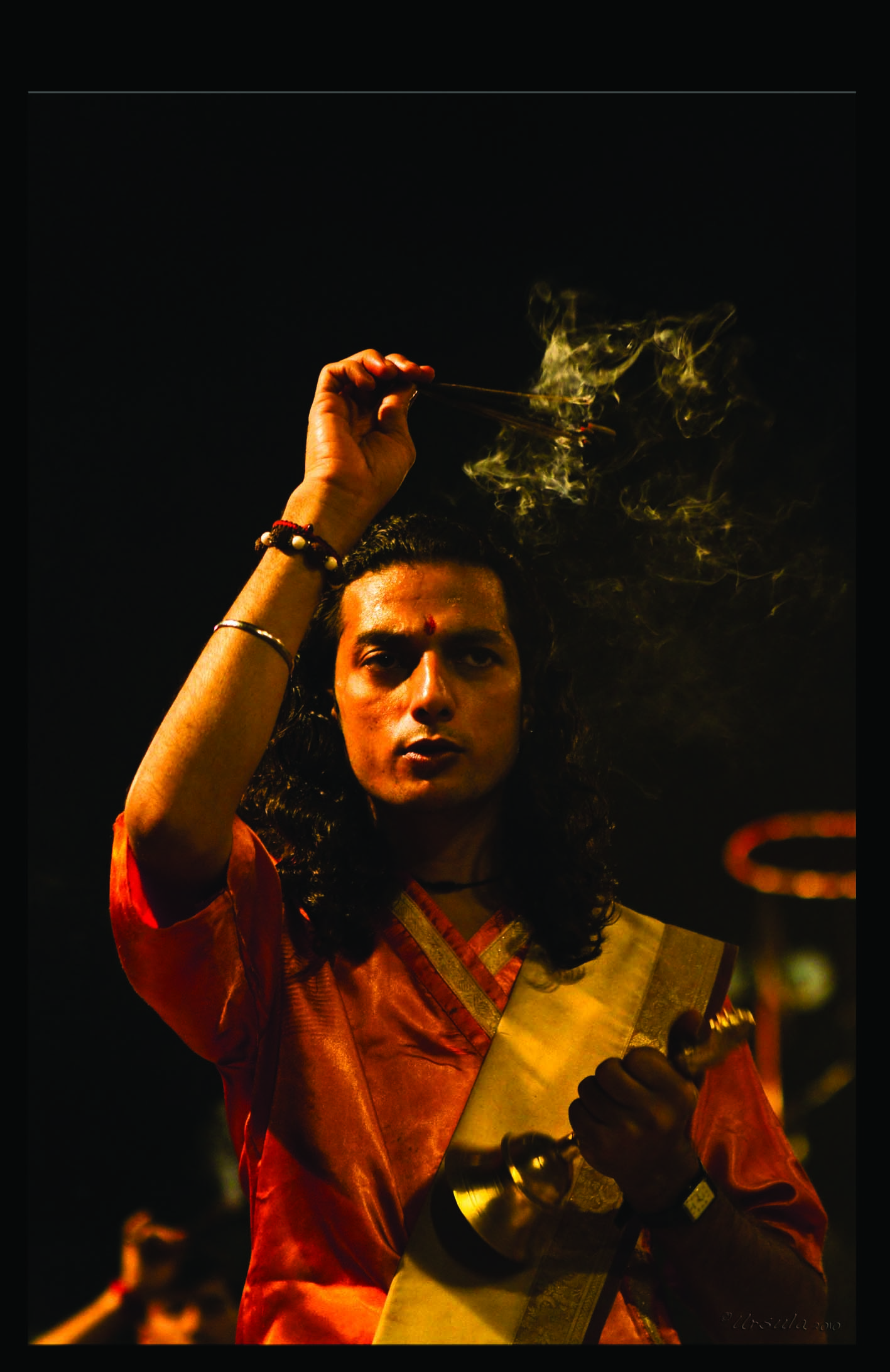
- Performing the Ganga Aarti from Dasaswamedh Ghat, Varanasi
- Buddha Head from Shwedagon Pagoda, Myanmar
- Harry Clarke Window from Dingle, Ireland
- Novice Monk Shwe Yan Pyay Monastery, Myanmar
Packets of 10 for $AU50.
Or - pick any photo from my Flickr or Wanders blog photos.

.jpg)
.jpg)
.jpg)








 Maybe one day I’ll get back to these waters – I’m pretty sure the area won’t have changed much.