Kara Youth in Beads Although the Kara people of the Lower Omo Valley love their face and body paint, one of my favourite pictures from their village is this one of a clean-skinned youth, free of clay paint and ritual scarring.
Ethiopia is a big country: at 1,104,300 sq km, it is number 28 in the world in terms of area. And, it remains – despite recent progress in alleviating extreme poverty – one of the poorest countries in the world (CIA World Factbook).
So, local infrastructure is not what it might be, and the country is not particularly easy to get around!
What continued to amaze me was how distinctive each of these groups was!
On our sixth day in the country, we hopped into four-wheel drives after breakfast, and drove north again, deep into the heart of Kara(Karo) territory. A beautiful, fully equipped campsite had been set up for us (Grand Holidays Ethiopia) in shady forested clearing along the Omo River, not far from Dus Village. This gave us unique access to the Kara people, Ethiopia’s smallest ethnic group, but possibly one of the most popular. They are well known for their decorative face- and body-painting in chalk and ochre.
There are about 100,000 members of the Kara ethnic group, but most live in South Sudan or the Central African Republic. In Ethiopia, there are only about 1400, living across three villages on the left bank of the Omo River. As speakers of an Omotic language, they are loosely affiliated with the Hamar people; this puts them at odd with the more aggressive and more numerous Nilo-Saharan-speaking Nyangatom who live on the other side of the river.
Join me on an excursion into Kara territory.
Worker – Buska Lodge After breakfast in Turmi, we farewell the staff there and hit the road. (iPhone6)
Driving Ethiopian Roads The roads on the east side of the Omo River into Kara territory are dirt tracks …
Dusty Tracks … that lead into the jungle. At one point we had to stop and remove fallen trees before we could pass.
Dus Mobile Camp After a challenging drive, it was lovely arriving at our beautiful campsite, which was set up and ready for us in a shady clearing in the forest along the Omo River in the heart of Kara land.
Home Away from Home My tent in the Dus Camp was airy and spacious.
Dus Kara Village When we drove to the nearby Kara village in the afternoon, the rains came …
Escaping the Rain … and the locals huddled under the eaves of a community building to protect their face- and body-paint. Kara people enjoy decorating their bodies and faces daily with coloured ochre, white chalk, yellow mineral rock, charcoal, and pulverised iron ore.
Kara Man Kara men paint their faces and bodies in white chalk on special occasions. A brief gap in the rain allows a natural-light shot of a man in his ceremonial paint.
Kara Village The rains have made little impression on the dry landscape. Although all the homes are the traditional conical huts (ono) we saw on entering the village, there are a few more modern buildings scattered around, …
Looking into the Schoolhouse … including a simple schoolhouse.
Looking out through the Schoolhouse Windows With the weather being so chancy, we take shelter in the school and set up a a black cloth and a soft-box lighting system to take some “studio” shots of the youngsters who have gone to so much trouble with their body art.
Kara Girl Men, women, boys, and girls, all engage in creating and wearing symbolic and artistic body and/or face decorations.
Painted Children The decorations can be elaborate and detailed, or rough, but striking paintings traced with the palms or fingers.
Kara Youth in Beads and Paint The patterns can change daily, and there is a vast lexicon of painting motifs to choose from.
Face Paint and Beads Even so, some common themes emerge.
Dawn in the Dus Village We returned to the village early the next morning to learn more about the Kara and their customs.
Ceremony House Only initiated men are allowed into this structure – in fact, only initiated men …
Kara Elder in his Ostrich Feather … like this elder, are even allowed to touch it! A friendly, but watchful, eye was kept on us, lest we got too close.
Kara Family
Men in Body Paint With these men side by side, you can see the different body paint patterns in use.
Man in Face Paint The notch in the man’s left ear was given to him after initiation to symbolise his ability to listen to tribal secrets.
Woman with Flowers Men and women make an incision below their bottom lip and often insert straw or wood – or in this case flowers – into it.
Pensive Young Woman
Automatic and a Skull Cap Kara share many similarities with their Hamar cousins. Men who have killed an enemy from another tribe or a dangerous animal are entitled to wear an ochre clay cap with an ostrich feather. All men need to own an AK47 before they marry, so they can prove their ability to protect their village and herds.
Young Woman in a Hut The huts are hot and dark, even mid-morning. With a helper and an off-camera flash, I manage a few shots of this solemn young woman before we all have to get outside where it is slightly cooler.
The Kara are a beautiful and fascinating people – fortunately, with our tents set up so close, we were able to return to this village several times.
In this era of being confined within my own borders, I look forward to reviewing more of my photos from these visits.
[…] of times, and therefore could spend time with the locals as they went about their daily lives (see: Visits to a Kara Village and The Kara of Dus […]ReplyCancel
[…] meant we had proximity to the largest of the three Kara villages. We visited it several times (eg: Visits to a Kara Village) and spent some meaningful time with these beautiful people in their own […]ReplyCancel
Headless Pharaoh Holding tightly to a pair of ankhs, or the keys of life, a headless statue stands tall in the Karnak temple complex near Luxor, Egypt.
So much of Ancient Egypt was about one’s relationship to the Gods and the afterlife. And, so much art and architecture dedicated to these relationships remains to be explored today.
From the mind-blowing pyramids at Giza (see: Stories in Ancient Stone) to the amazing tombs in the Valley of the Kings (see: The Writing on the Walls, and Take me to the Afterlife) and the stunningly beautiful mortuary temple for Hatshepsut (see: The Queen who would be Pharaoh), every hieroglyph, every statue, and every wall and column says something about the Egyptians’ complex belief system about immortality.
Nowhere is this more in evidence than at Karnak, a temple complex on the east bank of the Nile River, just 2.5 km north of Luxor. Part of the UNESCO-listed “Ancient Thebes with its Necropolis”, this crumbling collection of temples, chapels, pylons, and other buildings, stretches over two square kilometres, forming the largest temple complex in Egypt and one of the largest in the world. The Temple of Amun-Ra at the heart of the Karnak complex vies with Angkor Wat in Cambodia for position as the largest single religious building in the world.
Added to and altered for well over a thousand years, the site has been called a great historical document in stone. From the beginning of the Middle Kingdom (2040 – 1782 BCE), through the New Kingdom (1570 – 1069 BCE) and into the Ptolemaic Dynasty (323 – 30 BCE), successive Egyptian rulers affixed their own architectural stamps to the complex, defacing the contributions of their predecessors and building over ruins of monuments in honour of the God Amun-Ra thought to date to the Old Kingdom (c. 2613 – c. 2181 BCE). Even Alexander the Great left his mark here, decorating an inner chapel.
The temples are principally dedicated to the Theban god-triad: Amun, the father-god, god of the sun; Mut, mother-goddess and god of ‘everything’ in the world; and Khonsu, lunar child-god, god of the moon.
Join me for a wander around this extraordinary complex:
Morning on the Nile Staying on a boat on the Nile made me feel like I was in the middle of an Agatha Christie novel. (iPhone6)
Model of Karnak At the entry to the extensive Karnak Temple Complex, visitors get a chance to appreciate an overview.
Entering Karnak The First Pylon, a monumental gateway of tapering towers leading into the temple complex, was the last pylon to be built at Karnak, and was never finished and decorated.
Rams at the Entrance to Karnak The entry to Karnak is flanked by criosphinxes, sphinxes with the bodies of lions and the heads of rams. The god Amun is depicted as having the head of a ram with curved horns.
Criosphinx Weathered and worn, each criosphinx protects a small figures of a Pharaoh – thought by most to be Ramses II – in the pose of Osiris.
Phalanx of Criosphinxes The row of ram-headed sphinxes leads the eyes to one of the obelisks on the site.
Sun through the Gates It is nine o’clock in the morning. It seems only fitting that the sun should greet us as we enter the first gate into a temple dedicated to the sun god.
Sparrow in the Wall
The First Court Once we are through the massive pylon, the space opens out.
Barque Shrines of Seti II Barque stations or shrines were resting places for the statues of the gods when they were journeying outside the temple during festival processions. The First Court houses the shrines of Seti II and Ramses III. I liked leaving people in my pictures: it allowed me to appreciate the grand scale that even these smaller temples are built on.
Sweeper in the Courtyard More criosphinxes grace the courtyard.
Guides in the Courtyard When I visited, tourism was still down following the Arab Spring, and many guides hung around chatting and hoping for work. I can’t imagine how they are managing this year!
Hieroglyphs on the Pillars Intricate detail is everywhere; it is too much to take in! The guide books recommend you visit more than once.
Tourist in a Courtyard Doorways and portals lead off in all directions.
Pillars of the Hypostyle Hall The Hypostyle Hall – literally, a great hall whose roof rests on pillars or columns – it truly amazing!
Sandstone Pillars The 134 sandstone columns represent papyrus stalks, as they reach for the sky where the roof once was.
Writing on the Pillars At the beginning of creation, Amun arose from the waters of chaos in the primeval papyrus swamp.
Hieroglyphs on the Pillars Every square inch tells a story.
Sandstone Stories According to scholars who can actually read them, the reliefs and inscriptions in the Great Hypostyle Hall provide us with an encyclopedia of Egyptian civilisation.
Pharaoh in the Nook
Hatshepsut’s Obelisk Hatshepsut had two obelisks created for Karnak – this 0ne, the tallest surviving ancient obelisk on earth – still stands.
Obelisk in the Blue An obelisk is a tall, four-sided, narrow, tapering monument which ends in a pyramid-like shape at the top. Obelisks symbolised rebirth and were used as funerary monuments. Pairs were also placed at the entrances of temples. Each obelisk was carved from a single piece of stone – typically red or rose granite from the quarries at Aswān – and then moved to its location and raised onto a base.
Hieroglyph Detail Obelisks are carved with hieroglyphs that include religious dedications to the sun god and commemorations of the rulers – in this case Hatshepsut.
Iconography Protected portions of the complex retain some of the original colour. These must have been brilliantly vibrant when they were fresh!
Inside Alexander’s Temple One of the most colourful corners of the complex is the sanctuary decorated by Alexander the Great.
Akh Menou Temple Otherwise known as the Festival Hall of Thutmose III, the morning sun is already hot when we walk through the Akh Menou Temple, …
Patterned Shadows … and the shadows are strong. (iPhone6)
Seated Pharaoh Tuthmosis III (also known as Thutmose III, 1458-1425 BCE) was the 6th king of Egypt’s 18th Dynasty. Stepson to Hatchepsut, he became a great military and was one of Egypt’s most effective rulers.
A date palm and a faceless pharaoh: it seemed a fitting last image from a temple complex with more stories than I can comprehend.
But, learning some of the history of Ancient Egypt through its sculpture, art, and architecture is an absolute joy!
I look forward to the days when we can explore again.
[…] a morning spent exploring Karnak Temple (see: In Worship of Ancient Gods), I had just enough time to wander some of the market streets in Luxor before our boat set sail. […]ReplyCancel
On the River Snow-capped mountains in the background, a forest dominated by drought-tolerant pinyon pines and juniper trees in the foreground, and mountain waters at our feet: this is the beautiful Eastern Sierras during a less fiery season.
For the last three weeks, fires have been raging across the Western States of the USA: in Oregon, California, and Washington millions of acres of land have been razed, more than 30 people have been killed, and thousands of homes have been lost.
I’ve been watching in horror as the images coming out of the conflagrations remind me of what we endured here in Australia at the beginning of this year, and may well be facing again soon.
It has also been personalised for me, as at least one friend was among the tens of thousands of people under evacuation orders in California. Fortunately for her, the winds shifted in time, her house was saved, and she and her animals were able to return to her home in the hills outside of Coleville, CA. But, the Slink Fire – last reported at 26,752 acres – was within two miles of the front door of her house: a place I once stayed.
It was mid-summer when I visited many years ago: July, which is rated as the hottest – but one of “the most pleasant months in Mono County”. The moisture from the winter snows had not yet been sucked out of this end of the Antelope Valley: the grass was green and the mountain flowers were out.
On our first day in the vicinity, we went on several short drives and medium hikes. We drove
into the Stanislaus National Forest, about an hour south of Coleville. There we hiked up into the Sonora Pass (elevation 9628 (2935 metres)) and onto a portion of the fabled Pacific Crest Trail in search of views and wildflowers. We drove back north in the late afternoon to explore some local mining history at the Golden Gate Stamp Mine, and then enjoyed evening views over the Eastern Sierras.
Fortunately for me, I was a bit fitter then than I am today: even the passes in California are higher than Australia’s tallest mountain! The Sonora Pass Pacific Crest Trail climbs 1,500 feet (457 metres) in the first two miles (3.2 km) before levelling out and traversing the flank of Leavitt Peak (11,569 ft – 3526 m), the highest mountain in the area. So, I used the wildflowers as a good excuse to stop and catch my breath!
Do join me:
Appaloosa Not far from here, there are bands of wild horses roaming in the mountains. This beauty in the lush Antelope Valley, however, is not one of those! Side note: California has not one but three localities called “Antelope Valley”! This one, high in the Eastern Sierra Nevada Mountains, stretches from Mono County, where we are here, into neighbouring Nevada.
View over the West Walker River Our first stop is at a vantage point, where there are views over the farms and ranches in the Antelope Valley, and over the West Walker River as it flows towards Nevada.
Silver Lupine – Lupinus Albifrons It is here that we are treated to our first wildflowers: the showy white-leaf bush lupine, or evergreen lupine, is native to California and Oregon.
Hairy Mule’s Ear – Wyethia Molliss Named for their long, hairy leaves that resemble the ears of the work animals commonly used in early mining here, hairy mule’s ears are members of the sunflower family.
Mule’s Ears on the Track Clumps of plants find a home on the dry and rocky earth …
Pine Forest … and the tall, straight pines stretch out around us.
Small Waterfall The waters that start with snow-melts high in the mountains rush down noisily over massive boulders in the many creeks.
Into the Woods Our pathway takes up up over more boulders …
Alpine Meadow … and into clearings …
Lemmon’s Rubberweed – Hymenoxys Lemmonii … of fallen logs and alpine flowers. Also known as Lemmon’s bitterweed, Lemmon’s rubberweed is a member of the daisy family native to the western United States.
Mountain Coyote Mint – Monardella Odoratissima As we walk up the Sonora Pass Trail, we find more unique wildflowers. Mountain beebalm or mountain pennyroyal is a perennial which grows in mountain forests and sagebrush scrub.
Skyrocket – Ipomopsis Aggregata My favourite of the wildflowers here is a member of the phlox family commonly known as scarlet trumpet or skyrocket. Apparently it is one of the most common western wildflowers, but we didn’t see that many.
Indian Paintbrush – Castilleja
Mules Ears on the Ridge
A Walker on the Track
White Prickly Poppy – Argemone Albiflora Another of my favourites was the widely-distributed American-native bluestem prickly poppy.
Glacial Waters There are a number of glaciers high in these mountains, contributing rich green colours to some of the creek pools.
Post and Bush The eastern Sierra Nevada mountains and the Great Basin are in a rain shadow, which is largely responsible for the arid climate. Winters might be cold and wet, but summers are typically hot and dry.
Forest Floor Pine needles and pine cones litter the ground underfoot.
Golden Gate Mine Later the same day, just a short drive out of Walker, we visited the Golden Gate Mine.
Golden Gate Mine Detail In surprisingly good condition, this stamp mill operated from 1903 to 1939.
Golden Gate Stamp Mine The ten-stamp mill pulverised the ore with a deafening noise that could be heard for miles.
“Joshua Hendy Iron Works” The Joshua Hendy Iron Works was an American engineering company that was once a world leader in mining equipment.
Leaving One’s Mark No matter where you are in the world, you find the marks of those who have gone before!
Strange Pines on the Ridge Our last stop of the day was on a ridge nearby, …
Windswept Trees … where the cross-winds strip the trees of moisture, and the updrafts stole my favourite fedora.
Rocks on the Ridge Mosses and lichens colour the rocks, …
Nature’s Sculpture … old trees are left like skeletons against the blue skies, …
Overlooking the Antelope Valley … and the views go on forever.
Endless views …
… and endless walking possibilities!
Not today, unfortunately with ongoing fires and compromised air quality. I do wish our leaders would learn from the current catastrophic blazes and make some positive changes for the future!
[…] How lucky was I to have a photography-friend with not one, but two bases in this rugged and gorgeous area! Like me, she is a fan of mountain walks and flowers, and we had timed my trip to line up with the best of the mountain blooms (see: Greener Pastures and Wildflowers). […]ReplyCancel
Woman in a Red Ghoonghat India is about colour: everywhere you look, people in colourful clothing contrast wildly with colour-washed walls and chaotic backgrounds.
India is an intensely sensory experience.
For me – a Westerner who grew up in a conservative culture of lowered voices and subdued shades in the northern prairie lands of snow and open spaces – the colours, the smells, the heat, and the press of the crowds in India can quickly lead to sensory overload. This is especially true during festival times.
But, I love it!
Here in Australia at the moment – thanks to the Novel Coronavirus – we are entering our sixth month of restricted movements, with the Australian borders closed to virtually all international travel in or out. Even our internal borders are closed, and many communities are enduring weeks of strict lockdown. All my travel plans for the the year have had to be postponed or cancelled.
So, the only way I can travel is vicariously by exploring archives of old images. What better antidote for Social Distancing than to return to pictures I took during what has been called the world’s biggest religious gathering: India’s Kumbh Mela.
The Kumbh Mela or Kumbha Mela is a major Hindu pilgrimage and festival. According to the story, back when the gods lived on the earth, they fought continuously with demons over a pot (kumbha) of amrita, the nectar or elixir of immortality. During the struggle, drops of the elixir fell on four earthly sites: Allahabad (the confluence of the Ganges and Yamuna SarasvatiRivers), Haridwar (Ganges), Nashik (Godavari), and Ujjain (Shipra). Roughly every three years, the Sun, the Moon, and Jupiter line up over one of these sites, and the associated rivers turn back into the original primordial nectar. Pilgrims bathing in the sacred waters at these auspicious times are eternally blessed by the divine, and their sins are washed away.
So, when the Hindu Holy Men calculate the propitious dates, the Hindu pilgrims come. They come from all over India. They come to bathe and pray, and they come to transport water from the sacred rivers home with them.
I – along with photographers Gavin Gough and Matt Brandon and a small group of intrepid photography enthusiasts – was one of the more than 10 million people who descended upon the ancient city of Haridwar in Uttarakhand, North India to attended the 2010 Kumbh Mela.
There, amid the crush of bodies, my cameras and I revelled in the colours of the occasion.
Colours of India Colour is everywhere: in the bright and wildly patterned saris and ghoonghats (headscarves), in the vibrantly painted walls of the old brick buildings, and in the chaotic array of goods for sale.
Shisha Mirror Embroidery Many of the fabrics people wear are elaborately embroidered with rich threads and and small mirrors.
Pilgrim in Cream Even the more subdued colours are lit up by the smiles of their wearers.
Lace Trim Border Cotton lace edging frames faces and contrasts with the main fabric.
Hands Women carry their wealth in the gold bangles they wear. More than one woman I met thought me rather ‘poor’ because of the lack of gold jewellery on my person!
Sadhu in Orange The Holy Men come in a range of colours and styles. Check out that hair!
Colourful Scarf Everywhere I go, I meet smiling faces and a direct gaze.
Orange Bridge over the Ganges Even the bridges across the sacred mother Ganga are brightly painted.
Sadhu on the Move Some of the pilgrims have walked for days to get here …
Time Out … so a break with friends is always welcome.
Overlooking the Camp To handle the massive influx of humanity, a vast tented camp area has been set up. Monitoring is low-key, and performed by local police in subdued uniforms.
Lady in Red Sheer fabrics often act as a face cover – but the gaze is still direct.
Fresh Laundry Saris, turbans, and ghoonghats all require metres of colourful cloth.
Women in Bindis Red forehead dots (bindis) placed on the third eye of spiritual sight are commonly worn by married women, particularly Hindus and Jains, across the subcontinent.
Sadhu in a Tilaka While bindis have a range of uses and meanings, tilak or tilaka are more specific, acting as a holy mark of religious affiliation. The three lines are a reminder of the various sacred triads in Hindu thought.
Child in Sunnies Pilgrims come in all ages.
Women in a Tent In the dim shade of fabric tent a group of women have gathered. They invite me to join them.
Woman in a Purple Tent The purple fabric contrasts with the women’s colourful headscarves.
Colourful Woman The woman are all smiles and chatter …
Indian Woman … and there is plenty of food and drink in the tent with them.
Woman in Blue
Young Woman in Yellow The purple fabric casts interesting lights on the young women in the tent.
A Splash of Sari Colour Back outside, the light and heat bounce off the corrugated iron sheeting that lines the corridors of the pilgrim’s camp.
Mother and Daughter
On the Bathing Ghats In Hindi, a ghat is the “river landing stairs”, and the place where pilgrims gather to bathe in the Ganges as it races past.
Young Woman on the Ghats
Woman in an Ornamental Bindi
The Face of Experience
Rusty Rails Away from the ghats, crowds are thinner, but the colours and textures continue.
Child on a Balcony As I make my way back through the arterial roads, a child watches my retreat from overhead.
It was time for me to return to the relative quite of my small room.
As I said, as much as I love the colours of India, they overwhelm me, and I have to retreat.
Dingo on Seventy-Five Mile Beach Fraser Island, off Southern Queensland’s east coast, is home to several packs of wild dingos (Canis lupus). This makes the UNESCO-listed sand island one of the best places in Australia to see them in their natural habitat.
Fraser Island is a unique and wonderful place; it is a poem in sand, punctuated by the occasional sculptured rock.
The world’s largest sand island, Fraser Island was formed over hundreds of thousands of years as winds, ocean currents, and waves swept sands north from the continental shelf of Eastern Australia, and deposited them over the remenants of an ancient terrain of sedimentary rocks from the Cretaceous age and volcanic rocks from the Mesozoic or Tertiary periods. The outcrops that have resurfaced – including the volcanic formations at Indian Head, Middle Rocks and Waddy Point – only add up to a very small portion of the island’s total 184,000 hectares of land mass.
Some of the older, underlying layers of sands have been stained shades of yellow, brown, and red by the iron-rich minerals deposited with them. When portions of those layers of sand are compressed and bound together with clay, they form a weakly consolidated mass. Over thousands of years, rain and wind have rubbed surface layers away, exposing this soft older core; at The Pinnacles this has resulted in subtly coloured sculpted forms.
Sand is notoriously low in the nutrients essential to plant growth, but in spite of this, Fraser Island is home to a diversity of spectacular vegetation (see: Into a Pristine Past). This, in turn has evolved to support a range of insects, reptiles, amphibians, birds, and almost 50 identified species of mammals – including the iconic Australian dingo (Canis lupus).
There are 25 – 30 stable individual dingo packs on Fraser Island, which gives the visitor a good likelihood of spotting at least one. To preserve their ‘wildness’ it is an offence to feed, harm, or encourage them. The animals on the island have not crossbred with domestic or feral dogs as extensively as mainland populations, and so are thought to be the purest strain on the eastern Australian seaboard – and possibly in the country.
Come and enjoy the landscapes of Fraser Island, and some of the flora and fauna that live there.
Seventy Five Mile Beach from the Bus Where else in the world is a straight sandy beach part of the national highway system? Seventy Five Mile Beach Road, also known as the Fraser Island Beach Track, runs almost the entire length of the island along the east coast. (07June2019)
The Pinnacles Entry At the entry to The Pinnacles walkway, visitors read how the coloured sands were formed when the Rainbow Serpent of the Butchulla people was killed by his lover’s jealous husband.
The Pinnacles Also called Coloured Sands, the 72 different colours counted in The Pinnacles are from the different levels of iron in the sand and clay – or they might be from the thousands of pieces of shattered Rainbow Serpent that fell to the earth.
Pathway at the Pinnacles The coloured sandstone layers were muted under the overcast sky. The trail is lined by she-oaks and pandanus palms.
Treads in the Sand : Middle Rocks All the roads on Fraser Island are sand. You need a 4WD, a special permit, and a fair bit of skill to navigate them.
Windswept Walkway : Middle Rocks Not far from The Pinnacles, but in a very different vegetation zone, we follow a windswept wooden walkway to Champagne Pools.
View to Indian Head Much of the small percentage of rock found on Fraser Island is here on the east coast. From the boardwalk, we can look south to Indian Head …
View from the Walkway … and north to Waddy Point.
Look, but don’t swim! The waters around Fraser Island are home to marine stingers, dangerous currents, and a large shark population.
Stairs at Champagne Pools The pools at Waddy Point are sandy-bottomed and almost completely surrounded by shallow rocks, making them the only place on the island where swimming in ocean water is safe, and allowed.
On the Rocks The sharpness of the vocanic rocks that surround the Champagne Pools are in stark contrast with the beautiful silica sand most of the island is made from.
Champagne Pools Every crashing wave aerates the water in the pools like a delightful jacuzzi.
Girls in the Bubbles
Flowers on the Track The short “Imagine Walk” at Middle Rocks is lined with flowers …
Banksia … and low shrubs.
Pig Face – Carpobrotus Glaucescens
Guinea Flower – Hibbertia
Dingo on the Beach It is an offense to feed the animals, but this one still thought she might find some scraps from our picnic lunch.
Wild Dingo – Canis Lupus They are such intelligent looking creatures! While dingos don’t generally attack humans, they can be dangerous, especially to small children.
Viewpoint on Tukkee Wurroo – Indian Head The rocky outcrop at Tukkee Wurroo is very different in colour and texture from that at Middle Rocks.
White-Bellied Sea Eagle A sea eagle circles overhead …
Waves on the Rocks … and the sea foams below.
Fraser Island Landscape Looking south from the vantage point of Indian Head, you can see how swathes of vegetation alternate with stretches of bare sand.
Walkway at Eli Creek Our last stop was at Eli Creek …
Girls on the Walkway … where a 200m wooden walkway takes you up the island’s largest freshwater creek.
Waters under the Walkway They say the waters in the creek take more than a 100 years to filter through the sand, making them among the purest of the world.
People in the Creek It was raining while we were there – which is hardly a problem if you plan to walk downstream …
Rafting on Eli Creek … or raft down the fast-moving waters. The creek pours up to four million litres of water into the ocean every hour.
Evening on the Great Sandy Strait Sadly, it was time to leave the island. The light was low over the waters as we waited for the ferry back to the mainland.
It is truly a rich and beautiful island, worthy of its UNESCO listing, and of our respect and protection.
As the Queensland Government Parks say, the challenge is to balance the conservation of the region’s natural and cultural assets with increasing demands for access and tourism.
[…] had spent two days on a tour of Fraser Island off Australia’s east coast (see: Living Sands and Rock), and the ferry was scheduled to return to the mainland early evening. I was heading back through […]ReplyCancel
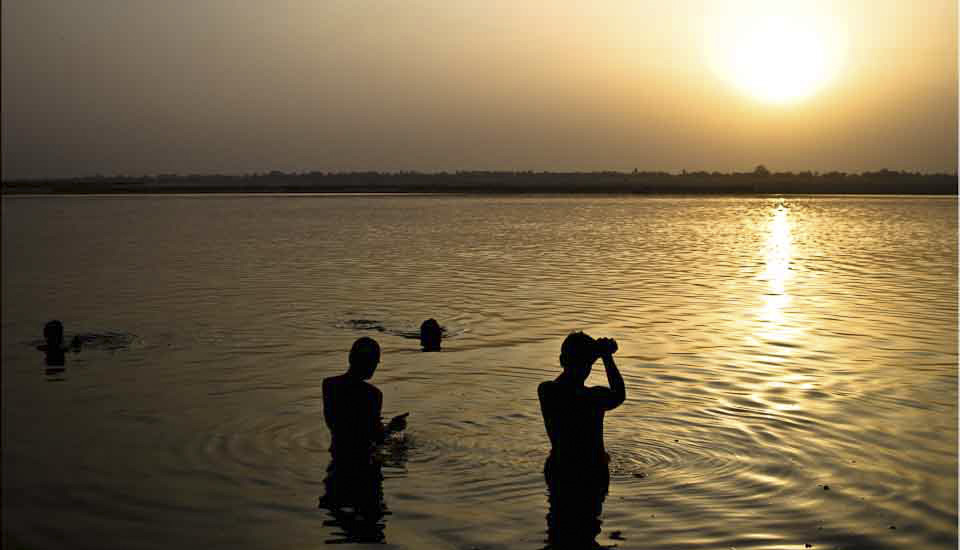
- Performing the Ganga Aarti from Dasaswamedh Ghat, Varanasi
- Buddha Head from Shwedagon Pagoda, Myanmar
- Harry Clarke Window from Dingle, Ireland
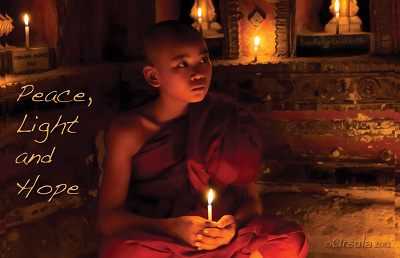
- Novice Monk Shwe Yan Pyay Monastery, Myanmar
Packets of 10 for $AU50.
Or - pick any photo from my Flickr or Wanders blog photos.

.jpg)
.jpg)
.jpg)

 Until then,








[…] of times, and therefore could spend time with the locals as they went about their daily lives (see: Visits to a Kara Village and The Kara of Dus […]
[…] meant we had proximity to the largest of the three Kara villages. We visited it several times (eg: Visits to a Kara Village) and spent some meaningful time with these beautiful people in their own […]