.jpg) Museum and Mountains
The National Museum of the Sultanate of Oman is like a symbol of Muscat, or of Oman as a whole: modern architecture based on traditional Omani Arabic principles, surrounded by an oasis of lush gardens and rugged, arid hills – and watched over by medieval Portuguese forts. Muscat, the Sultanate of Oman’s capital and most populous city, has been known as an important trading seaport since at least the early 1st century. Hemmed in by the rugged Western Al Hajar Mountains, the sheltered port city lies on the Arabian Sea along the Gulf of Oman, where the waters lead east to the Indian Ocean, and west to the Straits of Hormuz and the Persian Gulf.
The original tribal dwellers of this strategically important location were challenged by the Neo-Persian Empire in the 3rd century CE, but the influence of the Al-Azd tribal Arab dynasty continued to grow until the First Imamate was established in the 9th century. The Portuguese conquered Muscat in 1507, built fortresses – which still stand – to protect their trading routes, and maintained a hold on the city against challenges from Persia and the Ottoman Turks for over a century.
By the early 1600s, the balance of power shifted again, from the Persians and the Portuguese to local Omanis, but infighting and conflict continued until the emergence of the Al Bu Sa‘id dynasty in 1749. This family has ruled Oman ever since.
Oman might be the oldest independent state in the Arab world, but it is a bundle of contradictions. The country is an absolute monarchy, and although the current ruler Haitham bin Tarik Al Said is described as “outward-looking and Western-oriented”, as with any autocracy, civil and human rights can be ignored with impunity.
But, the country has come a long way. Until the overthrow of Sultan Said bin Taimur, who ruled from 1932-1970, the country was closed to any outside influences. In spite of considerable proceeds from the export of oil, the people suffered high mortality rates. There were only three schools, the literacy rate was 5%, and there were only 10 kilometres (6 mi) of paved roads. By contrast, in 2010, after forty years of rule by his son, Sultan Qaboos bin Said, the United Nations ranked Oman as the most improved nation in the world in terms of development.
This development is not unbridled, however. While new buildings look to safety and function, they are also expected to conform to design and height restrictions, and must be in “harmony with the elements of Islamic and Arab Omani architecture”. As a consequence, Muscat’s urban landscape consists of modern low-lying white buildings that blend seamlessly with historical architecture and the landscape.
Oman’s return to modern development and an outward-looking economy make it a comfortable place to visit. Tourism is the fastest-growing industry, and provided one respects local rules and traditions, the country feels safe and hassle-free.
Certainly, Muscat was a pleasure to explore, with plenty to see.
.jpg) Prayer Hall
Our first stop on a day tour was at the Sultan Qaboos Grand Mosque (see: Sacred Spaces), where – outside prayer hours and with our heads suitably covered – we wandered around the magnificent interior. This intricate 21 tonne carpet took four years to make, and the 14 metres (46 feet) tall Italian-made central chandelier includes 600,000 Swarovski crystals. .jpg) Inside the Mosque Muhammad al-Amin
We then spent time exploring the slightly more modern marble-clad Muhammad al-Amin Mosque (see: Sacred Spaces).  Sultan Qaboos Port
Muscat clings to the waterfront. The Muttrah Corniche follows the outlines of the Sultan Qaboos Port. The wealth here is evidenced in the two royal yachts sitting in the harbour. Entry to Mutrah Souq
Regardless of vagaries of spelling, the Muttrah Souk is a delight to wander around. Snuff Tins
It is one of the oldest marketplaces in the Arab world, and although there are some products aimed at tourists, it clearly is a local market. Trinkets, Jewels and Gems
Every square inch is full of fascinating products, and the while the shopkeepers are friendly, they weren’t intrusive. Traditional Glass Mosaic Lanterns Souk Corridor
It was hot outside, but the wide lanes of the souk were actually relatively cool and restful – and the whole place smelled delightfully of Frankincense. Gold Finery
There is some real money in this city! I settled for a couple of scarves. Mutrah Fort
Back on the waterfront, we found a local place to eat lunch under the watchful eye of the tower built by the Portuguese in the 1580s as part of the city fortifications. Waterfront Fish Sculpture The Corniche
The roadway along the waterfront is flanked with beautifully tiled walkways which culminate in parks on the points. Dhow in the Harbour
Oman takes great pride in its boatbuilders, and traditional wooden dhows are still used for fishing and tourism. Riyam Incense Burner
High above a waterfront park, a watchtower that looks like an incense burner was built in 1990 to celebrate Oman’s 20th National Day. View over Old Muscat
From a hillside vantage point, we look over the forts and buildings of the old city. At the Sidab Women’s Group
A bit further up the hill, we stopped in at the Sidab Women’s Sewing Group, a poverty alleviation initiative, where we admired local textiles … Kahwa at the Sidab Womens Group
… and of course, were offered coffee. In Oman, coffee – kahwa or qahwa in Arabic – is blended with saffron, rose water, and cardamon, and served with fresh dates as a ritual ‘welcome’. I loved it! Minaret and Mountains
Back on the road, we head into Old Muscat … Al Alam Palace Gate
… past the colourful gate to the old palace, … White Wall
… and past classic white-washed walls. Al-Mirani Fort
The old city is separated from the rest of modern Muscat by coastal mountains – and Portuguese walls and forts. Nubian Ibex (Capra Ibex Nubiana)
Outside the Bait Al Zubair Museum, we find colourful models of the native desert-dwelling goats … Relief Model
… and a model of the old city as it would have looked in 1625 when the encircling walls were finished. Omani Khanjar
The National Museum of the Sultanate of Oman was established in 2013 … Carved Arch
… as a showcase for the country’s cultural heritage … Bronze Age Magan Boat
… and history, back to the earliest settlement. Omani Door Handle
Beautifully carved wooden doors and their heavy ornamentation feature everywhere in the country. Desert Jewels – The National Museum Sunset over Muscat
For a different perspective on the city, I took a sunset cruise in an old dhow (Watch this Space!). You can just see the incense burner and city fortifications against the darkening sky.  Certainly a culturally rich and fascinating place! Certainly a culturally rich and fascinating place!
Until next time,
Happy Travels!
Photos: 20 and 26October2019
A Kara Youngster : Dus Village
The Kara are a beautiful people. and photographing them with the benefits of a black cloth and an off-camera flash is a real joy. The Lower Omo Valley in south west Ethiopia is a photographer’s dream. It might be off the beaten track and hard to get to, but it is home to 16+ ethnic groups, each with their own distinctive customs, dress, and body art, so once you are there, you are spoiled for choice of subjects.
The tribal people in this region have learned that their tourism ‘value’ is in their appearance, and they generally charge visitors ‘per click’ for pictures made of them. While this is entirely fair, it removes the opportunity to make truly environmental pictures: the people in these remote villages are acutely aware of the camera, and will ‘pose’ at every opportunity.
So, if they are going to pose anyway, why not make use of the black cloths and off-camera flashes that someone has transported into the middle of the jungle!
I was comfortably lodged in the heart of Kara tribal territory on the south bank of the Omo River, at a mobile camp organised by Grand Holidays Ethiopia. The campsite was close to Dus Village, the largest of three Kara villages in Ethiopia: a half-day’s drive from power, running water, and the market town of Turmi. I was travelling with photographer Ben McRae on a Piper Mackay tour, and he and some of the other participants had brought flash units with them.
Our location gave us exceptional access to the village, and we visited a number of times, at all times of day (see: Kara Village). The Kara are known for their beautiful body- and face-paint, which they apply to each other for fun, decoration, and artistic expression – even if there are no photographers around, and even when there is no special occasion to celebrate.
Join me for some flash – and some environmental – portraits of these beautiful people.
Kara Youngster in Face Paint
The Kara people love their beads and face paint. Smiling Kara Youngster
With no common language, and the Kara’s serious attitudes about photography, it was hard to get a relaxed pose – so I was very happy with this gorgeous smile. Painting Guinea Fowl
Outside our makeshift studio, young women are helping each other get ready. Guinea-fowl spots are one of the most popular design elements. Cowrie Shells and Beads
Kara women love their beads. Like their Hamar cousins, they wear goatskin smocks, trimmed with cowrie shells. Face Paint and Ochre
They take pride in their face paint, and – also like the Hamar – they dress their hair in an ochre and fat paste. Kara Man
There is a simple elegance in these people’s faces. Man in Hands
The face-and-body paint styles take a variety of forms. Hand prints are a popular body-paint motif. I love that clear, direct gaze. Old Kara Man
The feathered clay cap this man is wearing is proof that he has made a kill in the past year or two: either of an enemy, or of a dangerous animal. Kara Woman in a Beaded Headdress Beads and Spots A Sideways Glance Mother and Toddler
Back outside in the village, people pose in front of their woven grass houses. The Soccer Match
On a flat patch of dusty ground, … Jump Shot
… a group of young men in bare feet or flip-flops … Ball Skills
… chase an under-inflated soccer ball. Playing Ball
I can’t figure out the rules – if there are any – of the game they are playing, … Eyes on the Ball
… but there is no mistaking their skill and enthusiasm. Face Painting
The afternoon draws on and people continue to gather in clusters to apply face paint. Kara Mother in Corn Rows
All around the village, young mothers … Kara Mother in Traditional Dress
… are happy to show off their children. Young Kara Men Girls and their Instas
As the light started falling, I pulled out my Fujifilm Instax camera and – once they realised what was happening – the young women clamoured to get their own instant pictures to keep. They are so used to having their pictures ‘taken’; having them given back to them was a nice change! I lost all my new ‘best friends’ as soon as I ran out of Instax film!
 But, it was time to move on anyway: the young men were about to bring home the goats. But, it was time to move on anyway: the young men were about to bring home the goats.
More on that later. Until then,
Keep Smiling!
Pictures: 21October2018
Posted in Africa,environmental portraits,Ethiopia,Portraits,TravelTags: blog,children,environmental portrait,environmental portraits,people,Photo Blog,portrait,portraits,travel,Travel Blog,Ursula Wall
Devils Postpile National Monument
The regular-shaped basalt bricks tumbled all over the ground at the Devils Postpile are as impressive as the 18 metre (60 foot) ridge of columnar basalt behind them. California’s Eastern Sierra region is a remote and vast wilderness, lightly populated and replete with extensive rugged and magnificent terrain. Sitting in the rain shadow of the Sierra Nevada, the mountains here rise steeply from the prairies and deserts to the east.
The largest industry in the Eastern Sierra is tourism: based in tiny localities and small cities, and focused on getting people into the extensive national parks, national forests, state parks, and protected wilderness areas. You could get lost for days and weeks on the back-country hiking paths and trails.
Fortunately for me, you can access some pretty uniques and remarkable places with short walks as well!
I was staying with a fellow-photography-enthusiast at her home in Mammoth Lakes, in Mono County California (see: Waters and Wildflowers). Well known as a winter skiing base, the town also provides easy access to nearby summer trails.
It was a short, early-morning drive to next-door Madera County and the Devils Postpile parking lot. From there, it’s a delightful walk into the expansive Inyo National Forest, the fabled Ansel Adams Wilderness, and the Devils Postpile National Monument. Our 8.5 km (5.3 m) part-circuit and part out-and-back walk took us to the magnificent formation of basalt columns known as the Devils Postpile (How I wished for an apostrophe and a hyphen, but that is American English for you!), leading us along a short section of the John Muir Trail/Pacific Crest Trail before we branched off towards the very pretty Rainbow Falls.
The Devils Postpile sits at 2286 m (7500 ft), which is higher than mainland Australia’s highest mountain, so the extra 230 m (758 ft) gain and loss of elevation on our walk slowed me down … as did the scenery along the way.
Join me for a walk in the High Sierras.
Devils Postpile
It’s a short walk from the carpark to the lofty, 18 m (60 ft) columns of strikingly symmetrical basalt rising above us. The Postpile faces west, and we hadn’t checked the Photographer’s Ephemeris, so of course, the sun was in our eyes and the rocks were bathed in shadow. At the Base of the Devils Postpile
According to radiometric dating, the formation was created by a lava flow just under 100,000 years ago. It is thought that the lava that makes up the Postpile was at the bottom of the mass, allowing it to cool slowly and evenly, which gives rise to the long symmetrical columns. Trees on the Postpile
Basalt columns are a common feature resulting from volcanos, but this is considered one of the world’s finest examples due to its hexagonal regularity and lack of horizontal joining. Fireweed (Chamaenerion Angustifolium)
When we leave the Postpile cliff behind, we follow the path through a tangle of undergrowth and flowers … Nature’s Sculpture
… and artfully sculpted fallen timbers. Dried Bits against the Sky
This is an arid – and often fire-ravaged – region. Drought and the consequent rise of mountain pine beetles have also taken their toll. Walkers in the Woods
These are conifer forests of tall pine and fir trees. Burned Logs
The 1992 Rainbow Fire here in the Inyo National Forest was started by a lightening strike, and burned out 8000 acres of forest. Rainbow Fire Totem
Charred trees still stand as markers amid the new growth. In areas of ‘high severity fire’ the regrowth has been sparse and limited to certain species. Like a Burned Totem
The charred timber of this standing tree trunk is like an elaborate sculpture. Ansel Adams Country
Photography enthusiasts know the name Ansel Adams: American landscape photographer and environmentalist. This 93,698 ha (231,533 acre) wilderness area was named for him after his death in 1984. It spans the Inyo National Forest, the Sierra National Forest, and includes nearly all of Devils Postpile National Monument. Fledgeling Pine
Conifers are slow-growing, so damage takes a long time to regenerate. Old Damage
Burned out, blown down, and/or rotting tree trunks provide animal homes and ground nutrients. Fireweed (Chamaenerion Angustifolium) In the Inyo National Forest
The name Inyo comes from a Native American word meaning “dwelling place of the great spirit.” As we walk along the Middle Fork San Joaquin River, I can easily imagine spirits living here. Top of Rainbow Falls
After a 4 km (2.5 mi) walk, we reach the top of these very pretty 30 m (101 ft) falls. Stony Pathway at Rainbow Falls
In the right light, rainbows form in the spray at the bottom of the falls. We weren’t lucky enough to find any. Katy on the Path
Wildflowers are in bloom everywhere. Nature’s Artworks
The extreme climate leads to twisted trees and hardy flowers; … A Natural Bouquet
I think these are a type of Hymenoxys. Pearly Everlasting (Anaphalis margaritacea) Riders in the Forest
This is a shared track, … On the Dusty Trail
… as we are reminded when a trail ride goes past. Columnar Basalt
Our return trail takes across the top of the Devils Postpile, … Polygonal Shapes
… giving us a bird’s eye view of the tops of the contracted basalt columns. On Top of the Postpile
The cooled remnants of the lava flow have been carved, shaped, and polished by the powerful erosive forces of wind, water, earthquakes, and glaciers over the last 80,000 to 100,000 years. Ranger Michael
As we walk back down the Postpile, we come across Ranger Michael, who is explaining how to tell the difference between the two main trees in the forest: lodgepole pines (Pinus contorta) and Jeffrey pines (Pinus jeffreyi). Pine Needles
Unfortunately, I have forgotten which is which! Devils Postpile
We get one last (slightly better lit) look at the Postpile before returning to our car.
As much as it would have been better to have done our homework, and to have explored this area in better-angled sunlight, it is better to have the sun in your eyes than not to go at all!
And, to paraphrase Hellen Keller, if you keep your face to the sun, you’ll never see the shadows.
Keep Smiling!
Photos: 17July2013
Posted in Nature,Travel,USATags: California,environmental portrait,flora,landscape,National Park,nature,Photo Blog,travel,Travel Blog,Ursula Wall,USA,walk
Rotunda in Queens Park
Queens Park in Maryborough was established in 1860, with many of the trees being planted soon after. The lace-trimmed ornamental band rotunda with its cast iron ogees was originally exhibited at the Glasgow International Exhibition in 1888. It was erected in the park in 1890, and I can easily imagine it as a setting for a Mary Poppins fantasy scene. It was pure serendipity that lead me to spend two nights in the little city of Maryborough, in Southern Queensland, Australia.
I had spent two days on a tour of Fraser Island off Australia’s east coast (see: Living Sands and Rock), and the ferry was scheduled to return to the mainland early evening. I was heading back through Brisbane, some 300 km south, and didn’t fancy driving too far in the dark.
It was after I decided to make nearby Maryborough my stop-over that I read about the Mural Trail. I had really enjoyed hunting out the murals in the little town of Chemainus on British Colombia’s Vancouver Island some years before (see: The Little Town that Did!): so I booked an extra night to allow me a full day in the city.
The Murals of Maryborough were launched in 2015, and the Central Business District now features 37 murals and installations. They depict whimsical and serious stories from Maryborough’s colourful past as an industrial city: building naval ships, sugar-mill machinery, and railway rolling stock; and as one of Australia’s largest ports: serving as a commercial and immigration hub.
Ideally situated on what is now called the Mary River, there is evidence of human habitation in this region stretching back at least 6,000 years. Maryborough was first settled by Europeans in 1847, making it one of Queensland’s oldest and most historic cities. Known as a ‘Heritage City’, it is home to a number of fine old buildings that are listed on the Fraser Coast Heritage Register. And, for serious history buffs, the city and its surrounds is home to a number of quality museums and collections on a range of topics.
Serendipity.
Such a Mary Poppins kind of word …
And, as it happens, P. L. Travers, author of that magical book – a favourite of mine from my late-childhood – was born, as Helen Lyndon Goff, in Maryborough in 1899. She grew up in the Australian bush before going to boarding school in Sydney, and then emigrating to England at the age of 25. Although the fictional Banks family lived in Depression-era London, Travers drew a lot of inspiration from her family and her early surrounds. Tributes to this legacy live on in the city’s buildings, murals, sculptures, and even in the annual Mary Poppins festival in July.
Come with me on a hunt for some stories in art and architecture – and just a smidgen of history:
Maryborough City Hall
Any walking tour of Maryborough is best started by collecting maps at the Maryborough Visitor Information Centre, located in the distinctive American-Colonial style City Hall (1908) on Kent Street. The elegant clock was added in 1935. St Paul’s Anglican Church
A short walk around the corner, we come to the heritage-listed church (1878) and hall (1921). Gorgeous Gum Tree Trunk
I can’t guess at the age of this beautiful eucalyptus tree on Lennox Street, … Maryborough Railway Station
… but the elegant heritage-listed timber railway station complex behind it dates to 1882. Electric Charging Station
Even a city that takes pride in its heritage can look to the future! Brave Lexie and ‘Foxie’
– by Brian Tisdall
The first mural I find is on the wall of the Maryborough Fire Station and recognises the bravery of 12-year-old Lex Casperson. In 1927, he and his dog ‘Foxie’ saved his two brothers and a sister from a house fire. Ellena Street Pavement Art and Sculpture
– by Susie Hansen
As a tribute to Maryborough industry, this half fly wheel that was part of the gas engine in the powerhouse of Walkers Ltd – a local engineering company that built ships and railway locomotives – is part of a street installation. J M Monsour
The Monsour family was at the forefront of Maryborough commerce for many years. Cousins Fred and JM both built two-story shop-houses on Adelaide Street. This one, built in 1914, houses the ‘The Bee Hive’ emporium on the ground floor, and residential accommodation upstairs. Shoes and Stays
– by Mela Cooke / April Spadina
A bronze shoe sculpture sits outside Langers Broadway Shoe Store, a family-run business for almost a century. The Whip Cracker
– by Shanay Scarlet
Country towns love their colourful characters! Barbara Dalton was a whip-cracking part of the Dalton Family Whip Cracking Show, which performed at the local markets. Prime Minister Fisher
– by Brian Tisdall
Queenslander and founding member of the local Labor Party, Andrew Fisher (1862-1928) served as Australia’s Prime Minister and Treasurer for three terms between 1908 and 1915. We are not looking at the mural – which is across the road – but at its reflection. The Legends of Moonie Jarl
– by Fiona Foley
First published in 1964, this was the first book written and illustrated by Indigenous Australians. The mural, unveiled outside the library in 2016, depicts the cover of the book of Butchulla creation stories about K’gari (Fraser Island) told and illustrated by Maryborough-born siblings Wilf Reeves and Olga Miller. Comet Man and Horsburgh Lane
– by Nigel Zschech
While scanning the western skies with binoculars, amateur Maryborough astronomer Mervyn Jones found an unnamed comet on 1 July 1967. In the laneway behind him, you can see the mural dedicated to the endangered Mary River turtle. The Girl and the Croc
– by Dan Krause
This whimsical mural in Horburgh Lane was inspired by a photograph taken in the early 1900s of a girl sitting on a four metre crocodile. It is believed the croc was one shot in the Mary River and on display at the Iindah Sugar Plantation in 1903. Mary Poppins Crossing
On the corner of Kent and Richmond Streets, the pedestrian crossing lights are little figures of Mary Poppins, … Mary Poppins Statue
– Dr Rhyl Hinwood AM
… and a statue of the nanny, as she is depicted in the books, watches over. This location was chosen because the building behind – formerly the Australian Joint Stock Bank – is where Travers Robert Goff was an unsuccessful (and, reputedly, alcoholic) bank manager and where author Helen Lyndon Goff (P.L. Travers) was born in 1899. Old Customs House
Built in 1899, this beautiful heritage-listed building with its terracotta-clad Dutch-gabled roof now houses a Portside heritage interpretative centre. On the corner opposite, you can see the quirky stainless steel, bronze, copper, and electro-mechanical match-making machine – an installation by artist Russell Anderson. The Kanaka Memorial
In the late 1850s, the Mary River region was found to be ideal for the cultivation of sugar cane. As sugar became more profitable, plantation owners too often relied on importing cheap, sometimes blackbirded, labour from islands in the South Pacific. The first South Sea Islander workers arrived in Maryborough in 1867, and before the practice was stopped in 1904, some 50,000 Kanakas passed through here. This memorial on the Mary River Parklands pays tribute to their cultural heritage, their huge contribution to local economic development, and the appalling ways in which they were treated – leading to their death rates being 400% higher than white Australian workers. The Post Office (1866) and Post Office Hotel (1889) Mary Poppins
– by Steve Falco
This mural depicts a number of the magical episodes that take place in the Mary Poppins books. Colourful Pharmacy The Dong Sisters
– by Dan Krause
The daughters of Chinese migrants who came to Maryborough in search of gold in the 1870s, Ellen and Maud Dong were born in their parents’ home near here. A Dong Sister
– by Dan Krause
The family turned to market gardening, and in 1915, the sisters took over the business of selling vegetables, plants and seeds to the Maryborough community. Electricity Box
Even the Maryborough electrical boxes have their own personalities. “Portside”
Old Customs House is so intriguing: it looks different from every angle! Flight Commander Frank Lawrence
– by Benjamin Higgins
This mural on the side of the Maryborough Military and Colonial Museum commemorates the city’s most decorated World War II veteran. Tubby Clayton
– by Akos Juhasz
Army Chaplain, Maryborough-born Reverend Philip Thomas Byard “Tubby” Clayton co-founded Talbot House, a place of respite for Allied troops serving on the Western Front during World War I. St Mary’s Roman Catholic Church
The first Roman Catholic services were conducted in 1852 by a visiting Father James Hanley from Brisbane in the house of the local chief constable. The now-heritage-listed St Mary’s Roman Catholic Church was finally built on donated land between 1869 to 1872. St Mary of the Cross
– by Patrick Phillips
Mary MacKillop was declared Australia’s first saint in 2010. In 1870, the Sisters of St Joseph – the religious order she founded – established a school and residence in Maryborough: the Catholic Church’s first formal education presence in the area. Maryborough City Hall
I end my explorations in the same place I started: at the City Hall. There are whole chapters behind any one of these, and the many other stories illustrated around the city, and you could easily spend days exploring the richly diverse history.

But, I had other places to be, so I pointed the car south, leaving Maryborough behind.
Happy Rambling!
Photos: 09June2019
Women in a Queue
The crush of people in the streets of Haridwar during a Kumbh Mela is almost unimaginable – but most of them are happy and smiling. Crowds are a such a normal state of affairs during the festival that I can’t remember what these people were lined up for! It is heartbreaking watching the situation in India with the Kappa and Delta B.1.617 variants of COVID-19 sweeping through the population and devastating communities. First detected last October, the variants – and the societal factors enabling them – have caused a huge second wave of infections and resulted in around 4000 deaths per day at the peak in May (see: Worldometer).
The mass of people who attended the Haridwar Kumbh Mela celebrations between January and April this year has been blamed – at least in part – for this deadly wave. Denial of the event’s potential as a super-spreader has also been rife: back in March, India’s Prime Minister Modi invited devotees to the festival, assuring them it was “clean” and “safe”, and only after the festival’s biggest days – and the illness and hospitalisation of a number of saints and seers – suggested that attendance should, in future, only be “symbolic”.
As I have written before (see: Haridwar Mela) the Kumbh Mela – literally “festival of the pot” – is one of the most holy Hindu religious festivals and pilgrimages, rotating every three years or so across four sacred river locations. The faithful believe that when they bath in these rivers on the auspicious days, they will be absolved of sins and delivered out of the cycle of birth and death.
They travel all across the country for the privilege – and this year many took COVID-19 home with them, while still denying its existence or impact (see: Guardian: Superspreader).
Of course, many people took heed, and the number of participants was well down on previous melas, with 3.1 million people bathing on the most auspicious day of April 12th. The last time the Kumbh Mela was in Haridwar, back in 2010, an estimated 10 million bathed in the Ganges on the sacred day of April 14th. UNESCO has inscribed the mela as the largest peaceful congregation of pilgrims on earth.
The many pilgrims I met while I was wandering the streets and festival campgrounds of Haridwar in 2010 were open and welcoming. For many of them, it was a once in a lifetime experience, and they were overwhelmingly happy to be there.
Woman in a Blue Ghoonghat
Everywhere I go, I am met with beautiful smiles. Reading the Paper Sadhu Walking People in a Queue
There are crowds everywhere: if I look out of the city … The Crush in the Streets
… or towards the river-front, the streets are full. Along the Ganges
Some of the ghats along branches of the river are quiet – the main bathing sites are elsewhere. That bamboo fencing on the other side of the ghats is for crowd management. Food Stall
With millions of people on the move, you need food – and the street venders are doing a brisk trade. Man in White Woman in Brown Smiling Man in Scarves
I am always touched and amazed by how generous Indian people are: cheerfully interacting with me and allowing me to make their portraits. Elegant Woman in Yellow Woman in Red Men in the Camps
It’s hot on the dusty walkways that lead to temporary camp that houses the mass of humanity. Sadhu in Saffron
The sadhus fascinate me: … Sadhu in Yellow
… even those travelling together are so different. Guru on a Platform
Inside the camp area, gurus, saints, and seers all have their own large tented areas – and their own disciples. Doing Laundry
This might be a temporary space, but everything is quite orderly, and everyday lives continue. Tent and Cloths Hanging Laundry Smiling Sadhu Sadhu in Red and Gold Group in a Tent
What amazed me about this group is how well the men sit cross-legged – I don’t think you’d find a group of Westerners who could sit so comfortably! Applying Tilaka Woman in Pink In the Camps Mountains in the Background
The mountains rise up into the hazy air behind the Ganges River – and the ghats below are crowded with people. Waiting for the Train
All those pilgrims who come into the city for the mela have to leave again – … The Long Wait
… so the railway station was packed with travellers and their belongings. A Train is Coming!
The joy so many people took in attending this religious gathering was palpable. Given that it only happens every twelve years, I can understand people’s reluctance to forgo their planned pilgrimages.
But, this year’s participants and their communities have paid a high price.
Photos: 15April2010
Posted in environmental portraits,India,TravelTags: environmental portrait,environmental portraits,hindu,people,Photo Blog,Religious Practice,travel,Travel Blog,UNESCO,Ursula Wall
« Older posts
Newer posts »
|

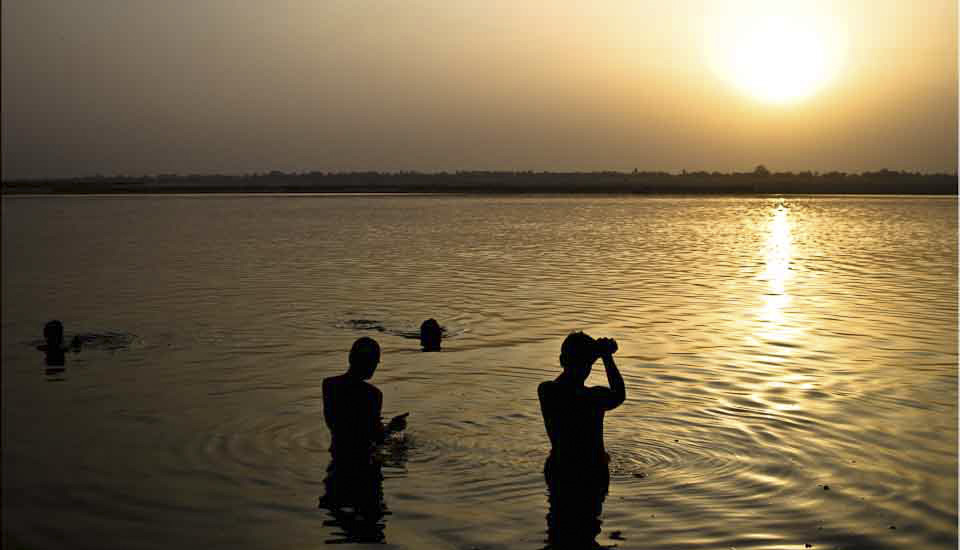






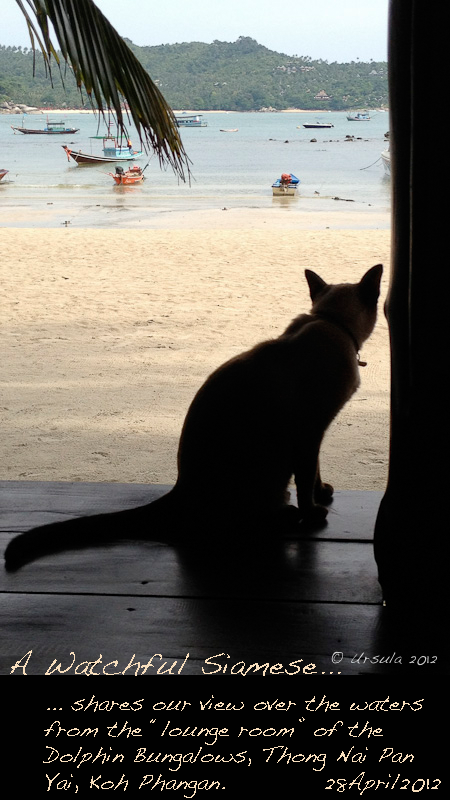

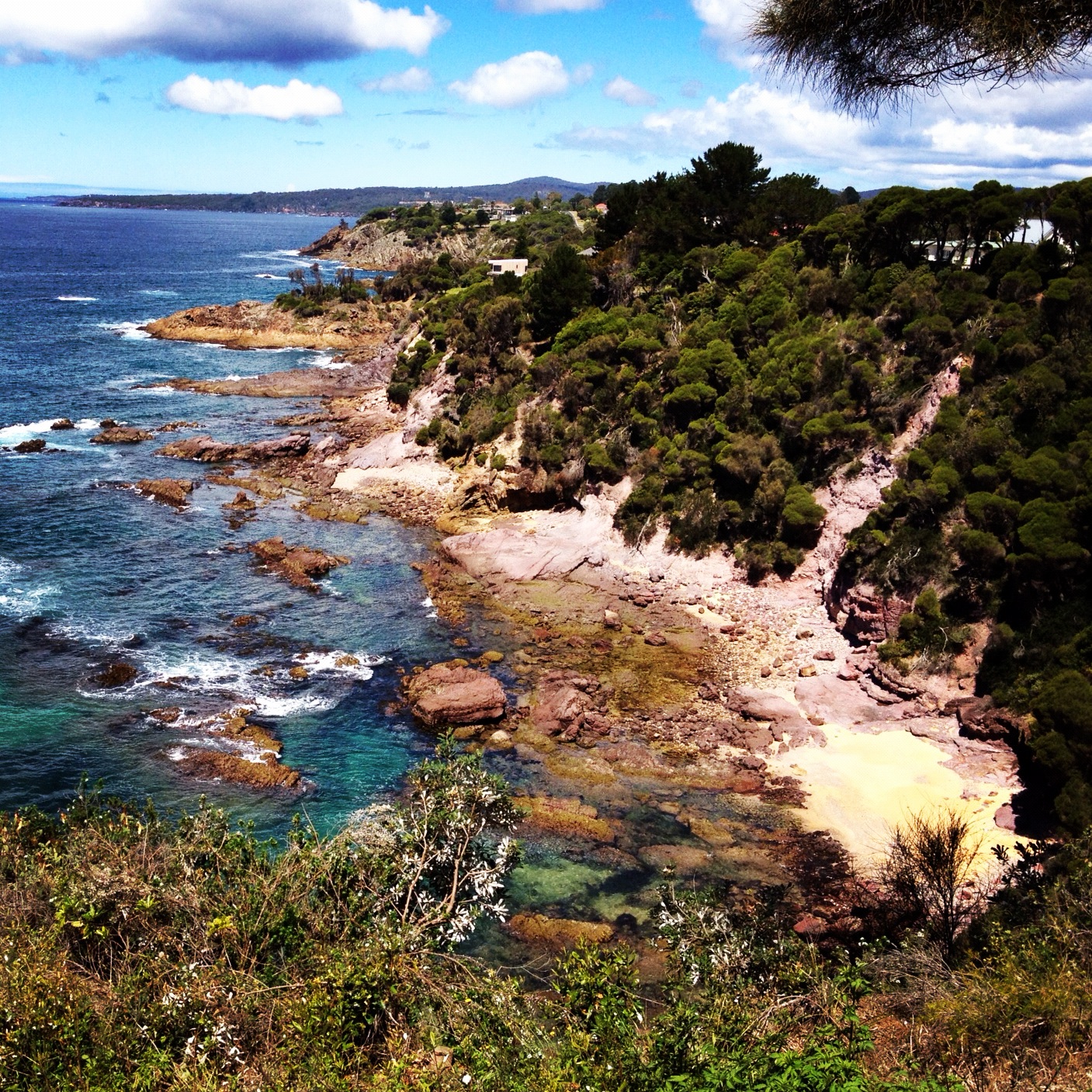
[…] a day of exploring Muscat at ground level (see: Sacred Spaces and Between the Past and the Future), I had the chance to take a sunset cruise on the Arabian Sea off the coast of the city in a […]