Ibn Tulun Mosque and the Mosque of Sarghatmish Framed From the 17th-century Egyptian roof terrace of the Gayer-Anderson Museum, two of Cairo’s neighbouring mosques are so close you can almost touch them. (iPhone6)
The centre of Cairo, Egypt’s sprawling and populous ancient capital on the banks of the Nile River, is so dense with vibrant culture and UNESCO- listed history as to be overwhelming.
So, it pays to sample small sections at a time.
The Al-Sayeda Zainab Governorate is one of the city’s oldest and most crowded neighbourhoods. This district centres on – and is named for – the eponymous mosque reputedly built over the gravesite of Sayyida Zaynab, granddaughter of the Islamic prophet Muhammad.
Our focus, however, is another medieval mosque nearby. The Mosque of Ibn Tulun is almost as old, and arguably more famous. Originally built between 876 and 879 AD, this mosque – which has been restored several times – featured in the James Bond film The Spy Who Loved Me, as well as in the video games Serious Sam 3: BFE and Tomb Raider: The Last Revelation.
In medieval times, it was common practice to build private homes against the outer wall of a mosque, and by the 1900s this mosque could barely be seen from the outside. In 1928, the Committee for the Conservation of Arab Monuments organised the demolition of all but two of these houses: the “House of the Cretan woman” (Bayt al-Kritliyya), built in 1632, and the adjacent Beit Amna bint Salim, built in 1540. At some point in time, a bridge between the two structures was added at the third floor level, and this combined building was considered to be worthy of protection.
After the property was restored, a retired collector and self-described ‘Orientalist’, Major R.G. Gayer-Anderson, was given permission to live in the house by the Egyptian Government. He oversaw the installation of electricity and plumbing and filled the home with some of his extensive collection of art, furnishings, and carpets. After living there between 1935 and 1942, he returned to England and gifted the house and its contents back to the government. Noted for being one of the best-preserved examples of 17th-century domestic architecture left in Cairo, and now named the Gayer-Anderson Museum, the house is open to the public, and is accessible through the outer walls of the mosque.
I was traveling in Egypt with a small group, and we had flown back from Aswan that morning (see: Boats on the Nile). Fortified by lunch at one of the Gad chain of cheap and tasty Egyptian fast-food restaurants, we set off to explore the mosque and neighbouring museum.
On a photographic note: I wasn’t allowed to use my cameras inside the museum, but for some reason, iPhones were permitted!! The lens in my old iPhone6 was a long way from the modern iterations of camera phones; even so, I hope the pictures give you an idea of the richness of the architecture and artifacts.
Fresh Fast Food What could be better than Shawarma – hot spiced rotisseried meat, sliced with fresh salad and dressing into a warm pita wrap? (iPhone6)
Ancient Mosque from the Bus From the road, you can get a sense of how these old buildings all butt up against each other.
The Ziyada The entrance to the Mosque of Ibn Tulun takes you into a large ziyada, or empty space between the mosque and the surrounding buffer wall. On the right hand side, an entry leads into the mosque itself. The portal directly in front of us takes us into the Gayer-Anderson Museum.
Textured Walls in the Ziyada The walls around the space show their age – and the intricate detailing that went into their construction.
Visitors at the Inner Entrance to the Mosque of Ibn Tulun
Lamp Everywhere you look in the Gayer-Anderson Museum, some magnificent old detail catches your eye. (iPhone6)
Wooden Window Lattice (iPhone6)
Ghostly “Selfie” I’m not big on selfies, but when intricate silver artifacts are encased in glass, it is hard to avoid! (iPhone6)
Silhouetted Urn Latticed windows look out at the crowded city around us; … (iPhone6)
Life on the Rooftops … a city where everyday life goes on.
Inlaid Chest of Drawers(iPhone6)
Bastet and Nefertiti Guarded by a Mashrabiya screen, these backlit figures of the cat goddess Bastet and Queen Nefertiti are replicas; Gayer Anderson donated the original Late Period bronze cat to the British Museum. (iPhone6)
Nefertiti Bust This replica queen is modelled on the original that has lived in the Neues Museum in Berlin since its discovery in 1912. (iPhone6)
Towards the Mosque Back in the ziyada, Ibn Tulum Mosque’s famously distinctive brick minaret with its external spiral staircase stands out.
Quba from the Minaret The climb up the minaret is worth your while, affording views back over Cairo’s largest mosque, the crowded old city, and the hills beyond.
Geometric Patterns – Sarghatmish Madrasa The tower also gives views over other mosques, …
Finials on the Sarghatmish Madrasa … near …
Mosques in the Distance … and further away.
Arches The repeated arches inside the mosque are decorated with floral and geometric designs in the abbasid style.
Quba Framed
Young Woman at the Mosque The people who are visiting the mosque are as interesting to me as the architecture.
Kufic Calligraphy The main mihrab – or niche indicating the qibla, the direction of the Kaaba in Mecca, is topped with the Muslim profession of faith: ‘There is no God but God’.
Young Women These young women were part of a university group visiting the mosque, and were a delight to chat with.
It is always wonderful finding locals to interact with! They bring the architecture of these ancient places to life.
Three Tambul Men – Western Highlands With their spears, face paint, and tall, elaborate wigs, these men would be a formidable sight if you came across them accidentally in the jungle!
It was a bit of an anti-climax …
After several days in the Papua New Guinea Highlands, mingling with and photographing the myriad of fascinating and colourful tribes who had come to participate in the annual Mt Hagen Cultural Show (see: Mt Hagen) and the smaller, more intimate Paiya Show (see: Paiya Village), we were meant to be on our way to the beautiful Milne Bay. But, after we had checked out of our hotel rooms, settled our bills, and stowed our baggage on the minibus for the airport, the phone call came: our flight had been cancelled.
All the Air Niugini pilots were on strike in solidarity with eight pilots who had been fired the year before for being part of a nation-wide protest against Prime Minister O’Neill, who was facing fraud allegations at the time.
That is the kind of place Papua New Guinea is: still wild and tribal, where getting from A to B can be difficult. Unless you have a lot of time, a machete, and a good sense of direction, flying is the only way to get from Mt Hagen back to the capitol Port Moresby. And, in this rugged terrain, flights are often delayed or cancelled on account of bad weather, poor visibility, or due to mechanical or staffing issues.
But, the locals demonstrated their resilience and flexibility. Our hotel checked us back into the rooms we had just vacated, the mini-bus took us to the local market instead of the airport (see: Mt Hagen Market), and our local contact, Pym from Paiya Tours, went to work finding us a replacement activity.
And that is how I ended up back in Paiya Village, where some elderly men from Tambul had been ferried in to be our portraiture subjects.
The Tambul-Nebilyer District is in the southwest corner of the Western Highlands Province. The population is supported by subsistence farming in the fertile lands at the base Mt. Giluwe, the country’s second highest mountain. There are several distinctive tribes in the district, collectively numbering just over 75,000 people; they are all known for their impressive headdresses and their songs that resemble war cries.
Although the distance between Mt Hagen and Tambul is less than 50 kilometres (30 miles), the estimated driving time is over an hour and a half. This gives you an idea of the sort of terrain we are talking about!
Come meet some elders:
Hills from the Bus The jungle-clad hills of the Western Highlands extend high into the clouds; the rich soils are a boon to the many small-holder (subsistence) farmers.
St Andrew’s Cross Spider – Argiope Magnifica Jungle is all around, …
Man with a Machete … and only constant vigilance keeps it at bay.
Old Uncle I met this Paiya Village elder several times; he was always a delight to photograph.
Tambul Man Face-Painting When we got into the village clearings, three elderly Tambul men were already starting to prepare as if they were going to battle, or to perform at a sing-sing (cultural festival).
Black Base Paint Even the unfinished face paint is quite ominous – which is its intention! Although these costumes are now mostly used for dance performances, they were originally applied before inter-tribal raids or wars.
Tambul Armbands Feathers, shells, and greenery collected from the surrounding jungle, are typical costume elements.
Tambul Man Fixing his Headdress Headdresses take a variety of forms in the Western Highlands: like the Hela Wigmen from further west, these men sport fabulous wigs of fur and hair, built onto bamboo frames, and decorated with shells, greenery, and feathers.
Tambul Skirt The skirts or long loin cloths are fashioned from fibres, using the same looping technique that goes into making colourful string bilum bags.
Concentration
Tambul Man We are a long way from the ocean: the mother of pearl wig decorations and the shell necklaces and chest plates are prized and valuable items in these mountains.
A Betel Smile and Facial Tattoos Technically banned, chewing areca nut and betel leaf is endemic in the country. You see the red-stained mouths and teeth everywhere.
Tambul Man in Face Paint Tambul-Nebilyer District is at the corner of the Western Highlands, bordering Enga and Southern Highland Provinces. So, Tambul dress, face and body paint, and traditions, borrow from these neighbours.
Face Paint and Feathers Parrot bodies and bird of paradise feathers are such an essential element in tribal adornment, I was always amazed the birds are not more endangered!
Tambul Man in the Jungle The kina moka shell shields these men are wearing as chest plates are highly valued symbols of wealth and power.
Tambul Man with Spears Tall bird of paradise feathers give the men extra height, and the bamboo spears are finely honed.
Local Papuan Man The local villagers loved watching us watching them.
Tambul Man in Face Paint I was hot just looking at the fur in those wig-hats! The painted wooden shield behind this man belongs to Paiya Village people – not Tambul.
Corrugated House Tourism has helped develop some of these remote areas: simple corrugated iron houses with electricity are an improvement on the dark, grass huts with mud floors that people were living in a scant generation ago.
Taro Plants
Sweet Potato As we left the village, I once again marvelled at the lush and tidy vegetable gardens.
It’s a wild and rugged place. One that has bred some strong and resilient people. The men we met were lovely – but theirs was not a look I’d want to challenge in the depths of this jungle! In the current climate, travel in this area has become even more fraught. At the time of writing, only 1.7% of the Papua New Guinea population had been vaccinated against Covid-19, and community transmission of the disease was still spiralling.
Some of this is due to the difficulty of providing health information and services in this difficult terrain.
But more is due to the strength of tribal traditions and beliefs, and a historically justified distrust of outsiders (see: The Conversation).
It is hard to know how to bridge this gap between worlds: tribal resilience and relative isolation may be no match for modern viruses.
Jagannath and other Temples Durbar (Palace) Square is the beating heart of old Kathmandu. Somehow these ancient buildings have survived successive major earthquakes and they continue to bustle with tourists and faithful alike.
You could people-watch for hours in Kathmandu’s Durbar (Palace) Square!
Until the 19th century, the Hanuman Dhoka Palace Complex was the principal residence for the Malla and Shah kings who ruled over Nepal’s Kathmandu Valley and the Newari (Newar) people, the valley’s historical inhabitants and the people who gave Nepāl its name. The Newari still rank as the most economically, politically, and socially advantaged group in the country, influencing much of its art, culture, and religion, even though they only count as the country’s sixth-largest ethnic community.
As it exists today, much of the old palace was built in the 17th century. The roughly five acres of ancient courtyards surrounding it are packed with temples and shrines, many dating back to the 16- and even 1500s. This rich cultural heritage has lead to Durbar Square’s UNESCO listing – collectively with six other declared Monument Zones in the Kathmandu Valley – for its outstanding universal value. The ancient buildings demonstrate intricate detailing and skilled craftsmanship – like they do in Patan’s Durbar Square, another of these Monument Zones which had I visited earlier in the day (see: City of Devotion and Fine Arts). In Newari traditions, Brahmanic (Hindu) and Buddhist elements enjoyed equal status: this coupled with the value they placed on culture and art might account for the variety of old buildings in the palace precincts.
My Lonely Planet guidebook is old: it mentions the damage caused to these wonderful temples by the ‘great earthquake of 1934’. Since that time, the devastating Gorkha earthquake in April 2015 killed almost 9000 people and destroyed many of the precious buildings in Durbar Square and elsewhere. At the time of my last visit in 2017, there were still piles of rubble all around, and many buildings were propped up against collapse.
But, some repairs had been undertaken – and the people were in the streets, bringing the city back to life.
Our Guide Sunita in the Courtyard of the Living Goddess Close to the entrance to the square is the Kumari Bahal – the House of the Living Goddess – with its beautifully carved wooden detailing.
In the Courtyard The Kumari, or ‘living goddess’, is a Newari tradition stretching back 300 years to the last days of the Malla Dynasty. There are ten or 12 Kumarisaround the Kathmandu Valley, but the one who lives here in Durbar Square is the most revered.
The Living Goddess Chosen at age three and vacating her post at puberty, the Kumari is the embodiment of Taleju, a manifestation of the goddess Durga. I’m sharing this postcard because we were not allowed to photograph her – and in any event, she didn’t come to her window.
Keeping the Buildings Up So many of these beautifully crafted buildings are in danger of collapse.
Rooftop Detail The top of the Kumari Bahal features gold ornamentation.
Flying the Nepali Flag This is the world’s only non-quadrilateral flag: the two triangles signify the Himalaya and the country’s two major religions.
All Smiles
Jagannath Temple Thought to date back to 1563, this little temple is well known for its roof struts, richly carved with erotic images.
Wonderful Window Everywhere I look, intricate details – and the evidence earthquake damage – catch my eye.
Kaal Bhairav Kaal Bhairav (Kala Bhairava) is a fierce manifestation of Lord Shiva. This giant 3.6 meter (12-foot) stone carving shows the deity stepping over a dead body and holding a decapitated head in one hand. People worship Kaal Bhairav for courage and happiness.
Eating Grapes
Colourful Dhaka Topi The distinctive Nepalese hat made from specially woven fabric is part of the national dress – and immediately recognisable.
A Pigeon and a Street Shrine Pigeons – and wildly colourful shrines dedicated to the myriad of Hindu gods – are everywhere you look.
Nepali Man and his Sewing Machine I love these street sewing stations and their old pedal-powered machines.
Scissors The scissors are handy – and heavy!
Sewing Work The work continues.
Ruined Shrine A strangler fig tree (ficus religiosa) has taken over this old brick shrine in the middle of a street.
Namaste! Another deity – Shiva, I think – is tucked into in a niche in the old brickwork.
Mahadev Temple Delicate lattice work and carved roof struts are a feature of many of the temples.
Couple on a Temple Stoop
Rubbish and Ruins
Candle Wax and Latticework Decorative lattice almost hides the intricate statuettes tucked inside.
Brass Bell and Marigolds Ringing the bell focuses one’s mind and summons the Gods.
Marionettes The detailed craftsmanship extends into the goods on sale in the shops tucked into corners in this honeycomb of streets.
Small Stupa in a Courtyard The sacred is very much a part of everyday life.
On the Lions Brass lions guard the entry to Shiva-Parvati (Parbati) Temple …
Shiva in the Window … and overhead, Lord Shiva and his consort watch the street below.
Silver and Stones The shops are a treasure-trove of intricately crafted silver and gemstones.
Buddha Heads Religious iconography is in great supply …
Buddha Head … and motivated me to buy and re-read a copy of Jeff Greenwald’s travel classic Shopping for Buddhas.
Durbar Square is an almost-overwhelming richness of colours, patterns, and cultural history. How wonderful that in spite of earthquake damage the city is also brimming with life!
Sagebrush and Jagged Peaks Pack a good pair of walking boots: this is uneven terrain. But the hot afternoon air smells beautiful, and the views are stunning.
Mono County in California’s Eastern Sierra region is an outdoor paradise: crystal clear glacial lakes and rivers that attract fly fishing enthusiasts; jagged, steep mountain peaks that are magnets for rock climbers and mountaineers; high alpine meadows, dotted with unique wildflowers which photographers flock to enjoy; salt lakes and their colonies of birds that draw bird watchers from all over the globe; and countless hiking trails meandering through National Parks, State Forests and local reserves.
Basically, one is spoiled for choice!
I was lucky: I was visiting a friend who lives in the area, so I didn’t have to think or make decisions. I just put on my hiking boots, strapped on the cameras, and followed her lead.
One of our hikes was on the Virginia Lakes Trail in the Hoover Wilderness, a short drive away from the hamlet of Lee Vining. Although the 13.0 kilometre out-and-back trail is rated as moderate, at 3000 metres (9,846 feet), the trailhead is higher than our tallest mountain in Australia! I live at sea level, so I felt every inch of the 710 m (2330 ft) gain in altitude along the way. One blog site even warns hikers to watch for signs of altitude sickness on the trail (see: Another 100 Feet).
Virginia Lakes is the collective name given to a basin of lakes, connected by Virginia Creek. This hike starts near Big Virginia Lake, and passes a number of the other small lakes on the way to a scenic pass with panoramic views. Serious hikers can continue along the Pacific Crest; we turned around at Frog Lakes.
It is a very pretty hike – and the walk back was easy!
Mono Lake Vista Point It is a short drive into the hills above Mono Lake, where we had spent the morning watching the California gulls (see: Mono Basin and Mono Lake).
Virginia Lakes The walk starts near the Virginia Lakes Resort – and skirts the northeast of the aptly named Big Virginia Lake.
Anglers Virginia Lakes is popular for fishing, boating, and camping.
Catch of the Day? Fly fishing for trout is an art – but I’m not sure this fish counts!
Virginia Lakes Surrounds It amazes me how these tall pines find a foothold in this steep and stony terrain.
Mountain Monardella – Monardella Odoratissima Pockets of wildflowers are tucked into the rocky ground, creating fragrant bouquets all around us.
Running Water We are within sight – or at least earshot – of Virginia Creek for most of our walk.
Pathway through the Scree Parts of the trail are steep and covered in loose stone; I was glad for good boots and a walking stick. The wildflowers make a good excuse to stop and catch ones breath!
Water in the Valley Below When you look back, you can see how far you have climbed.
Asters
Pine Branches
Crimson Columbine (Aquilegia Formosa) and Yosemite Onion (Allium Yosemitense) Wildflowers in every shape and colour are everywhere we look.
Sierra Tiger Lily – Lilium Parvum
California Corn Lily – Veratrum Californicum Native to these high mountain meadows, this beautiful plant is extremely poisonous.
In the Woods Some parts of the trail are surprisingly damp and green.
Miner’s Cabin After we have passed Blue Lake, we come to an old miner’s cabin. It is currently in a state of disrepair and poles propped to one side keep it from tumbling over completely.
Miner’s Cabin Roof Detail
Empty Tins Inside
Cooney Lake It is a moderately steep climb up the hills to the next lake in the chain, Cooney Lake (3122 m – 10,244 ft).
Virginia Lakes Trail The track continues up through tilted granite, with mountains scarred by ancient avalanches in the background.
Rocks and Milkweed Even the seemingly inhospitable granite is home to wildflowers.
Mountain Pride – Penstemon Newberryi
Along the Trail
Nature’s Sculpture: Fallen Wood and Sage
Fishing on Big Virginia Lake Back on Big Virginia Lake, the anglers are still fishing. Gas-powered boats aren’t allowed on these lakes, so it is beautifully quiet.
I took fewer photos on the return trip, as there was less need for me to stop to catch my breath! This made the return walk much quicker than the hike up.
It truly was a beautiful walk, and we had perfect weather.
Even so, my poor legs and lungs were happy to make it back down the trail in one piece!
Mike Elrington The joyful passion of blues and roots performer Mike Elrington, as he sings on stage with the frenetic powerhouse band that is 19-Twenty, is what makes festivals so special!
The annual Thredbo Blues Festival combines two of my favourite things: mountains and music.
Every summer, the delightful village of Thredbo, tucked into the unique alpine flora and fauna of the Kosciuszko National Park, plays host to this eponymous weekend festival. Restaurants, pubs, and public spaces, give themselves over to musicians and music-lovers from near and far.
Well, almost every summer! Last year the festival was cancelled on account of the coronavirus that has turned all our lives upside down. The year before that, the weekend was in limbo until less than three days before it was due to start because of raging bush fires encroaching on the village itself (see: Singing the Blues). Even this year, under the cloud of Omicron, it was scheduled later in January than usual – perhaps in the hope that the rising waves of infection would peter out? – and its actual commencement was by no means certain until the last minute.
The performers on the line-up this year were all local, as our international borders are still effectively closed. There were also last-minute programme changes when musicians were either diagnosed with covid-19 or were deemed to be ‘close contacts’. Fortunately, this country is blessed with a depth of wonderful talent, so while the range of bands on offer might have been reduced, the quality didn’t suffer.
The festival did finally go ahead, but it was under somewhat restrictive guidelines: audience numbers were greatly reduced and room capacities were enforced; temperature checks and venue check-ins were in place; the audience was (mostly) to remain seated. Masks were required indoors, unless we were seated – when we are presumably less infectious – and while the performers could (obviously) sing, we weren’t allowed to.
Oh, and no dancing!
But, it was worth it to be back around live music. In fact, it was so uplifting that at one point, I found myself being hugged by a total stranger! So much for social distancing. Of course, I duly monitored for symptoms afterwards … But, we are all SO tired of the rules!
Join me for some music, and a walk in the mountains. Just refrain from singing along, please.
Morning Walk – Jindabyne The festival provides me a good excuse (as if I need one!) to spend a few days in the nearby town of Jindabyne. This year, the lake is overflowing after unseasonable rains. (iPhone12Pro)
Michelle Van der Meer & The Midnight Ramblers After the requisite welcome by festival organisers, the music kicked off Friday evening with Michelle Van der Meer & The Midnight Ramblers in The Pub.
Michelle Van der Meer An award-winning blues vocalist, Michelle is backed up by some well-known faces on the Australian scene …
George (Medicine Man) Rigatos … including passionate guitarist, bassist, and singer George Rigatos.
Alison Penney Much-loved boogie-piano player Ali Penney has lost none of her dazzle – in spite of recent serious illness.
Rory Ellis Across ‘town’, gravel-voiced story-teller Rory Ellis packed out the room.
The Blues Preachers In another venue, I joined Brother John (John Morris) on slide guitar and Captain Bluetongue (Craig Lyons) on harmonica for some classic gospel-blues over dinner.
19-Twenty News of the high-energy performances and superb musicianship of 19-Twentyhad preceded them: I was part of a long queue outside the bar where they were playing.
Kane Dennelly and a Guest Vocalist Thanks to sound amplification – and a long (200mm) lens – I was able to enjoy them from outside the door.
Mike Elrington with 19-Twenty
Simon Kinny-Lewis I kicked off Saturday morning at the outdoor Alpine Bar where Simon Kinny-Lewis was clearly having fun …
Simon Kinny-Lewis on Guitar … with his contemporary blues guitar.
Tony Boyd Drummer Tony Boyd was everywhere I looked, providing the backbeat for a number of groups. Fortunately he’s a pleasure to watch and listen to!
Chairs on the Ramshead My next venue was Australia’s highest restaurant, the Eagles Nest, which sits near the top of the Ramshead at 1937 metres (6355 feet). It is a steep, five kilometre walk up the hill, or a 15 minute chair ride. (iPhone12Pro)
Fiona Boyes At the top of the hill, I get to enjoy a lunch – and Fiona Boyes, whose stories I enjoy as much as her music and unique guitar collection.
Thredbo in the Mist Below When the lunch-performance has finished, the mists have closed in and rain is threatening.
Grasses in the Mist But, I am determined to walk down the Merritts Nature Track– about a two hour steep descent – regardless of the weather.
Silver Snow Daisies on the Ramshead My favourite flowers, the silver snow daisies (Celmisia tomentella), seem to be late this season.
Bench on the Path I love this walk, but it feels steeper every year!
Trigger Plant – Stylidium Armeria
Floral Sunshine There are countless varieties of daisy – and other wildflowers – growing along the path; many are endemic to this region.
Lloyd Spiegle I make it down the hill in time to catch Lloyd Spiegle – another wonderful performer whose storytelling is as enjoyable as his guitar stylings.
Set Up in the Cascades Restaurant One of the things I like about restaurant gigs is being there early, and getting a sort of ‘backstage’ vibe.
Genevieve Chadwick This is a performer I’ve caught many times now: she never disappoints!
Candle Light My last stop for the evening was in the Lounge Bar, ….
Stewart D’Arrietta … where Stewart D’Arrietta, with his husky voice, was re-interpreting the songs of Tom Waits and Randy Newman.
Gondolas on the Hill Sunday morning it was raining again. Fortunately, my plan was to try out the brand-new gondola, and enjoy the performers at Merritts Mountain House. (iPhone12Pro)
Steve Edmonds … and the fabulous Steve Edmonds on guitar.
Tony Boyd The ubiquitous drummer Tony Boyd was hiding in the background, and stayed there …
Simon Kinny-Lewis (Again) … as support for Simon Kinny-Lewis, who was the next performer. His set finished just before we all got temporarily trapped on the mountain top by lightening storms!
We did get down the mountain, eventually, and there were more wonderful artists …
No Entry! … but I’ll leave you with this image of a wandering wombat, caught in my headlights as I make my way off the mountain for the last time. (iPhone12pro)
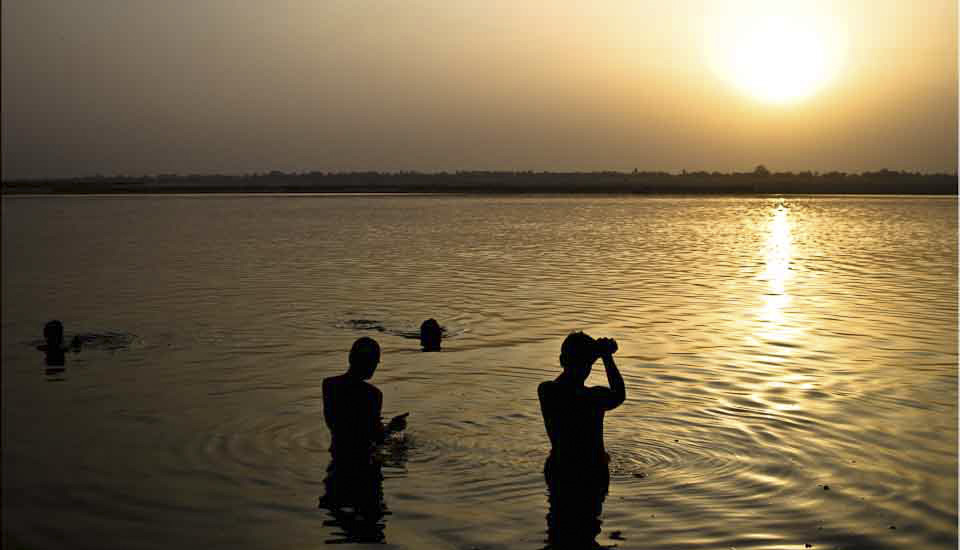
- Performing the Ganga Aarti from Dasaswamedh Ghat, Varanasi
- Buddha Head from Shwedagon Pagoda, Myanmar
- Harry Clarke Window from Dingle, Ireland
- Novice Monk Shwe Yan Pyay Monastery, Myanmar
Packets of 10 for $AU50.
Or - pick any photo from my Flickr or Wanders blog photos.

.jpg)
.jpg)
.jpg)








 Durbar Square is an almost-overwhelming richness of colours, patterns, and cultural history. How wonderful that in spite of earthquake damage the city is also brimming with life!