Layers of History The Venetian harbour of Rethymno first operated some time after 961, during the Byzantine period. Today, lined with modern cafes and tour boats, it is a place for locals to fish and tourists to wander. The Egyptian lighthouse that marks the port entrance was built some time in the 1830s.
Crete, in the Mediterranean Sea, is Greece’s southern-most administrative region and the country’s largest and most populous island. The landscape has given up artifacts that are evidence of human settlement as early as 130,000 years ago. Even today, there are ruins and buildings dating across several civilizations.
The island’s long (1,046 km (650 mi)) and beautiful coastline is bounded in the north by the Aegean Sea and by the Libyan Sea in the south. The land is craggy and mountainous: about 5 to 10 million years ago, an intense tectonic uplift of the whole Cretan area gave rise to the many gorges, caves, and plateaus found today (see: The Formation of the Cretan Gorges). A high range – comprised of six different groups of mountains – crosses the island from west to east.
The most mountainous region is Rethymno (Rethymnon), the smallest prefecture on Crete. It runs north-south, with the White Mountains forming a border in the west, and Mt. Psiloritis delineating the east.
I was there on a tour-bus day-trip. We had started in the early morning in Heraklion, the prefecture to the east, and had driven along the rugged north coast before turning at Rethymno and following the winding, precipitous mountain highway south to Preveli. Once there, I had time to walk down the steep and rocky cliff path to a beautiful beach, where I could bathe in the Libyan Sea and walk through a rare and precious forest of Theophrastus palms (Phoenix theophrasti) (see: Preveli Beach and Palm Forest).
The return trip followed the same narrow and winding highway north through the spectacular Kourtaliotiko Gorge (Asomatos Gorge). This time, however, we stopped briefly to admire the jagged carbonate rocks that made up the gorge and the little hermitage or chapel that is nestled into one of the sides.
We also stopped in the beautiful and historically rich capital city of Rethymno, originally founded during the Minoan civilization (3500 – 1100 BC), and still showing architectural evidence of the Venetian occupation (circa 1250 – 1646), as well as the subsequent conquest by the Ottoman Empire (1646 – 1941). I wandered the streets, admiring the abundance of local produce, the unique shopping, and the centuries of architectural history.
Coastline from the Bus As our bus takes us north, away from Preveli Beach (see: Preveli Beach and Palm Forest), I look back over the rugged landscape that defines southern Crete. (iPhone12Pro)
Venetian Bridge While we were driving, I was glad to catch sight of this much-photographed Venetian Bridge over the Megalopotamos River. (iPhone12Pro)
Kourtaliotiko Gorge We hadn’t been on the road long when we stopped briefly to admire the jagged rocks of the Kourtaliotiko Gorge …
Hermitage or Shrine in Kourtaliotiko Gorge … and the once-isolated shrine, nestled into the mountainside where the highway now runs.
Drivers We weren’t the only bus stopping, and our driver was happy to share a brief smoke and chat with an old friend.
Tour Guides and Bus Drivers
Fishing Boats I started my city walk in the historic Rethymno Harbour, …
Textured Walls … where old buildings speak of days gone by.
New Lamp : Old Walls
Knossos Tavern Colourful coffee shops and taverns, named for local persons and places, promise fresh and tasty food.
Archaeological Museum of Rethymno Now housing many artifacts from the ancient Minoan ruins nearby, the Church of Saint Francis dates back to the beginning of the 16th century.
Shopping Streets Tourist shops, with everything from fine gold to local herbs, are nestled into the narrow Venetian streets.
Ceramic Door Knobs
Tourist Trinkets Shops aimed squarely at tourists offer figurines depicting local heroes from Minoan and Greek mythology.
The Great Gate – Porta Guora A Venetian gate remains from a 16th century fortress …
Old City Gate … and still makes for a grand entryway into and out of the Old Town.
The Church of Four Martyrs This relatively new church, inaugurated in 1975, is built near the spot where four men from Rethymno were executed in 1824 by the Turks for refusing to convert to Islam. They were honoured as Orthodox saints in 1837.
City Park and Urban Art The nearby Rethymnon Municipal Garden is a pleasant break from the city streets. (iPhone12Pro)
Kostis Giampoudakis Identified as a local hero, Giampoudakis died while battling the Ottoman Turks as part of the Cretan rebellion in 1866 at Arkadi Monastery. (iPhone12Pro)
Ancient Fountain – New Restaurant New development in the ancient city of Rethymno has had to incorporate ancient ruins and remains. The Rimondi Venetian Fountain, with its elegant Corinthian capitals, adds a pleasant coolness to an inner-city space.
The Rimondi Fountain Eight fountains in Rethymno are preserved; this one, built in 1626, is the only one from the Venetian years. According to legend, drinking the waters here guarantee eternal youth.
Old Street with an Enclosed Balcony The Old City includes some elegant examples of Ottoman architecture.
Doorways I spent some time exploring the more “ordinary” streets in the Old City.
Street Art and Body Art The Old City is a delightful mix of preserved buildings and modern colour.
Lighthouse on Rethymno Harbour My walk finishes where I started – on the historically layered waterfront.
Fortunately, I have learned to set my walking app to trace my path when I walk through new locations. It – like Ariadne’s thread – was able to lead me back through the labyrinth of streets to the bus in time for the drive back.
And, I took a little bit of the region home with me: I am still enjoying the rich smells of the beautifully packaged Cretan mountain herbs I bought in one of the many tourist shops.
Sadhu Smoking Followers Shiva – the destroyer and the protector in the Hindu trimurti (holy trinity) – are well known for smoking hashish. They are emulating their God, who is often depicted meditating alone on Mount Kailash in the Himalayas, his eyes half-closed from the effects of the hash in his chillum – a traditional clay pipe.
When I spend time in the crush of Indian streets, rubbing shoulders with holy men and drinking masala chai with the locals, I always come away with some new realisation about myself, or the world.
My first visit to Varanasi was not my first trip to India, but it was revelatory. Most of my time – from pre-dawn to post-sunset – was spent on the ghats that lead down to the Mother Ganges: the holiest place in this most sacred of Indian cities (see: Weekly Wanders Varanasi). The shimmering heat in the air had me wandering in a bit of a daze as I watched – and attempted to understand – the richness of life going on around me.
I was travelling with photographers Gavin Gough and Matt Brandon; because it was a photographic trip, and not a ‘tour’, I had plenty of time to immerse myself and think about what I was seeing and how I was seeing it. It was easy to understand how Western seekers of a different way of being could get swept up in the magical spiritualism of the place. There is even a name for it: India Syndrome (see: Firstpost, Mythical or Mystical?).
My sense of slight disorientation probably had more to do with the openness of strangers: pilgrims who allowed themselves to be photographed, locals who shared what little they had, and the women, who, just that morning had made offerings to Mother Ganges on my behalf (see: Morning Puja). Of course, mild anxiety about the polluted river water I had allowed to touch my lips as part of the puja, lack of sleep as a result of excitement and early mornings, and/or the rich smells of hashish and incense on the hot air all added to a feeling of unreality.
So, it felt perfectly normal to be invited into a priest’s tent-like enclosure, and sit cross-legged on the floor as his acolytes helped him prepare the charas for his clay pipe.
Although the use of cannabis products among holy men, particularly those who follow Lord Shiva, is ignored by authorities, it is not actually legal in India. When the sadhu’s pipe was passed to me, I bowed my head in reverence, and passed it on without partaking.
Even in a magic place like Varanasi, partaking in illicit drug use with strangers seemed a bridge too far!
Kids in the Market Even though the caste system in India is technically illegal, I still get the sense that these children’s future is largely determined by the station of their parents.
Man on a Stoop The streets leading to the ghats are crowded with shops and people.
Varanasi Laneway So much of ‘everyday life’ is conducted in the streets and laneways.
Red Temple on the Ghat The river and the ghats are busy any time of day or night, but Dashashwamedh Ghat is especially so. Visitors and pilgrims flock to it for the performance of the evening Aarati (see: Life and Death).
Family People come from all over India to enjoy the evening ritual.
Women in Red As the sun goes down, friends and family sit on the steps and wait.
Boats on the Ganges Other watchers hire a spot on one of the many boats on the water, where the diyas – small lamps with a candle surrounded by flowers – float on the river.
Mixing Lassi There is plenty of food available in the streets leading away from the darkening ghats.
Selling Pots and Pans Crowded stores selling all manner of goods line the narrow streets.
Marigolds in the Mud At the edge of the Ganges River, ritual flowers are everywhere. I was told that these were laid out for a child who had died.
Hands and Offerings Elsewhere on the ghats, Hindu priests construct elaborate offerings for the Gods.
Buildings on the Ghats All along the ghats, little shrines are tucked into corners of the rising buildings.
Orange Shrine Inside the shrine, fresh flowers are garlanded over Lord Hanuman, the monkey God.
Keeper of the Shrine Hanuman is an avatar of Lord Shiva in Shaivism; my host poses himself with a trishula,Shiva’s trident.
Sadhu Blessings
Acolyte The sadhu’s helper is a handsome young man.
Smoking a Chillum He has earned his place in the smoker’s circle.
Another Holy Man
Haircut on the Ghats Back in the heat and bright light along the river, …
Having a Haircut … everyday life continues.
Simple Pleasures Everyday, this man comes to the ghats with bags of birdseed …
The Birdman … and takes great pleasure …
Feeding the Birds … in feeding the pigeons.
Untouchables Mum watches on as I interact with a little girl who is the daughter of a man who manages the cremation pyres on Harishchandra Ghat.
Flower Girl They sell ceremonial flowers; naturally, I couldn’t resist!
During our daily reviews back in our hotel rooms, we critiqued the photos we had taken, and mused how they could have been better “… in a perfect world …” with a bit more height or distance, or better light, or less distraction in the background, etcetera.
Certainly, as I look back on these old pictures, I can think of a number of things I’d like to improve.
Even so, they evoke memories of a truly magical time in an other-worldly place that I will always cherish.
Doorway into Nothing Beautiful entryways into tumbled buildings and nonexistent rooms give a clue to the richness of life that was once in the Al Munisifeh quarter of Ibra in Oman.
There is something ineffably sad about an abandoned city or town.
Ibra is one of the oldest cities in Oman, and home to some of the biggest tribes in the country. It grew rich because of its location on the major trade route between Muscat, Sur and Zanzibar, becoming a centre of trade, religion, education, and art. We we passing through on our way to the Sharqiya Desert (see: Life in the Desert and Desert Dreams).
Al Munisifeh is a virtually deserted tribal village just two kilometres outside of Ibra. The empty village is surrounded by remnants of its original walls, with gateways at either end. Relatively modern houses are interspersed with empty lots and crumbling multi-story mansions built of mud-brick and stone. Roofs and floors have mostly disappeared, and some skeleton buildings look ready to collapse at any moment.
Our guide was vague about the actual history of the village, and the reasons for abandoning it, and I’ve not been able to fill in the blanks online.
So, we will just have to let our imaginations run wild as we wander through an empty village with still-beautiful doors, windows, and dreams.
From the Car Oman is not a particularly big country, and the highways are superb – but it still feels like you cover a lot of empty ground getting around.
Empty Bench In the deserted village of Al Munisifeh, it sometimes felt as if people would be back any minute! I never could establish exactly how long some of the buildings have been empty – as far as I can tell, leaving this village for Ibra was a gradual process.
Said in a Doorway Our guide Said points out some of the detailed craftsmanship.
Decorated Door Oman is known for its beautiful and intricate doors and windows.
Interior Arches Even in their current state, the internal plastered walls and graceful arches suggest these rooms had a stately elegance.
Corridors Entries into walled corridors show how extensive some of these buildings were.
Doorways Everywhere there are beautifully carved wooden pieces that surely could be recovered!
Rusty Fittings
Arch and Lintel I love the delicately carved lintel over this heavy wooden door.
Rusty Door Pull It amazes me what has been left behind.
Rough Arches
Wooden Door How beautiful this must have once been!
Partial Buildings Some of the ruins look relatively recent – and there are even power lines running through parts of the site.
Lone Wall It amazes me that some of these walls continue to stand with little support.
Ornate Carved Doors
Said in the Street
Bricks and Mortar Clearly some work is going on around the village – but we saw no one.
Wood inside a Window The carved work inside these old buildings …
Another Window … is intricate and lovely.
Bricks and Mortar and Sun
Street Lamp After wandering the deserted streets of the ruined village, finding a street lamp was surprising.
Less than Ten Minutes Away … Back on the main roads, a modern mosque sits against the desert sky.
It was a surreal experience: wandering through the remnants of someone else’s hopes and dreams. I find it hard to imagine just walking away from what were once mansions, with their elegant arches and beautifully carved doors and windows.
Eventually, the desert will reclaim what still remains.
Puyupatamarca Known as La Ciudad entre la Niebla – The City Above the Clouds, Phuyupatamarca was possibly my favourite of the many ruins along the Inca Trail.
Hiking the Inca Trail from Piscacucho, or Kilometer 82, to the Inca citadel city of Machu Picchu is an unbeatable experience.
The trail follows just a small part – 42 kilometers (26 miles) – of the much larger UNESCO-listed complex of roads, the Qhapaq Ñan – meaning ‘royal road’ in Quechua – built by the Inca over several centuries as a communication, trade, and defence network throughout the Andes Mountains.
Walking it requires a reasonable level of fitness: the rocky paths are steep and the days are long. From a starting point of around 2500 metres (8202 ft) above sea level, the track ascends to beyond 4200 m (13,800 ft), and more than a few people experience altitude sickness. The route rises over several mountain passes and through several types of Andean vegetation zones; it gives the walker access to remote villages and ancient Inca ruins of extraordinary beauty and complexity.
It also gave me a huge sense of accomplishment.
But, one needs to keep it in perspective! There is an annual Inca Trail marathon, and the quickest participant can finish in under six hours what took us four days to walk. And, our local porters carried many times the weight that we did, and were only ever slowed by bureaucracy: the steeply ascending mountain tracks did not phase them. Peruvian porters are a hardy lot!
When we walked the trail, back in 2006, there was an election in the country. As voting is compulsory, many of the seasoned porters were back in their respective villages, leaving us in the care of 18-year-old first-timers, who still did a superb job. Almost every meal stop, they beat us to the site, and we would arrive, exhausted, to find the meal tent already set up and ready to go. In the evenings, we’d reach camp to find our tents-for-two ready and waiting for us. Our arrival signalled the young men to go scurrying for pans of hot water so we could wash in our tents before dinner. The porters were ‘colour-coded’, wearing bibs according to the group they belonged to. Ours was ‘the green team’, and we thought they were fabulous.
Our second day on the walk (see: The Inca Trail, Day 2) had been particularly rugged. After that, the first half of day three was a piece of cake – up and down through beautiful countryside and magnificent archaeological ruins. While we saw lots of birds – sparkling violators, blue and white swallows, Inca wrens, and rufous collared sparrows – we didn’t meet Wellington Bear (the South American bear, or osode anteojos), whose family originated in these woods.
Unfortunately, because heavy rains had washed out a portion of track past the Sun Gate, our campsite for the night had to be changed, and we spent the afternoon walking down a steep, little-used gully trail to the railway tracks, where we walked along uneven rail ties and gravel (keeping an ear out, so as to avoid oncoming trains!), further testing joints and muscles. This took us into the town of Aguas Calientes (or, as the locals call it: Machu Picchu Town), where four of us decided to indulge in beers and pisco sours while waiting for the last two, who hobbled into camp with one of the guides well after dark.
Because we had successfully completed all the high-altitude sections of the walk, we were actually treated to wine with our dinner. After another fabulous meal (our chef was a wonder!), we fell into our tents knowing we would have to be up at 4:30 to break camp for the final ascent, straight up, into Machu Picchu itself.
Daybreak in the Andes The early-morning sky over our campsite at Sayacmarca (3625 m / 11893 ft) turns pink. ‘Sayacmarca’ is sometimes translated as Town in a Steep Place. ‘Steep’ doesn’t begin to describe the trip to the toilet blocks!
Morning over the Vilcabamba Mountains The sun isn’t fully up and it’s cold, but it is turning into a beautiful day. Pumasillo, or ‘puma claw’, is the snow-capped peak on the left.
Sayacmarca As we drop down the trail, we can look back up at that almost inaccessible sacred Inca ruin.
Porter! After dropping to about 3500 meters, we start climbing steeply again.
Red Team We hear the call “Porters!” and the red team comes through.
Above the Clouds On the last rise, we enter the pass at Puyupatamarca (3640 m / 11942 ft) – “The City Above the Clouds”.
Triumphant We are feeling so relaxed after the tough day the day before …
The Hill … that we climbed an extra hill, just for fun!
Puyupatamarca (Phuyupatamarca) – Cloud-Level Town The views are pretty amazing as well.
Ritual Baths at Puyupatamarca
Paddington Bear Forest This is the ancestral home of the Andean bear, Tremarctos ornatus …
Walker and a Butterfly … but we only ever spotted smaller creatures.
Down to Puyupatamarca The down-hills can be as hard as the ups. Those bamboo poles we bought on Day 1 (see: The Inca Trail, Day 1) got a real workout!
Lines and Curves I loved these ruins: they are written up as an example of the Inca philosophy of balance between humans and nature because of their complex hydraulic structures; I just loved the patina of moss on the curves of the ancient stones.
Taking in the View The mountains and their cloud forests stretch out forever.
Wiñay Wayna (2700 m / 8858 ft) The extensive agricultural terraces at Wiñay Wayna (Huiñay Huayna) – Forever Young – are seriously impressive, …
The Urubamba Gorge … as are the views into the valley far below us
Salvia Dombeyi Lamiace The giant Bolivian sage thrives at this 3000 m altitude.
Steps and Water Catchment Thinking about the time and engineering …
Stairs … that went into constructing these complexes is just mind-boggling!
Wall Detail – Wiñay Wayna
The Valley Below Hard to believe, but by end of day, we’ll be back down there!
Up Wiñay Wayna In the other direction, the terraces climb up forever.
Lizard on the Stones
Wild Orchid Apparently Wiñay Wayna was named for an orchid that used to grow profusely in this area. I can’t actually tell you if this is one or not – there were many different varieties along the way.
View Down From Wiñay Wayna, it is ordinarily a five-kilometre walk to Machu Picchu. Unfortunately, with part of the track washed out, we had to head down to Aguas Calientes for the night instead. After lunch at the restaurant, we descend through steep, rough terrain …
The Urubamba River at Choquesuysuy … down to the swollen river below. From there, it was a a good two-hour walk along the railway tracks …
Aguas Calientes … into the little town 9 km (5.5 miles) down the mountain from Machu Picchu.
Our Chef This was our last meal with our trekking crew. Our wonderful chef came to take our applause; he really had prepared some fabulous meals!
Now that we were finally below the altitude sickness zone, we were treated to wine with our meal, which we all thoroughly enjoyed.
A hot shower might have been nice after all that exertion, but even though Aguas Calientes means Hot Waters, our campsite had none.
Hands on the Offering Everyday, faithful Hindus – priests and laypeople – say prayers and make offerings of flame, food, and flowers to Ganga Ma, the holy Ganges River at Varanasi, India.
The Ganges River is India’s lifeblood, flowing 2525 kilometres (1570 m) from her source in a glacier in the Himalaya, across India and Bangladesh, and into the Bay of Bengal. The river is sacred: personified as Ganga Ma, mother to humanity.
Hindus worship Ganga Ma as the goddess of purification and forgiveness. Some places along the river banks have taken on additional spiritual significance, with the ghats (steps) at Varanasi being particularly special. Bathing here can purify the soul, and if you die here, you are freed from the endless cycle of rebirth.
Every morning (see: Light in the Darkness) and every evening (see: Life and Death on the Varanasi Ghats) Hindu priests perform the ritual aarati (arti, aarti, arati, arathi, aarthi, aarthy, or arthy) to Mother Ganga. The cacophony of chanting and clanging of bells means the break of day is far from quiet… but there is a kind of a calm in spite of the noise, as the prayers which are offered to the sacred river are performed in their slow, measured paces.
But it is not just the priests: everyone who visits Varanasi bathes in the river as a symbolic purifying ritual. Women who have come to the river as pilgrims go to the muddy edge of the water with their baskets of bits to perform a pūjā, an the act of worship. They make round piles from the river mud and carefully decorate these with flowers, herbs, and spices that they have brought with them. A small butter lamp is lit, prayers are said and water from the river is splashed and drunk. When all is finished, the lumps of clay are returned to the river, and we can all hope for an easier time in the next life.
Perhaps now that time has passed, I can tell the story of how I drank water from the Ganges – and survived.
I had spend a lot of time at the river bank at Assi Ghat photographing the women as they made their offerings. As I was about to leave, three of them consulted each other in Hindi, then turned to me: “Stay, Sister!” One of them made a new set of offerings – clearly on my behalf. I felt honoured, as I was tikka’d and blessed by them, but I admit to being a little nervous while they watched me like hawks to make sure I ate their sweet raisins and ‘drank’ the sacred river. I tried not to swallow too much!
Fortunately, I was fine, and didn’t have to confess to my guides. Not everyone fares so well (eg: SBS Topics: Beliefs and Bacteria).
Offerings to the Shrine Except for the bare bulbs in the garish shrines, the pre-dawn streets are completely dark.
The Shrine I think this might be Hanuman, the monkey God, but I’m not sure.
Morning Meditation The waterfront is dark, with the city lights along the river stretching out to the north. Boys wander the waterfront with baskets of diyas, the small candles surrounded by flowers that are lit for floating on the river.
Morning Aarati The metal aarati plate of scented ghee smokes in the the pre-dawn light.
Ring the Bell The lengthy ceremony uses lamps, incense, bells, conch shells, and sometimes feathers, at specific parts.
Call the Gods Bells focus the mind and alert the Gods to our prayers.
Circling the Flame The flame in the metal aarati plate or lamp represents the power of the deity.
Candelabra The chanting sequences are repeated with a giant flaming candelabra …
The Long Pause … until finally, the ceremony is finished …
The Apparatus … and quiet falls. The dawn light slowly emerges.
A Tender Dawn As the sun approaches the horizon, boats are already out on the river.
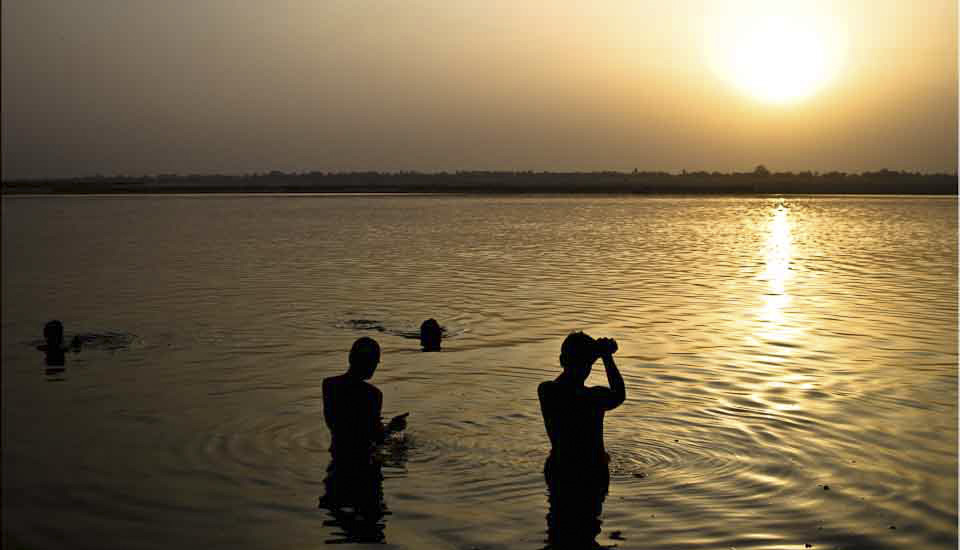
Pūjā at Sunrise Paying honour to Ma Ganga takes a number of forms, including taking a ritual bath in the river and offering sacred water to the sun.
Pūjā Offerings The loving offering of light, flowers, and water or food to the divine, is an essential practice in Hinduism.
Offering Light Light, in the form of a flame, is the final element in the offering.
Making Offerings All along the riverbank, women with their baskets of brass jugs, utensils, flowers, and spices, construct their offerings.
Woman on the Ganges It was a meditative process watching the women construct their gifts for the Mother.
Incense Smoke from burning incense is cupped in the hands and waved into ones face.
Decorating the Offering The balls of mud, made from the riverbed, are carefully decorate with spices …
Flowers … and flowers. Every element has a purpose and meaning …
The Offering … and the finished product is quite beautiful.
Women and their Paraphernalia All along the river’s edge, the process is repeated.
Woman on the Riverbank
Woman in Red
Sail Away The offerings, like life, are ephemeral. Once given to the Mother, they are absorbed back into the river.
This visit to the mighty Mother was a long time ago, and I have shared some of these pictures in different formats before. But, I always feel rejuvenated when I revisit these images: there really is something magic in those polluted waters.
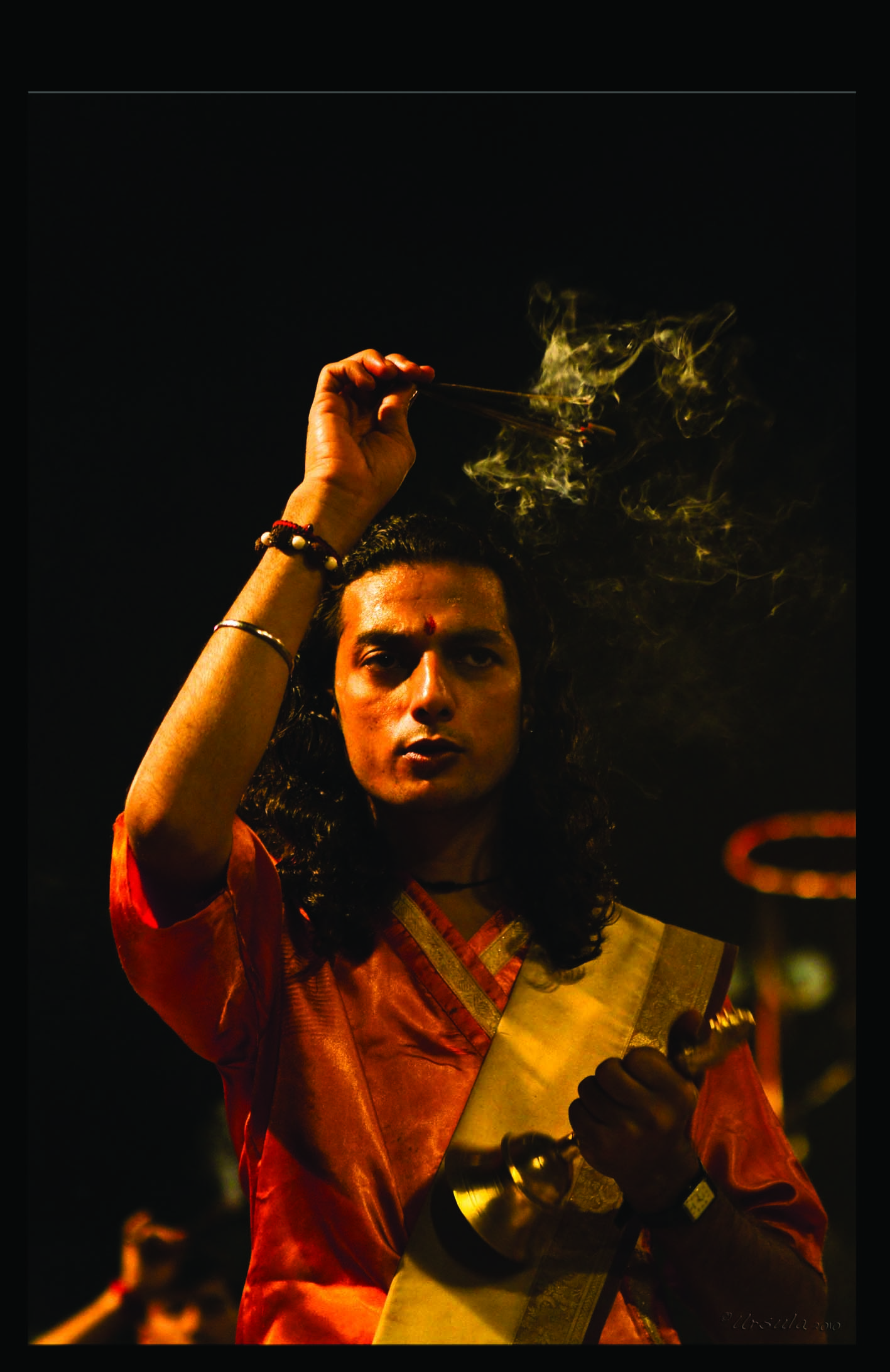
- Performing the Ganga Aarti from Dasaswamedh Ghat, Varanasi
- Buddha Head from Shwedagon Pagoda, Myanmar
- Harry Clarke Window from Dingle, Ireland
- Novice Monk Shwe Yan Pyay Monastery, Myanmar
Packets of 10 for $AU50.
Or - pick any photo from my Flickr or Wanders blog photos.

.jpg)
.jpg)
.jpg)









.jpg)


 Ah well. At least we were all in the same boat!


.jpg)