Nature’s Artworks : Bracket Fungus The forests of Haida Gwaii, off the northwestern coast of Canada’s British Columbia, are magical. It is easy to imagine mythical creatures making their homes here. This bracket fungus I found while walking the Dover Loop Trail on Moresby Island might be the same type that – according to Haida origin stories – is integral to the very creation of humanity.
Haida Gwaii, an archipelago off the northwestern coast of Canada’s British Columbia (BC), is a land of tall trees.
And stories.
The more I walked through the quiet and magical woods, and the more I learned about the mythical stories that originate here, the more enchanted I became. Haida Gwaii truly got under my skin!
This ancient landscape of old-growth spruce and cedar forest has been home to the Haida people for more than 13,000 years. And, according to their origin stories, their cultural ties to the land go back even further.
Haida Gwaii has many walking trails – but very few roads. I was based in the main town of Daajing Giids on the main northern landmass: Graham Island. Thanks to a local tourist map, I planned a program of hikes for myself that didn’t require camping to complete them, or a four-wheel drive to reach them. Even so, I’m not sure if the car-rental company would have approved the number of kilometres I drove on unsealed roads!
On this particular late-spring day, the car and I had crossed the Skidegate Channel to access Moresby Island to the south (see: Birds and Boats). My intention, after finding some lunch, was to access the moderately-rated Dover Creek Trail. The tracks go by a number names, with AllTrails referring to a 3.4 km (2.1 mi) loop they call the Louise Dover Trail. I followed a similar route, but recorded 5.5 km (3.4 mi) – so I’m not sure where we diverged.
In any event, it was finding magical-looking bracket fungus (polypores) on this path that led me to the story of the all-important Fungus Man.
Fungus Man was a friend of Raven, and together they created the world as we know it.
We have met Raven before (see: Stories in the Rocks and Trees). He is one of the most powerful creatures in Haida mythology, and is frequently described as a “trickster”. Raven is a cultural hero, and can be a magician, a transformer, and a potent creative force. He embodies both beneficial and selfish desires, and many of his stories are cautionary tales.
In this particular legend, however, he is seeking to create humans.
To do this, Raven needs to capture female genitalia from some distant shore. Raven’s attempts to do this have failed, as neither he nor other creatures who have tried to help him have had sufficient supernatural power to enter the region. Only Fungus Man, who paddles a canoe while Raven rides in the bow holding a spear, can overcome the spiritual barriers protecting the area.
As with all myths, there are elements of complex realities in this tale. Like many other scientists, author and mycologist Lawrence Millman suggests that we do owe our existence as we know it to the fungi, and uses the Fungus Man story as an illustration (see: Meet Fungus Man).
I was happy to wander through the woods and enjoy their beauty – without worrying too much about their biological or existential origins.
Join me for some short walks.
Into the Woods The trees rise tall all around, and the ground is soft and quiet underfoot.
Dover Trail This track is named for Louise Dover, a local woman of Haida ancestry.
Waterway in the Woods Sometimes called the Haans Creek Loop, part of the trail meanders along the creek. In the right season, salmon spawn in these waters.
Ferns at the Base Everything is moist and dimly lit; ferns thrive here.
Greenery on the Creek These lands are part of the Damaxyaa Heritage Site, and are protected under the BC Provincial Parks.
Trail Marker As part of the BC Parks reconciliation action plan, some of the trail markers were designed by renowned Haida artist Ben Davidson (1976–2020).
Like Faerie Steps up the Tree Trunk Bracket fungi, also known as shelf or polypore fungi, grow on the trunks and branches of both dead and living trees.
More Bracket Fungi I was fascinated by these tough fungi. One story tells how Raven animated a bracket fungus by drawing a design on it, thereby creating Fungus Man.
In the Trees
Textures in a Mossy Trunk The forest here is a mix of cedar, spruce, and hemlock; I think this is cedar, but I’m never sure!
One-Flowered Pyrola – Moneses Uniflora
Droplets on a Bracket Fungus It’s early afternoon, but there is still moisture on this polypore.
Under the Shelf Fungus
Rotting Stump The cycle of life continues, with mosses, ferns, and saplings rising out of rotting stumps and leaf litter.
Light and Dark The afternoon sun shines through the old man’s beard (Alectoria sarmentosa) and the sound of the creek rings through the fresh air.
Rough Trunks
Tall Trees Later in the day, on my way back to the ferry, I stopped at the short Onward Point Trail which leads through more ferns in the spruce and cedar forest.
Onward Point Trail Viewing Site There is a cedar gazebo here, where you can sit and look over Skidegate Inlet. The site is known for birds, seals, and even whales; it was all quiet while I was there.
Ferns at Onward Point I contented myself with appreciating the light in the ferns …
Rocks Below … and the waves over the seaweed.
When the Evening Ferry Leaves Without You … I was at the Kwuna ferry landing in good time, but there were too many cars in front of me! Thankfully, it wasn’t the last ferry of the day, and I had water in my car and an ibook on my phone! (iPhone12Pro)
Evening over the Islands Finally, an hour and a half later, it was my turn to cross Skidegate Inlet, back to my base on Graham Island.
The late-spring evening was still light when I got back to my room – and even better: the local restaurants were still open.
I was able to reflect on the day’s explorations over a glass of wine and a meal of homemade tagliatelle with local cremini mushrooms.
An Indonesian Navy Liquid Oil Support Ship (BCM) and a Traditional Outrigger Canoe Sorong Harbour, like the Southwest Papuan city itself, is a study in contrasts.
Sorong, the largest city in the newly-formed Indonesian province of Southwest Papua, is the sort of place people usually go through rather than to. As the logistics hub for Indonesia’s thriving eastern oil and gas frontier, it harbours a busy industrial port. For tourists and scientists, it is the gateway to Raja Ampat, a collection of over 1,500 islands famous for its magnificent coral reefs and the richest marine biodiversity on earth.
Unlike most tourists who simply transit, myself and roughly 100 other travellers had limped into harbour on an incapacitated vessel and were anchored there for several days. Our small ship, the Australian-registered Coral Geographer, was meant to be in the waters of Raja Ampat. Unfortunately, mechanical, bureaucratic, and communication problems had forced our unexpected return to Sorong, barely a week after we had set off from there.
On the plus side, we were serviced by a wonderful tour crew who did their best to organise impromptu off-vessel excursions using the ship’s tenders.
One day, we headed to the nearby island of Doom (see: Midday Sun on the Island of Doom). Later, some of us explored another, very different destination: PulauSoop. Sometimes know as Tsiof, this is a small island with less than 1500 inhabitants
The next day a small group of us took a cab from Sorong Harbour to the Sapta Ratna Pagoda, a Buddhist landmark attached to the Vihara (Temple) Buddha Jayanti. We then indulged in some shopping for batik fabrics.
Even within these three destinations, the contrasts were remarkable: the island of Doom that I have talked about before (see: Midday Sun on the Island of Doom) has Dutch-influenced colonial architecture and Second World WarJapanese war-relics; the soporific PulauSoop, is quiet with small houses, a simple LutheranProtestant church, and sandy coconut groves; and finally, the city of Sorong features bustling streets. We passed multiple mosques and churches on our way to its surprising Buddhist landmark.
The Colours and Textures of Fishing Boats The flaking paint and rusty fittings on the traditional outrigger canoes in the waters around PulauSoop speak to a simple, laid-back lifestyle.
A Long Jetty Fortunately, we had opted for a beach landing – I’m not sure how stable that pier is!
Outrigger at Rest Seen all across Indonesia, this type of small wooden outrigger boat is known as a jukung, cadik, or kano.
A Boat in the Shallows
A Solemn Sandy Face Southwest Papua has more than 52 ethnic groups living across its many islands.
Cutting the Coconut Drinking a freshly cut coconut was the perfect way for me to rehydrate in the equatorial heat – and to contribute to the local economy at the same time.
Dappled Light Mangroves shade the water’s edge, throwing shadows across the sand.
Metal Sheeting The huts and houses here are simple affairs making use of ‘found’ materials.
In the Coconuts Soop’s main settlement is on the north of the island; here in the southeast, mangroves give way to coconut palms and life is quiet.
Direction Signpost We are about 4 kilometres (2.5 mi) west of the city of Sorong on the mainland and 2.5 kilometres (1.6 mi) west of the very-different island of Doom that we visited earlier in the day (see: Midday Sun on the Island of Doom). (iPhone15Pro)
Fish Drying Food here is in the sea and in the trees. As I wander past the coconut trees, I find fish on corrugated iron sheeting, drying in the sun.
Washing on the Line The small houses are neatly marked off from each other.
Marthen Luther Church Lutheran missionaries made inroads into this region in the mid-1800s, and over 60% of people in Southwest Papua are Christian.
Young Women
Mother and Child The local women are happy to show off their children; the little ones are less certain.
Kids Sending Us Off The older children rush to the jetty to wave us off as our tender leaves the island.
Malaillo Wooden Liveaboard Schooner The next day, our tenders take us into the busy Sorong Harbour, where the ships range from traditional fishing vessels to oil tankers and elegant luxury tourist boats like these ones.
Scenes from a Taxi: Mosques Everywhere Our ship’s passengers head off in all directions; four of us jump in a taxi to visit a Buddhist temple I had spotted on TripAdvisor. We pass all manner of mosques and churches on the busy streets enroute.
Sapta Ratna Pagoda It was a steep and winding drive up to the temple complex – which seems to go by many names. After checking in at the office and paying a small fee, we climbed up to the pagoda itself.
View from Vihara Buddha Jayanti From the top of the stairs, we have quite a view over Sorong Harbour and the many islands there. (iPhone15Pro)
Prayers in the Temple The pagoda was built in 1992 as a place to store the ashes of deceased local Buddhists – however, as Buddhists represent only 0.1% of the population of Southwest Papua, it doesn’t get used often for that purpose.
Giant Bell The whole complex is built in Chinese Buddhist style. Back outside, we ring the bell for luck and blessings. (iPhone15Pro)
Boats on Sorong Harbour After spending some time – and a bit of money – in a local batik shop, we return to the docks to wait for our transfer.
Ships on the Water Tankers and other industrial vessels are at rest in the port.
Over the Waterfront to the Pagoda As our tender pulls away from the harbour, we have views over the ramshackle waterfront buildings, and the pagoda high on the hill.
GKI Bethel Doom On the way back to our ship, we pass the island Doom with its Protestant church standing prominently on the hill.
Sunset over the Seas Night falls quickly in the tropics. Back on our ship, we are treated to beautiful orange skies. (iPhone15Pro)
It was very much a case of making lemonade from lemons: the shore trips were interesting and enjoyable.
Even so, we all hoped that the mechanical gods would line up, and we would finally be on our way to the nutmeg-rich Banda Islands that were a central focus of our planned itinerary.
The Rolling Hills of Munnar In the Western Ghats of Kerala, India, the mountains brush the clouds, the rivers and roads wind in all directions, and the hills are blanketed by tea bushes and silver oak trees.
I read a lot of historical fiction growing up. Much of it took place in “The Colonies”.
So, I always had a fascination with India’s many Hill Stations.
Finally! A couple of years ago, I had my chance: I was booked on two trips in India’s south, with a four week interval between them. To part-fill that gap, I made forays into the hills of Kerala; more specifically, into the Western Ghat Mountains.
My first hill-stay was in Munnar, a former resort for the elite of the British Raj. Although long inhabited, the region between Cochin and Madurai was first formally surveyed by Benjamin Swayne Ward from 1816. In 1817, he established a camp at the confluence of three mountain rivers: the Muthirapuzha, the Nallathanni, and the Kundali. This gave the colonial settlement its name: the word munnar means ‘three rivers’ in Malayalam.
Soon, the hardships faced by the early explorers in what they called dark impenetrable forests, passed. Before long, the trees were being cleared, and by the 1880s, tea plantations were established across the landscape.
Munnar itself is situated at around 1,600 metres (5,200 ft), with the surrounding hills rising to 2,695 meters (8,842 ft). It boasts a much cooler climate than the coast, which made it an attractive summer resort for the British during their rule. It continues to attract urban Indians and international visitors.
I had found a timeshare spot in the village of Chinnakanal (Club Mahindra Munnar Resort), up in the hills about 30 minutes outside Munnar. I had an arrangement with a Kerala driver, and after my first group tour finished (see: A Morning in Historic Fort Kochi), we set off west into the mountains.
Scenes From a Car: A Bridge over the Periyar River It is bliss not having to drive! Especially in India where signposts can be indecipherable and adherence to road rules is vague at best. About half way, in the village of Neriamangalam, we cross Kerala’s longest and most important river. (iPhone12Pro)
Valara Waterfall A short while later we stop – like every other driver – to admire the waterfall on the Deviyar River, tumbling down through the jungle next to National Highway 85. (iPhone12Pro)
Bonnet Macaques I was more interested in these primates – which I take to be a pair. (iPhone12Pro)
Red Face and Big Eyes Bonnet macaques are endemic to southern India. A high number of blood capillaries under the thin skin of their faces flushes red easily with their emotions. (iPhone12Pro)
Afternoon Light over the Mountains As we climb higher into the mountains, the clouds lower to meet us. (iPhone12Pro)
Munnar Colony The buildings of the town are already far below in the valley. (iPhone12Pro)
Tea Harvesting When I spot my first tea-pickers, I have to pull out the actual SLR cameras. But, the pickers are a long way away, and we still have driving to do.
Roadworks and Rain With two monsoon seasons, roads are regularly in need of repair. (iPhone12Pro)
Visibility Zero Munnar averages only two days of rain every February; as we drove into the clouds, I could only hope the rest of my trip would be clear! (iPhone12Pro)
This Will Do Nicely! My spacious cottage was a welcome treat after a long day in the back seat of a car. (iPhone12Pro)
From my Balcony Finally! In the morning, the clouds lift and I have a view over the tea plantation as I drink an instant coffee on my balcony. (iPhone12Pro)
A Lone Bonnet Macaque I’d been warned not to take food onto the balcony; macaques are opportunists. (iPhone12Pro)
Green and Green After the long road the day before, I’ve given my driver a couple of days off. I set off from my room on foot to explore the neighbourhood.
Winding Roads Everywhere I look, the mountains rise to meet the clouds.
A Splash of Colour A daylily (Hemerocallis) makes a nice contrast to all the green.
Through the Teas and Trees I love the humped patterns made by the tidy evergreen tea plants (Camellia sinensis). Silver oak trees (Grevillea robusta), native to Australia, are dotted around the plantations to provide shelter from strong winds and shade from the sun.
Red-Whiskered Bulbul – Pycnonotus Jocosus It was a melodious warble that caught my ear before I spotted this medium-sized beauty overhead. My lenses are not bird-worthy, so I’m always pleased to catch something!
Rolling, Rolling …
Bird on a Wire Birds are everywhere – mostly too small for me to photograph, and too distant for me to identify.
A Lone Dog on a Rough Road I’m always a bit leery of wandering dogs …
Local Dog I guess he is wary of me too; he stops to check me out and then saunters off.
A Shopkeeper and his Very Tidy Shop I finally find a local shop: impossibly tidy, and stacked with many products I don’t recognise. (iPhone12Pro)
A Tidy Shop I continue to photograph as the owner makes me a masala chai.
Herbs in Recycled Bottles It pays to ask! This is NOT a cooking spice mix – when combined with coconut oil, it is a hair tonic!! I leave the store with fresh nuts and locally-made chocolate.
Cooks at the Resort These young men were the highlight of my stay at this resort: they cheerfully explained all the exotic dishes they were preparing and let me taste-test. (iPhone12Pro)
Another Overcast Day in the Tea Plantation The next morning the rains were back! This was my view from the restaurant at breakfast. (iPhone12Pro)
… and Up again … But, at least I was getting some exercise: it was a long walk down to breakfast, and it seemed even further going back up! (iPhone12Pro)
A Bright Spot in an Otherwise Dull Day A hibiscus in a pot beside the staircase made a cheerful spot of colour – and a good excuse to stop and catch my breath. (iPhone12Pro)
Apart from myself, all the visitors to the resort were Indian family groups. Hardly the romantic idyll of historical fiction, but a wonderful place to stay, even so!
I had my fingers crossed for better weather as I hoped to explore further afield the next day.
Overlooking Saint-Cirq Lapopie Sitting high on a cliff, the picturesque medieval village of Saint-Cirq Lapopie in the southwest of France has commanding views of the Lot River and the neighbouring fields and dwellings.
It is like stepping into the past – but with artists’ ateliers, boutique shops, and great coffee!
Saint-Cirq Lapopie is a heritage-listed medieval village in the southwest of France. Located on a steep cliff, 100m above the Lot River, it originally served as a defensive and administrative centre for one of the local viscomtés – a division of land and fiefdom smaller and less important than a duché. Much of the original architecture – some of it dating as far back as the 13th century – remains.
Today, this well-preserved commune is a member of Les Plus Beaux Villages de France – The Most Beautiful Villages in France Association and is one of the most popular tourist destinations in the Department of Lot. It is on the French Way of St. James pilgrimage route, and is – among other designations – in the heart of a Regional Natural Park and in the UNESCO Global Geopark of the Causses du Quercy.
I was visiting friends in Cahors, a mere 30 km (19 mi) to the west. Our plan was to walk 4 km (2.5 mi) along the towpath, the Chemin de Halage, from Bouziès to Saint-Cirq Lapopie (see: the Chemin de Halage). Unfortunately, rain drove us back when we were halfway, so we drove the rest of the distance, and parked above the village.
Fortunately, the rains eased, and we only contented with a light drizzle and overcast skies as we explored this charming site.
Do come along!
Pastorale These rural locales are timeless!
Saint-Cirq Lapopie (la Popie) As we walk down from the carpark, we have views over the karst cliffs that were formed during the Jurassic period, and of the medieval village that takes strategic advantage of its position over the river and surrounding fields.
Old House at the Top of the Village It is always interesting to see the juxtaposition of modern cars parked next to very old architecture!
Red Berries It is autumn – and bright red berries contrast with the wet green leaves.
Church in the Village The gothic Saint-Cirq Lapopie Church takes pride of place in the village. It is dedicated to Saint Cyr, three year old Cyril of Tarsus who was martyred with his mother, Sainte Julitta, in Turkey the early 4th century.
Grape Leaves
Window Shutters Shutters are common in older buildings in the south of France: they are considered essential to keep out the sun on hot summer afternoons. In the winter, they insulate against the cold.
Crucifix Traditionally, France is a Roman Catholic country. The signs of this are everywhere.
Overlooking the Village These are the half-timbered houses of the old bourgeoisie. Parts date back to the 13th and 14th centuries, …
Village Houses … with the beams and upper stories added in 15th century. Today, they mostly house artists’ retreats, ateliers, boutiques, and cafés.
The Moulin de l’Aulanac Our walk passes over a 14th-century watermill with its half-timber exterior of exposed stone. It once housed four millstones to service the needs of the district.
Mossy Roofs and Ivy Walls
Knight Guardian Signpost The village is known for its artisans – and examples are everywhere.
Wet Cobbles in a Village Lane
Saint-Cirq Lapopie Church
Stained Glass in the Church The church, which was started in 1522, was built on the same ground as an earlier Romanesque parish church. It retains features from that earlier time, including some 12th century sculpted acanthus leaf decorations and fragments of 13th century wall paintings. I believe the stained glass is a modern addition.
Just a Door Knocker
Rooftop Details Peaked tiled roofs over narrow square towers and battlements are all around.
Gated Courtyards Gardens hide behind a decorative stone fence. This complex was once a 15th century fortified house, and is now the Musée Rignault.
Overlooking the Street From the little hill at the end of the village, we can look back over Rue de la Pélissaria.
Porte de la Pélissaria This end of the village is marked by a well-preserved arched city gate. We walk through it, and retrace our steps.
Church on the Hill Above us, the church dominates the horizon. You can see how the old building took advantage of the ancient rock.
Sleeping Dog
Église de Saint Cirq Back outside the village, we get one last look at the church.
Steep Bluff And, we look back at the Rock of La Popie. You can just see people who climbed up the promontory – as we had – for views over the village and the valley.
The entire town is like a museum, and it reminded me how much I love these distinctive old complexes in Europe.
Saint-Cirq Lapopie has been attracting artists since the mid-1900s; we enjoyed exploring the ateliers and shops as much as we enjoyed appreciating the cobbled streets and medieval architecture!
Building Details Ornately carved wood and overhanging balconies: the architecture in the historic and UNESCO-listed city of Meknes in Northern Morocco is a blend of Islamic and European styles from the 17th century and older.
Colour and pattern is everywhere!
Tiled walls and fountains are around each corner and intricate wood, brass, and plaster work decorate every building in old Meknes.
Founded in the 11th century under the Almoravid Berber dynasty, Meknes is one of Morocco’s four Imperial Cities: that is, it was once the capital of the country, and continues to house a royal palace. UNESCO-listed for its historic architectural interest and its approach to urban design and town planning, the narrow, winding streets of the medina (the old city) contrast with the massive ramparts and huge monumental gates that are the mark of its historic defensive origins.
I was travelling with a small group. We had driven to Meknes the day before from Casablanca, with a stop at Rabat, the current capital and one of the other Imperial Cities (see: Imperial City and Capital of Morocco). Our overnight accommodation was in a old charming riad – a traditional multi-storied house built around an inner courtyard with a fountain below and a colourful skylight above.
After a very early breakfast, we were out the door with our walking shoes on and our bags packed and ready for the bus. We met with a local guide who took us through some of the main attractions in the old city. I was very grateful to her: without a guide, I might have never made it back out of the medina!
I’ve forgotten most of the dates and details: so enjoy the visuals as you join me for a morning walk through old Meknes.
Ornamental Facade Overhead As soon as we enter the medina, we are surrounded by intricate architectural details, like this carved and painted wood and plaster.
Ornate Tiled Fountain Sultan Moulay Ismaïl (reigned 1672–1727) oversaw the construction of grand palaces, public buildings, and sophisticated water systems. Some of the existing fountains date back that far, although most are from the 18th and 19th centuries.
Under-Cover Corridor Walkways wind in every direction. The UNESCO documents note the need for restoration or conservation measures in many areas.
In the Medieval Streets Unlike the medinas of some of Morocco’s bigger cities, old Meknes is not aimed at tourists: it is very much a site where daily life goes on.
A Local Guide and a Local Shop At a clothing store, our guide explains the difference between the every-day djellabas and special-occasion caftans that women wear.
Another Door and Another Fountain
Our Guide
Another Beautiful Public Fountain The repeated tiled patterns are quite beautiful – but they send my head spinning!
Ornate Ceiling Detail Even the roof overhanging the fountain is decorated in intricate geometric patterns and flowing arabesques typical of Islamic art.
Blue Mosaic Wall Art at the Dar Jamai Palace Our walk brings us to a large open square, Place el-Hedim, where we stop to admire the beautifully tiled fountain on the outside wall of the Dar Jamai Museum. The palace that now houses the museum was built in 1882.
Bab el-Mansour or Bab Mansur At the opposite end of Place el-Hedim – which was built between 1672-1674 after Sultan Moulay Ismail demolished half of the city of Meknes for his palace – we come to a historic monumental gate. The Mansour Gate was built in 1732 by Mulay Abdullah, the son of Sultan Moulay Ismail. It is currently undergoing renovation and what we are looking at is a giant photograph!
Pillar and Repairs Behind the giant photo, I get a glimpse of the scaffolding, and one of the elegant pillars it encircles.
Old Alleyways We enter the walled area through more modest gates and winding tunnels.
Pigeons in the Wall Pigeons roost the depressions in the giant walls which once held scaffolding.
Arched Gateway The interior of the ancient imperial city comprises vast open spaces.
Pony Cart Small pony carts wait to transport passengers.
Mausoleum of Moulay Ismail A short walk from the gate, we come to the funerary complex of the sultan who first made Meknes his capital.
Brass Door Knockers The huge carved wooden doors to mausoleum are decorated with traditional Moroccan door knockers.
Inside the Mausoleum The mausoleum complex winds off into various courtyards and chambers; the patterned tiles everywhere played havoc with my astigmatism.
A Prayer
Brass Chandelier Richly decorated indoor patios flank the tomb chamber at the centre of the mausoleum.
Another Brass Chandelier
The Tomb Chamber This square central chamber holds the mqabriyas – tombstones – of Sultan Moulay Ismail (c. 1645–1727), his son and successor Ahmad ad-Dhahabi (1677 – 1729), and the later sultan Moulay Abd ar-Rahman ibn Hisham (1778 –1859).
The historical fiction I’ve read (see: The Sultan’s Wife) andWikipedia agree that Moulay Ismail left behind a mixed legacy. He was known for his military successes and his ruthless – often cruel – governance. Although he is credited with unifying Morocco, his death was followed by civil wars and instability.
But, the architectural grandeur he left behind is indeed a testament to Meknes’ start as a magnificent imperial capital.
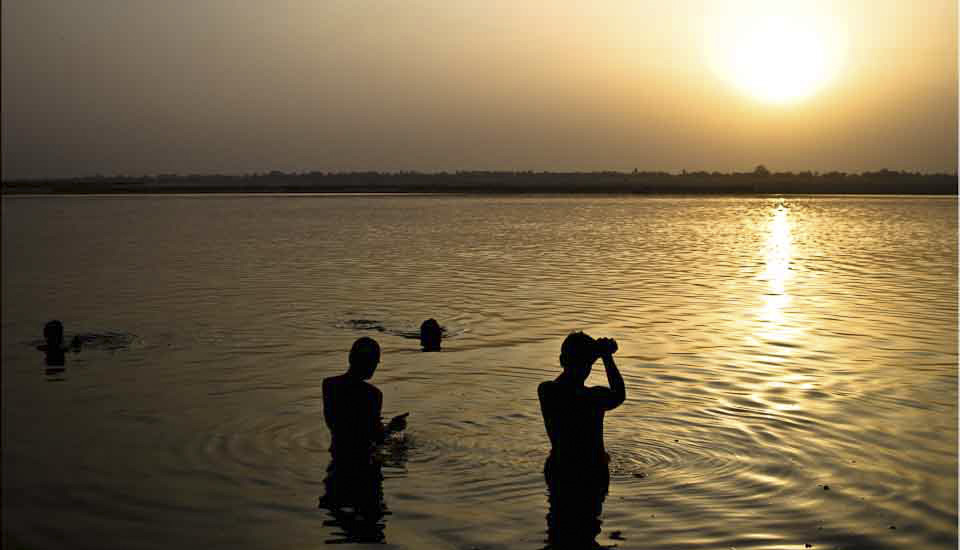
- Performing the Ganga Aarti from Dasaswamedh Ghat, Varanasi
- Buddha Head from Shwedagon Pagoda, Myanmar
- Harry Clarke Window from Dingle, Ireland
- Novice Monk Shwe Yan Pyay Monastery, Myanmar
Packets of 10 for $AU50.
Or - pick any photo from my Flickr or Wanders blog photos.

.jpg)
.jpg)
.jpg)







 Until then,


 Saint-Cirq Lapopie has been attracting artists since the mid-1900s; we enjoyed exploring the ateliers and shops as much as we enjoyed appreciating the cobbled streets and medieval architecture!


 But, the architectural grandeur he left behind is indeed a testament to Meknes’ start as a magnificent imperial capital.


