Orthodox Dome It’s no surprise that the Cyclades are at risk of being ‘loved to death’ – they truly are a paradise! The sky was cloudless the whole time I was there, and I lost count of the classic blue and white churches on the landscape.
It was one of those ‘pinch-me’ moments.
I was finally getting to visit those magical Greek islands that we all know from photographs: islands with endless blue skies and dusty green olive groves; towns with winding cobbled streets and the buildings all whitewashed with blue trim; a landscape with small blue-domed Orthodox churches everywhere you look.
One of the great joys of writing this blog is that I get to re-live these special moments many times over: when I travel and take the pictures, when I later review and edit the photos, and when I finally shape them into a collection and story.
This set, from the tiny little town of Parikia, in the Greek Cyclades, has been a great pleasure to revisit.
Although small – only 4500 people – Parikia is the administrative capital of Paros – and the island’s biggest population centre. It is the busiest settlement on the island, but has retained its traditional flavour and typical Cycladic architecture, with narrow cobbled walkways between whitewashed buildings, all decorated with bright blue trim and colourful plants.
I was travelling with a small group and a guide from Intrepid; we had landed back in Athens the day before (see: Postcards from Athens) and had a week of island-hopping ahead of us.
Join me on our first stop:
Athens Port at Piraeus It was an early start: it was well before 7am, and we were checked out of our Athens hotel and ready to board for our three and a half hour ferry crossing to Paros.
Wind Farm on Agios Georgios On the way to Paros in the Cyclades, we pass Agios Georgios, the largest uninhabited island in the Saronic Islands.
Arriving on Paros I can barely contain myself! I’ve been waiting all my life for this, and it looks perfect!!
Ready for Island Time Our resort on Krios Beach just outside of Parikia is truly magnificent. (iPhone12Pro)
Welcome to Paros! How perfect is this! Cocktails and a view over the harbour. (iPhone12Pro)
A Modern Aphrodite Late afternoon, our little group gathered together for a walking tour of Parikia. This beautiful sculpture – about which I could find no information – was the first thing that caught my eye.
Cobbled Street Parikia is a charming town, with the narrow cobbled laneways …
Blue Door and Shutters … and the blue and white houses typical of settlements in the Cyclades.
White Walls – Blue Doors Every winding laneway; every lopsided, asymmetrical building, is a treat!
Rectangular Tower on the Frankish Castle Built in 1260 CE by the Venetian Duke of Naxos, this castle used building materials recovered from ancient buildings that were scattered around the city.
Pigeon in the Tower We didn’t stop long, and the narrow streets surrounding what remains of the old castle meant I didn’t get a good perspective on it. So, I focussed my attention on the well-worn stones and the roosting birds.
Sweeping For the locals, of course, it is just another day, …
Saint Constantine Panoramic Church … but for me, every corner is a new delight!
Flag on the Church Built in the 1600s, this Cycladic-style church is dedicated to Agios Konstantinos – Saint Constantine. One of the most important religious buildings on the island, it is also architecturally significant, incorporating elements of the earlier Byzantine and Ancient Greek structures that once stood here.
Tiled Cross Saint Constantine is a beautiful little church. Sitting at the town’s highest point, it has views down the hill and over the Bay of Parikia.
Blue, White, and Bougainvillea Could it be more perfect? I can’t stop smiling.
Still Life Found : Bicycle
Local Beauty I don’t know how I managed to make this fuzzy! But, she was so lovely, I had to include her anyway.
Bougainvillea and Shadows Light dances off the white walls, …
Marble Stairs … and the narrow stairs and laneways …
Grape Leaves … lead off in all directions.
Panagia Ekatondapiliani The last stop on our walking tour of Parikia was the Monastery and Church of Panagia Ekatontapiliani, considered to be one of the best-preserved Paleo-Christian monuments in Greece. Founded in the early 4th century CE and added to in the 6th century, the complex goes by many names. Panagiais a favourite Greek title of Mary Mother of God. Ekatontapiliani is commonly translated as the “Church with a Hundred Doors”. According to legend, the church was built with 99 visible doors, and one secret door which will open when the Orthodox church reclaims the Hagia Sofia in Constantinople.
Holy Shrine of the Virgin Mary Ekatontapyliani The interior is dark, and ornately beautiful. According to one story, Saint Helene built the church to give thanks to the Virgin Mary for a successful trip to the Holy Land. The alternate version is that Helene’s son, Constantine the Great, built it on her behalf after her death.
I couldn’t believe my good fortune: I had waited so long to get here, and so far, the Greek islands were living up to the hype.
Parikia was everything I could hope for in a Cycladic town – and we still had the rest of the island to explore!
Walkers on the Pambula River White sands, blue skies and sapphire waters – it really is hard to beat the Far South Coast of New South Wales, Australia, for beautiful places to explore!
Not thirty minutes north – or south – of my home, I can be in Beowa National Park.
This 8,900 ha (22,000 acres) park was established in 1971, and consists of two coastal sections running north-south alongside the South Pacific Ocean, on either side of Twofold Bay and the town of Eden. It was originally called Ben Boyd National Park, for a sometimes-resident Scots entrepreneur Benjamin Boyd (1801-1851). His complicated history included blackbirding cheap labour. After extensive community consultation, in 2022 the park was renamed Beowa, which means ‘orca’ or ‘killer whale’ in local Thaua language.
It is a park I have visited often (eg: Haycock Point; Short Walks; The Pinnacles), but usually only when someone else suggests it, or I have the excuse of out-of town visitors.
The walk pictured here was organised by my local branch of the National Parks Association of NSW. We found parking near Pambula Beach, and followed the beach and rocks around the corner to the mouth of Pambula River and up into magnificent coastal bushland.
Join us:
Coastal Waters It’s a beautiful summer day on the Sapphire Coast. Our walk starts near the south end of Pambula Beach.
Pambula Beach It’s a steep climb up to the trail – as you can see from the view back down over the beach behind us. That is probably what give the otherwise-easy walk its Grade 4 listing.
Coastal Cliffs We are looking out over Merimbula Bay and the South Pacific Ocean; next stop: New Zealand.
Crashing Waves I love watching the waves on the rocky outcrops.
Paddle Board This is where the river meets the sea, and rip currents are not uncommon here. Haycock Point – on the other side from us – protects the estuarine river mouth from weather coming up from the south.
Memorial Bench This is a community park: we haven’t yet reached the actual National Park boundary. Whale watching – and just water-watching – is popular here.
Rocks Below Unlike the the sandstone common around here, the dark, red ironstone stands up against the waves.
People on the Beach A makeshift staircase leads down to the beach near the mouth of the river.
“Jiguma Walking Track” Our track stays high over the water below …
Over Merimbula Bay … and allows us occasional views through the trees.
Sea Kayak
Into the Pambula River The red rocks – rich in iron oxide – stand out against the blue waters.
Patterns and Colours I find the patterns and shapes endlessly fascinating.
Wading in the Pambula River
Sweet Pittosporum (Pittosporum Undulatum) on the Edge Our path takes us back uphill to follow the river, where we are finally in the National Park. The river waters below us are clear, …
Through the Trees … and the colours everywhere are incredible!
White Sand
Stairs through the Trees It’s an out-and-back track: after we reach the beach, we turn around and climb back up the hill.
Strange Fungus A colourful fungus – scarlet bracket (Pycnoporus coccineus) I think – gives me an excuse to stop and catch my breath.
Tidal River Mouth With the tide coming in, the shoreline narrows and we could lose some of our path back around to Merimbula Bay.
Fisherman on the Edge The estuarine waters are fairly sheltered and safe, making them a good place for fishing …
Splash! … as long as you are prepared to get wet!
Goanna on the Move When we arrive at the carpark, a mid-sized monitor lizard makes its way back into the scrub.
This short and relatively-easy walk is so delightful – and so close to home – that I can’t believe I haven’t done it before.
Jackfruit (Artocarpus Heterophyllus) in the Jungle The Cardamom Hills in Kerala are named for the spice that grows there – alongside other and exotic spices and a range of popular Asian fruit. Jackfruit has been cultivated in India for between 3000 to 6000 years. The fresh fruit is found in food markets across Southeast Asia, and the wood is valued by Hindu and Buddhist carvers.
The Cardamom Hills of Kerala.
The name is as heady as the rich array of exotic spices and fruits that grow there, and the wild animals that hide out in the jungle expanses.
The Cardamom Hills form the highest part of Western Ghats, a range of mountains and hills that run north – south through western India. The Western Ghats are older than the Himalaya, and so special that they have been USESCO-listed for their influence on Indian weather patterns, and for the biodiversity and the sheer number of endemic plants and animal that live there.
The importance of these hills have long been recognised. By royal proclamation under the Kingdom of Travancore in April 1822, the Cardamom Hills were declared a special administrative area. This was to promote cardamom cultivation and to support the cardamom farmers. Today, the lands come under the State Government of Kerala, but there are ongoing disputes about land use between the Forest Department and the Revenue Department.
The small group I was travelling with had driven westward, up into the hills from Madurai in Tamil Nadu (see: West out ot Madurai). Our afternoon itinerary included a visit to a spice plantation and a boat ride through a tiger reserve.
You’d be forgiven for thinking the latter would have been the high point. After all, boating through a national park – the Periyar National Park – which advertises itself as the Best managed Tiger Reserve in India, sounds pretty spectacular.
Unfortunately, the boat ride was an exercise in frustration and discomfort, which I’ll elaborate on later, while the visit to the spice garden (Ravi’s Spice Garden) was an absolute delight.
Still, the both provided a great introduction into some of what Kerala – which has long been on my wish-list – has to offer.
Guide in Ravi’s Spice Garden Our guide to the beautiful organic garden was a lovely man – and well versed in the plants growing there and their uses in Ayurvedic medicine. Today, the ancient Indian medical system, known as Ayurveda, is subject to modern scientific scrutiny and taught at local universities.
Cacao Pod The cacao tree (Theobroma cacao) originates from South America, but is now grown in various tropical regions – to the benefit of all of us who love chocolate!
Cloves Cloves (Syzygium aromaticum, syn. Eugenia aromatica) are the aromatic dried flower buds of a tree in the myrtle family. Long used in Western and Ayurvedic medicine, clove flowers start out pale, gradually turn green, then a bright red when they are ready for harvest.
Passionfruit Leaves Passionfruit (Passiflora) is a native of Brazil and southern South America and was introduced into Europe by Spanish Christian missionaries. Since the 15th century, the flowers have been associated with the Passion of Jesus in Christian theology. The leaves and roots are poisonous, but have a long history of use in Native American healing practices.
Nutmeg on the Tree The evergreen Myristica fragrans tree is another magical plant: …
Nutmeg Pod … the fragrant spice nutmeg it is named for is ground from the seed, while mace (no relation to the defense spray) is made from the seed covering.
Green Cardamom The flower of the herbaceous cardamom plant is beautifully delicate, like a small orchid. A member of the ginger family, Elettaria cardamomum, or true cardamom, is native to these forests.
The King of Spices. Black pepper (Piper nigrum) has grown here forever, and has been used in Indian cooking and medicine since at least 2000 BCE. Somehow, it made its way to Egypt, where black peppercorns were stuffed into the nostrils of Ramesses II as part of his mummification around 1213 BCE. At times across history, pepper was so valuable that it was used as collateral or even currency. Today, it is in every kitchen and accounts for one-fifth of the world’s spice trade.
In the Jungle The display garden that we walk through is beautifully wild, making every new plant feel like a discovery.
Cinnamon Buds Cinnamon, another ubiquitous spice, has been popular since time immemorial. The spice is scraped from the inner bark of several Cinnamomum tree species (eg: Shaving Cinnamon, North Sumatra).
Thekkadi or Periyar Lake Some time later, after spice shopping and a local lunch, we were overlooking the boat ramps on Periyar Lake. This lake was formed in 1895, when the Mullaperiyar Dam was built across the west-flowing Periyar River. Today it is the heart of the Periyar Tiger Reserve.
National Parks Sign Posts We were waiting for our tour boats. This signpost indicates the distance to some well-known reserves, and I was pleased to note that I gone looking for tigers in Royal Chitwan National Park in Nepal, and had actually seen three in one day in Ranthambore NP in Rajasthan.
State Flowers of India Information signs on the waterfront illustrate the many state flowers, birds, and animals around India.
Tour Boats on Thekkadi Lake It would seem that all the tour boats are coming back at once!
Bonnet Macaque (Macaca Radiata) Cheeky monkeys have their eyes out for anyone with unguarded food.
Bundled Up and Bundled In Observing how passengers are forced to wear bulky, unwieldy live vests, and are wedged in tightly together, I realise that unless I’m lucky enough to get a seat at the edge, I’m not going to have much of a view!
Cormorant in the Heat-Haze When our turn comes, we are told where to sit (and no, I didn’t get an edge), and instructed not to stand up or move around. The life vests are not optional; they are hot and incredibly uncomfortable.
Nilgai (Boselaphus Tragocamelus) Any pictures I got were over the heads of people, with my 70-200 ml lens at full zoom. I was thrilled to see this large antelope at the water’s edge …
Butting Heads … and even more excited to see two stags locking horns. They were quite a distance away, so I’m glad they are more-or-less in focus!
The Samudra Some of the boats are double-deckerd, but clearly those passengers are also seated, and wearing their jackets.
Elephant Dreaming We didn’t see any of the 40+ tigers rumoured to be in the reserve, but we got a vague glimpse of some of the hundreds of elephants that live there. They moved through the forest like a dream – and it took me a while to realise I wasn’t just imagining things! I think those are sambar (Rusa unicolor) in the front.
Dead Tree The lake is quite lovely – and if I hadn’t been so hot and squashed I would have really enjoyed it!
Stags Locking Antlers It must be the season for it! A pair of sambar deer (Rusa unicolor) are locked in battle …
Stand Off! Eventually, the sambar stags unlock antlers and just face off. I’m not clear who won?
A Suggestion of a Langur Monkey We could hear the monkeys – but they stayed mostly hidden.
Cormorant on Watch
Not all the Boats Come Home Two abandoned boats make me wonder if that is why we have to wear those horrid vests?
Dinner Music in the Spice Village Our beautiful accommodation in a nearby resort was truly a balm after the boat ride! There, in a reimagined tribal village set in a spice garden we got to sample southern cuisine, flavoured with the spices we had seen earlier. (iPhone12Pro)
Although I was frustrated by my experience on the boat in the animal reserve, I had plenty of new spices and an Ayurvedic recipe to get my blood pressure back down.
Daniel Lanois This was the only performer I was familiar with before attending the 30th Vancouver Island Musicfest: Lanois’ 1989 debut album “Acadie” lives on my CD stacker. It was a gift from my brother many years ago.
(Click to start Still Water by Daniel Lanois.)
The morning started early, with the rousing sounds of Sunday gospel and Sacred Steel from the American South. The evening rounded out with silky smooth songs by Canadian legend Daniel Lanois.
Sunday at the Vancouver Island Musicfest in Comox, BC, featured a diversity of musicians from countries around the world performing a range of genres. From Northumbrian clog dancing to flamenco footwork; Latin rhythms from Brazil and Chile; and story-songs from one end of Canada to the other.
The weather was glorious and the setting – clearings among the trees of the Pacific Northwest – was beautiful. There were several performers I didn’t see, and some favourites I saw more than once: whatever your taste in music, the quality was superb. If it hadn’t been for the over-zealous volunteers who shuffled people around indiscriminately and the fact that my intended companion had to withdraw, the weekend would have been perfect.
Daniel Lanois was the only performer I was familiar with before attending. Clearly, I had been living under a (non-Canadian) rock: I had no idea how accomplished and well-known he actually is! A member of the Canadian Music Hall of Fame (2002), Canada’s Walk of Fame (2005), and the Canadian Music Industry Hall of Fame (2012), he’s the winner of five JUNOs and seven GRAMMYs. He has produced albums by Bob Dylan, Neil Young, Peter Gabriel, Robbie Robertson, Emmylou Harris, Willie Nelson, Spoons, Brandon Flowers, U2, and others, as well as his own.
Possibly his best-known song, “The Maker” has been covered by Willie Nelson, Emmylou Harris, Jerry Garcia Band, and the Dave Matthews Band.
I just knew it as a track on the CD “Acadie” in my living room!
Sunday Morning Gospel Set with the Lee Boys (and Leon Timbo) What could be better than some old-fashioned gospel in the sunshine?
Modern Keyboards John Mang, keyboard player with the tribute band Stealing Dan, has had a life-long love of the Hammond organ. His Sunday morning workshop on the Crossroads Stage walked us through the science and history of modern keyboards.
In the Woods Between sets, I took the opportunity to explore a short walk through the woods to the Tsolum River.
Drums for Kids In The Barn, Christy Vanden was demonstrating different drum patterns to a young and attentive audience.
Sound Checking Meanwhile, on stage, the performers and crew were getting ready for the Sunday Song Circle.
Sound Mixing Once everyone is happy with the balance, the set launches.
Moira & Claire Sisters Moira & Claire deliver enchanting, angelic harmonies. Their original, Delaney’s Dad, deserves all the praise that’s been heaped on it.
Marianne Grittani and Rose Birney Beautiful story-songs continued with Marianne Grittani and Rose Birney rounding out the Sunday Song Circle.
Flávia Nascimento Failing to get the seated audience on its feet for the energetic Brazilian rhythms, the former actress, circus artist, and clown, jumped down off the the stage to get us dancing in the grass.
Introduction to Northumbrian Smallpipes and Folk Tunes This was the workshop I didn’t know I needed! Kathryn Tickell, OBE and recipient of the Queen’s Medal for Music, introduced us to the workings of the Northumbrian small pipes.
Kathryn Tickell & Amy Thatcher There’s nothing like a traditional clog dance to make you smile!
Accordion and Fiddle The performance by Kathryn and Amy was joyful and fascinating – as we learned about the traditional music of Northern England.
Clarinet with Chola y Gitano Change of venue and change of continent: Chola y Gitano come from Chile, with distinctive Latin sounds.
Belén Rojas I had enjoyed Chola y Gitano so much the day before (see: From Folk to Fusion) that I bought one of their CDs. I couldn’t resist seeing them again.
Fancy Footwork From my (mandated!) seated position, I couldn’t get a good view of Damián Gallardo’s feet …
Damián Gallardo … but his flamenco passion was unmistakable!
Kathryn Tickell and the Darkening Having snared a good spot, reasonably central in front of the main stage, I stayed planted while the outer stages wound down for the evening. I was looking forward to hearing Kathryn Tickell again – this time with her full band, the Darkening, named for the Northumbrian twilight.
Josie Duncan On Clarsach The Celtic harp is a traditional instrument across northwest Celtic regions.
Amy Thatcher
JigJam The next performers to take the stage were also in the Celtic vein: …
Irish Meets Ole Opry … JigJam are described as Irish-Bluegrass. They are wonderfully energetic!
Daniel Lanois This was what I was waiting for! Delightful story-songs and magical harmonies – Daniel Lanois lived up to my hopes. Johnny Shepherd and Jim Wilson helped out with vocals on The Maker.
Pedal Steel I had lost my central spot (long story!), and when Daniel Lanois moved back to his slide guitar, I had trouble getting a good view of his hands.
Having been thrilled by Daniel Lanois, I had no desire to stay for the last two sets. I would have bought more CDs, but the Merch tent had packed up early!
Never mind. I was humming the sad refrains of The Maker as I walked back to my car.
The Changing of the Greek Guard Every Sunday, at 11am, there is a formal changing of the guard in Syntagma Square, Athens. The traditionally dressed Evzones, or Presidential Guards, are a ceremonial infantry unit that guard the Tomb of the Unknown Soldier and the Presidential Mansion.
Having spent most of my life in what the West calls the “New World” or the “Colonies”, I haven’t had a lot of access to the great cities of Europe. So, when the opportunity arises to visit one of those historical cities, I am thrilled!
I had two short stops in Athens: I had spent a week wandering around Crete on my own (see: Weekly Wanders Crete) and flew back into Athens to meet up with a small group with whom I then toured the mainland. After a week, we returned from the Peloponnesus (see: Ouzo for Breakfast) and stopped in the city for two short nights.
Of course, it wasn’t long enough! But the hotel chosen by the tour company was exceptionally well-located: a short walk from Syntagma Square and with views of the city and the Acropolis from its rooftop restaurant. So, I made the best of it.
Join me for some highlights.
The Parthenon on the Hill I arrived into the metropolis very late afternoon, but had time to appreciate the view from the rooftop restaurant …(iPhone12Pro)
Sunset over Athens … before the sun came down over the sprawling city of Athens. (iPhone12Pro)
Parliament House The next morning, phone and map in hand, I set off for a walk up the road, and found myself at the austere Neoclassical Parliament House on Syntagma (Constitution) Square. Built between 1836 and 1842, it was originally the palace of the King of Greece. (iPhone12Pro)
Aischylos – the Father of Tragedy (525-456) For my morning walks, I always aim for the green patches on the map. That lead me past a number of bronze statues on the main road …(iPhone12Pro)
Georgios Souris – Greek Poet (1853 – 1919) … and to busts of important local poets in the charming Zappeion Garden. (iPhone12Pro)
The Rooftops of Athens I was back at my hotel in time for breakfast on the rooftop, and enjoyed some clear morning views. Unfortunately, the lack of smoking prohibition meant that my neighbour, six inches away from my table, was puffing away on a foul-smelling local cigarette. (iPhone12Pro)
The Erechtheion and Athens The next day, my new group and I had an early-morning tour of the Acropolis (see: On the Acropolis).
Temple of Olympian Zeus On our way through the centre of the city, we stopped at the Temple of Olympian Zeus. Originally started in the 6th century BCE, it was finally finished under the Roman Emperor Hadrian in the 2nd century CE. It fell into disuse after being pillaged in 267 CE, and was mostly hidden by scaffolding during our visit. (iPhone12Pro)
The Olympieion At one time, this was the largest temple in Greece, but it is hard now to get a sense of its former glory.
Digging at the Temple Archaeologists perform painstaking excavation works under the supervision of the Ephorate of Antiquities.
Fallen Corinthian Column Once, the temple included 104 colossal columns of fine marble.
Flags in the Stadium Our next stop was at the Panathenaic Stadium, built entirely of marble in 330-329 BCE. It was the site of the first Modern Olympics in 1896 and is still in use today.
Statue of Archbishop Damaskinos by Greek Sculptor Fanis Sakellariou Damaskinos Papandreou (1891 – 1949) was the archbishop of Athens and All Greece from 1941 until his death in 1949. He was also the Prime Minister of Greece for a time.
Holy Metropolitan Church of the Annunciation to the Virgin Mary This magnificent three-aisled basilica was begun in 1842 and finished 20 years later. It was largely built from marble recovered from 72 demolished churches around Athens.
Athens Street One of the joys of travel has to be the unique shopping experience! I had a wonderful time exploring the shops in the Plaka neighborhood. It has been described as a village within the city (see: Athens: the Plaka).
Flag On The Hill Plaka sits under the rocky outcrop that houses the Acropolis.
A Local Hero In a public square nearby, a statue pays tribute to Yannis Makriyannis (1797-1864), a military officer who participated in the liberation war of Greece against Ottoman Empire.
Arch of Hadrian Our last stop before we drive out of the city towards Meteora (see: A Walk through Ancient Monasteries) was at Hadrian’s Gate, an 18m (59 ft) monumental gateway built in 131 CE.
The Pigeon A week later I was back on the Athens hotel rooftop fighting a pigeon for my morning toast. (iPhone12Pro)
Carrying the Standard There was already a crowd in Syntagma Square when I arrived for the Sunday morning changing of the guard.
Fancy Sleeves and Bayonets Every element of the distinctive Evzone uniform has a meaning tied to Greece’s modern history and national identity. The red Pharion (cap) they wear symbolises the blood spilled by the warriors during the liberation struggles, and the black silk tassel represents tears for the losses endured.
Stepping Out The Fustanella, the kilt, is made of 30 meters of white fabric with 400 pleats, which represent the number of years of Turkish occupation. The Fermeli (vest) is beautifully hand-embroidered with cultural designs in white or gilt thread.
National Police Officer
Stepping Out The uniform of the Cretans, with its blue breeches and white leather boots, is worn for parades and official ceremonies. (iPhone12Pro)
Pom Poms Traditionally, the large black tassel on the tsarouhi (shoe) concealed blades that could be used in close-range combat. (iPhone12Pro)
Officer Marching The uniform of the officers more closely resembles the dress worn by klephts – the brigands and/or freedom fighters who battled against the Ottoman occupiers. Officers are armed with a pála, a kilij-style curved scimitar. (iPhone12Pro)
Street Musicians Evening in the cobbled streets near our hotel are charming – and a little cooler than the wickedly hot days.
The Church of Panagia Kapnikarea There is a new delight on every corner. Probably built around 1050 … (iPhone12Pro)
Busking … the beautiful little Church of Panagia Kapnikarea is one of the oldest in Athens. (iPhone12Pro)
In the Streets of Monastiraki We are headed to the Monastiraki district for alfresco dining across from the Museum of Modern Greek Culture and evening views up to that ever-present Acropolis. (iPhone12Pro)
Night Lights on The Acropolis Back at the hotel after dark, I snuck up to the now-quiet rooftop for one last look at that incredible monument on the hill. (iPhone12Pro)
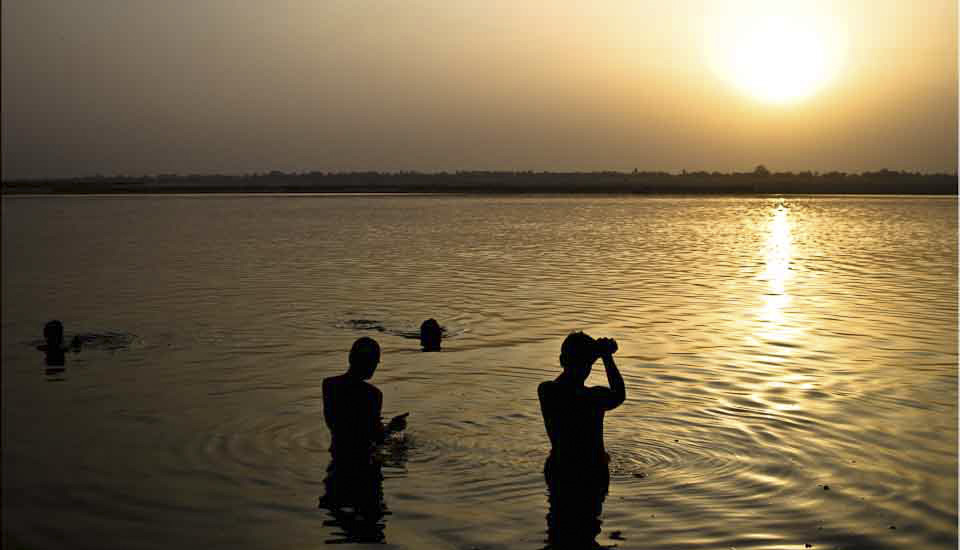
- Performing the Ganga Aarti from Dasaswamedh Ghat, Varanasi
- Buddha Head from Shwedagon Pagoda, Myanmar
- Harry Clarke Window from Dingle, Ireland
- Novice Monk Shwe Yan Pyay Monastery, Myanmar
Packets of 10 for $AU50.
Or - pick any photo from my Flickr or Wanders blog photos.

.jpg)
.jpg)
.jpg)











.jpg)